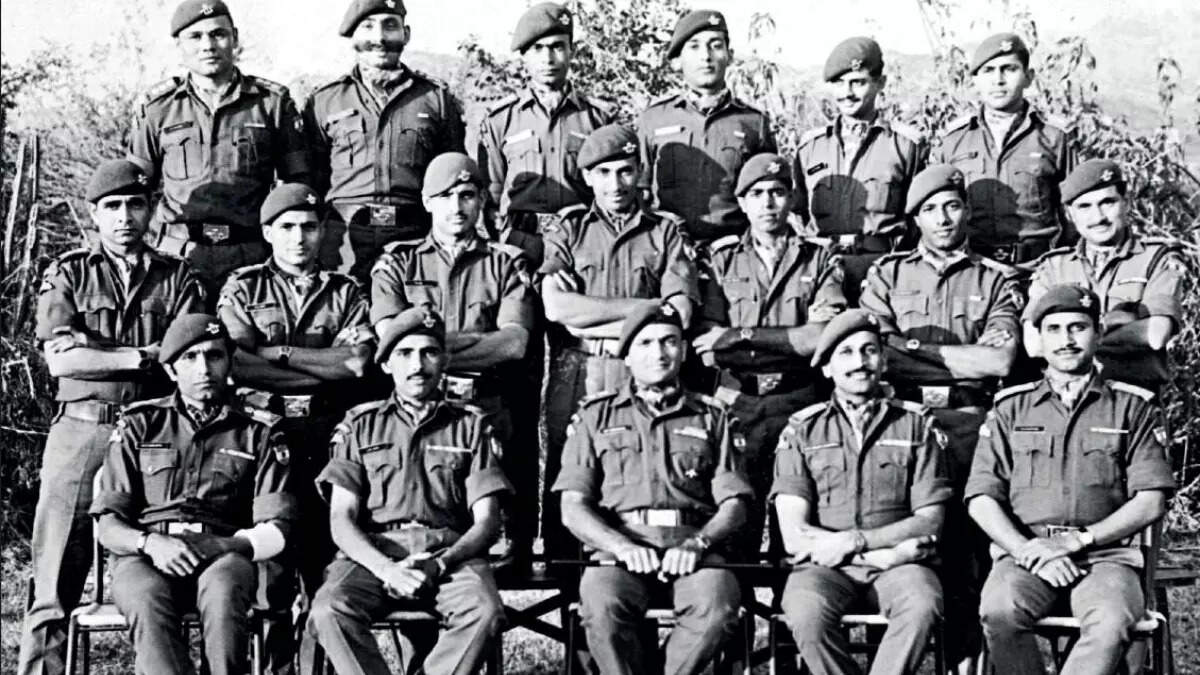
CHANDIGARH: Exemplary is, perhaps, the best word for describing the team spirit, commitment to duty, and camaraderie shown by officers and men of Indian Army’s commando unit during the 1971 war.
Major General O P Sabharwal (retired), then a lieutenant colonel, was the commanding officer (CO) of the elite 9-Para Commando unit that successfully carried out Operation Mandhol inside Pakistan territory, destroying enemy’s strategic artillery gun positions.
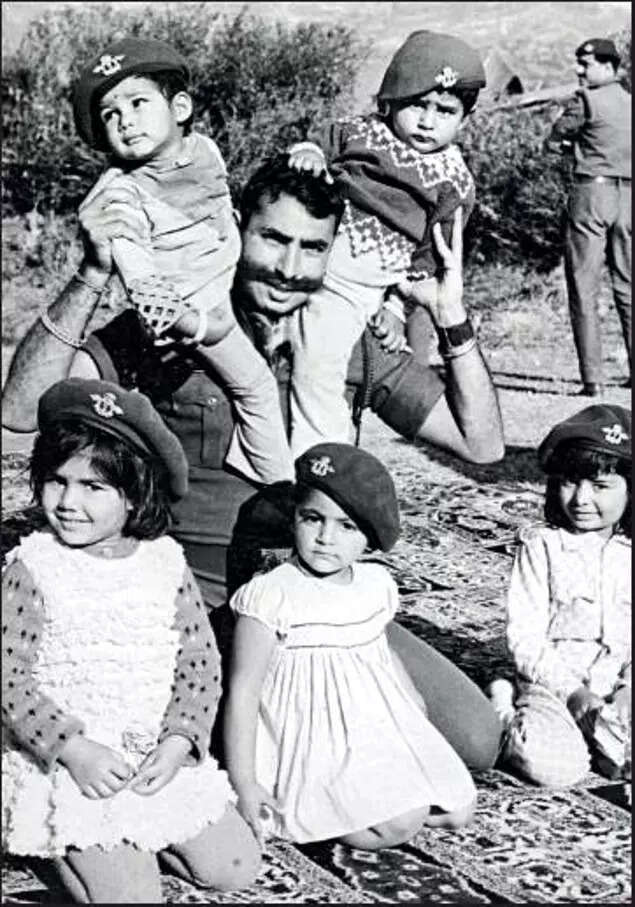
He shared anecdotes from the war, highlighting the indomitable spirit of the special commandos and what made them a “rare breed” of soldiers. According to Maj Gen Sabharwal, as the unit’s CO, he visited the military hospital in Jammu on December 3, 1971, morning to meet an officer of the unit, Captain Keshav Chandra Padha, who was admitted there as he was unwell and running a temperature of 103°F.
Knowing that the war was closing in, Capt Padha became oblivious of his discomfort. “He pleaded to (me to) get him discharged from the hospital. However, I told him to stay put till he fully recovered. The war began the same day at 6.30pm. Keshav took it upon himself to leave the hospital and scribbled a note that he was leaving the hospital on his own to join his unit. He then hitchhiked all night to join his commandos in Chhamb sector.
The next morning, while going around the trenches about 3am, I found Keshav sitting in one of them with other commandos,” said Maj Gen Sabharwal. “What are you doing here, Keshav? You should have been in the hospital, I asked. ‘Sir, I could not stay in the hospital, I wanted to be with my men in battle,’ he said. I touched his forehead, he still had high fever. Such is the mettle commandos are made of,” Maj Gen Sabharwal said.
Padha retired as a major general. When he was a colonel, Padha led a commando unit during Operation Blue Star in Amritsar.
Paid from own pocket to fly back
Sharing another example, Maj Gen Sabharwal, who is now in his 90s and settled in Dehradun, said Captain Kiran Kumar was a cheerful, popular young officer. The epitome of physical fitness, he was always ahead of others in physical fitness tests.
The commando unit was camping in Jhindra, four miles from the base of Vaishno Devi temple. Every Sunday morning, Capt Kumar would run up to Vaishno Devi, offer prayers, run down and only then have his breakfast. Capt Kiran was posted in Bhutan, as part of IMTRAT (Indian Military Training Team) training team mission, just three months before the war began.
As the political situation deteriorated, he wrote six letters to the CO and made a few telephone calls to get back to the unit. As he was posted in a foreign country, it was difficult to accept his request. “Kiran was a determined soldier, a great mountaineer of Everest fame. He took leave for 20 days and flew back to New Delhi by paying for a ticket equal to his salary for three months.
He joined the unit on December 11, 1971, during the battle of Chhamb. ‘Reporting to you for duty, sir, please give me an operational task,’ he said,” Gen Sabharwal added. Kiran died in 1985, while attempting to climb the Mount Everest as part of an Army expedition.
‘Had officers over authorised strength’
Sharing another story, Maj Gen Sabharwal said one of his officers, Captain H S Lidder, popularly known as Hardy Lidder, was posted as an instructor in the commando wing of Infantry School at Belgaum. “He took 20 days of leave and joined the unit in battle, and performed exceptionally well. By and large, units are always short of a few officers, but, here, I was with two officers more than my authorised strength.
Being the commanding officer, I had sent a signal to the military secretary’s branch, informing them that I have taken Capt Lidder and Capt Kumar on my unit strength. I wanted to make sure that in case of any battle casualty, they would be taken care of,” Maj Gen Sabharwal added. Lidder retired as a lieutenant general from the Army headquarters. Maj Gen Sabharwal served in the USA as a defence attaché for four years and was also an international fellow of American War College.
Wives offered to be nurses
Maj Gen Sabharwal informed that the first personnel injured during the war was Second Lieutenant Shashi Khanna in the Chicken’s Neck, Akhnoor area in Jammu and Kashmir. Orders of his evacuation to military hospital in Udhampur were given.
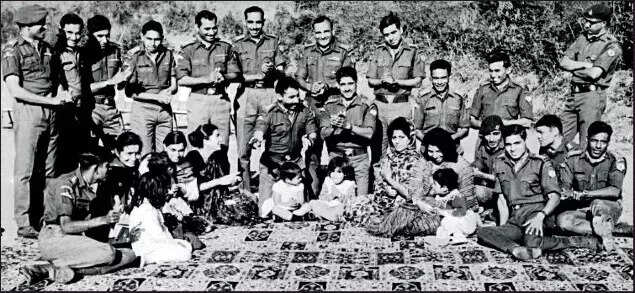
In the battalion, Sub Major Balwant Singh Katoch informed the ladies of the unit about this. The wives of all officers and a few commandos led by CO’s wife Kamini Sabharwal rushed to the hospital.
They reached there even before 2nd Lt Khanna. They informed the doctors that they would do the nursing part for all commando casualties. Twenty of them also offered to donate blood. Khanna retired as a brigadier.