
OneOdio Studio Max 2: Two-minute review
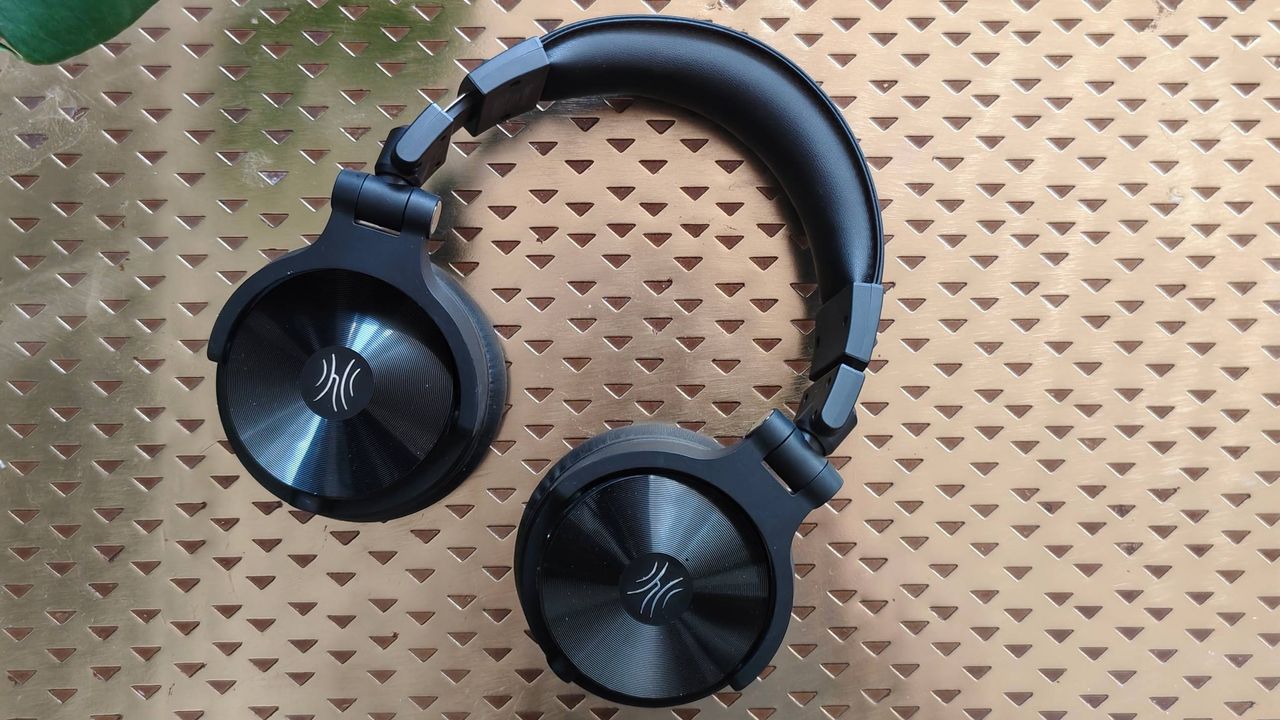
Despite the number in the name, I’ve taken to considering the OneOdio Studio Max 2 to be more like a ‘pro’ version of the originals rather than a completely new pair of headphones. I’ve been testing them for several weeks, and the experience doesn’t feel hugely changed (even though the price is).
The originals upon which they are based were released in early 2025, and after I finished my review, I found myself using them daily. They’re always plugged into my guitar amp or keyboard for when I want to do some music practice; a few select features made them uniquely handy for making music.
The OneOdio Studio Max 2 are, mostly, a very similar proposition. They’re not designed for audiophiles so much as DJs, studio musicians and other music-makers — but they have enough of a consumer-friendly bent that they’re not just for the studio. If you’re an amateur musician or music producer, and want cans for the task in hand but also for general use, you’re the target audience.
Like their predecessors, I wouldn’t strongly recommend these for general use, though. They’re big and chunky, so I felt self-conscious wearing them in public, and the fit was unreliable, so they shook when I was walking. On top of that, the audio quality is pretty poor, and you won’t get noise cancellation. There’s a reason the old pair stayed tethered to my instruments.
That sounds like a deluge of criticism, and an odd one given the score above, but the Studio Max justify themselves with their tools for professionals or music creators.
These puppies connect to other devices in four ways: there’s both a 3.5mm jack and a 6.35mm one, so you’ve got more cable versatility than most other cans. Of course, you’ve got Bluetooth, but there’s also an audio transmitter included in the box that can connect to any analog source.
With the transmitter, you can get 9ms latency between the headphones and audio source. This is OneOdio’s pitch for why they’re great DJ headphones — with no transmission delay, you won't miss your bass-dropping cue. OneOdio isn't the only brand to offer this feature, but crucially, its headphones are the cheapest to do so.
Upgrades to this transmitter also form the main upgrades over the original Studio Max. The latency has been halved from 20ms and the bitrate has been increased, but the transmission distance has been halved to 10m. Given that the price has increased, though, it might not be a tempting upgrade for many buyers of the original.
For music producers or performers, the foldable form factor is appreciated, as is the massive 120-hour battery life over Bluetooth (and the battery life when using the transmitter has been doubled to 50 hours in this model). I can see it being particularly useful for touring musicians for this reason, who can’t charge regularly — although IEMs will still rule supreme for that.
More so than most headphones I test, the OneOdio Studio Max 2 are situational, and niche. I wouldn’t recommend them to people on the market for the best headphones for general use, nor would I suggest professionals buy them over specially-designed studio kit.
But there’s a small overlap in the Venn Diagram between those groups, in which the cans may find appreciative buyers. That's included me, as a dedicated user of the original model — but check the price of the original OneOdio Studio Max 1 before you buy, though, because if it gets price drops, it might be the better-value buy.
OneOdio Studio Max 2 review: Price and release date
- Released in May 2026
- They sell for $189 / £179 (about AU$360)
- Come with carry case as well as cables and transmitter
The OneOdio Studio Max 2 were unveiled on May 11, 2026 — that’s a year and three months on from the release of their predecessors.
The official price of the Studio Max 2 is $189 / £179 (about AU$360, but they don’t seem to have enjoyed an Australian release at the time of writing).
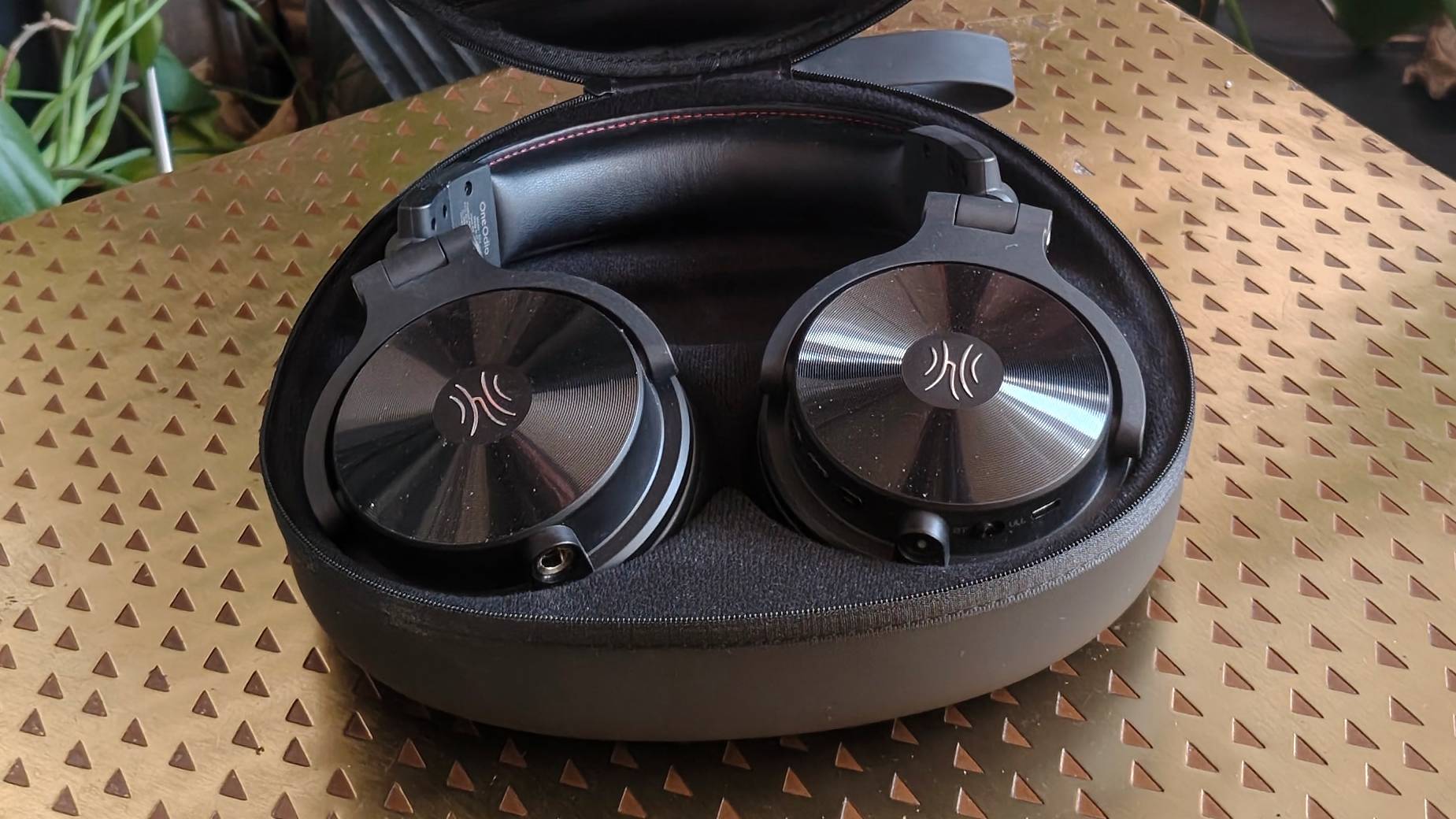
In the box you get the headphones, transmitter, various cables (loads of cables) and a handy carry case. It’s the complete package, and I’ve never felt the need to root around in my drawers for other wires.
For context, the original Studio Max released for $169 / £135 / AU$275, so there’s been a price hike here, which varies quite a bit by region.
OneOdio Studio Max 2 review: Specs
Drivers |
45mm |
Active noise cancellation |
No |
Battery life |
120 hours |
Weight |
353g |
Connectivity |
Bluetooth 6.0, 3.5mm, 6.35mm, 2.4Ghz transmitter |
Frequency response |
20Hz to 40kHz |
Waterproofing |
NA |
OneOdio Studio Max 2 review: Features
- No noise cancellation, and basic phone app
- Massive 120-hour battery over Bluetooth
- Many connection options including low-latency transmitter
Let’s address the elephant in the room, or lack thereof: there are some features missing here, which some music listeners might miss. There’s no active noise cancellation, for example, and the app is quite barebones. It has three EQ presets (normal, monitoring and bass), and a 10-band custom mode, as well as a few extras such as wear reminders, volume limiters, and a way to pan the sound to the left or right ear cup only.
What you do get is pretty rocking though. Take the battery life: 120 hours equates to five straight days of music playback. No, not five hours. Five days. That figure matches the original pair, and I can’t name another option which lasts that long.
Another key feature is the range of connection options. Naturally, you can connect them via their 3.5mm port, or the 6.35mm jack so they can connect to professional audio kit easily. The Studio Max 2 support Bluetooth 6.0, allowing for more reliable wireless connection than the old pair.
But perhaps the key selling point here is the transmitter, which comes included in the box. Using OneOdio’s RapidWill+ 3.0 technology, this transmitter lets you cut the response time between your source and the Studio Max 2 to just 9ms. It uses 2.4GHz connectivity, and all you need to do is plug it into your output device, and your headphones can pick it up.
All the cables you need are included in the box, so it's a plug-and-play style situation. The transmitter needs to be charged via USB-C, and lasts for 50 hours per charge.
- Features score: 4 / 5
OneOdio Studio Max 2 review: Sound quality
- Uses 45mm drivers
- Music is muffled and tinny
- EQ doesn't help fix things
OneOdio has used a 45mm driver in each Studio Max 2 cup, and the headphones are certified for Hi-Res Audio and Hi-Res Audio Wireless, with LDAC compatibility too. Unfortunately it's not quite the recipe for success it would appear to be on first glance.
The Max 2 sound muddy and muffled, with rumbly and ill-defined bass stomping over over lines of a song. Any semblance of a soundstage is forgotten, instead presenting your music as one amorphous sonic boulder.
Glorious by The Hoosiers is presented like a confused mush of synths, and the bass in Charlie Mars' She Ain't Coming Back veers between drowning out everything else, and being inaudible.
They also offer a sound that's tinnier than anything else at this price point, with noticeably compressed hi-hats and distorted guitars that really shouldn't be distorted. I'd usually cite a song here as an example, but you can basically insert any song that has instruments here.
Usually I'd turn to an equalizer to try to fix problems like this, but you've got three options: the default, a Bass Mode (that's not going to fix the problem), a custom EQ and Monitoring Mode. Those latter two both gave music a crunchier feel, so I stayed far away.
It's worth noting that criticism I levelled here, I also put against the Studio Max 1. As far as I can tell, the sound hasn't changed much.
- Sound quality: 2.5 / 5
OneOdio Studio Max 2 review: Design
- Industrial look
- Rotatable cups and foldable arms
- Plenty of ports and dials
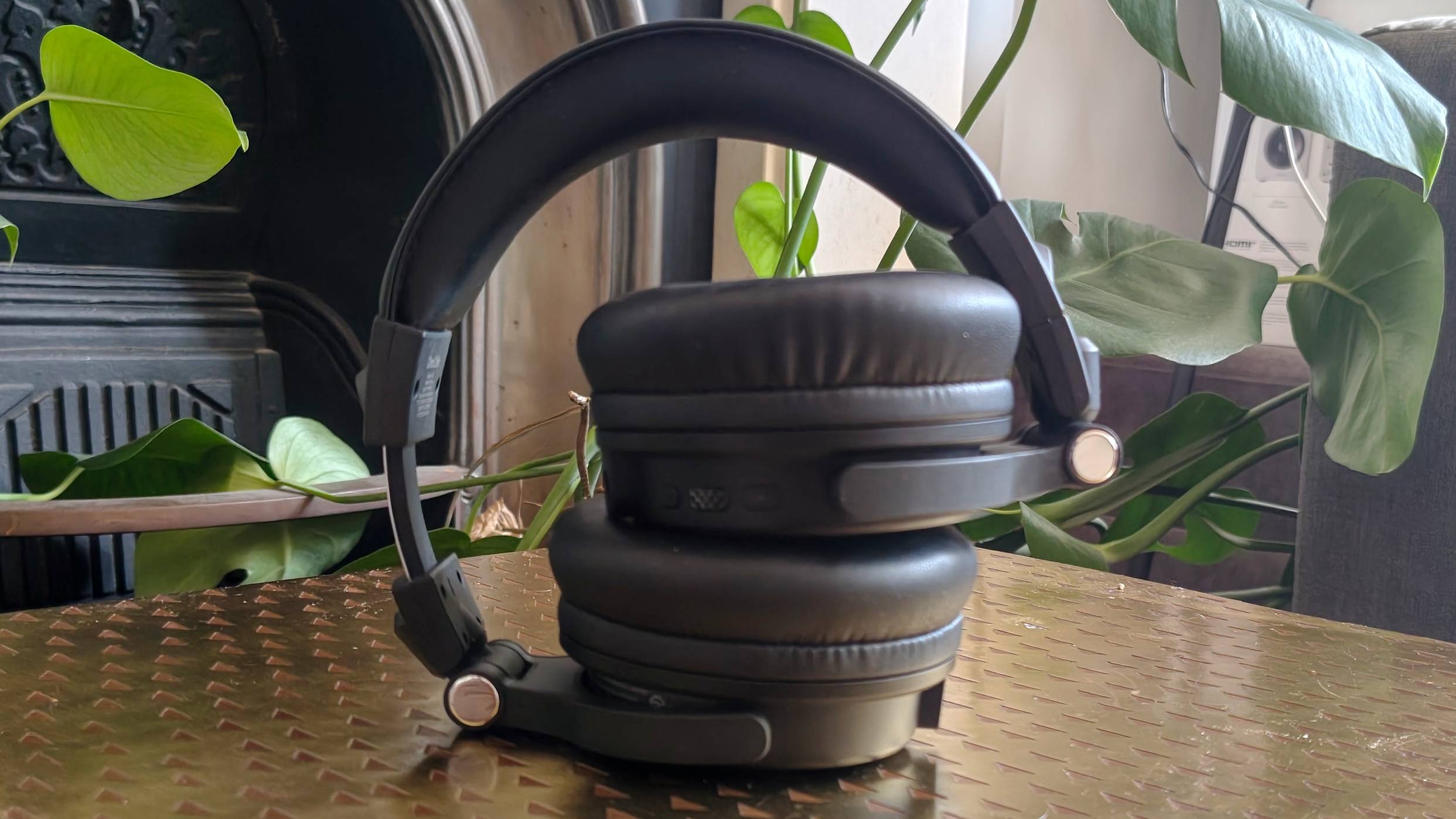
Don’t buy the Studio Max 2 if you’re looking for svelte, lightweight or fashionable over-ear headphones. They’re bulky and large, with a design that’s quite industrial. You’ve seen the pictures, you know what they look like, and I felt self-conscious wearing them outside the house.
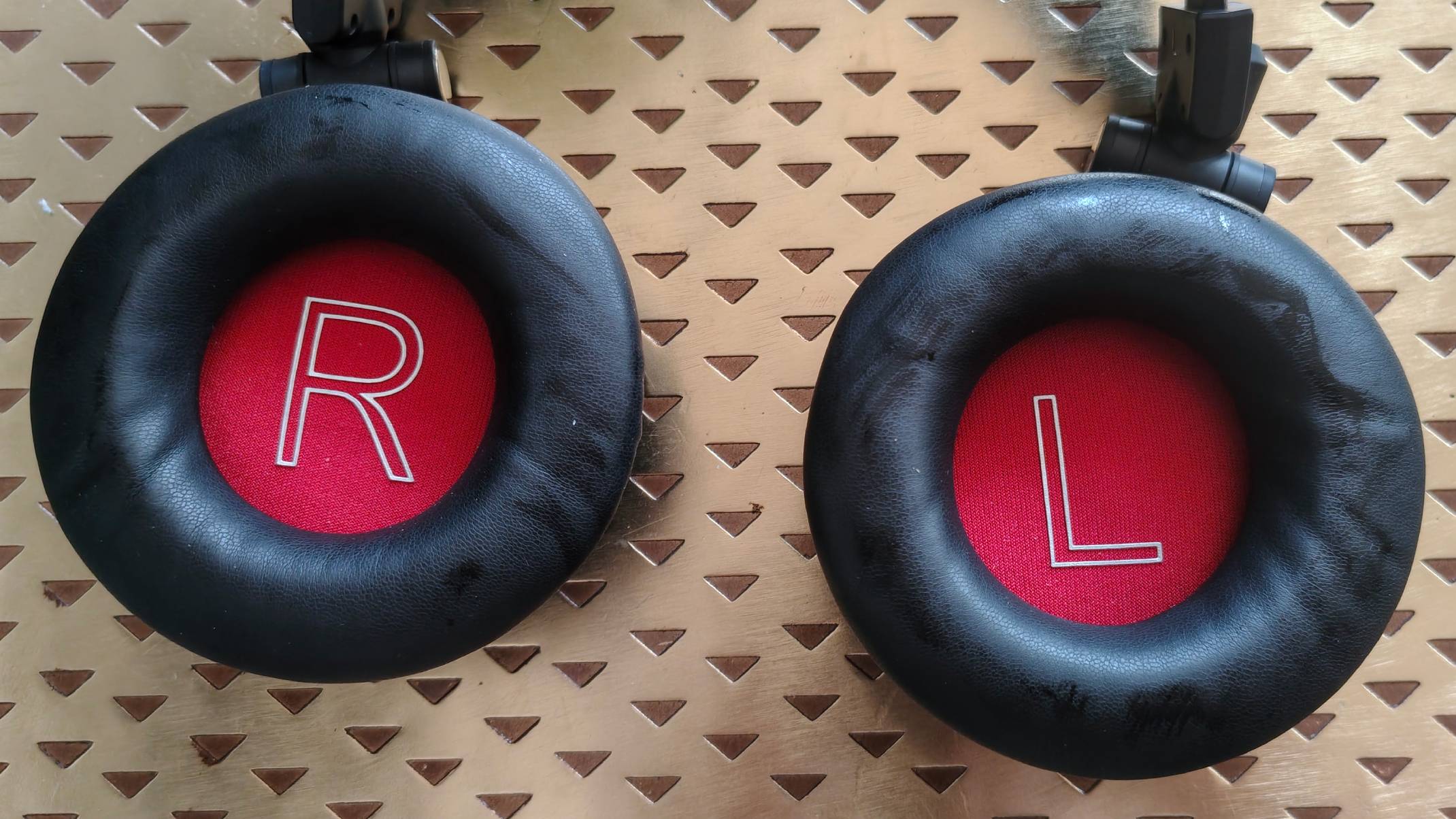
The cups and headband are pretty soft, yet they weren't too comfy to wear, perhaps because of their 353g weight. At least they're good at at catering for different shapes of head, thanks to how versatile they are: the cups rotate around different angles. This also makes them easily-foldable for bags, and handy to form for review pictures.
However, and likely as a natural side-effect of the size, they didn't stick in place reliably. If I was walking, they'd sway a tiny bit, and I imagine they'll wobble if you're an active DJ enjoying your own set.
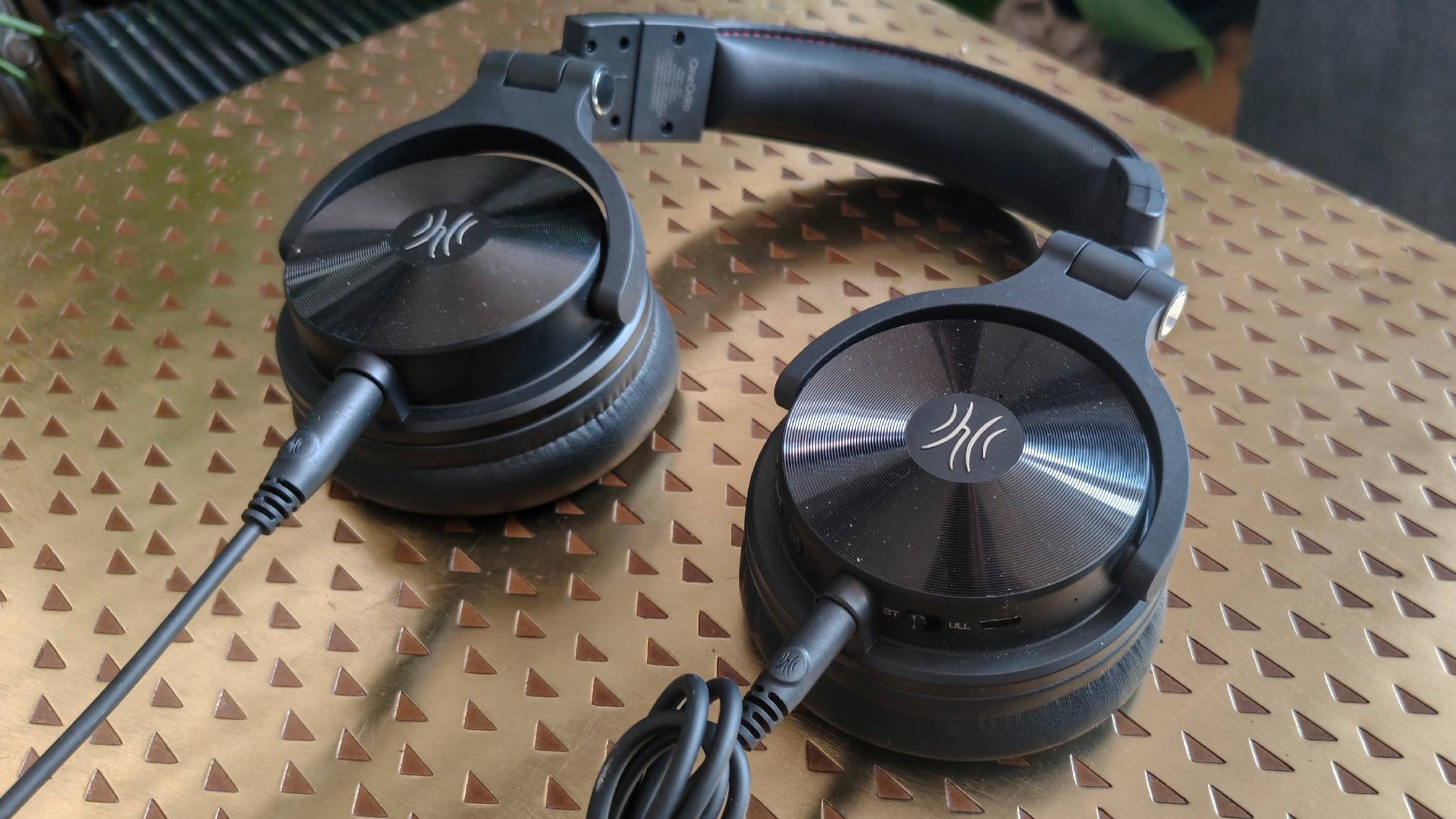
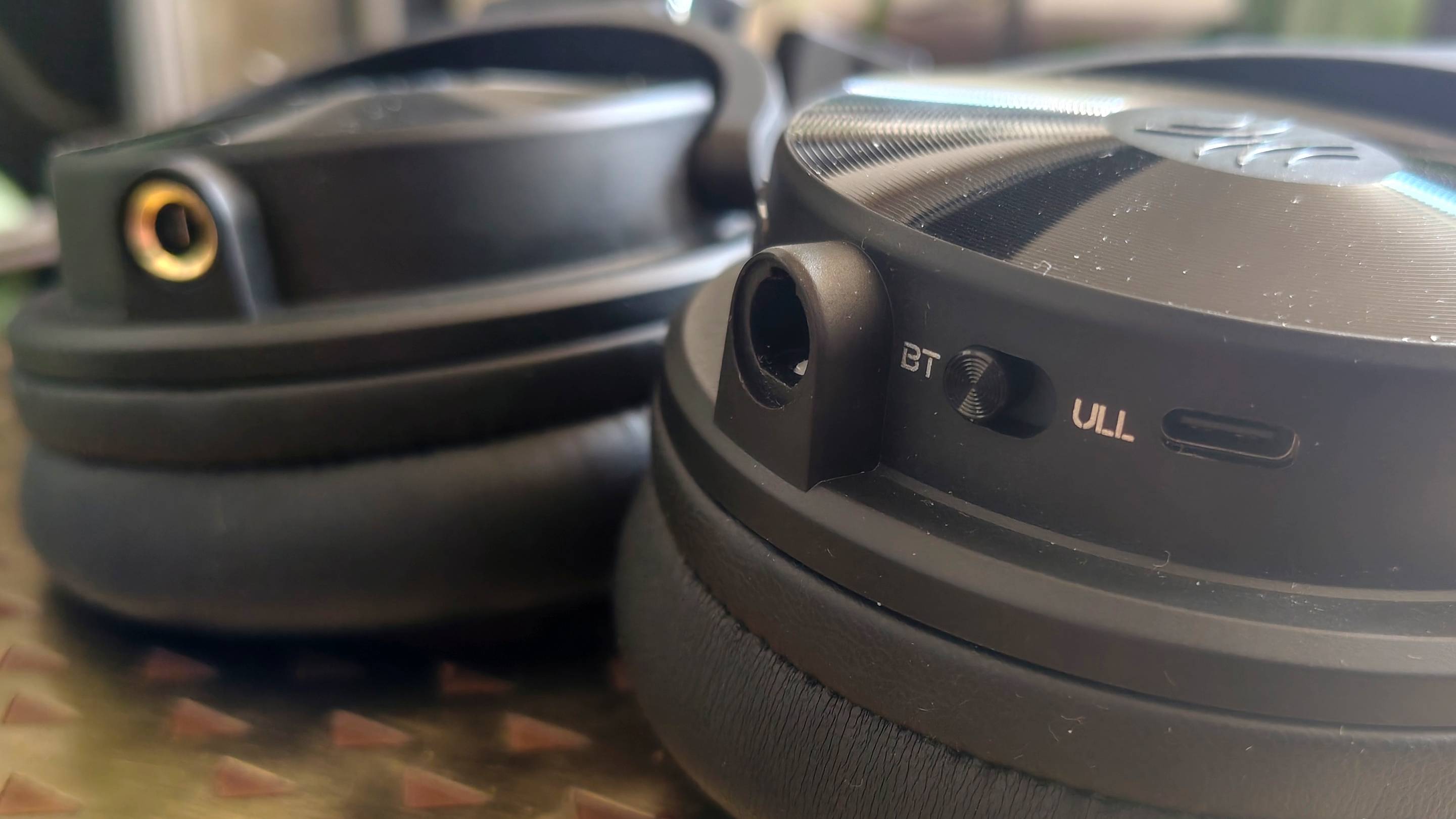
Adorning each Studio Max 2 cup is a range of buttons and ports. The left cup has a 6.35mm port, while on the right you're getting volume up, volume down and power buttons, a 3.5mm jack, a slider to toggle between Bluetooth and ultra-low latency, and a USB-C port for charging too.
Two things to point out that images don't convey. Firstly, these things creak quite a bit; I'm used to this being a symptom of cheap plastic used in the design, but it doesn't feel like the case here. I think the many moving parts are to blame. Secondly, the back of the cups are grooved to resemble vinyl records; a neat touch, but if my previous pair are any indication, they can be huge dust magnets.
- Design score: 3 / 5
OneOdio Studio Max 2 review: Value
- Too expensive to be consumer cans
- Value for money if you need transmitter
If you’re looking at the OneOdio Studio Max 2 as consumer-friendly headphones, it’s hard to argue that they offer you good value for money. There are great cans for music fans at a third of the price — from OneOdio itself, as well as other brands.
That’s also true if you’re looking for general studio headphones, for that matter.
What you’re paying for is the transmitter, to allow for low-latency wireless music from any source, including instruments. If you need a gadget like it, the Studio Max 2 undercuts its rivals — if not, then these aren’t the cans for you.
- Value: 3.5 / 5
Should I buy the OneOdio Studio Max 2?
Attributes |
Notes |
Rating |
|---|---|---|
Features |
The app may be barebones, but the fantastic battery life and useful connection modes are a winner. |
4 / 5 |
Sound quality |
Don't buy them if you want good-sounding headphones. |
2.5 / 5 |
Design |
It's not a look that'll appeal to many, and it's not very comfy, but at least it's versatile. |
3 / 5 |
Value |
The affordable transmitter makes these good value (if that's a feature you need). |
3.5 / 5 |
Buy them if…
Don’t buy them if…
OneOdio Studio Max 2 review: Also consider
OneOdio Studio Max 2 |
AIAIAI TMA-2 |
AlphaTheta HDJ-F10 |
|
|---|---|---|---|
Drivers |
45mm |
40mm |
40mm |
Active noise cancellation |
No |
No |
Yes |
Battery life (ANC on) |
120 hours |
40 hours |
30 hours |
Weight |
353g |
217g |
356g |
Connectivity |
Bluetooth 6.0 |
Bluetooth 5.3 |
Bluetooth 5.2 |
Waterproofing |
NA |
NA |
NA |
How I tested the OneOdio Studio Max 2
- Tested for one month
- Tested alongside PC, guitar amp, synth, smartphone
- Used all connection options
I used the OneOdio Studio Max 2 for roughly a month before writing this review.
During the testing process, they were connected to a wide variety of devices including my guitar amp, my keyboard, my PC and my smartphone. Across this board, I used every connection option possible.
Mostly, the testing was done for music playback, but I also used it for a variety of other tasks including audio mixing, video editing, playing my own music and, for one weekend, audio recording alongside a field recorder and boom mic.
I've been reviewing gadgets for TechRadar since early 2019, and in that time have tested plenty of audio products including the original Studio Max 1 (the number is in the name, I've not added it!).
- First reviewed in May 2026