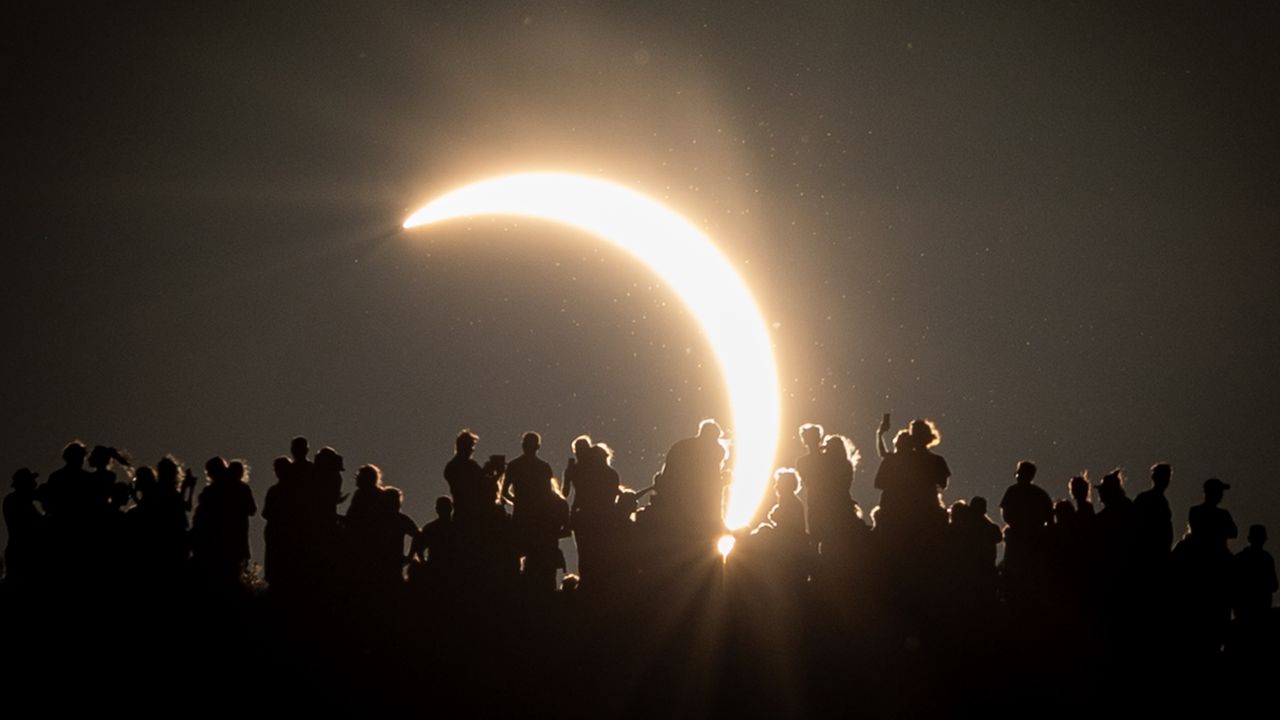
The 2026 solar eclipse only reached totality for a small slice of the globe, but thanks to talented photographers and videographers, my feed is drowning in eclipse photos so good, they don’t even look real.
While GenAI means I should be rightfully wary of the photos in my feed, the reason that the best eclipse photos look too good to be true has nothing to do with software – and everything to do with optics.
From a wingsuiter flying through the eclipse to a skateboarder in mid-air in front of a giant eclipse, the best photos and videos coming from the 2026 eclipse have an unreal quality for one simple reason: the eclipse looks far too large.
A post shared by Danny Leon 🦁 (@danny_leon)
A photo posted by on
In some shots, the eclipse dominates the frame, appearing larger-than-life in the background. But the moon actually doesn’t look that big from Earth, so how are photographers and videographers creating jaw-dropping artwork that makes the eclipse appear so large?
The answer lies in a powerful photography trick: forced perspective.
Forced perspective is a type of optical illusion that makes something look larger than it really is. This is the same type of trick that tourists use to make it look like the Eiffel Tower fits in a hand, only in reverse.
A post shared by Benjamin Riquelme (@benjaminriquelme_)
A photo posted by on
In photography, there are two key components to getting the moon or sun – and thus the eclipse – to look larger than it really is using forced perspective.
First, when the sun and moon are the closest to the horizon, they will look larger than when positioned higher in the sky. That’s one of the reasons why the total eclipse over Spain was so unusual, as totality happened near sunset while the sun and moon were close to the horizon.
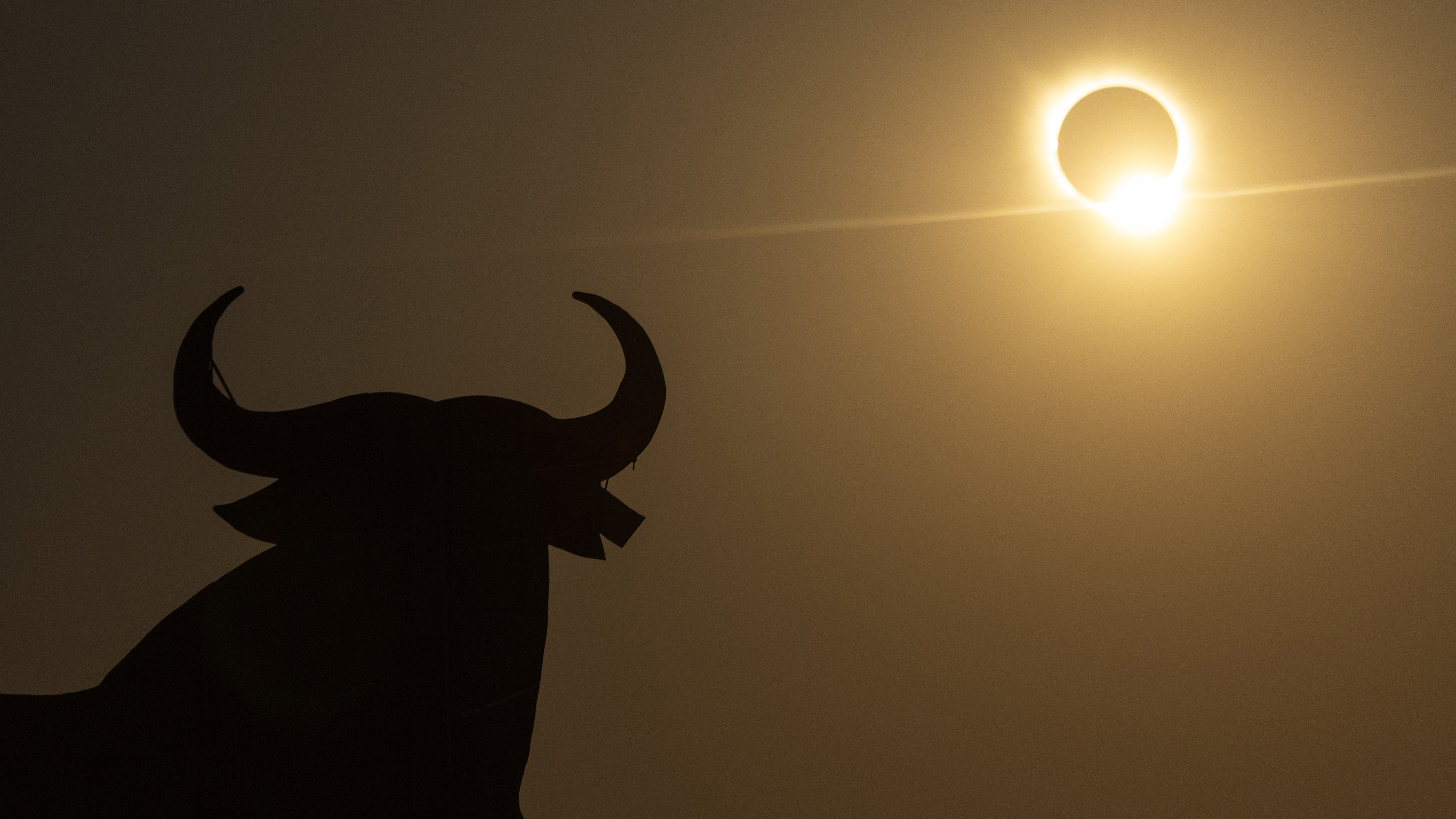
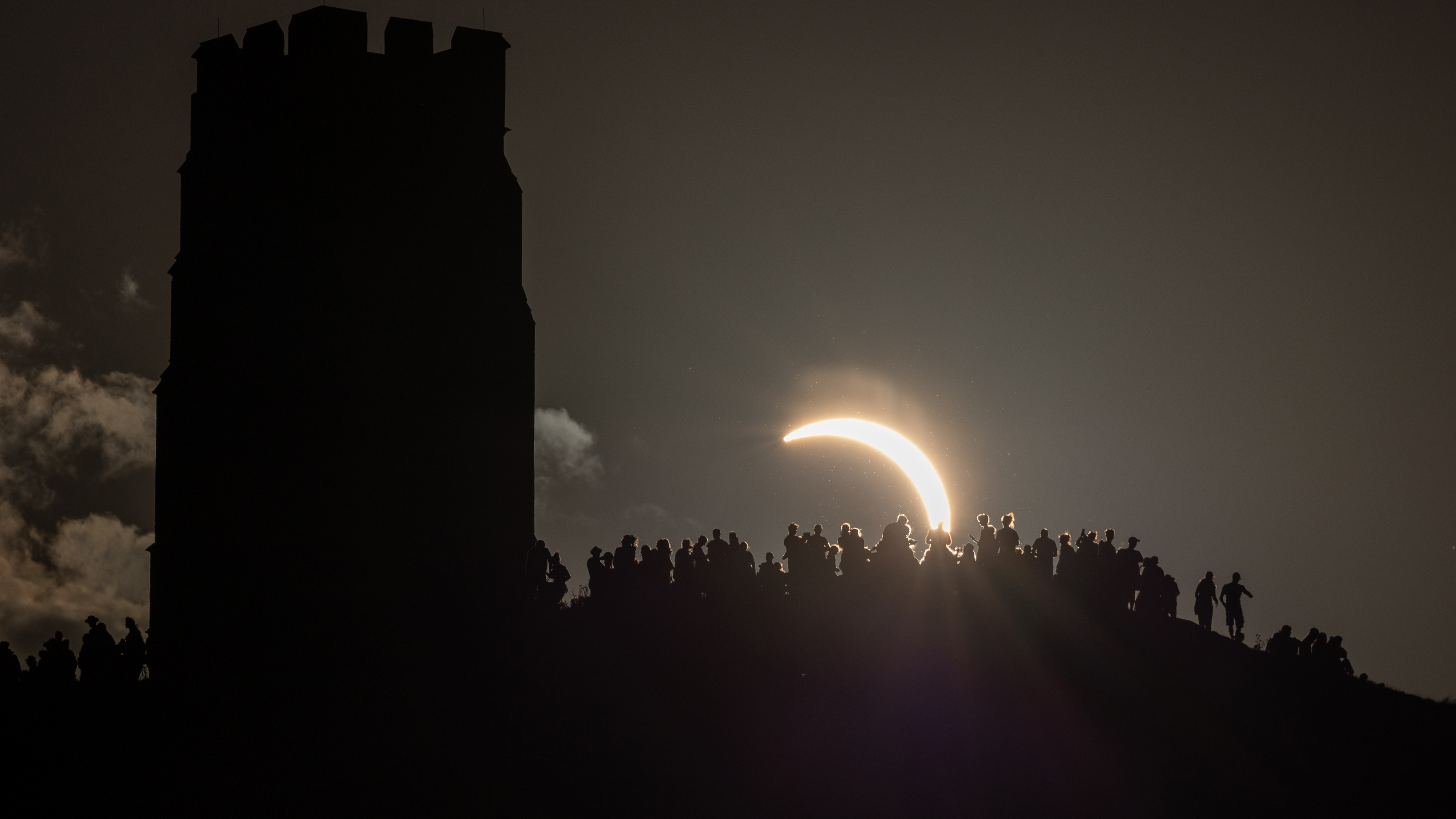
But the other key part of the trick is the lens. A telephoto lens makes the background appear larger in the photo than a wide-angle lens does. This is called lens compression.
The longer the telephoto lens is, the larger the eclipse appears in the background – so those extremely large eclipses are the result of extremely long telephotos, sometimes aided with teleconverters.
This photo was taken with a telephoto lens:
This photo was taken by the same photographer, but with a wider lens, making the eclipse look smaller:
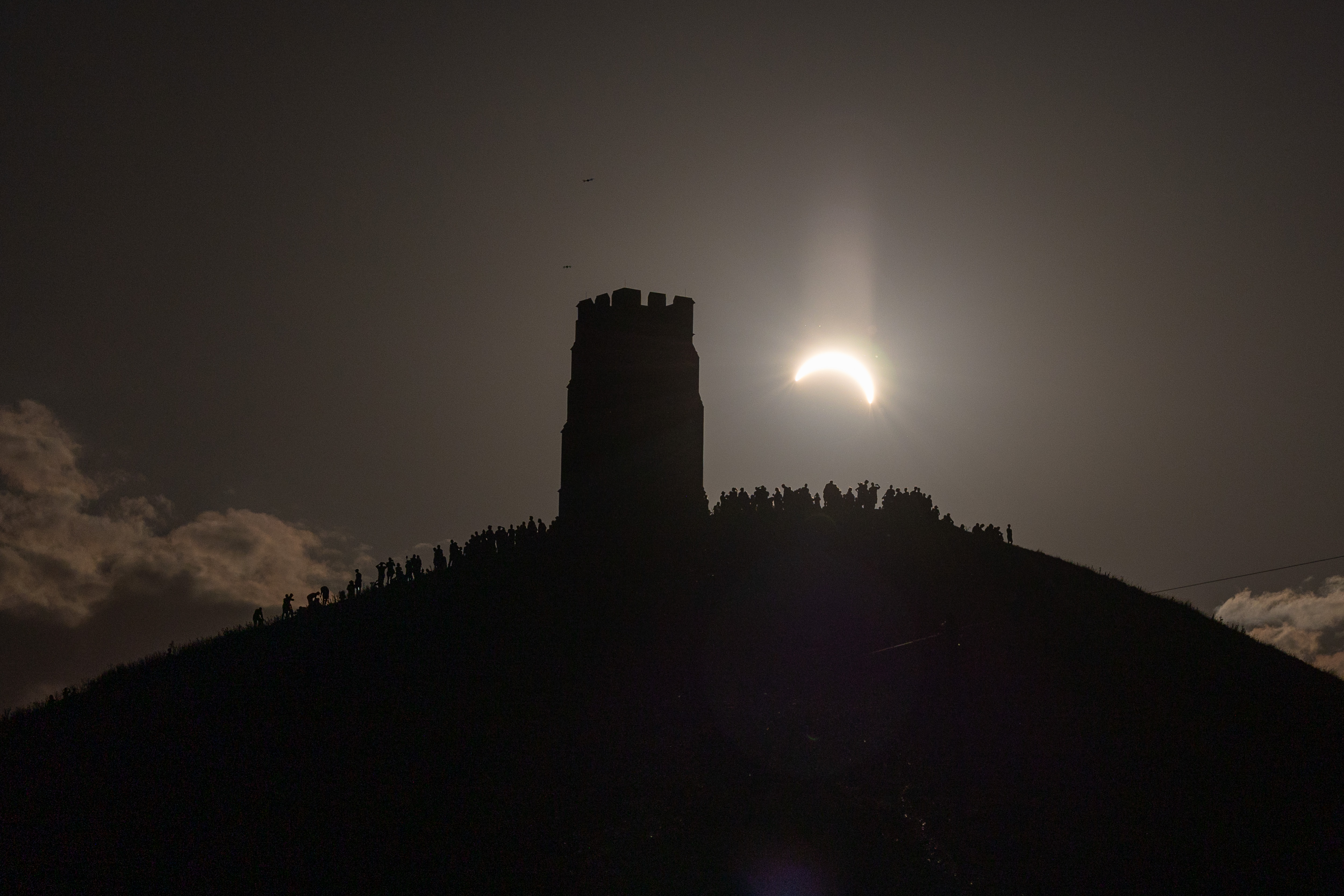
Another key component is that the subject should be far away as well – as something up close to the lens will look much larger than the eclipse in the background.
The photos making the eclipse look unnaturally large are a result of using extreme telephoto lenses, a distant subject, and positioning the eclipse close to the horizon. No, photographers don’t have the power to move the sun, but they can make the eclipse appear even closer to the horizon by using hills, plateaus, and buildings.
A post shared by Dennis Schmelz (@dennisschmelz)
A photo posted by on
These larger-than-life eclipse shots not only require heavy, expensive lenses, but often advanced planning to find a location that will heighten the effect by making the eclipse appear as close to the horizon as possible. And that makes the stunning photos and videos coming from the 2026 solar eclipse all the more jaw-dropping.
You may also like
The eclipse isn't the only thing to watch for in the skies this week. Learn how to photograph the Perseid meteors.