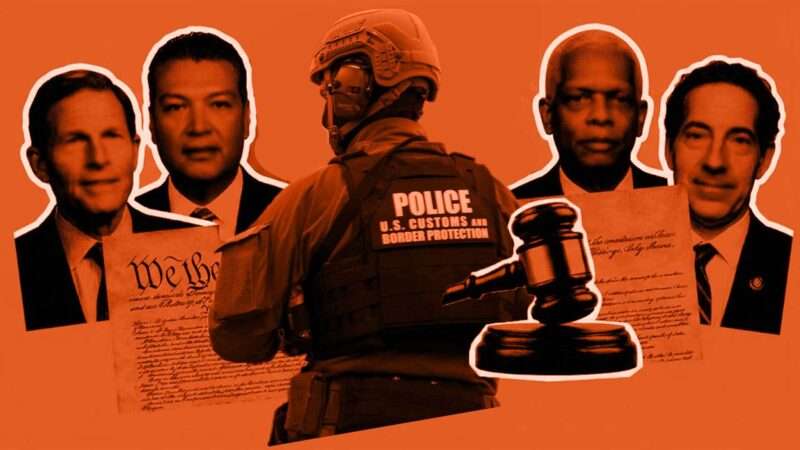
Sens. Richard Blumenthal (D–Conn.) and Alex Padilla (D–Calif.) introduced the Accountability for Federal Law Enforcement Act on Monday, which would allow individuals, regardless of citizenship status, to sue federal law enforcement officers and agencies that violate their constitutional rights. The announcement comes in response to the Trump administration's aggressive immigration enforcement tactics that have violated the rights of both immigrants and American citizens.
Earlier this month, Blumenthal released a report on the unchecked authority that immigration officials under President Donald Trump have used to forcibly detain people. The report highlights the firsthand accounts of 22 American citizens wrongfully detained by immigration agents, five of whom testified during a public forum on December 9.
Wilmer Chavarria, a naturalized citizen and school superintendent, described his experience upon returning to the U.S. in July after visiting his mother in Nicaragua. Chavarria was detained for four hours by Customs and Border Protection until he finally agreed to a search of his smartphone, tablet, and laptop. Although Chavarria originally refused to consent to a warrantless search, particularly given the amount of sensitive student data stored on his work devices, federal agents told him he did not have Fourth Amendment rights at the border. With the help of the Pacific Legal Foundation, Chavarria filed a lawsuit in the U.S. District Court for the District of Columbia challenging the Department of Homeland Security's "border exception" to the Fourth Amendment when it comes to electronic devices and the vast amount of sensitive data such devices hold.
Another citizen and Army veteran, George Retes, shared testimony of his experience with immigration officers conducting a raid at his workplace in July. Unable to comply with agents' contradictory orders to both drive away and exit the vehicle he was in, officers used tear gas, pepper spray, and excessive force to arrest and detain him. Retes was held without charges for three days and was never given an opportunity to make a phone call or speak with an attorney.
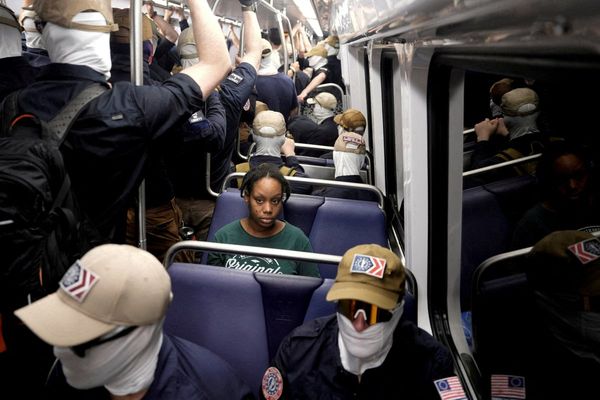
Others testified to an apparent pattern of masked immigration authorities using physical violence to arrest first and investigate later. With or without proof of citizenship, each encounter with federal agents described blatant constitutional violations.
Despite these clear violations, holding federal officers accountable is nearly impossible without a change in the law—a change that Blumenthal and other members of Congress are seeking to make. Blumenthal and Padillo's new bill mirrors two bills reintroduced in the House in November: The Bivens Act, which would allow citizens to sue for damages resulting from constitutional violations committed by federal officers, and the Constitutional Accountability Act, which would create a cause of action against federal law enforcement agencies and police departments for constitutional violations.
These bills are designed to, in part, revive and codify the 1971 Supreme Court ruling in Bivens v. Six Unknown Named Agents, which found that there is an "implied cause of action that allowed individuals to sue federal officers for Fourth Amendment violations," according to Mike Fox, a legal fellow at the Cato Institute. Over time, however, the Court has narrowed the Bivens ruling, practically making it a dead letter.
Other avenues, such as the federal statute known as Section 1983, also fail to provide relief for those whose rights are violated by federal officers. Although Section 1983 creates a civil action for the deprivation of rights acting under the color of law of "any State or Territory or the District of Columbia," the statute leaves out federal actors. Amending the statute to include officers acting under the color "of the United States" would close this loophole.
Guaranteeing a legal remedy to hold all law enforcement officers and agencies accountable is paramount to protecting constitutional rights and renewing trust between law enforcement and the American public. As Retes said during his recent testimony, "Accountability is not the enemy of respect—it is its foundation." Without consequences for these violations, individuals' rights will only continue to be violated and degraded.
The post These Congressmen Want To Give You the Right To Sue Federal Law Enforcement for Violating Your Rights appeared first on Reason.com.