Ed Hedemann hasn’t paid federal income taxes since 1970. The Brooklyn freelancer received a draft notice for Vietnam a year earlier and refused his induction because he didn’t believe in war or killing people. Once he began working, he realized he didn’t want to fund the military with his paycheck either.
“I was thinking, ‘Well, it’s a little inconsistent for me to refuse induction, refuse to go into the military, yet pay taxes that would fund other people to go into the military,” the 81-year-old told Fortune. He estimates he’s withheld roughly $85,000 from the federal government over the decades.
Hedemann is a war tax resister—someone who refuses to pay federal income taxes as a form of protest against government spending they find morally reprehensible. And while he’s been at it for more than 50 years, recently he’s been finding a lot more company.
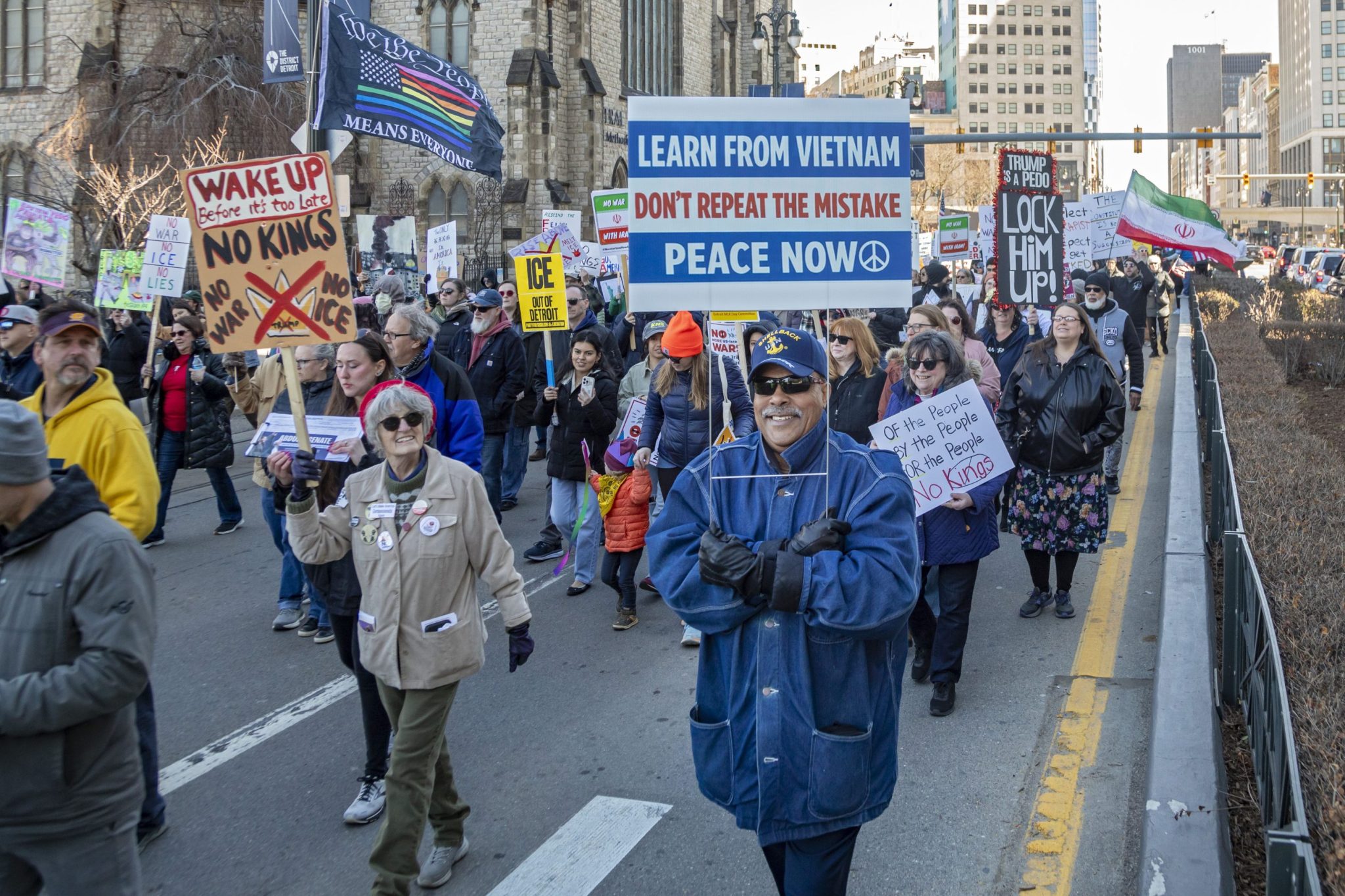
In the 15 months since the Trump administration returned to office—a period that has included ICE and Border Patrol killing Americans in Minnesota, the capture of former Venezuelan president Nicolás Maduro, and the start of a war in Iran—a growing number of Americans have decided that paying their federal taxes amounts to complicity. Some are withholding what they owe. Others are restructuring their lives to owe nothing at all.
Tax resistance has a long history in the United States, going back to the Boston Tea Party. During the Vietnam War, an estimated 200,000 Americans refused to pay a 10% telephone tax that directly funded the war. But organizers say the current wave is unlike anything they’ve seen in decades.
The war in Gaza was a “watershed moment,” said Lincoln Rice, national coordinator at the National War Tax Resistance Coordinating Committee (NWTRCC), which provides guidance on conscientious tax objection. Before Oct. 7, NWTRCC hosted a couple of Zoom workshops a year for 20 to 25 attendees. During the past few tax seasons, the organization has offered sessions every other week, drawing 100 to 500 people, and has seen a surge in calls, emails, and social media inquiries.
The demographics have shifted, too. Interest after the Gaza war skewed toward people in their twenties and thirties. After Trump retook office, it expanded to higher earners and people over 40 who were alarmed by DOGE’s firing of hundreds of thousands of federal workers and cancellation of programs. Now, Rice said, it comes from people of all ages and racial backgrounds.
‘I just saw myself in those mothers’
For Clara Vondrich, the turning point came on Feb. 28, when the U.S. hit an elementary school in Iran with a Tomahawk missile, killing more than 150 girls—most between ages 7 and 12—and their teachers.
“I just saw myself in those mothers, and the lifelong devastation that they suffered for no good reason,” the 48-year-old lawyer and climate activist, who has an 11-month-old daughter, told Fortune. She said she’d been “horrified” by the administration since day one, but the strike pushed her toward civil disobedience.
“I believe that taxes should be used for building lives and not taking them, and so the idea that I would be paying into a war machine was just untenable for me,” she said. She feels so strongly that she wrote an op-ed in the Guardian and started a petition urging people to join the war tax resistance.
Some of Vondrich’s taxes were already withheld by her employer, but she owes roughly $2,000 if she files separately from her husband, she said. She plans to redirect that money to a relief organization supporting Iranians or Gazans. As her income is needed to support her 87-year-old mother, husband, and daughter, she’s aware of the risks, but said she can’t pay in good conscience.
“I’m all for paying taxes. I’m all for putting my dollars towards initiatives that build our country,” she said. “I’d rather sleep at night than know that I’m skirting my obligation to support the common good.”
A life built around resistance
Hedemann has shaped his life around not paying federal taxes. He quit salaried jobs to freelance, so he could earn money without tax being withheld. He pays bills through money orders to avoid exposing his bank account information to the IRS. He even keeps a landline to protest the federal telephone excise tax—originally a 10% levy to fund military spending, now at 3% since 1983.
The consequences are real. Every year, Hedemann receives letters and calls from the IRS threatening liens or property seizures—but he doesn’t own a house or a car. In 1999, the IRS and the Department of Justice served him with an order requiring him to appear in federal court and explain why he shouldn’t be held in contempt for refusing to disclose information about his bank accounts and assets. The judge accepted his argument that doing so would assist the government if it chose to prosecute him.
Hedemann donates what he would owe to organizations, including Doctors for Global Health, the New York Times Communities Fund, and the Alzheimer’s Association.
“The issue is not so much taxation, but is how that money is being spent. I’m not challenging taxation or that I owe taxes,” he said.
Earning less on purpose
Others have taken a different path: intentionally earning below the federal filing threshold of $15,750 for a single filer under 65.
Missy Pidgeon, 32, lives in New Jersey, works part-time at an organic vegetable farm, and plays in a band. She heard about low-income tax resistance a decade ago from friends, but didn’t start until the Israel-Hamas war.
“My salary is just low enough that with credits and other things that I work out for the year, I don’t owe a tax debt,” she said. Her lifestyle allows her to spend time on activism and volunteering at a thrift store that supports a community food pantry and emergency assistance.
She’s clear-eyed about the burden tax resistance can present. “I’ve been working on building this lifestyle that I live to fit into my ability to be a low-income war tax resister, but it also comes at the privilege of having a lot of familial support,” she said. “I don’t have debt from school.”
The risks are real
NWTRCC advises people to file their taxes accurately and does not encourage anyone to falsely claim exemptions. The organization says the “safest” method is adjusting deductions on W-4 forms, though Rice acknowledges this is illegal. His role, he said, is to make sure people understand what might happen.
“The average thing that might happen is they might face a wage garnishment or some sort of collection in the future,” Rice said. “They most likely won’t lose their house, won’t go to jail, all those sorts of kind of biggest fears.
“We always let people know, it’s always what you’re comfortable with, what feels right to you. But if you lie on your tax forms, your risk of criminal prosecution increases exponentially,” he said.
Tax experts stress that the law offers no exemption for people who oppose the government’s policies.
“Some of the promoters of tax resistance often forget that there is a price that comes with protest. There is not a legal option not to pay just because they‘re frustrated or they don’t believe that the tax system is created the way it should be,” said Danshera Cords, a tax lawyer and professor emerita at Albany Law School.
The IRS can impose liens that damage credit scores, which, in most states, can affect insurance premiums, along with fines, compounded interest, and property seizures. Willfully not paying can be charged as a misdemeanor punishable by up to $25,000 in fines for individuals and, in rare cases, up to a year in prison, Cords said.
For the people who’ve decided to resist, those risks are part of the calculation.
“I’d rather have the sense of self-determination than know that I was directly funding this,” Vondrich said.