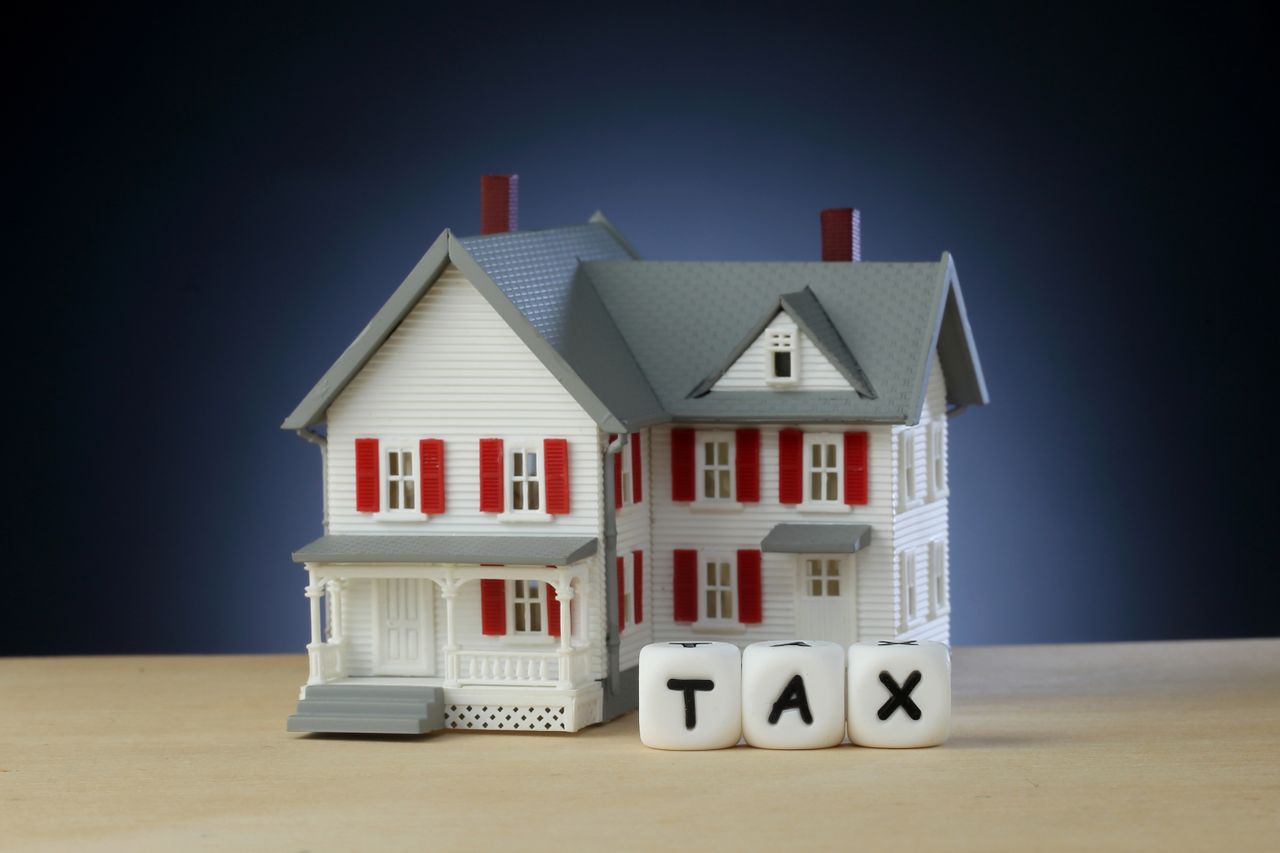
In the United States, taxes on real property are the primary funding source for education, local governments, and local infrastructure. But in recent years, debates between stakeholders over property taxes have grown heated.
Home values are directly tied to assessed values because assessed values are calculated using home values. That’s why steep increases in home values tend to translate into steep rises in assessed values.
For example, between 2019 and 2024, home values grew an average of 45-55% nationwide. The rapid market appreciation translated into large jumps in assessed values during that same period.
There have been increasing calls from interest groups for state legislatures and calls from legislators themselves across the country to abolish property taxes.
If property taxes are scrapped, how do localities replace the funding for schools and the local services we rely on, like roads and police protection? Read on to find out more.
If property taxes are eliminated, what replaces them?
A common criticism of property taxes is that they can be regressive, taking a larger share of income from lower-income people than from people with higher incomes.
Here’s a simple property tax example:
- Homeowners A and B each pay $2,000 in property taxes.
- Homeowner A makes $40,000 a year. The property tax is 5% of their income.
- Homeowner B makes $200,000 a year. The property tax is 1% of their income.
Another problem is that the property tax rate is based on the home’s value, not the homeowner’s ability to pay. This has been a driver of property tax revolts in the past — California’s Proposition 13 comes to mind — but today it’s reached a new breaking point.
Over the past five years, home values in many states have risen faster than homeowners’ income, making it difficult for some to pay the taxes due.
The pressure to address housing costs in 2026 is leading state lawmakers across the country to propose increasingly bold solutions.
While several states are offering major relief for homeowners, a core group — including Florida, Indiana, and Texas — is debating measures that would effectively eliminate specific portions of the property tax.
However, “elimination” means something different in each state, and how states will replace that revenue, without gutting essential services, is a major topic of debate.
For example, in Florida, the focus is on ending county and city levies, which could force a shift toward higher sales taxes or new "user fees" for local services like fire protection.
In Texas, the goal is to strike school property taxes from homeowners’ bills by using state budget surpluses, though critics worry about the long-term sustainability of school funding if those surpluses dry up.
Meanwhile, in Indiana, lawmakers are weighing a total repeal of tangible property taxes, but the trade-off would be a broader and significantly higher sales tax that applies to everyday services like haircuts and auto repairs.
Here's more of what you need to know.
Is Florida considering eliminating property taxes?
As Kiplinger has reported, the Florida House recently passed HJR 203, which would phase out non-school property taxes over 10 years. The bill is now in the state Senate for its consideration, and if approved there, could end up on the state's November 2026 ballot for voter consideration.
The bill contains no provisions for replacing non-school property taxes. Since Florida is a state with no personal income tax, the state and localities could raise sales taxes. However, to replace the property tax, it seems the rate would have to be at least double what it is now, and likely higher.
Although no proposals have been floated at this time, instead of raising the sales tax, the Florida legislature could enact a new tax or taxes of some type. Or it could be a combination of higher sales taxes and new taxes.
Perhaps the reason for the decade-long phase-in is to give the legislature time to craft a solution to replace the property tax revenue. Whatever the solution, it would not be surprising if it involved higher sales taxes.
To learn more, see Kiplinger’s report Florida Wants to Eliminate Property Tax: Here’s Who Would Really Pay Instead.
Indiana property tax proposal
Indiana’s HB 1288, which is currently being debated in the 2026 session, proposes to abolish the assessment of tangible property after 2026 and end the imposition of property taxes by the end of 2027.
- To replace the lost revenue, the bill would expand the Indiana sales tax to include all services except for health care, mental health services, and services rendered for charitable purposes.
- It would also establish a local revenue sharing fund into which revenues from sales tax on services would be deposited.
- Revenues from the fund would be distributed to local jurisdictions by the state.
In states with sales tax, while most tax physical goods, they often leave many types of "services" — the tasks we pay others to do — tax-free. Indiana has traditionally taxed goods over services, but HB 1288 would flip that and essentially make all services taxable by default.
This could cover a broad spectrum, from personal errands like haircuts and dry cleaning to professional needs like legal fees and architectural design. While this shift is designed to replace property tax revenue, if approved, it would create a new, recurring cost. Instead of one large property tax bill, Hoosiers would see a steady stream of smaller taxes added to their professional and personal service receipts throughout the year.
How much do Texans pay for property taxes?
Texas Gov. Greg Abbott, who is running for a fourth term, has released a five-point plan to overhaul property taxes.
- Limit local spending growth to population growth plus inflation or 3.5%, whichever is lower.
- Require two-thirds voter approval for all local property tax increases.
- Allow voters to roll back local property taxes if 15% of registered voters in a jurisdiction sign a petition triggering an election.
- Appraise properties every five years. If appraisals remain annual, cap growth at 3%.
- Allow voters to decide whether to eliminate school property taxes for homeowners.
Regarding the elimination of school property taxes for homeowners, Abbott told reporters that the state would cover that revenue loss because public education is the state’s responsibility.
How will the state pay for it? Abbott wants to use the state’s massive budget surpluses, which have been fueled by record energy revenues and strong sales tax growth, to “buy down” local school tax rates to zero.
Between the surplus and the state’s economic growth, the governor told reporters he’s confident that Texas will be flush with money for a long time to come.
Related: 10 Cheapest Places to Live in Texas
Property taxes on the edge?
Eliminating the property tax may sound great to homeowners pummeled by rocketing home values, but if property taxes are abolished, the schools, local government, and services they fund don’t go away.
The money has to be replaced, and that’s usually done by raising other taxes.
Whether these or other states can succeed in eliminating property tax remains to be seen, but it’ll certainly be interesting to watch.
While the prospect of property tax reform — perhaps in your state — is exciting, there’s no guarantee that there’ll be changes in the law this year.
If you’re wondering what you can do about your property taxes now, here are five common relief programs states offer to homeowners, although not all programs are available in every state.
- Homestead exemptions (these are the most common)
- Credits/rebates (either income-based or universal)
- Circuit breakers (your property tax is capped as a percentage of income)
- Assessment value caps/-growth limits (freezes)
- Deferral (usually for seniors; tax deferred and paid upon death of homeowner or sale of home)
Visit your state’s tax or revenue department website for further information.