Afternoon summary
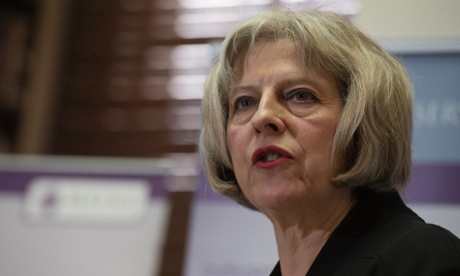
- Theresa May, the home secretary, has been criticised by the Internet Service Providers’ Association for not consulting on her plans to require ISPs to retain internet protocol (IP) addresses. (See 3.07pm.)
Labour are five points ahead in this week’s Ashcroft National Poll, conducted over the past weekend. Labour’s share is up two points since last week at 32%, with the Conservatives down two at 27%, the Liberal Democrats down two at 7%, UKIP up two at 18%, the Greens unchanged on 7% and the SNP up one point at 5%.
But it also shows that a majority of voters expect Cameron to be prime minister after the election.
For the other half of the sample I put the question in a slightly different way: irrespective of what they wanted to happen, did they think David Cameron or Ed Miliband was the most likely to be Prime Minister after the election? On this question the nation was less equivocal. Only 23% of all voters said they expected Miliband to enter Number Ten next May. More than half (59%) of all voters, including nearly nine in ten Tories (88%), a majority of UKIP voters (55%) and two thirds of swing voters (68%) expect Cameron to remain in charge. Even Labour voters are divided over whether the PM will be Cameron (43%) or Miliband (44%).
-
Ed Miliband has said Labour would aim to create an extra 400,000 engineers by 2020. In a post on Facebook, he said it would do this by getting more young people to study engineering and by giving employers more control over training budgets.
It is estimated we will need approximately 780,000 more engineers between now and 2020 to meet industry demand - 156,000 per year. Currently, we are training less than half that - leaving Britain with a shortfall of more than 400,000 engineers by 2020.
This is not just a shortage of the traditional civil, mechanical and electrical engineers, but also in information technology, green energy, and life sciences where many of the jobs of the future will be created.
And we need to ensure Britain does not waste the talents of any our young people, be they men or women.
It should be matter of national embarrassment that the UK has the lowest proportion of female engineering professionals of anywhere in Europe.
- The independent remuneration board for the National Assembly for Wales has said that assembly members (AMs) should get a pay rise of more than £9,000 after 2016. If implemented, AMs’ basic pay would increase by about 18% - from £54,390 to £64,000. Remuneration board chairman Sandy Blair said he hoped there could be a “measured debate” about the plans - which is open to public consultation from today. he said:
The fifth assembly starting in 2016, will be a mature parliament like those in Westminster, in Scotland, with law-making and tax-setting powers. With new responsibilities come new expectations on AMs. We are proposing a salary for AMs which reflect the weight of responsibility they carry.
Clearly people in Wales are facing difficult economic circumstances and there is great pressure on public spending. But that is precisely why Wales needs to attract the highest calibre people to be members of the National Assembly.
Wales needs good governance and good government. That requires a strong effective Assembly. For that to be so, individual members must be exceptional in their abilities and remunerated accordingly.
That’s all from me for today.
Thanks for the comments.
Updated
Here’s an afternoon reading list. All three articles are about the Emily Thornberry tweet.
Thornberry broke one of the golden rules of politics. While voters can be rude to politicians, politicians can never be rude to voters. But Thornberry is not an insulated freak in regarding an ostentatious display of St George’s flags as depressing or alarming rather than inspiring. Far-right groups parade the flag on their marches as if it belonged to them. However innocent the patriotic motives of most who display it, the flag has come to symbolise something more. We all know this but Thornberry is freakish in that, as a politician, she is not allowed to express such negativity, even in the form of a photo on Twitter.
What followed her tweet reflects the extreme insecurities of those that are elected, a dark irony given that the Ukip surge is partly explained by voters’ assumptions of lofty arrogance in the so-called Westminster bubble.
Knowing a thing or two about the Sun-reading working class - it’s where I come from, after all - I can tell you what their army of readers are likely to think. They see a skinhead with a thuggish appearance, a first impression they’ll probably stick with when they learn he’s a some-time cage fighter. Compounding the unfavourable vibes is his occupation - he owns and runs a used car dealership. And last of all, Ed Miliband might feel respect when he walks by a house festooned like Dan’s. Most Sun readers on the other hand would barely notice, or at best think the resident is a bit of a nob. Contrary to what the hacks and the politicians think, the majority of working class people feel that showy displays of patriotism outside of European/World Cup tournaments is tacky and vulgar. So stick that in your pandering, patronising pipe and smoke it.
And so White Van Dan becomes a kind of British version of Joe the Plumberand British politics moves ever-closer to an American-style politics of culture wars dominated by endless grievance. This, more than anything else, is what the twin ascendancies of Ukip and the SNP reveal. A politics of identity and exclusion in which the centre seems weak and hopeless and the extremes – of one sort or another – enjoy the luxury of passionate intensity.
A revolt, too, against a lily-livered, out-of-touch, metropolitan elite that’s now besieged from all sides. There’s Russell Brand for the yoof, there’s Nigel Farage for the olds and there’s the nationalists for the Jocks. What larks. Westminster, you see, is the new Washington DC. The place which you run against.
And here’s a statement from Yvette Cooper, the shadow home secretary, on Theresa May’s speech. Here’s an extract.
We will look at the detail of other measures when the government’s forthcoming bill is published. Strong powers should always be balanced by strong checks and balances, should be proportionate to the threat, and effective at keeping Britain safe and protecting our democratic values.
Here’s a Guardian video with an extract from Theresa May’s speech.
The Internet Service Providers’ Association has put out a statement about Theresa May’s speech. It is complaining that the Home Office has not consulted it about its plan to require ISPs to retain internet protocol (IP) addresses. The ISPA said:
ISPA is disappointed that the Home Office has not consulted with industry on proposals for IP matching, but we will work with our members to scrutinise and inform the legislation when it is published. IP addresses can generally only be used to identify a subscriber and not an individual. As we argued in our submission to the Anderson Review on future communications data laws, the Home Office needs to do more to consult with industry on its proposals, once again there has been a distinct lack of engagement with industry.
Government committed to a review of communications data capabilities by David Anderson QC which we supported, yet the home secretary appears to have pre-judged the inquiry by reemphasising the need for a new communications data bill, a bill that both relevant parliamentary committees rejected.
David Anderson QC, the independent reviewer of terrorist legislation, says points out that the government has effectively watered down its plans for dealing with extremists who fight for Islamic State. At one point the government was implying they would be banned from returning to the UK, but now May is talking about managing their return. (See 12.03pm.)
Exclusion for British foreign fighters has morphed into talk of "controlled return" and "managed return": legally/practically easier? #RUSI
— David Anderson (@terrorwatchdog) November 24, 2014
He also said the name of the new independent privacy and civil liberties board being set up by the new counter-terrorism bill seemed inspired by America, where a privacy and civil liberties oversight board was established after 9/11.
@UKHRights Name of the "Board" (though not its functions) appears to modelled on PCLOB in the US
— David Anderson (@terrorwatchdog) November 24, 2014
Here’s the Lib Dem blogger Mark Pack on Theresa May’s speech.
Odd when authoritarian Home Secs point to terror attacks stopped to justify more powers. Actually shows that existing powers are working.
— Mark Pack (@markpack) November 24, 2014
Theresa May is going to raise the burden of proof that applies when a Tpim is imposed, and it is going up from “reasonable belief” to “balance of probabilities”. In an earlier post I got those the wrong way round. I’ve corrected it now. Sorry about that.
Lunchtime summary
- Theresa May, the home secretary, has announced that new powers for ministers to order universities to ban extremist speakers from their campuses are to be included in the counter-terrorism bill to be published on Wednesday. As Alan Travis reports, the bill will also place a statutory duty on schools, colleges, prisons and local councils to help prevent people from being drawn into terrorism, the home secretary said. The full text of May’s speech is here.
- Owen Paterson, the Conservative former environment secretary, has said that David Cameron should trigger the process that would put Britain on the route to leaving the EU. Doing this (invoking article 50 of the Lisbon treaty) would strengthen Cameron’s negotiating hand, Paterson said. Pat McFadden, the shadow Europe minister, said proposals like this were damaging to the UK.
Owen Paterson’s suggestion of invoking article 50 is equivalent to handing in your resignation notice. It’s not a negotiating tactic. It is a notice to quit.
What is remarkable about the debate in the Conservative Party over Europe is that they think this kind of speculation about the UK leaving Europe is costless, but it isn’t. It places a huge question mark over British jobs, rights at work, investment and our place in the world.
In his forthcoming speech Mr Cameron must do something he has failed to do on Europe since 2010 which is show some leadership. Until he stops caving in to his Eurosceptic backbenchers, Britain’s national interests will continue to suffer.
-
The Institute for Fiscal Studies has released an analysis saying average incomes in the UK are set to rise faster than inflation this year, after falling by around 5% in real terms following the 2008 financial crash. As the Press Association reports, the IFS said that the median average income will rise by 3.1% to £459 a week - £23,868 a year - in the 2014/15 financial year, outstripping CPI inflation by 1.2 percentage points, with a similar rise predicted for 2015/16. This means that by 2015/16, average household incomes will be back at 2010 levels but still 3% below 2007, taking inflation into account. The picture is less rosy when the less-favoured RPI measure of inflation is used, with incomes remaining virtually static in real terms over the coming years.
Updated
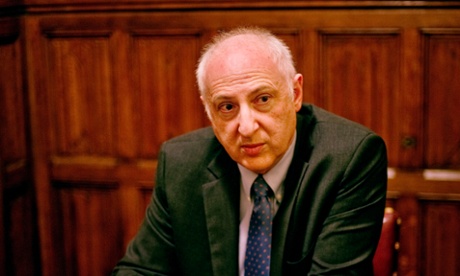
Lord Carlile, the Lib Dem peer and the former independent reviewer of terrorist legislation, was also on the World at One talking about the proposed counter-terrorism bill. He welcomed the plans “warmly” and made several interesting points.
-
Carlile said temporary exclusion orders were perfectly justified.
They do not render people stateless, it is perfectly reasonable to requite people who have been at least allegedly fighting for Isil or other terrorist groups, to go through a process of scrutiny when they return to this country; the test is whether it is a proportionate requirement. In my view, it is entirely proportionate and something which is peculiarly right for ministers to decide.
- He said changing the burden of proof for Tpims would not make much difference in practice “because judges dealing with these cases were de facto using the balance of probabilities as a test”.
-
He criticised Liberty for accusing the government of “blanket surveillance”. He seemed to be referring to this Liberty news release. He said:
I don’t know why Liberty keeps banging on about blanket surveillance of the entire population? Do they imagine that the security services who are seeking to find terrorists who are pretty difficult to find, are randomly going to look at your or my credit card transaction, or orders by internet. Not a bit of it.
- He said describing the draft communications data bill as the “snoopers’ charter” - as the Lib Dems have done - was unfair. The Lib Dems are opposed to the measure. But Carlile said he personally was in favour.
The ‘snooper’s charter’ is a fine headline and I commend them for finding the phrase. It actually didn’t tell the truth at all about what was proposed.
I’ve taken the quotes from PoliticsHome.
Updated
Nathan Gill, a Ukip MEP, has accused the government of using scare tactics to build support for its counter-terrorism bill.
'Time is right' for new terror powers - yep, they've scared enough people adequately to get through power grab http://t.co/94HODLIxzg
— Nathan Gill (@NathanGillMEP) November 24, 2014
At his monthly news conference Nick Clegg backed the counter-terrorism bill. It was important not to promote “knee-jerk illiberal anti-terror legislation but to get the balance right”, he said.
And here is Emma Carr, director of Big Brother Watch, on Theresa May’s speech.
The detail in the speech has done little to quell concerns regarding the technical requirements for retention of IP addresses. It is essential that Wednesday’s counter-terrorism and security ill shows that clear discussions have taken place with the ISP’s and that the government have a solid understanding of the policy’s technical feasibility.
The snoopers charter was shown to be not only illiberal but unworkable. Theresa May’s speech has in no way shown that the government have learned from their past mistakes, listened to the evidence against data retention or understood that the tech companies are not the sole solution to the capability gap.
Keith Vaz, chair of the Commons home affairs committee, says his committee is going to examine the measures in the proposed counter-terrorism bill.
For these measures to be successful, there must be a joint effort from across the community, from internet providers who can supply valuable intelligence, to groups who deal with radicalised individuals on a day to day basis.
While it is vital that we take a tough stance on this issue, a wide ranging bill such as this must receive appropriate scrutiny from parliament. It is for this reason that the home affairs select committee will examine the proposals outlined in this bill.
Liberty director says May's bill could 'recruit more terrorists than it prevents'
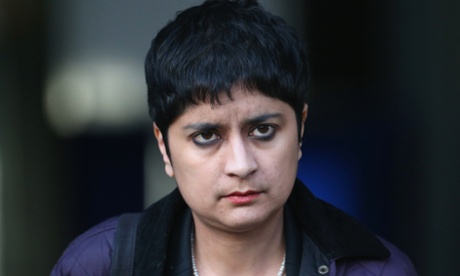
Shami Chakrabarti, the director of Liberty, told the World at One a few minutes ago that Theresa May’s proposals would be counter-productive, because they could lead to more people being radicalised. She was talking about the proposals to allow people to be prevented from leaving the UK if they are suspected of wanting to fight abroad, and the plans to prevent people from returning if they are thought to have been involved in terrorism. She argued:
If you are a young man who in the past has felt targeted by stop and search, how are you going to feel when your mates get to go on holiday and your passport gets seized ...
If [people returning] have just been naive, and they want to come home to mummy, you’re saying they can’t come home unless they agree to punishment without trial under a revamped control order. If they have been up to no good, why on earth would you tell them you are going to investigate them. What kind of investigation is that?
What we are talking about here is excluding people from coming home unless they agree to be under a control order without charge or trial. Now, that is unjust. That is going to make people indignant. And that is going to potentially recruit more terrorists than it ever prevents.
Ed Miliband offers qualified support for counter-terrorism bill
Ed Miliband has offered qualified support for the new counter-terrorism bill. On a visit to Crossrail in London, he said this.
We share the government’s desire and ambition to make sure we keep people safe and deal with people returning from Syria or going to Syria. That’s why we are going to be scrutinising Theresa May’s proposals. We want to work with the government and we will be looking closely at them.
I think we should always be looking at what more needs to be done to protect the security of our citizens. We have said, for example, in relation to Tpims - the control order the government has put in place - that we should have a relocation power because that was important, that was part of the previous control order regime. We want to do everything we can to keep our citizens safe.
Good point from Sunny Hundal.
Theresa May has released more detail on Britain's counter-terrorism operations to RUSI today than she ever has to MPs in Parliament
— Sunny Hundal (@sunny_hundal) November 24, 2014
Theresa May's speech - Summary
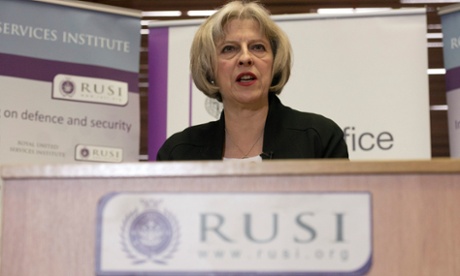
Here is a summary of the key points from Theresa May’s speech, and from her Q&A.
We will also place a statutory duty on named organisations - such as schools, colleges, universities, the police, prisons, probation providers and local government - to help prevent people from being drawn into terrorism. So for example universities will have to put in place extremist speaker policies and prisons will have to show they are dealing with extremist prisoners in an appropriate way. The organisations subject to the duty will have to take into account guidance issued by the home secretary. Where organisations consistently fail, ministers will be able to issue directions to them - which will be enforceable by court order.
-
She gave some details of around 40 terrorist plots that have been disrupted since 2005.
The security service [MI5[ believes that since the attacks on 7th July 2005, around forty terrorist plots have been disrupted. There have been attempts to conduct marauding ‘Mumbai-style’ gun attacks on our streets, blow up the London Stock Exchange, bring down airliners, assassinate a British ambassador and murder serving members of our armed forces. Almost all of these attacks have been prevented by the first-class men and women of our security and intelligence services, the police, and our allies overseas.
She also gave details of the number of people who have been arrested and charged in relation to terrorism offences since 2010.
Since April 2010, 753 people have been arrested for terrorism-related offences. 212 have been charged and 148 have been successfully prosecuted. 138 people are behind bars serving sentences for terrorism-related offences. Thirteen people, including Abu Hamza, have been extradited after being accused or convicted of terrorism-related offences. We have also made sure that a number of dangerous people, including Abu Qatada, have been removed from this country because of the terrorist threat they posed.
- She said that Tpims (terrorism prevention and investigation measures) would be strengthened to allow suspects to be relocated to a different part of Britain.This is something that Labour has been demanding, but something that the Lib Dems initially resisted.
- She said the burden of proof for a Tpim would be raised from “reasonable belief” to “balance of probabilities”. This was a recommendation from David Anderson, the independent reviewer of terror legislation, she said. All Tpims issued so far would meet this test, she said.
-
She said the plans to prevent extremists who have fought abroad from returning to the UK were temporary and were designed to ensure that their return was “managed”. How this would happen would vary on a case by case basis, she said. (See 12.03pm.)
The bill will create a statutory temporary exclusion order to control the return to the UK of a British citizen suspected of involvement in terrorism-related activity abroad. These orders will be enforced through the cancellation of travel documents and the inclusion of the individual’s details on our watch lists, including the ‘no-fly’ list. So the message to British nationals participating in terrorism overseas is clear: you will only be allowed to come home on our terms.
- She said the government would tighten some of the security rules for airlines.
We are also taking the opportunity to toughen our arrangements for aviation security. This means requiring airlines to provide passenger data more effectively, changing the law to extend our ‘no-fly’ list, and strengthening our ability to impose security and screening requirements on travel to the UK. If airlines do not give us passenger information or comply with our security screening rules, we will ensure they cannot fly to the United Kingdom.
- She said the bill would require internet providers to retain internet protocol, or IP, addressed. But the Conservatives were still committed to the communications data bill, opposed by the Lib Dems and Labour, she said.
- She said the bill would “clarify” the law, to make it clear that insurance companies could not pay terrorist ransoms.
- She said she wanted the new counter-terrorism bill to become law before the election. This would mean it would have to go through parliament faster than usual, she said.
- She said the counter-terrorism internet referral unit has removed 65,000 items from the internet that “encouraged or glorified acts of terrorism”. Around 70% of these related to Islamic State, Syria and Iraq, she said.
-
She said she had excluded hundreds of people from the UK as home secretary.
I have excluded 61 people on national security grounds and 72 people because their presence here would not have been conducive to the public good. In total, I have excluded eighty-four hate preachers.
- She said the fight against extremism would continue for many years.
We are engaged in a struggle that is fought on many fronts and in many forms. It is a struggle that will go on for many years. And the threat we face right now is perhaps greater than it ever has been - we must have the powers we need to defend ourselves.
-
She said that dealing with counter-terrorism took up more of her time than any other aspect of being home secretary. She set out her obligations in some detail so that people would understand how government was dealing with this, she said.
Almost every day I receive an intelligence briefing prepared for me by security officials that details threats to the UK and our efforts to counter them. On a typical day I spend considerable time carefully considering the necessity and proportionality of applications for warrants related to national security and serious crime. These are applications made by the Security Service, the National Crime Agency and the police to use interception and intrusive surveillance techniques to gain vital intelligence in the highest priority operations.
Each week, I have a meeting in which I am briefed by the Security Service and, because they head up national counter-terrorism policing, the Metropolitan Police. This meeting is usually with the Director General of MI5 and the Met’s Assistant Commissioner for Counter-Terrorism, and we cover a range of operational, legal and policy issues relating to the most serious terrorist threats we face. I also chair the weekly security meeting, in which I review the work we’re doing to protect the public from the risk of a terrorist attack.
Home Secretary is addressing RUSI on new Counter-terror bill. pic.twitter.com/Z19hFudmg4
— Jamie Grierson (@HomeAffairsPA) November 24, 2014
Updated
May says she wants to get this bill on the statute book before the election. She is talking to the opposition about this.
It will be on a faster track than would be the case for normal legislation.
And that’s it.
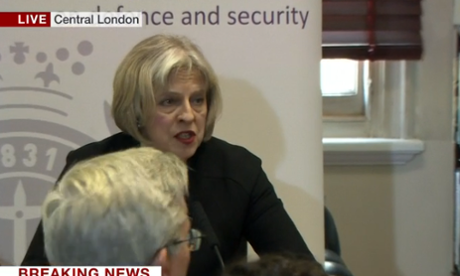
I’ll post a summary soon.
Q: What impact will stopping insurance companies paying ransom have?
May says the government is clarifying the law. It is putting it beyond doubt.
Q: If a British subject has no access to any other citizenship, how will you stop them returning to the UK? Using the crown prerogative? By taking their passport away? And what will they have to do to return? A re-education programme?
May says the details will be announced with the legislation. The idea is to ensure that their return is “managed”. These things will be settled on a case by case basis, she says.
Q: [From ITN] We spoke to an extremist who said these measures could radicalise a new generation.
May says she does not accept this. These measures are necessary to keep Britain safe, she says.
Syria is proving to be a huge attraction to extremists. There is nothing new about people leaving Britain to fight or train. What is different now are the numbers being attracted to go, and also the brutality of Islamic State.
Theresa May's Q&A
Theresa May is now taking questions.
Q: Are you saying to the public that they have to accept some kind of terror attack is inevitable?
May says the threat level is “severe”, meaning an attack is highly likely. The threat of an attack is higher than at any time since 9/11.
May says the Tpim regime will be strengthened.
The overall Tpim package “remains sound”.
But the government will allow Tpim suspects to be relocated to different parts of the country.
And the burden of proof for a Tpim will be raised from reasonable belief to balance of probability. This is in line with a recommendation from David Anderson, the reviewer of counter-terrorism legislation, she says.
- May announced that Tpims will be strengthened to allow relocation. This is something that Labour has been demanding, but that the Lib Dems were originally resisting.
Updated
May says the bill will place a duty on schools and university to stop being being drawn towards terrorism.
This will mean, for example, universities will have to have a policy on excluding radical speakers.
May says the new counter-terrorism and security bill will be introduced on Wednesday.
It will tackle radicalisation, strengthen Tpims, make sure British companies are not inadvertently paying ransom and set up a privacy board.
May says she has excluded hundreds of people from Britain, including 61 people on the grounds of national security and 84 hate preachers.
She has also revoked citizenship from 27 people on terror grounds, she says.
May lists the terror arrests since 2010.
Theresa May tells RUSI audience 753 arrests, 212 charged, 148 convicted, 138 now in prison under counterterrorism since May 2010
— simon israel (@simonisrael) November 24, 2014
May says it has not all been “plain sailing” for the government.
She has argued for the police to get more access to communications data.
But unfortunately there is no agreement within the coalition, or with Labour, on the proposed communications data bill. So this will have to wait until after the election, she says.
May says exit checks at the border will be introduced by April next year.
May says the strategy the government inherited from Labour was “broadly sound”.
The budget for counter-terrorism was protected.
The pre-charge detention time limit was reduced from 28 days to 14 days. And control orders were replaced with Tpims (terrorist prevention and investigation measures), she says.
The government also changed the Prevent programme, so it deals with non-violent extremism as well as violent extremism, she says.
May says her most important responsibility relates to counter-terrorism.
This is the most time-consuming part of her job. But it is one about which least is known.
She gets a counter-terrorist briefing almost every day. And she normally spends some time every day dealing with applications for warrants.
She has a weekly meeting with the head of MI5 and the assistant commissioner of the Metropolitan police. And there is another weekly meeting counter-terrorism meeting.
She says she is spelling this out to show how much time is devoted to this in government.
But Islamic State is not the only terrorist organisation posing a threat.
The threat is diverse. And it is changing rapidly, she says.
Change for the better is not inevitable. May says she warned that the Arab spring could make things worse. That has turned out to be the case.
Updated
May says Islamic State, unlike other terror organisations, has ambitions to become a state in its own right.
It occupies territory the size of Britain.
They have a sophisticated grasp of the media.
And they have given a sense of purpose to other terrorists.
Theresa May is speaking now.
She says the police have foiled 40 different terrorist attacks in the last 10 years. They include: a planned Mumbai-style gun attack, an attempt to bring down a plane, the attempted assassination of an ambassador, and the planned murder of members of the armed forces.
Theresa May, the home secretary, is about to start her speech now.
The Sun’s Tom Newton Dunn has got a news line.
Breaking: MI5 have foiled 40 different terrorist plots to kill and maim in Britain within the last 10 years, Theresa May reveals.
— Tom Newton Dunn (@tnewtondunn) November 24, 2014
Mark Rowley, the Metropolitan police assistant commissioner, told a news conference this morning that jihadists could pose a threat to Britain for several years to come.
Asked if the current terror theat would last for at least five years, he replied:
We have seen a step- change that will sustain for many years. Even if the awfulness that’s happening in Syria and Iraq was miraculously to get sorted in the next year or so - and that looks a very optimistic ‘if’ - there are other countries across parts of Africa and elsewhere in the world which are in parlous states and the potential for this type of terrorism to reach back into Europe to continue in other theatres is equally great.
Whether it continues in that theatre or whether it moves into other places, I think there’s a high prospect of it continuing in this nature for several years.
He also said that the police and other law enforcement agencies “cannot succeed alone” in defeating the terror threat and urged the the public to help. Over the last year the police have received 77 reports from families through the government’s Prevent anti-radicalisation programme, he said. He said some of these tip-offs led to terror suspects being caught.
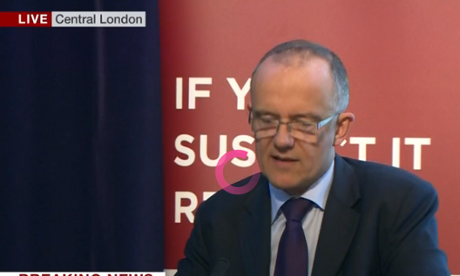
Theresa May will be giving her counter-terrorism speech shortly.
Here are two blogs that provide good background reading.
Some of the earliest British recruits to violent jihadist/Al-Qaeda ideology were drawn in because of specific grievances: the ringleader of the 7/7 attacks had his first taste of radical political causes when he shook charity buckets for the Kashmir conflict.
And although Al-Qaeda’s leadership has been decimated, the jihadi ideology has continued to have a life of its own.
That ideology is a strange brew of utopianism, political anger and religiosity.
And it is now, arguably, reaching a new peak in Syria and Iraq because of three factors well-known to experts who have studied how radical social and political movements develop:
- Window of opportunity
- Resources and capability
- A message to sell to followers
And here’s one more more relevant fact-ette.
Forthcoming counter-terrorism bill #factoid: It's the 7th major piece of legislation on security threats since 2000 http://t.co/D8OojoeJOQ
— Dominic Casciani (@BBCDomC) November 24, 2014
A new Populus poll is out this morning.
Latest Populus VI: Lab 36 (=), Con 31 (-2), LD 9 (=), UKIP 15 (+1), Oth 10 (+2). Tables here: http://t.co/Wu7ipf74Yf
— Populus (@PopulusPolls) November 24, 2014
You can read all today’s Guardian politics stories here. And all the politics stories filed yesterday, including some in today’s paper, are here.
As for the rest of the papers, here’s the PoliticsHome list of top 10 political must-reads, and here is the ConservativeHome round-up of all today’s political stories.
And here are three articles I found particularly interesting.
Plans to give Scotland full power over income tax would increase borrowing costs for the entire UK and end in “floods of tears”, Alistair Darling, the former chancellor, has predicted.
The explosive intervention by Mr Darling, who led the “Better Together” campaign against independence, comes days before Lord Smith of Kelvin unveils a cross-party deal on devolution for Scotland ...
“It seems that the entire principle of pooling and sharing risks, one of the strengths of the UK and all successful monetary unions, is being undermined,” [Darling] writes.
If all income tax is devolved, people in Scotland will not pay directly towards “quintessential” UK services such as defence, financial and social protection, he argues, weakening the ties that bind the UK’s member nations.
“For the first time in 300 years, a UK government would no longer have control over its power to raise income taxes,” he says. “It could be left in a position where it determines the rate of income tax only to find it impossible to implement in Scotland, Wales and Northern Ireland.”
Bondholders would question whether the UK could raise income tax if needed and would therefore charge more to lend, “hitting everyone throughout the UK”.
[Miliband] ingeniously doused himself with petrol; he lit the match – and ka-boom: there he is, with staring panda eyes and frazzled hair, and the entire Labour Party looking on in amazement at the destruction. He fired Emily; indeed he is said to have lost his cool altogether and actually shouted at the woman.
This tells us several important things about his leadership, and about the Labour Party under Miliband. The first is that he is prone to panic under pressure – and that is in itself a reason why he should not be prime minister. The second is that he clearly can’t think straight. By sacking Emily Thornberry so violently, he has emphatically and publicly endorsed the real meaning of her tweet.
-
James Cusick at the Independent says Max Mosley offered to give Labour close to £1m to fund a special “anti-Cameron” election campaign in marginal constituencies, highlighting the prime minister’s links to Andy Coulson. Labour has not responded to the offer.
Mr Mosley – who has reinvented himself as a privacy campaigner after winning damages from the News of the World for publishing a story wrongly alleging he had organised a Nazi-themed orgy – believed that reminding voters of Mr Cameron’s decision to employ the ex-tabloid editor, who has just been released from prison, could swing key seats.
The “substantial” offer, involving a six-figure sum, was made a year ago through formal Labour donation channels.
On BBC News Chuka Umunna, the shadow business secretary, explained what was being proposed.
After you’ve been working as an agency worker for 12 weeks you’re entitled to the same basic pay and many of the same basic conditions as a permanent worker in the same workplace. What we have found is that a number of employment agencies have been using a loophole in European law, frankly, to get around that rule, which then enables agencies to undercut permanent workers. So what we want to do is to stop this undercutting by dealing with this loophole.
We also, actually, have a situation where some employment agencies exclusively recruit people from abroad. We’ve got to stop that too. And we are also looking at introducing, if we don’t see the requisitve change, introducing a licensing system similar to that you haver in other EU countries to bring standards in and amongst employment agencies to where we want them to be.
Here’s a news release from the Metropolitan police on counter-terrorism awareness week.
Counter Terrorism Awareness Week #CTAW2014 launched today in #London by AC Mark Rowley http://t.co/H4T1zpY5Mw pic.twitter.com/mREmyb9RxZ
— Metropolitan Police (@metpoliceuk) November 24, 2014
The terror threat to the UK is greater now than at any time in the country’s history, Theresa May has said, as she warned that the danger posed by Isil is larger than that of any other terror organisation which has confronted Britain.
In an interview with The Daily Telegraph, the Home Secretary said the menace posed by the Islamist faction means the threat to Britain is now “greater than it has been at any time before or after 9/11”.
Gawain Towler, a Ukip press officer, thinks she is exaggerating.
Listen Mrs May, returning ISIS numpties are not the 'greatest threat' this country has ever seen. Vile, dangerous, yes. But we can cope
— Gawain Towler (@GawainTowler) November 24, 2014
The police are holding a counter-terrorism drive all week. And Theresa May, the home secretary, is going her bit too with a speech unveiling new counter-terrorism measures. Some of the proposals, aimed at stopping Britons who fight with Islamic State returning to the UK, were unveiled by David Cameron when he was in Australia, but, as today’s Guardian story reveals, there will be new plans in the speech too.
The government will embark on fresh steps to cut funding to “barbaric” terror groups such as Islamic State by changing the law to prevent insurance firms from inadvertently reimbursing ransom payments, Theresa May will say on Monday.
In an intensification of the government’s response to the terror threat, on the eve of the publication of the official inquiry into the murder of the soldier Lee Rigby last year, the home secretary will state that the Terrorism Act of 2000 is to be amended to close the funding loophole.
The announcement came after May confirmed that measures were to be introduced ensuring internet service providers keep data that could identify online users.
The home secretary said the new requirements would be included in an anti-terrorism and security bill due to be published on Wednesday, though she indicated that pressure from the Liberal Democrats had stopped her going further on data issues.
I’ll cover the speech, and reaction to it, in detail.
Here’s the full agenda for the day.
11am: Theresa May gives her counter-terrorism speech.
11.45am: Nick Clegg holds his monthly press conference.
As usual, I will be also covering all the breaking political news from Westminster, as well as bringing you the most interesting political comment and analysis from the web and from Twitter. I will post a summary at lunchtime and another in the afternoon.
If you want to follow me on Twitter, I’m on @AndrewSparrow.