Few people outside Queensland’s Scenic Rim would have heard of its local newspaper.
Even fewer would have noticed the few paragraphs that appeared on the front page of the small town publication last month.
But the story would provoke a strong response from one of the state’s most powerful investigative bodies.
Three weeks ago, two journalists at the Fassifern Guardian and Tribune in regional Queensland were sent a series of demands by the Office of the Independent Assessor (OIA).
The journalists were ordered to hand over notes and recordings and threatened with fines if they did not comply. They were also ordered to keep quiet about the entire investigation.
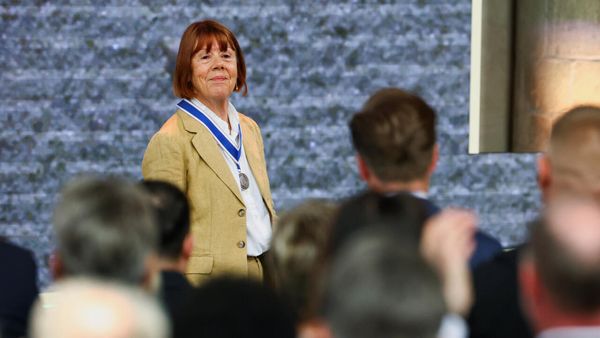
The purpose of the OIA’s demands? The Independent Assessor, Kathleen Florian, believed she had been misrepresented in the newspaper, in comments by a Scenic Rim councillor. The OIA pushed for a retraction and then – after the councillor and newspaper refused – launched a formal investigation into the councillor for making “false and incorrect statements”.
The Guardian and Tribune – a 120-year-old family-run operation based in Boonah, population 2,500 – hired lawyers and went to the Queensland supreme court.
The editor, Drew Creighton, told Guardian Australia the newspaper explicitly instructed its lawyers to fight the gag order.
“It was a lot of money, we don’t really have a budget for this kind of thing,” Creighton said.
“But there’s a price to pay for everything, and the price to not do anything would have been far more costly than a legal case.”
The case was ultimately withdrawn after the investigation was dropped.
The newspaper printed a story last Saturday questioning the appropriateness of the investigation and the implications of the OIA’s use of its powers for press freedom. The OIA has the powers of an anti-corruption body, but its work is now often focused on investigating large numbers of complaints about councillor behaviour rather than development approvals, or allegations of misconduct or corruption.
Watchdog flooded with petty conduct complaints
The OIA was established in 2018 after a series of criminal and corruption scandals at Queensland councils.
Three years later, the system has become overwhelmed with the OIA, a watchdog with coercive investigative powers, often probing petty conduct complaints.
In 2020, the OIA received more than 1,000 complaints and the office had repeatedly required more staff and a greater budget to cope with the excessive workload.
Fed up with the ongoing cost of constantly responding to the onslaught of complaints, regional councils have even proposed charging residents $200 to make a corruption allegation.
Last week, the OIA concluded a seven-month investigation into the Brisbane Greens councillor Jonathan Sri, related to Facebook posts by Sri about a fatal shooting by police.
The multiple complaints were dismissed partly on the basis that pursuing them would constitute an “unjustifiable use of resources”. However, in dismissing the complaints, Florian wrote to Sri criticising his statements and claiming they “arguably fail to provide high quality leadership to the community or constitute meaningful community engagement” and noting that there may have been another outcome in a different case.
Sri told Guardian Australia the matter highlighted serious concerns about the way the office operated.
“[Prior to the establishment of the OIA] people were concerned about local councils making weird zoning decisions that benefited developers or land owners,” Sri said.
“The OIA doesn’t seem to be concerned with those … they seem to be spending their time telling councillors what they can or can’t post on social media.”
“Councillors aren’t sure what they can or can’t do any more, even when we’re not breaking the rules, we can still get in trouble if a public servant decides we’re not providing ‘high quality leadership’.”
The OIA says it does not investigate many zoning decisions because these are considered “ordinary business matters” and rarely come within its remit. It says only 4% of the complaints it receives relate to social media.
A spokesperson for the assessor said the office was “required by law” to assess all complaints received and that the law stated that breaches of council media policies constituted inappropriate conduct.
Investigation thrown out
In July, the Fassifern Guardian and Tribune printed a quote from Derek Swanborough, a Scenic Rim councillor who represents the Tambourine Mountain area, in a story examining an idea for the mountain area to join with the Gold Coast area.
In it, Swanborough, who supported joining Gold Coast council, was quoted as saying he had sought advice from Florian about whether he was entitled to express his view on the matter. He told the Guardian and Tribune that the OIA had “assured him that he was well within rights” to do so.
Florian said that she did not express an opinion to the councillor on the matter. In subsequent correspondence with the paper’s lawyers, she indicated that she had recorded the conversation with Swanborough.
An OIA staff member contacted the newspaper and asked for a retraction. After speaking with Swanborough, the newspaper decided a clarification was not needed.
The OIA issued a statement “correcting the record” in early July and 15 days later sent a series of notices to Creighton, the editor, and journalist Joe Hinchliffe as part of an investigation into Councillor Swanborough over the statements.
The pair were threatened with fines totalling more than $50,000 if they refused to turn over notes from relevant conversations, attend a meeting in Brisbane and keep all information about the investigation confidential.
The Guardian and Tribune’s lawyers sought to have the notices set aside in the supreme court, claiming that “conducting such an investigation makes the OIA the complainant; the investigator; and the decision-maker”.
Florian denies any conflict of interest but nevertheless stood aside from the matter and asked the local government minister, Steven Miles, to appoint an acting assessor.
The acting assessor dropped the investigation, released the newspaper from any confidentiality clause and directed the OIA to pay its $1,000 supreme court filing fee.
Creighton said the newspaper fought the OIA out of concern that “down the track, this sort of thing becomes the norm”.
“We might be small but we still uphold the same standards of any newspaper,” he said.
In response to questions, the OIA said that “in the interests of fairness and natural justice” it does not usually comment on a specific matter unless a finding of misconduct is upheld.
“The OIA’s investigative powers, as defined in the Local Government Act, are used solely for investigations into the alleged conduct of councillors or breaches of the conduct provisions,” a spokesperson said.
“According to the Local Government Act, anyone who has information that may be relevant to an investigation into councillor conduct may be required to provide that information, unless doing so could incriminate the person or expose them to a penalty. A request for information must outline the potential penalties should the recipient fail to honour the request.”
Miles, also the deputy premier, said the government did not have the statutory authority to interfere with the OIA’s work, as the office was established to be independent from government.