The other day a stranger approached me in the road and asked whether I was Jewish. In 42 years of life, the question had never been posed to me by someone I didn’t already know. My first wild instinct was to offer congratulations in reply, perhaps a prize for observational skill. I don’t look the part. My father was Scottish, gingery and freckled, and my mother is the stuff of Hitler’s nightmares: a blond, blue-eyed Jew. “I thought so,” said the stranger, their hunch confirmed. We went on to have a confused, uneasy exchange. It was late. The stranger was smoking something vibey and I was suddenly sober, a bit drained, trying to gather my wits to equivocate and bring the conversation to a close. The whole thing lasted a couple of minutes and afterwards I felt as if something overdue had happened, the end of an easy ride.
It is a complicated time to be a British Jew, or a Jew of the global diaspora, shaped by different cultures with allegiances and affections that lately have been pulled wider apart. I’m not describing all Jews or even most Jews. But there are lots of us, I know, who hover on margins, whose adherences are not quickly definable, even in this time of disorder when the natural tendency is to try to neaten positions and make pigeonholes for beliefs. There have always been agnostic kosher-keepers. There have always been observers of the Sabbath who’ll sneak away after synagogue to watch Saturday football. (Hi, Grandpa Bernard.) There are loads of Jews like me who can go for weeks at a time in a sort of nondenominational trance. There are Jews who slip beneath notice, who defy the general understanding of what a Jew is.
I remember first noticing a difference between the Catholicism in my father’s background and the Judaism in my mother’s. Whereas missionary zeal was high among Christians, it was absent in Judaism, a non‑proselytising religion. (Join us? Are you crazy? Fine: here’s a stack of homework.) At my primary school, the two coolest boys in the playground were Jewish. Keen to establish a shared credential, I tried to persuade them I was Jewish as well. These boys were confident and gobby with the teachers, musical, dark-haired. I had none of these attributes and because my surname was so obviously that of a non-Jew, they dismissed my claim. I remember the day when my mum volunteered as one of the parents on a school trip. By the coat pegs, the more confident of the two boys sidled up to her for a chat – grownup to grownup. She must have said something to persuade him because suddenly I was admitted to the gang.
Still, I was capable of some atrocious errors of etiquette. I got mixed up in my thinking about two major figures in the Torah and for years I had a vivid image in my mind of God wearing the elaborate golden headdress of an Egyptian pharaoh. The synagogue we attended was liberal. They let my Catholic dad join in. On the day of my barmitzvah, the synagogue filled with my non‑Jewish friends who, confused by the rules around head coverings, appeared wearing tweedy flat caps. Although translation remained beyond me, I got quite good at reading the lovely, ancient, sonorous Hebrew language aloud.
Looking back, this was the apex of my academic Jewishness. Unlike some of my peers at Hebrew school (miniature men with the beginnings of genuine beards), I was not by appearances or temperament an adult at the age of 13, whatever our rabbi said. I had years of messy puberty to get through, and my Judaism fell into abeyance as I got older, superseded in the order of priorities by computer games, glimpsed cleavage and pretending to bloody love beer. By the time I was 17, my Jewishness was a biographical titbit I liked to play up to in poker games. I was part of a mixed bunch of boundary‑testing sixth-formers, too clever for our own good. We found it interesting and dangerous to play with the stereotypes of our different ethnicities. I was the Jew at the table, accumulative, sly, to be applied to for loans, etc. I would have hated my maternal grandparents to see me join in with this; but, at the same time, in the context of an outrageous teenaged hang, we often laughed until we wept.
* * *
Where did I first cotton on to these stereotypes about Jews? Books. Overheard odds and ends of conversation. Football chants. Sitcoms. In a pub I got talking to an old geezer who, unaware that I was Jewish, explained his theory of the kippah. These skullcaps are shaped like bowls, he told me in confidence, because Jews like to whip them off their heads and right away have a means to beg for money. So watch out. I was reading a lot of spiky, mannered English literature at the time. The Bloomsbury set. Evelyn Waugh. Of course, I noticed the casual antisemitism of that era, from Virginia Woolf’s pen portraits to Louis MacNeice’s reflexively vicious description of Jewish refugees (on page two of his memoirs!). There is a very good joke at the end of EM Forster’s A Passage to India. After hundreds of pages of intricate realism about an English-made scandal in the Ganges, the focus always tight on Anglo‑Indian administrators and the frustrated indigenous civilians they bedevil, a character sums up his final thoughts: “My personal opinion is, it’s the Jews.”
In my 20s and my 30s, working as a journalist, I was sometimes put in mind of that Forster quote. People tested to extremes have it in them to reach for wrong-headed explanations, anything to make sense of the inexplicable. Reporting on tragedies, I would now and then be offered an alternative explanation of events, the blame put on mysterious forces, Jewish forces. I can see myself (notebook out, listening with genuine sympathy) as someone in distress passes on a rumour or a theory. I can see the hurried calculations I’m making. I haven’t been figured for a Jew myself. But is it worth the potential argument and the certain awkwardness to interject? I can see myself deciding to stay quiet, to consign the quotes to the bin, to carry on with the job as if nothing has been said.
Prejudice is weird like this. You’re tricked into doing so much of the hard work yourself. Let’s say you once went down a certain conversational path and regretted it. Next time, recognising the beginnings of a similar path, you might try to alter course. You might awkwardly pre-empt someone, worried that a stereotype or a slur is brewing. What’s left is an unsolvable mystery, subtle in the moment and vinegary afterwards. It’s a middle state, not one thing or another. It leaves room for so many outward and inward misunderstandings.
At some point, I know, I stopped thinking about being Jewish as Hebrew school, the clean-carpet smell outside the rabbi’s office, the tang of the grape juice they handed out on festivals. Instead, I started to think of the ways an old culture shapes my soul: Grandpa’s jokes, Grandma’s puddings, the warmth, the humour, the grand demonstrations of generosity or affection, as well as the unbroken and unstemmable streams of worry that are passed down through generations. A paradoxical sense of feeling both supported and fearful lives deep in the interior of the culture as I’ve experienced it. This is not an easy feeling to excavate and show to people. It’s a chord sequence that, however clear to the inner ear, is impossible to put lyrics to.
A few weeks ago, at a gathering of journalists, I was chatting in a group that included a veteran war correspondent. The correspondent described some difficulties of reporting on the war in Gaza – trying to get into Gaza to report at all – making observations about Israel’s army that were thoughtful, measured, alarming, and so interesting to me that I burned with a million questions. I found myself staying quiet. Much earlier than I would have liked to, I drifted away from the conversation, convinced by a fidgety and overwrought paranoia that my presence as a Jew must be making these people hesitate or pick their words with extra care. I didn’t want that, not for the correspondent, who by the sounds of it had faced censorship enough.
These slivers of anxious overreaction are nothing – dust – in the larger picture of displacement, suffering, death. I record them only for completeness, to try to explain one more tiny byproduct in all of this: that as a Jew of the diaspora, you can go around feeling like an involuntary queller of frank discussion. You watch people you love stumble, trying to describe passions honestly felt, positions honestly taken. I was deeply shaken by the atrocities of 7 October and the ongoing suffering of families in Israel. The months of slaughter in Gaza, overseen by Israel’s government and carried out by its military, continue to fill me with visceral horror. These aren’t uncommon views. But as a Jew of the diaspora you can feel the need to state them, early and often, as something pre-emptive, mollifying even. I’ve been among friends or peers and felt sure there’s a phantom conversation, less restrained, that would be taking place if I wasn’t present.
Meanwhile, in the company of Jews who are a little or a lot like me, there tends to be a gluey fatalism. Looking crushed, we inch into discussion about the region, alert to sensitivities, shared lines, questions of whose relatives live where, who’s protesting, who might, who wants to but can’t, who won’t. Thoughts flit from the distant to the local and back again. You might be trying to wrap your head around a generation-deforming disaster on another continent, then you’re right away worrying about an individual grandparent’s panic levels, that unguarded expression on their face as they read the latest news and interpret some long-feared nightmare starting to unfold.
* * *
It might be obvious that I’ve been writing this in a state of fanatical caution, inching forward one sentence at a time. As I go, I feel my grandma’s fear of upsetting people or attracting negative attention. I answer to another inheritance, from my grandpa, invisibly guiding me to soften serious matters with jokes or with pain-masking anecdote.
This article came about when I mentioned to an editor friend (also Jewish) that I had once interviewed a famous person who was trying to explain to me the power structure in Hollywood. At a certain point they pulled a face – what I’d describe as a “fill in the gaps yourself” face – that I took to mean they were referring unfavourably to Jews. It was a momentary thing, fleeting, impossible to prove, a little event that I was mentally deleting from the record for their sake and mine as soon as it happened. It was an exchange, I sensed, that would never have happened if I looked more identifiably Jewish. When I told my editor friend about it, she said, “Oh, sure, that’s because you’re a stealth Jew.”
It sounded an interesting premise, or anyway an interesting phrase, and we agreed I’d try to write about this peculiar state of being. I wasn’t going to mention the violence in the Middle East at all, on the principle that being a Jewish writer and discussing a personal experience of Judaism need not mean addressing another government’s war. That version of the piece wouldn’t come out of my fingers. I couldn’t write it, not without reference to terrible events happening thousands of miles away. This is something shared by many diaspora Jews I’ve spoken to, who carry the crisis, who lose sleep to it, whether they feel a strong connection to Israel or not. So here I am, trying to choose my words carefully, with respect for every type of reader: equivocating again, as I did with the stranger who approached me on the road and tagged me as a Jew.
“I thought so.” That was a moment of realising how lucky I’d been, to be able to control the terms of my engagement with race. Control of that order is rare and almost never afforded to people of colour, nor to Muslim women who wear hijabs, nor indeed to Jewish men who wear kippahs. I have written a novel, Going Home, that is set in a London suburb similar to the one I was raised in. It’s about secular Jews who have one toe in religion, nine toes out. Copies have begun to be read by people I know, a surprising number of whom have been in touch to say they didn’t realise that Judaism formed any part of my life at all.
One friend forwarded me a WhatsApp, sent to them by someone who’d heard about the book: “I didn’t realise Tom is Jewish as well.” That phrasing made me nod in recognition, with its suggestion of an underground experience shared; also, that our Judaism was only a piece of a larger human puzzle. Like me, the characters in my novel wouldn’t ever stop to think: “I am Jewish.” But they might think: “I am Jewish as well.”
None of us are the one simple thing, easily answered to. And I suppose this piece of writing has become the response I would have liked to have given to that stoned stranger on the road. When he asked, was I Jewish, I might have started by describing myself in a playground, desperately petitioning for inclusion in a gang. I might have explained the student years when I hardly thought of my religious or cultural inheritance at all. I might have described the occasions of mentally censoring other people’s slurs, the times I’ve used such slurs myself in self-deprecating jest, the paranoia of late, all the old and new feelings without names. I wish I’d answered: “Am I Jewish? How long have you got?”
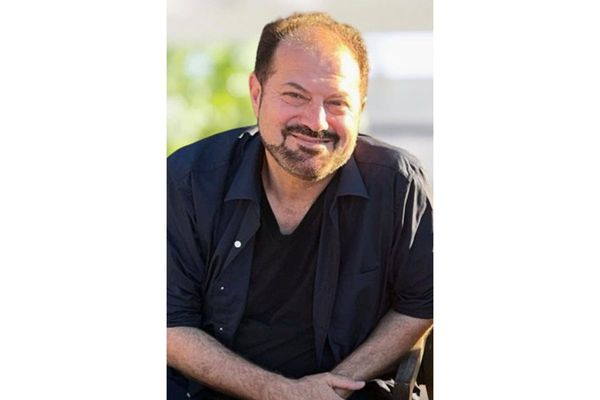
• Tom Lamont’s debut book is out now (Sceptre, £16.99). To support the Guardian and Observer, order your copy at guardianbookshop.com. Delivery charges may apply.