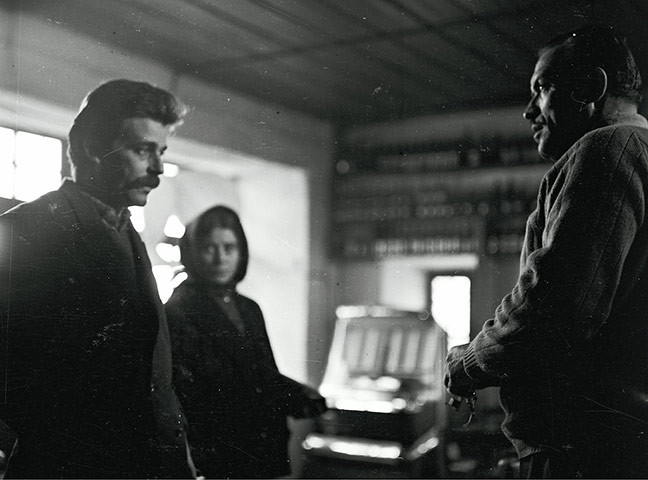
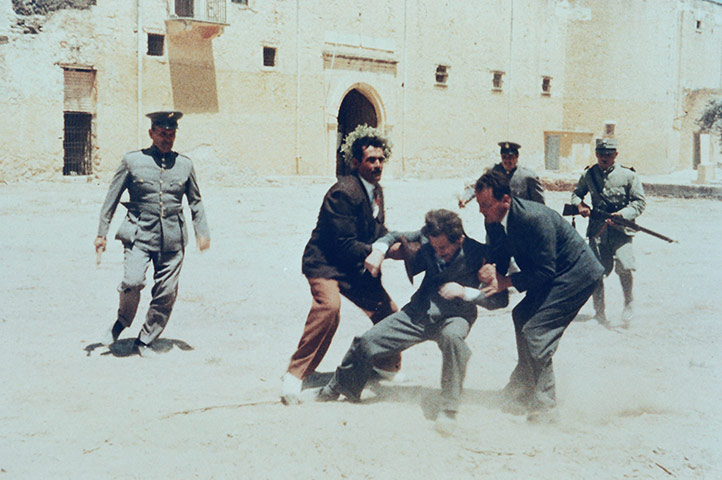
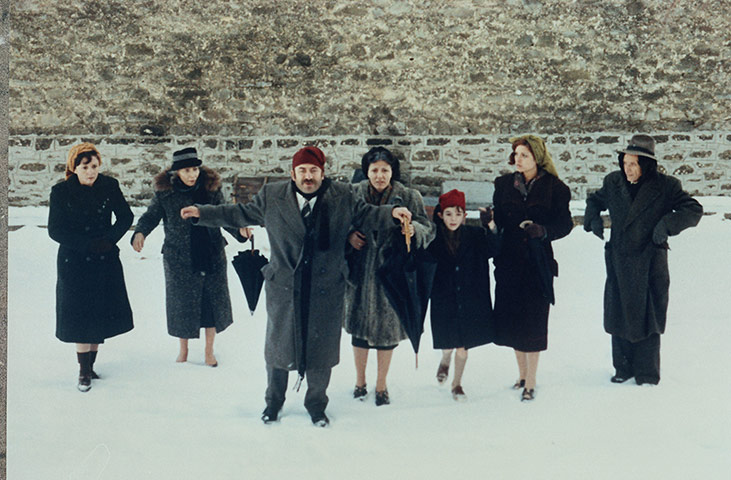
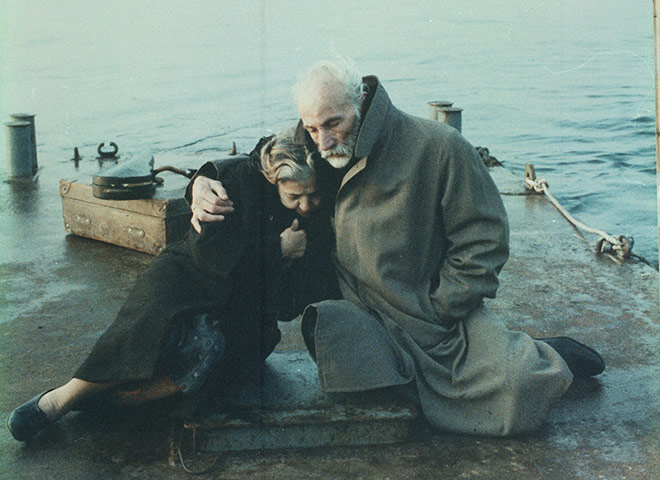
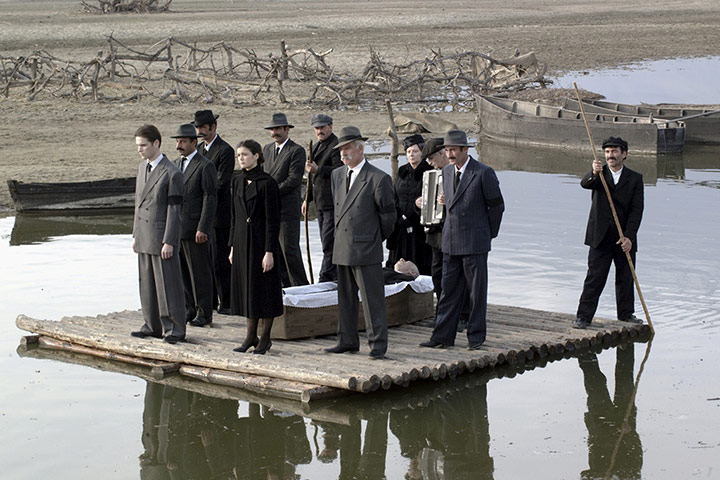
Theo Angelopoulos' first feature, The Reconstruction (1970), draws on the real-life murder of a Greek worker (Yannis Totsikas, left) in Germany by his wife (Toula Stathopoulou) and her lover (Michalis Fotopoulos). The murder story, and its 'reconstruction', becomes a parable for the disruption of a community and a nation – Greece was under military rule at the time.Photograph: Artificial EyeAngelopoulos' second film, Days of 36, was set during Greece's tumultuous interwar period, when unstable governments alternated with military coups with alarming regularity. Days of 36 focuses on a politically sensitive hostage situation, which Angelopoulos uses to lay bare the state's fragmentation as Metaxa's fascist dictatorship loomed.Photograph: Artificial EyeAngelopoulos' international breakthrough, The Travelling Players, is an epic tableau of 20th-century Greek history, told through the experiences of a touring group of actors – whose own stories are modelled on the Agamemnon myth. Among other awards, it won the BFI's Sutherland trophy.Photograph: Artificial Eye
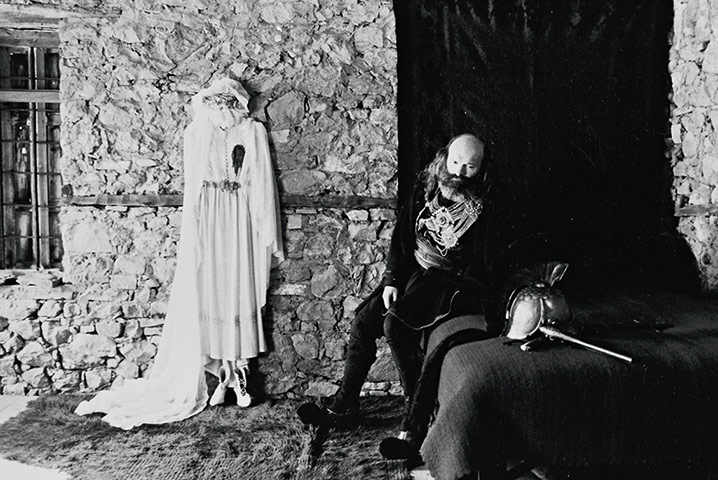
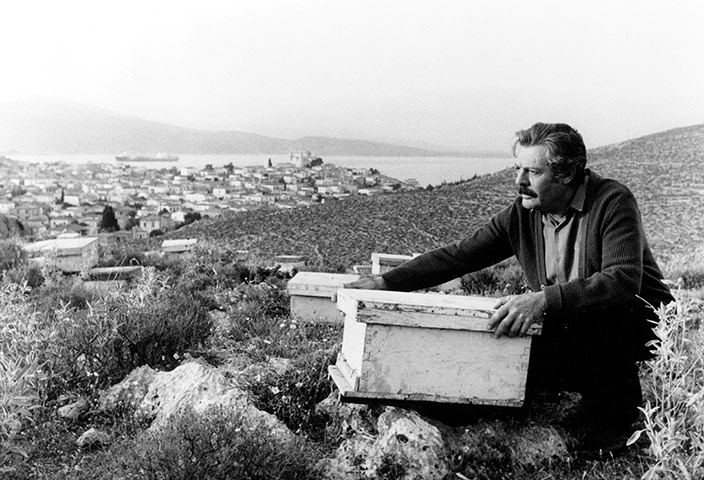
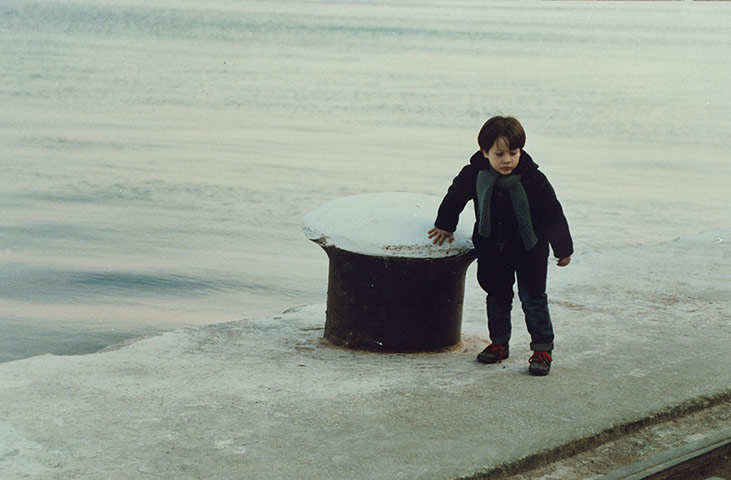
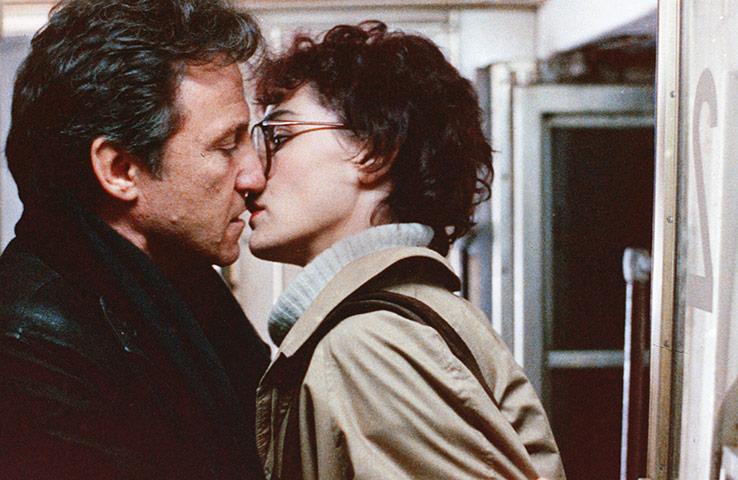
Angelopoulos took on the Stalinist cult of personality in his 1980 movie Alexander the Great, with Omero Antonutti as the 19th-century bandit of the title. This Alexander, whose name references the mythic Greek figure of antiquity, wordlessly tyrannises an agrarian commune – the liberator turned oppressor.Photograph: Artificial EyeVoyage to Cythera (1984), co-scripted by Tonino Guerra, is another parable of Greece's political history. Manos Kakrakis, an aging Odysseus, and his wife Dora Volanaki are adrift on a raft with no home or destination: the failure of the communist dream.Photograph: Artificial EyeInternational icon Marcello Mastroianni took on the lead role in Angelopoulos' 1986 chronicle of stasis and despair, The Beekeeper. Mastroianni's Spyros travels the traditional beekeeping routes, utterly unable to connect with the changing world around him. Photograph: Ronald Grant ArchiveAngelopoulos's Landscape in the Mist is another parable of search without discovery. Two children sneak on board a train they hope will take them to Germany – but only baffling disappointment awaits.Photograph: Artificial EyeIn Ulysses' Gaze Angelopoulos secured Harvey Keitel (here with Maia Morgenstern) to play a Greek-American film-maker obsessed with finding lost documentary footage of 'ordinary' people. The film was awarded the grand prix runner-up prize at Cannes; Angelopoulos was dismayed.Photograph: The Kobal CollectionAngelopoulos finally secured the Palme d'Or with his 1998 film Eternity and a Day, in which a dying writer (Bruno Ganz) helps a young Albanian boy (Archileas Skevis) as a kind of distraction from his own impending dissolution.Photograph: The Kobal CollectionThe first in a projected trilogy, The Weeping Meadow documents the turbulent first half of the 20th century, following a single family from the Russian revolution to the postwar civil conflict in Greece. Photograph: Artificial EyeAngelopoulos' last completed feature was 2009's The Dust of Time, starring Michel Piccoli, Willem Dafoe and Irene Jacob. Dafoe takes on the Keitel role of a Greek-American film-maker; Jacob is his mother Eleni, a woman who manages to reunite with her husband Spyros (Piccoli) after deportation to a Soviet labour camp.Photograph: PR
Sign up to read this article
Read news from 100’s of titles, curated specifically for you.