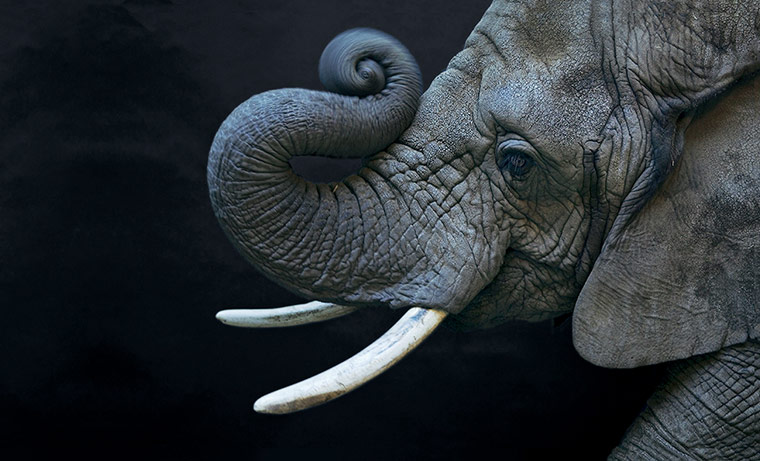
We enjoy a deep-down kinship with all living things, not just spiritually, or morally, or because we’re planetary neighbours, but bodily, in our habits, hungers and genes. We share the planet with 1.3 million named species, and if that seems enough, bear in mind that, in all likelihood, 10 times that number once auditioned here. In bygone eras, life tried its luck in every niche imaginable, with billions of different species testing out such marvels as eye sockets, tastebuds, fingernails and wings. →
Photograph: Joel Sartore/National Geographic Stock/Caters
Most of those species have become extinct, including some of our own close relatives, as well as colourful mega-fauna. Much as we’re fright-charmed by dinosaurs, if they still roamed the planet we wouldn’t exist, since their extinction favoured the small, timid, nocturnal mammals that ultimately led to us. Extinction, alas, is natural; it’s the pace of it that’s new and frightening. →
Photograph: Joel Sartore/National Geographic Stock/Caters
Without a vast medley of life forms, how drab, how quiet, how sapless the world would suddenly become. But variety isn’t merely the spice of life, it’s an indispensable ingredient. One habitat alone – the dynamic well of the rainforests – is home to countless life forms, and provides us with healing drugs, as well as essentials such as oxygen and rainwater. Biodiversity grows, heals, feeds, transports and protects us; it’s in our own best interest as a species, so it’s tempting just to value it for self-centred reasons. →
Photograph: Joel Sartore/National Geographic Stock/Caters
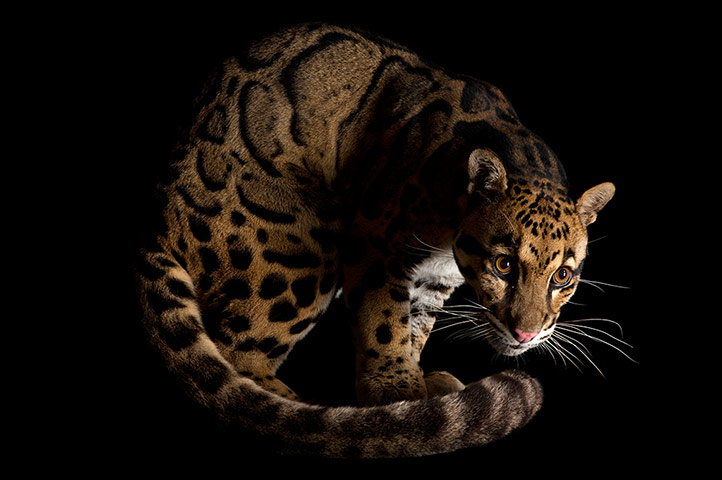
But if we pause to view other life forms with compassionate curiosity, celebrating their beauty and strangeness, yet all-too familiar ways, we can better appreciate how they may teach us about ourselves, and share our planetary fate. → Photograph: Joel Sartore/Nat Geo/Caters News
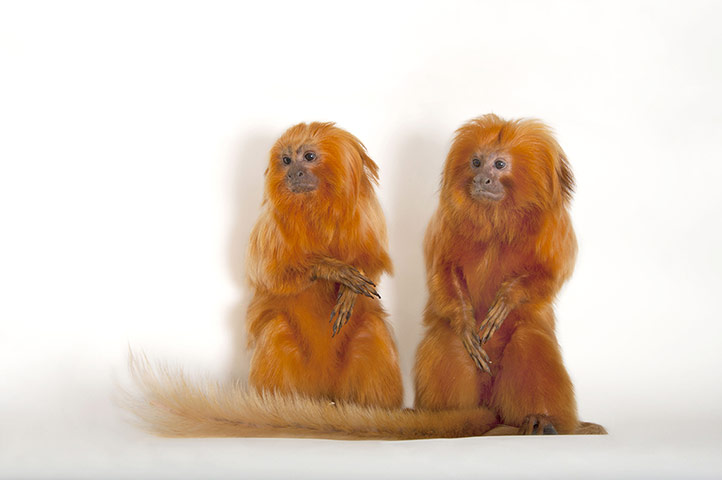
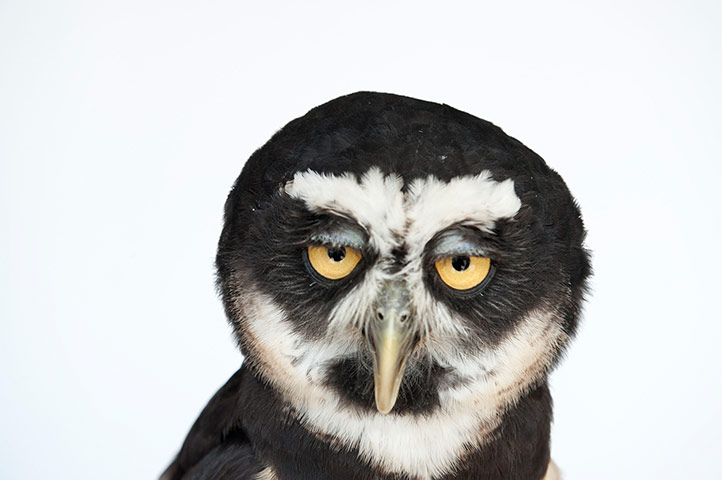
Offering some of those salient pauses, photographer Joel Sartore has been documenting the world’s biodiversity. In his majestic portrait gallery, a pair of golden lion tamarins – kabuki-faced orange monkeys – look anxiously off-stage, as if after departing friends. To some they may seem wistfully human, offered up with anthropomorphic zeal – a crime of sorts in some scientific circles. Yet these cousins of ours pursue surprisingly human dramas, real soap operas and family squabbles as they caper through the treetops in a tiny span of Brazilian rainforest. An archipelago of hilltop forests offers them a dwindling habitat, which conservationists have been working hard to unite with green corridors. →
Photograph: Joel Sartore/National Geographic Stock/Caters
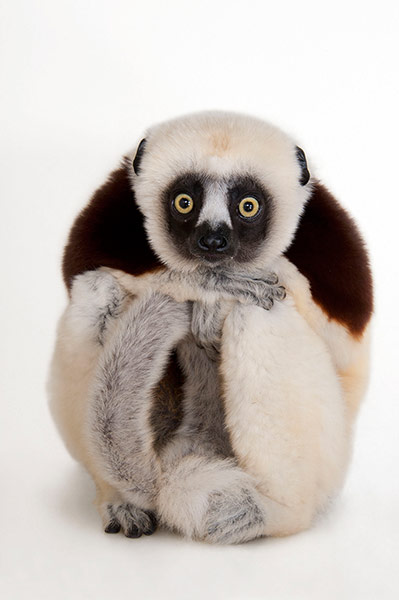
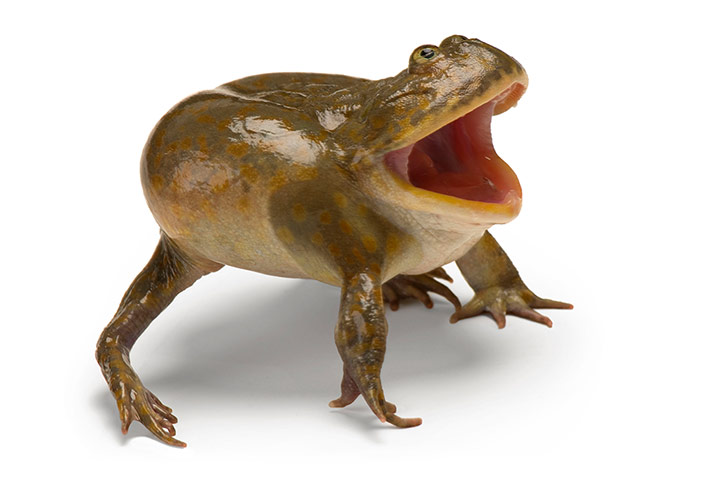
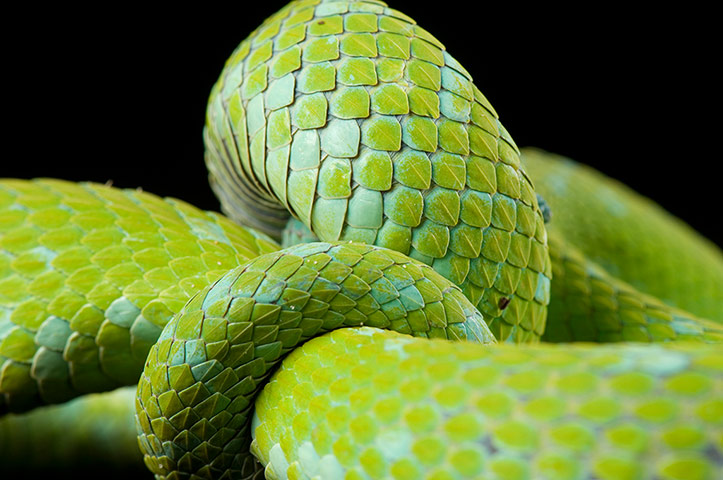
The black and white lemur, Coquerel’s sifaka, sits monk-like, resting its chin casually on crossed hands; it’s hard to resist mimicking him. The four Damaraland mole rats seem to sprout from a single body, which in a sense they do, since they’re eusocial mammals, like bees or ants, who work in concert for the good of the colony. The Budgett’s frog, a wide-mouthed yellow blob crooning on tiptoes, is no longer camouflaged under water, but looms big and fierce as a hippopotamus. A neon green and blue Rowley’s palm pit viper has tied itself into a living, breathing knot. Only the Gordian midsection is visible. An instant metaphor for puzzle, it tempts one to disentangle it. Of course, the snake can unfold itself and slip free. Not so the entangled beauty of the world’s plants and animals, many of which are disappearing too fast even to name, let alone celebrate. → Photograph: Joel Sartore/Caters News Agency
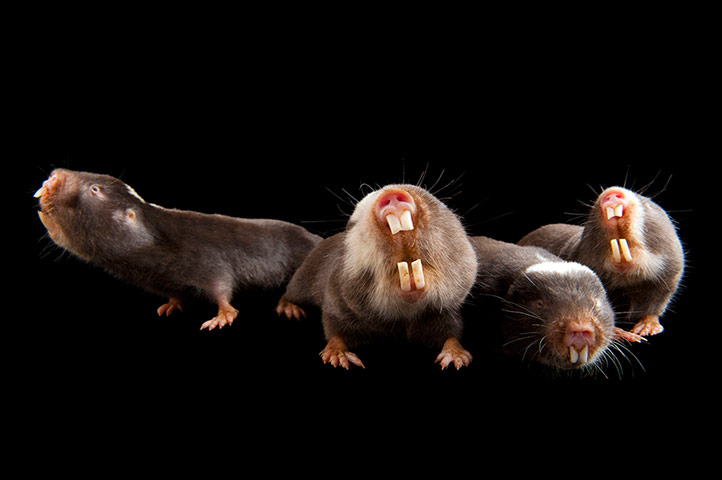
Identifying with them is the whole point of these portraits, which do invite human comparisons. However, the reverse invitation also applies. With fascination and humility, they remind us how many feelings, instincts, postures and even facial expressions we regard as typically human are actually typically animal. →
Photograph: Joel Sartore/National Geographic Stock/Caters
Diane Ackerman’s most recent book is One Hundred Names For Love, which was a Pulitzer prize finalist.
Photograph: Joel Sartore/National Geographic Stock/Caters