I love going to the theatre and not knowing too much about the show in advance – not just in terms of its content but also in terms of form. There is a real pleasure in being taken by surprise. But how often does that really happen? I’m privileged: I get free tickets to a wide range of work. As ticket prices rise ever upwards, I wonder whether that means that artists and audiences are inclined to see a narrower range of work made by a narrower range of artists. When money is tight we stick with what we know. If you’re an artist, what happens to your work if you have fewer influences?
Of course festivals are a good opportunity for taking a chance on shows that you might not get to see during the rest of the year, in places that you might not usually go. There is something about a festival that seems to make people more open and willing to go beyond their comfort zone: in Edinburgh during August I saw many different kinds of performance including dance, opera, circus, children’s shows and concerts as well as visual arts exhibitions and installations. All on different scales too.
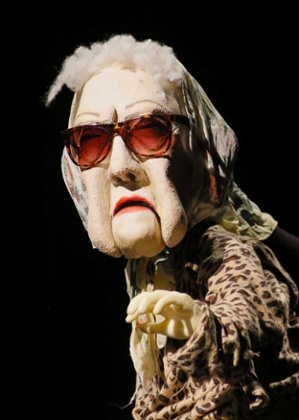
All over the city artists and audiences were doing the same, suddenly deciding to take a chance on a puppet show or a Butoh dance piece because it was there on the doorstep and the chances were you could get a cheap deal on the tickets. You may not think that puppets or Butoh are really your thing, but maybe it turns out that they are after all. After Blind Summit’s Citizen Puppet, I heard two young people talking enthusiastically on the way out about how they might incorporate puppetry into their own practice. Going to Edinburgh can be a real arts education which is why the suggestion that there should be more paid opportunities for young people to go to the festival is an important one.
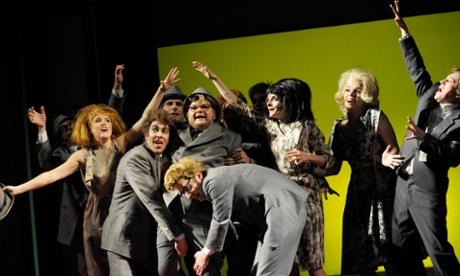
One of the most improbable shows I saw was the Volksbühne’s Murmel Murmel, a 70-minute piece consisting of a single German word that means both “to murmur” and “marbles.” It’s like watching a group of British actors say “rhubarb, rhubarb” for over an hour. Was this show to my taste? Definitely not. If I’m honest there were times when I found its mix of grimacing, mugging and near hysteria almost excruciating to watch.
But am I pleased I saw it? Definitely – because although it didn’t chime with my own personal aesthetic in any way, I could admire the brilliance of the stage craft, its internal logic and the fact that this was a piece of theatre that offered a very distinctive counter to the realism that still crowds so many of our stages. It offered another possibility, another way of doing things, like suddenly noticing a door in a room that you hadn’t realised was there.
This is why seeing a wide range of work is so important for theatre-makers (and critics), and I reckon it’s slightly odd when people dismiss entire art forms or particular kinds of work because they don’t think they like them. If you refused to ever see a musical or verbatim theatre you would have missed London Road, which combined both in an entirely new and fascinating way.
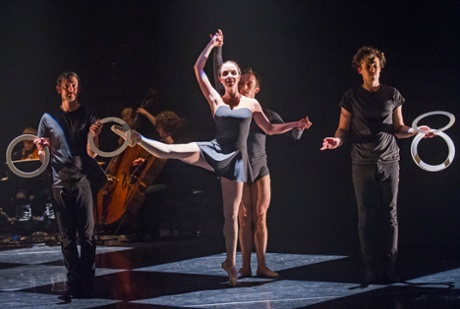
Influences from other people can bring a texture and depth to work that doesn’t diminish an artist’s own distinctive style but bounces off it in interesting ways. There was a time when children’s theatre seemed lost in its own cul-de-sac but that’s no longer the case – and that’s because the best practitioners are seeking out the most interesting work of any kind, being made here or arriving on these shores, and it is seeping into their own practice. One of the things that makes British circus show signs of teetering on the cusp of something new and thrilling is that younger makers, following the lead of established companies such as Gandini Juggling, are looking way beyond circus for influences and come with a theatre and performance vocabulary that adds an interesting dimension to the physical trick.
Getting to see a wide range of work costs money, whether it’s at a festival or at any other time of the year. But it’s clearly crucial, not least because while many start making theatre through participation routes, many also have their eyes opened by simply seeing a piece of work that makes them say: “I just had no idea that is what theatre might be.” It’s those moments that are surprising, challenging and life-changing too.