A remarkable 34 of the nominations for the 2015 Tony awards – to be presented in New York this Sunday night – are for products or personnel with British affiliations. The dominant performance of shows such as The Curious Incident of the Dog in the Night-Time and Wolf Hall and of the directors Marianne Elliott and Stephen Daldry – and the designer Bob Crowley, who is nominated four times for three different shows – can be viewed, according to prejudice, as evidence either of the impressive health of UK theatre or the ailing state of the US industry.
But, while this weekend’s winners, irrespective of nationality, will be thrilled to hold a trophy that may significantly advance their career, it is intriguing to look back and see how historically reliable the Tonys – and the other main awards open to American theatricals – have been as a guide to the most important achievements of the artform.
A general scepticism about cultural honours boards is encouraged by examination of the record of the Nobel prize in literature. Only one American dramatist – Eugene O’Neill, in 1936 – has ever been given this most prestigious prize for writing. Both Tennessee Williams and Arthur Miller were overlooked by the Swedish Academy. The Nobels have a questionable record on American fiction generally, having immortalised Pearl S Buck but ignored John Updike and Philip Roth.
The Tony award for best play is unsurprisingly more trustworthy as a catalogue of the dramatists who matter. Three Miller masterpieces – The Crucible, A View from the Bridge and Death of a Salesman – were recognised at the time of their premieres, as were plays now considered classics of their eras, such as O’Neill’s A Long Day’s Journey into Night, David Mamet’s Glengarry Glen Ross, August Wilson’s Fences and Tony Kushner’s Angels in America.
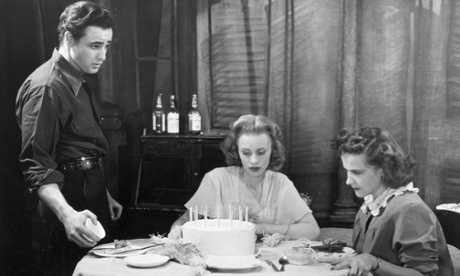
The category’s most embarrassing absence is the failure to reward any of the major plays of Tennessee Williams although the judges covered some of their blushes by opting for a minor Williams, The Rose Tattoo, in 1951. The block was possibly a parochial Manhattan resistance to the southern speech and settings of the plays. This ignorance towards Williams feels particularly odd because, in the period of his greatest creativity, the Tony voters gave first place to now obscure scripts such as Jan de Hartog’s The Fourposter, John Patrick’s The Teahouse of the August Moon and a thriller by Joseph Hayes, The Desperate Hours.
New York is the home of the musical and, like the best sports teams, the Tony for best musical has a formidable record on home turf. Since Cole Porter’s Kiss Me Kate won the first musical section in 1949, pretty much every show in the modern canon of song-and-dance classics has been honoured, with the exception of Chicago, which lost in a competitive year to A Chorus Line. The category’s nearest equivalent to a Pearl S Buck is The Will Rogers Follies, which beat Miss Saigon, possibly because, even by 1991, not all US theatre-prize voters were quite ready for a musical about the Vietnam war.
The main rival US prize for theatrical writing – the Pulitzers – showed a sharper eye for the significance of Tennessee Williams, although the then chairman of the prize, Joseph Pulitzer Jr, had to personally intervene in 1955 to pick Cat on a Hot Tin Roof over the panel’s preference for The Flowering Peach by Clifford Odets; posterity has more than vindicated Pulitzer’s countermand. Regrettably, in 1963, he seemed happy to allow the panelists to reject, on “moral” grounds, Edward Albee’s Who’s Afraid of Virginia Woolf?

Such outbursts of fustiness may explain why the Pulitzer provides a rather spotty account of past plays that mattered. This is also due to a pomposity in the process that allows an overall advisory board to declare that there was no play deserving of notice in a particular year. In a decade of especial snootiness, the Pulitzer blanked all dramatists in 1964, 1966 and 1968, perhaps because of a Vietnam-induced panic about the cultural values that should be encouraged.
Certainly, while spotting one work of canonical brilliance in that period – Albee’s A Delicate Balance – the judges, in the years when they thought anything worth rewarding at all, went for a number of plays that have gone stubbornly unrevived by subsequent Broadway producers, including Charles Gordone’s No Place to Be Somebody and Tad Mosel’s All the Way Home.
Even some plays that achieved American dramatists’ most desired double of the Tony and the Pulitzer best play prizes in the same year – such as Michael Christofer’s The Shadow Box (1977) – now have little resonance in the repertoire. So it may be some consolation for the contenders on Sunday night that history suggests the winners in a theatre season may soon be forgotten, while losers can endure.