
First introduced in 1972, Kodak’s “Pocket Instamatic” 110 film cameras proved remarkably popular. It quickly became one of the most successful film formats ever introduced, with dozens of manufacturers – including Canon, Minolta, Pentax and Olympus – producing 110 cameras.
What they gave up in image quality, they more than made up for in convenience. They were small, light and easily carried anywhere.
At its peak in the late 1970s and early 1980s, hundreds of millions of 110 film cartridges were sold annually, making it one of the dominant amateur photography formats of its era. But the 110 format soon acquired a reputation for mediocre results.
This came about from a combination of inexpensive (often plastic) lenses, necessitated by the low price of most 110 cameras, along with the amount of magnification needed to make standard prints (because of the tiny 13x17mm negative), even though the 110 negative was about twice the area of the later, short-lived, Kodak Disc cameras.
Not to mention the problems of keeping the film perfectly flat, given the inherent variability of the injection-molded, plastic film cartridge… However, a few companies set out to prove that reputation was not deserved, and to a large extent, succeeded.
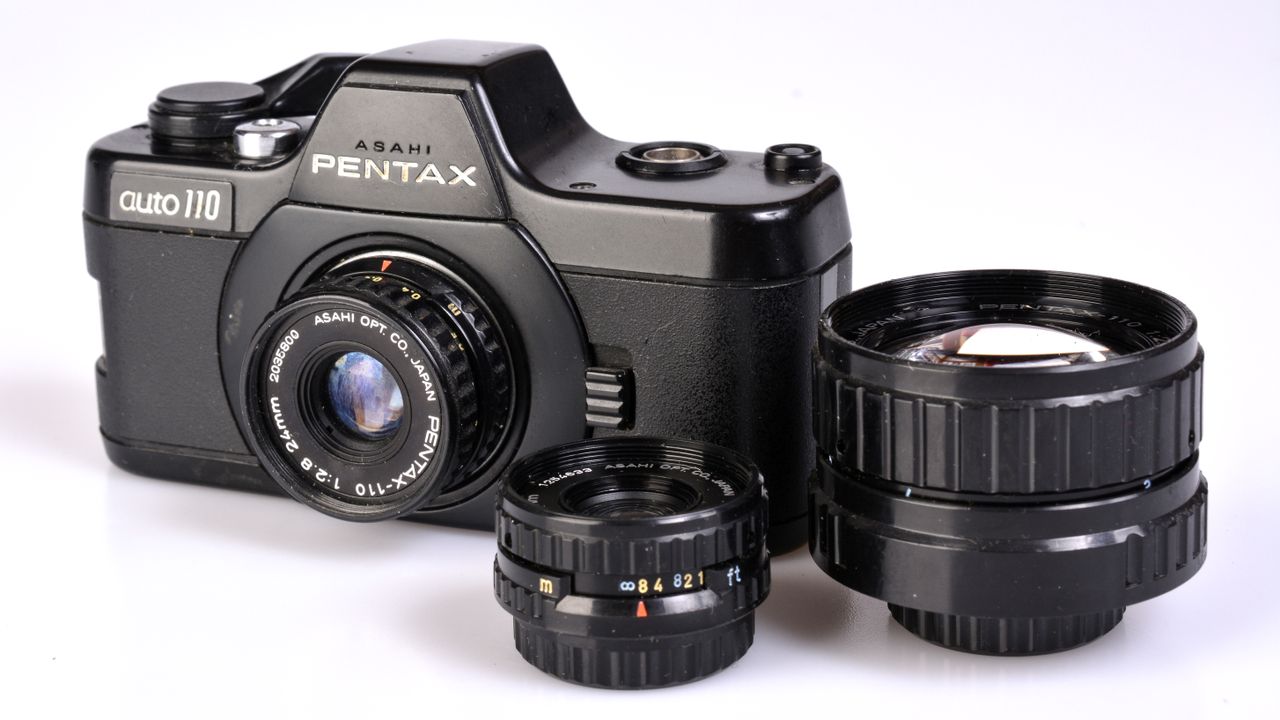
First to arrive, in 1976, was the Minolta 110 Zoom SLR, with its distinctive, horizontal design and a fixed 25-50mm f/4.5 zoom lens. Though compact, it was still somewhat larger than the Asahi Pentax 110 Auto that would come almost two years later.
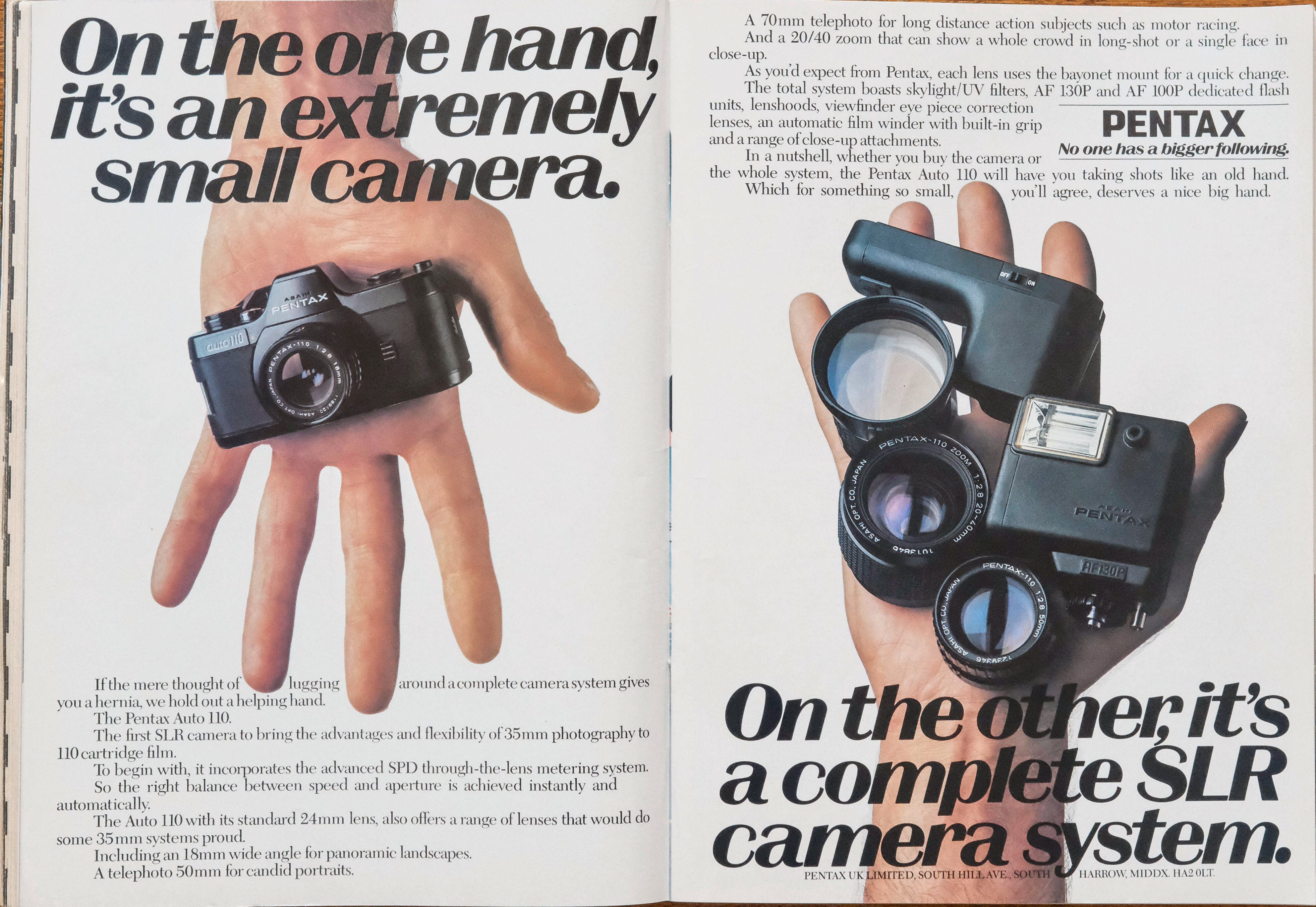
The 110 Auto proved to be the smallest interchangeable lens SLR camera ever made – for any format, by anybody.
It had TTL center-weighted metering and a programmed electronic shutter ranging from 1 sec to 1/400 sec, needing two LR44 batteries to function. It could also be bought as the "System 10," which included the full kit of lenses (18mm, 24mm, 50mm, 70mm and, in 1982, a 20-40mm f/2.8 zoom), dedicated AF130P / AF100P flashes and an auto-winder.
It was followed in 1982 by the 110 Super, which improved upon the original 1978 Auto 110 with several key upgrades: a single-stroke film advance lever, an electronic self-timer with a red LED indicator, a shutter lock and a +1.5 EV exposure compensation button for backlit scenes.
It also featured a brighter viewfinder with a split-image focusing spot and a low-light warning LED. Remarkable, for a 164g camera just 99 x 58 x 32mm in size.
I had the opportunity to play with a Pentax 110 Auto for some weeks, while I sold it for a friend. I didn’t run any film through it, but I was impressed with the quality of the build and finish. Absolutely remarkable! And I admit, I rather regret not purchasing it myself.
One interesting fact: the Pentax Auto 110's excellent interchangeable lenses were capable of resolving much more detail than the 110 negative could usually record, which is one reason Auto 110 photographs can look surprisingly sharp when carefully scanned today.
The Pentax 110 Super was discontinued in 1985, as the 110 format lost market share to ever-more-compact 35mm cameras that offered sharper pictures. Because of this there were roughly 80,000 Supers produced, whereas the 110 Auto saw approximately 1.1 million being made.
Kodak discontinued Ektachrome and Kodachrome 110 slide films in 1982. Verichrome Pan (B&W) went in 1995 while Kodacolor 110 survived until 2006, leaving Fujifilm as the only mainstream maker. It would then give up production of 110 films in 2009, seemingly ending the format forever…
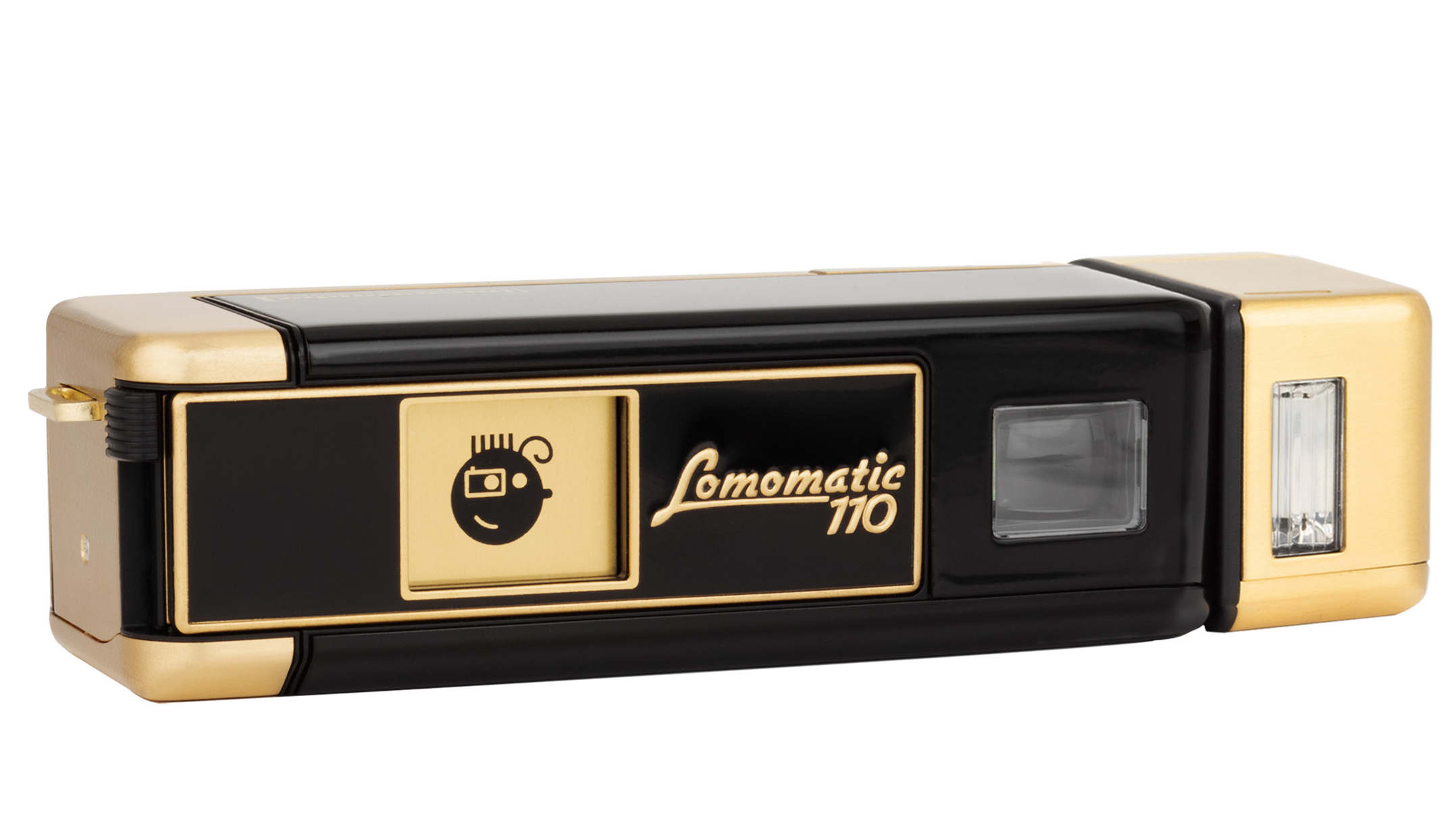
However, in 2011 Lomography started slitting larger film and packaging it into new 110 cartridges, with Lomography's Orca 110 B&W ISO100 reaching the market in May 2012.
Around the same time, Fukkatsu 110 film was produced by a small group associated with the now long-gone 'Films Reborn' in Hong Kong. It briefly appeared in ISO 100 B&W and ISO400 color in pre-loaded 110 cartridges, but by mid-2012 it was being described as “gone / vanished.”
Today, 110 film can still be purchased by mail from Lomography – but it is about the only source. That said, it's possible for truly dedicated fans to repackage 16mm film into recycled 110 cassettes at home – though it is a job for only the most ambitious of fans.
You might also like…
Take a look at the best point-and-shoot cameras you can buy today.