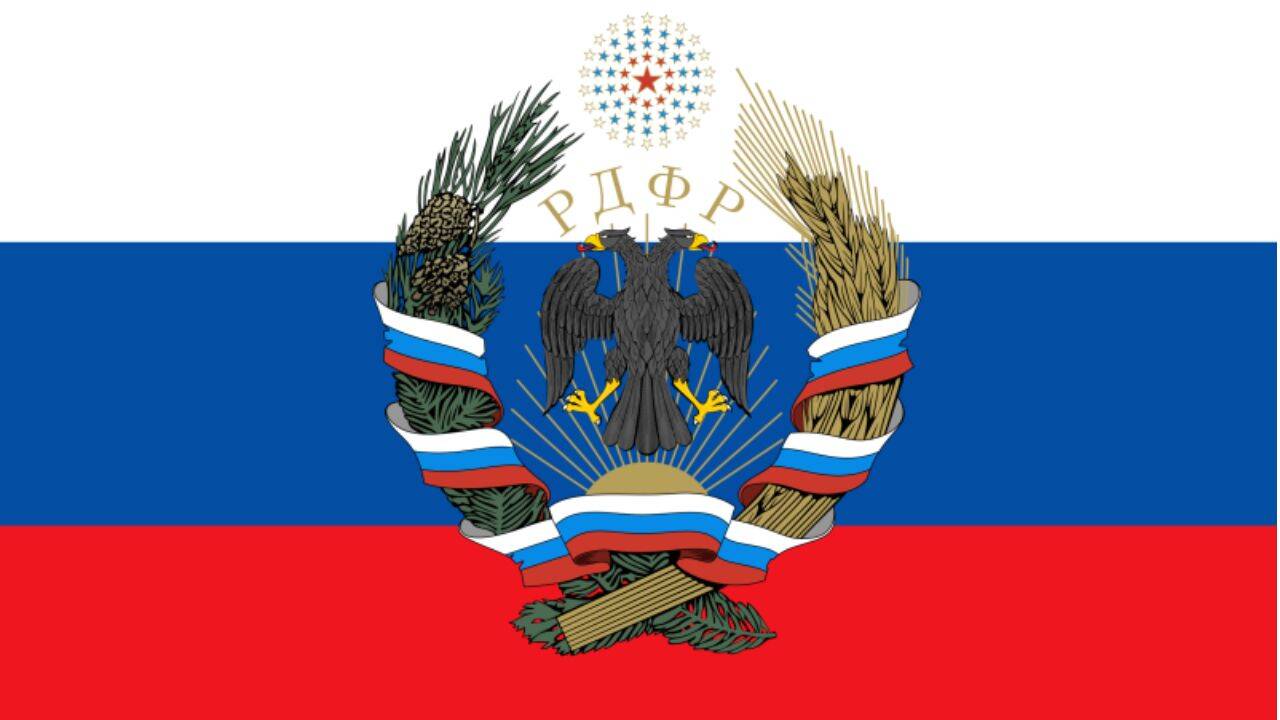
The 'Russian Democratic Federative Republic' was officially proclaimed on 19 January 1918 by the newly convened Russian Constituent Assembly. The new state was intended to govern a vast territory with millions of citizens, representing Russia's first democratically elected national legislature after the collapse of the Tsarist regime and the upheaval of the 1917 revolutions.
Get breaking news anytime, anywhere. Download the TOI app now!
However, the republic's life was remarkably brief, lasting for approximately 13 hours before being forcibly dissolved by the Bolshevik government. The event marked the end of Russia's first experiment with parliamentary democracy and the definitive beginning of Bolshevik rule. Although it existed for only a matter of hours, the Russian Democratic Federative Republic is widely regarded as 'one of the world's shortest-lived countries,' disappearing almost as quickly as it had been proclaimed in Petrograd.
How did the newly formed country ended in just 13 hours
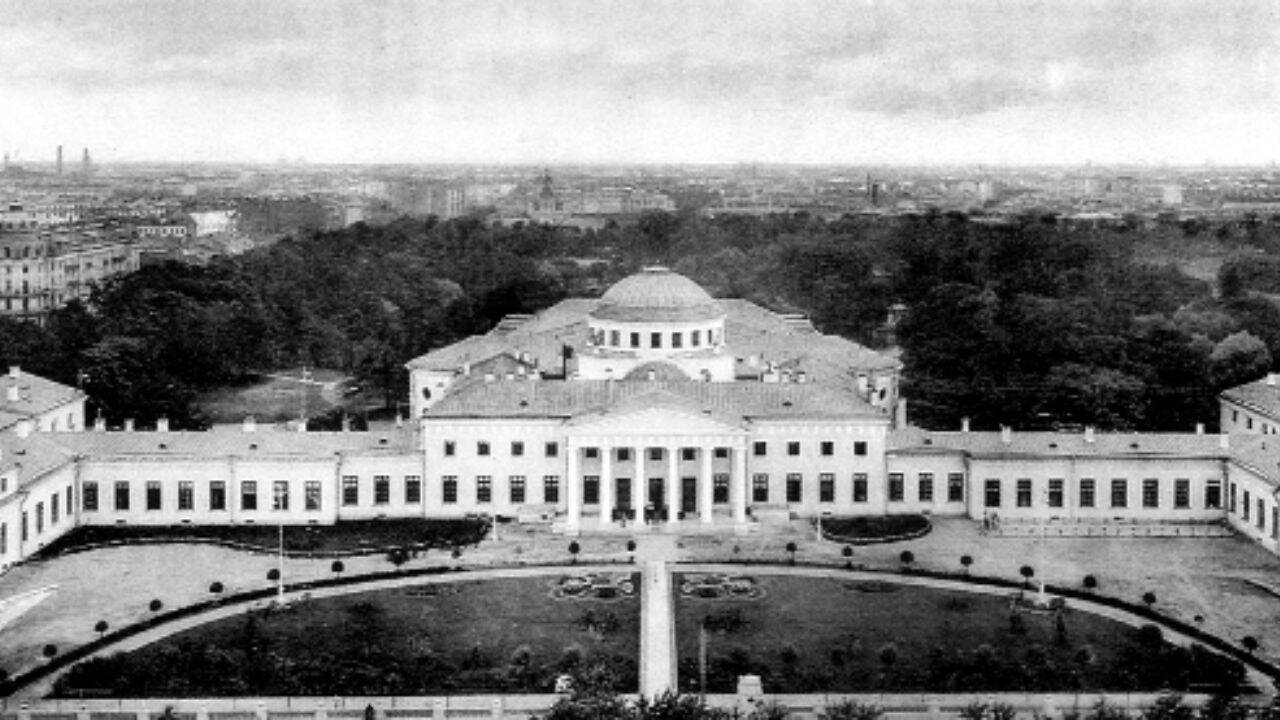
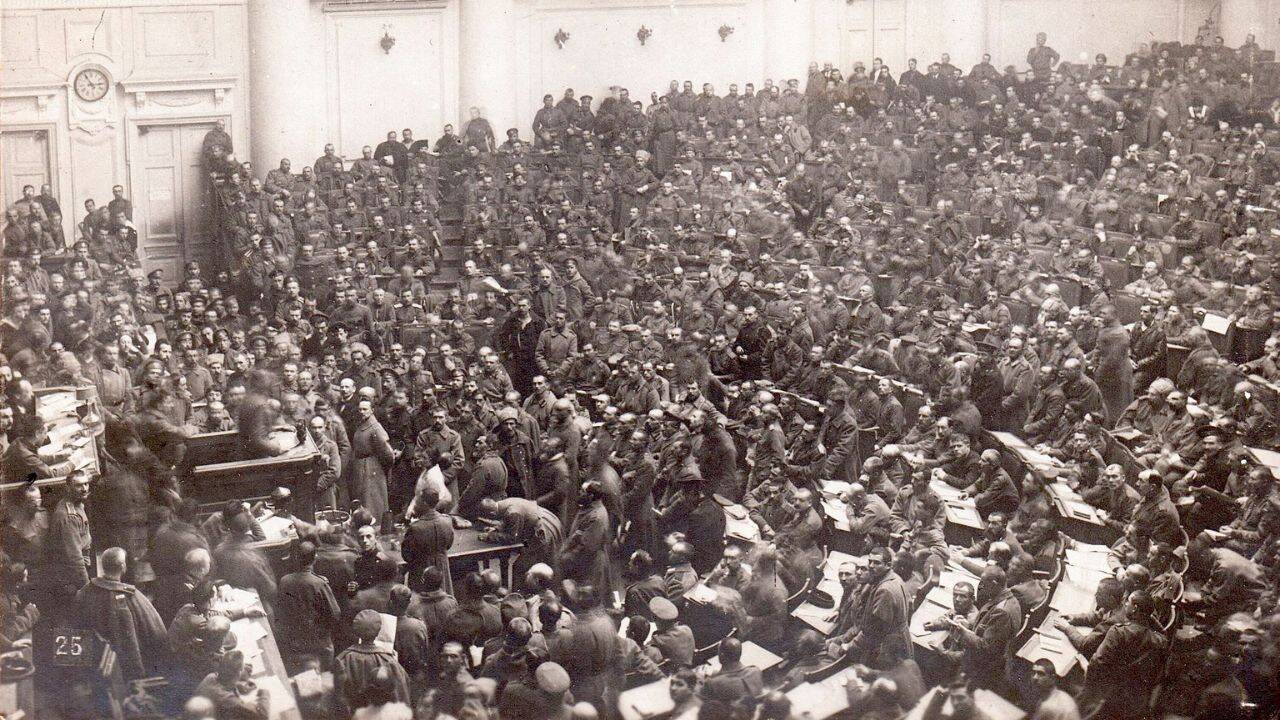
The forced closure of the Constituent Assembly was a dramatic military operation. The Slovak Academy of Sciences recounts that the session lasted for only 13 hours, continuing into the early morning of 19 January. The end came when a sailor named Anatoly Zheleznyakov approached the speaker and famously declared that 'the guard is tired.' This simple statement signalled that the military forces protecting the Tauride Palace would no longer allow the deputies to continue their work.
When the deputies returned the following day, they found the palace doors locked and guarded by soldiers with machine guns. The Marxists Internet Archive preserves the Decree on the Dissolution of the Constituent Assembly, issued by the All-Russia Central Executive Committee, which officially dissolved the Assembly and ended the republic's claim to govern Russia.
Why the nation lasted less than a day
The Bolsheviks viewed the Constituent Assembly as a threat to what Vladimir Lenin described as the dictatorship of the proletariat. In speeches and writings, Lenin argued that the Soviets represented a higher form of democracy than a traditional parliament because they reflected the interests of workers and peasants more directly. He believed the Constituent Assembly no longer represented the true will of the people.
The Bolsheviks presented the Assembly with the Declaration of Rights of the Working and Exploited People, a document requiring the elected deputies to recognise the Soviets as the supreme authority. As documented by the Marxists Internet Archive, the declaration demanded that the Assembly accept Soviet power as the only legitimate government. When the elected deputies refused to approve it, the Bolsheviks and their allies walked out, arguing that the Assembly no longer represented the revolution.
How was one of history's shortest-lived countries meant to be governed
During its only session, the Assembly formally adopted the title Russian Democratic Federative Republic for the new state. According to the Classic Europa Guidebook, out of 766 deputies, the Socialist-Revolutionary (SR) Party held a dominant majority with 374 seats, while the Bolsheviks held 175. The Assembly was chaired by 'Viktor Chernov,' a leading Socialist-Revolutionary politician who advocated democratic socialism and represented the interests of the rural population.
The goal was to establish a federal democratic system that would allow regional autonomy while maintaining national unity. Materials from the University of Maryland, Baltimore County (UMBC) note that the emerging Soviet system placed power in central revolutionary institutions with few constitutional checks. This fundamental difference made coexistence between the democratically elected Assembly and the Bolshevik government increasingly unlikely.
What was the purpose of the Constituent Assembly
According to the University of Arkansas, the Russian Constituent Assembly was expected to unify competing revolutionary movements and respond to the demands of both urban workers and the vast peasantry after years of war and political upheaval. For many Russians, the Assembly represented the country's first genuinely elected national representative body.
Despite enormous political instability, millions of Russians voted in the Constituent Assembly elections in late 1917. The Slovak Academy of Sciences notes that the Assembly was intended to provide a democratic socialist alternative to the increasingly radical methods adopted by the Bolsheviks. Many hoped it would bring constitutional government and stability to a country in turmoil.
What was the legacy of this 13-hour democratic state
The Slovak Academy of Sciences describes the dissolution of the Constituent Assembly as a 'political big bang' that helped consolidate communist rule. By dissolving the only democratically elected national legislature, the Bolsheviks removed the most significant legal and democratic challenge to their authority.
The Cheka, the Soviet secret police, had already been established in December 1917, before the Assembly met. In the months that followed, particularly during the Red Terror, its powers expanded dramatically as the Bolshevik government moved to suppress political opposition.
The Russian Democratic Federative Republic remains a symbol of what might have been for Russian democracy. UMBC materials note that although later Soviet constitutions formally guaranteed freedoms such as speech and assembly, those rights ultimately remained subordinate to the Communist Party's monopoly on political power, leaving citizens with little practical constitutional protection.
Stay updated with the latest news on Times of India. Get all the trending City News, India News, Business News, and Sports News. For Entertainment News, TV News, and Lifestyle Tips, visit Etimes.