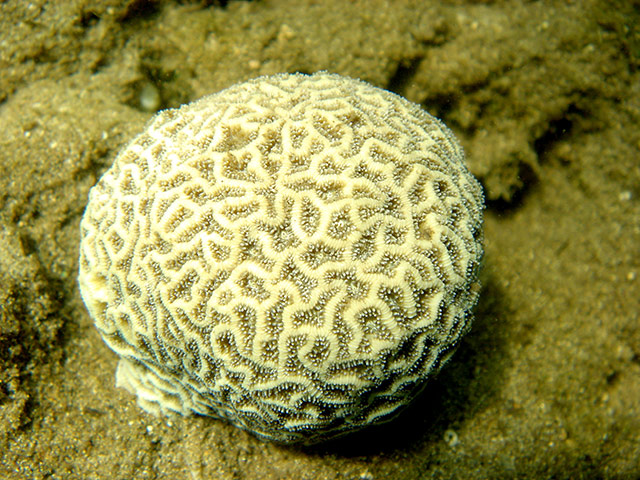
The species has an overall blue-grey or cream colour and its individual polyps are small, numerous and a shade of brown. The individual coral polyps are surrounded by soft tentacles which often extended during the day, collecting food from the surrounding water and feeding a central mouth. The corallites (the skeletons of the individual coral polyps), may sit closely side by side or be arranged in multiple series in a generally irregular honeycomb pattern Photograph: David Obura/ZSL
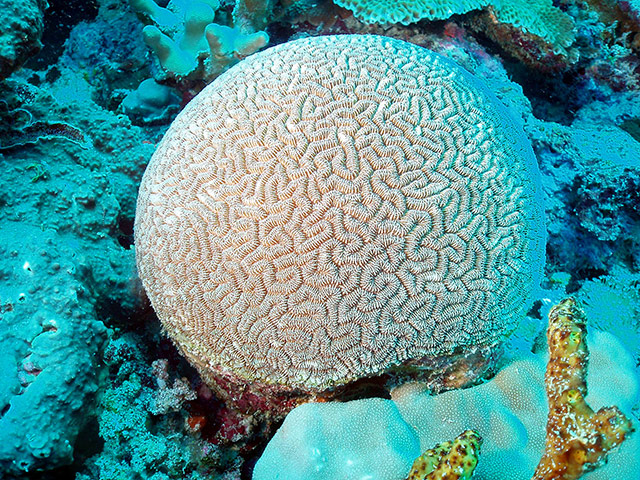
A brain coral that is endemic to the Chagos Archipelago. Ctenella coral has shown an aggressive ability known as extracoelenteric digestion where a coral is able to extend its stomach in digestive filaments onto the living tissue of an adjacent coral and destroy it Photograph: Charles Sheppard/ZSL
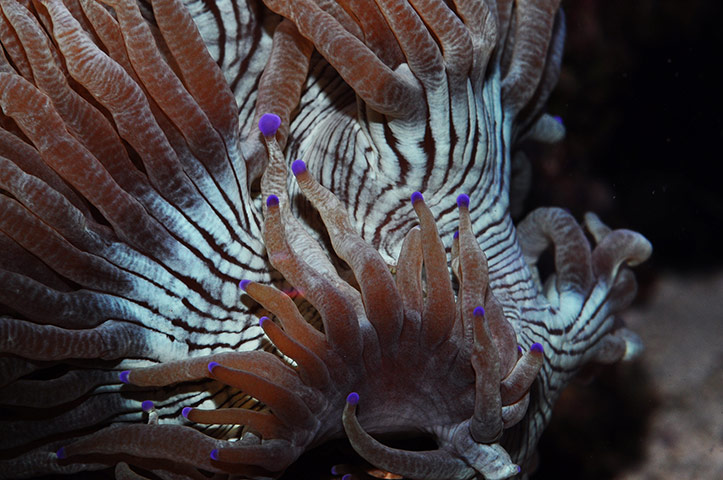
Polyps have large tubular tentacles which are green with pink tips and a ‘zebra’ striped oral disk. Elegance coral has a symbiotic relationship with zooxanthellae, an algae that lives within the tissue of coral and provides energy to the coral. Elegance coral can also obtain food by catching small prey with its tentacles to supplement its diet Photograph: Tim Wijgerde/ZSL
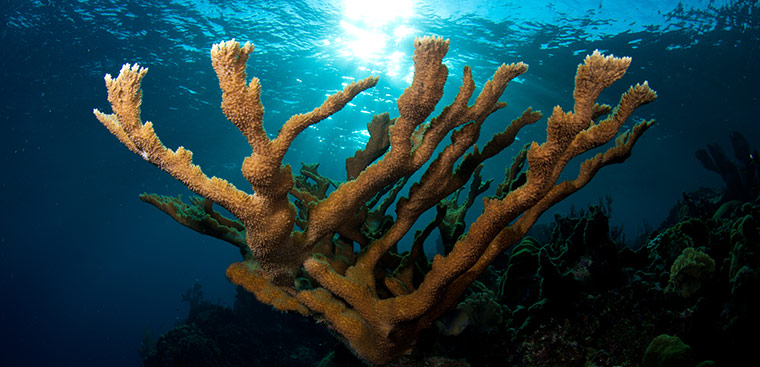
Elkhorn coral forms branching ‘antler’ type colonies which are yellowy-tan in colour with white tips to the branches, giving rise to its common name - elkhorn coral. Branches are extremely thick and very distinctive. It forms the largest colonies of all Acropora species, commonly 4 meters across, 2m high, with bases up to 40cm thick. Elkhorn coral is one of the fasting growing coral species, with colonies capable of growing by 4-11cm a year. This species once dominated shallow Caribbean reefs but has undergone an 95% decline in many areas in last three decades Photograph: Erik Brun/ZSL
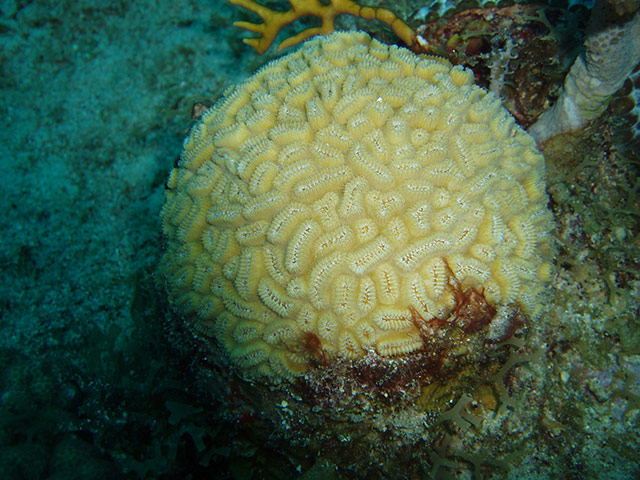
A Caribbean species, spherical in shape with irregularly shaped corallites. One study of the Florida Keys population has reported a 75% decline in numbers since 1995. This species is particularly susceptible to a coral disease called white plague disease. Elliptical star coral reproduces sexually by broadcast spawning which means it will release eggs and sperm into the water column to reproduce. Spawning usually happens en masse with all colonies in an area spawning at the same time to increase their chances of fertilisation. Timing of these mass spawning events often coincides with a full moon Photograph: Charles Sheppard/ZSL
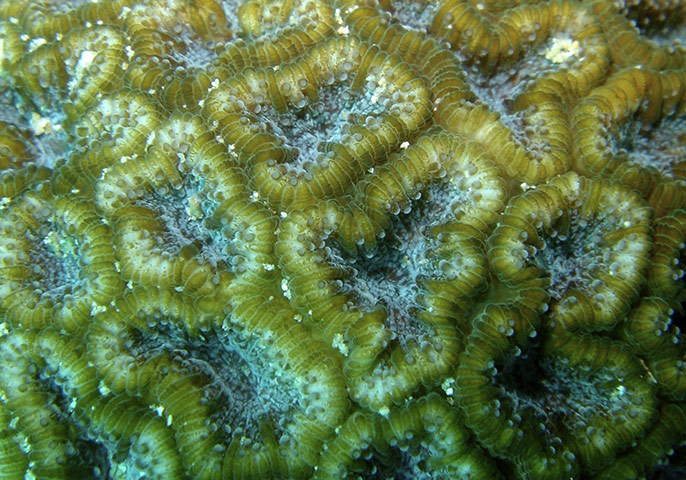
Horastrea coral is a hemispherical, colonial species and is pale-brown in colour with blue-grey oral discs. Due to its rarity, there is little known about this species Photograph: David Obura/ZSL
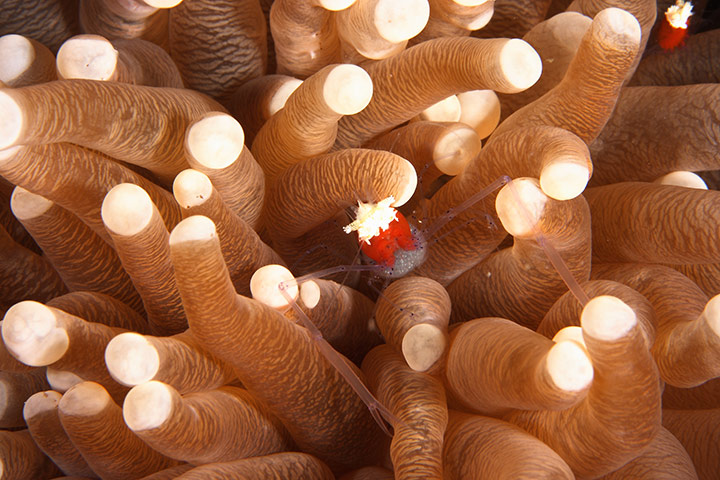
This species lives as a solitary large polyp, unlike many corals that form colonies of coral polyps, and has a flat shape with large, lobed teeth. The mouth is centrally located and can be up to 3cm in length. The tentacles are extended day and night, and are green, green-brown, grey or blue-green with bright white or pink tips and are long in length. The oral disk is visibly striped and has distinctive blue and grey colourings. This species supports many associated species including the colourful Periclimenes kororensis, commonly known as popcorn shrimp and a species of pipefish, Siokunichthys nigrolineatus that live among the tentacles Photograph: Wolfgang Krutz/ZSL
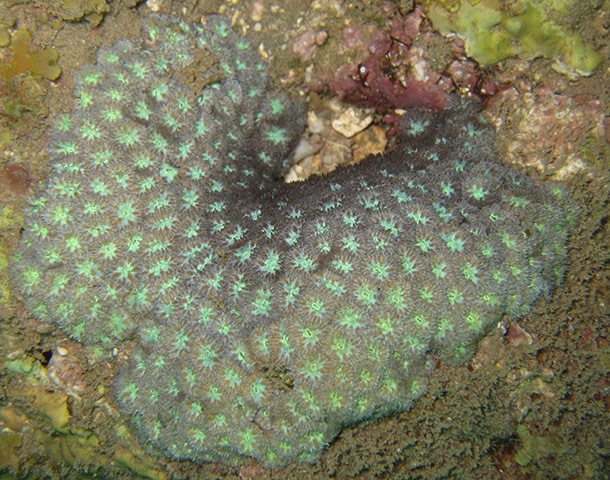
Parasimplastrea coral is a small, encrusting coral which is colourful in appearance: it is brown with a fluorescent green colour in the centre of the corallites. Very little is known about this species Photograph: David Obura/ZSL
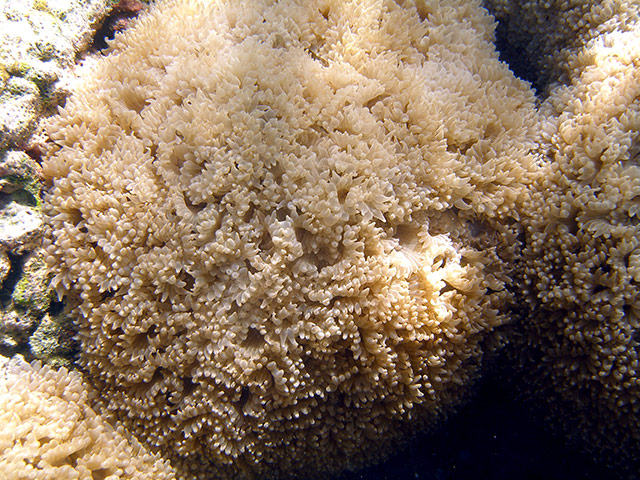
Pearl bubble coral is a colonial species that can form ‘massive’ colonies with a bubble like appearance. During the day the surface of the entire colony is covered with many small vesicles, which are structures that look like bubbles and protrude outwards. The shape of these vesicles can be smooth and rounded like a bubble or have a fork shaped edge. These vesicles will retract when disturbed. During the night tentacles are extended and the colony has a pale grey, almost white colour Photograph: David Obura/ZSL
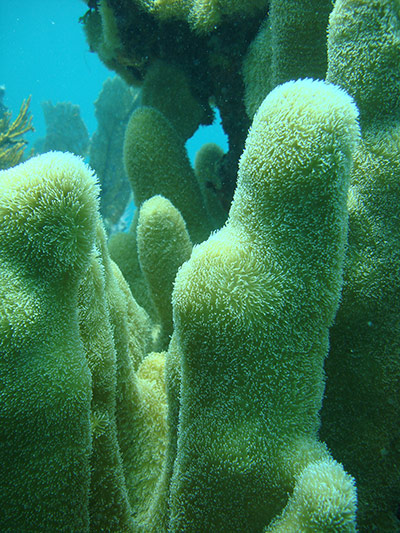
Colonies of this species grow in tall cylindrical columns of heights up to 2m giving it a distinctive pillar-like appearance which gives rise to the species common name of pillar coral. The species hairy appearance is due to its tentacles which are normally extended throughout the day. Pillar coral colonies are grey-brown or olive in colour. Like all other zooxanthellate corals, Pillar coral uses a symbiotic relationship with algae called zooxanthellae, which live inside the coral polyps, as a source of energy Photograph: Adriana Antelo/ZSL