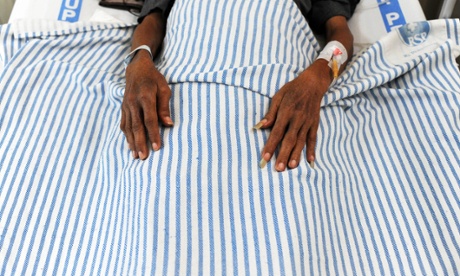
One billion people around the world have no access to healthcare – care which could mean the difference between life and death. Furthermore, hundreds of millions are forced into poverty annually by the cost of accessing their local healthcare services.
The first-ever Universal Health Coverage Day today will, I hope, help to focus the world’s attention on the plight of millions lacking the basic human right to have equal access to effective, quality health services without the fear of financial hardship.
Backed by more than 500 organisations across the world, including Oxfam, the World Health Organisation and the World Innovation Summit for Health, the day aims to promote the need for the international community, world leaders, policymakers, health professionals and NGOs to play their part in improving equal access to healthcare. This follows the United Nations resolution passed in 2012 calling on all countries to pursue the transformation of their health systems towards Universal Health Coverage (UHC).
It’s important for policymakers to realise that the benefits of governments investing in healthcare don’t stop with the individual; there are significant economic and social benefits. Last year’s Lancet Commission on Investing in Health clearly sets out the ways in which health improvements can have a direct impact on GDP.
So while the topic of how developing countries should finance their health systems has been one of the most contentious in global development, it is still essential that improving healthcare should form a key part of any agency’s efforts to improve living conditions in a developing country.
Undoubtedly, the Ebola crisis has helped to drive these issues further up the agenda for the international development community. Three principles underpin Universal Health Coverage; equity of access, long-term sustainability and resilience, ie making sure that health systems can withstand potentially catastrophic crises and emergencies. This last principle has been blown apart spectacularly in parts of west Africa, including Sierra Leone, Liberia and Guinea. These countries, where levels of health coverage were already some of the world’s lowest, have seen their healthcare systems completely decimated by the disease.
I am currently working on research to advise governments how health systems can be rebuilt, drawing on lessons from countries that have improved their health systems. One example is Indonesia, where President Joko Widodo, known as Jokowi, implemented a policy of providing all households that had no cover with a free health insurance card, after he was elected this year. If this reform continues to be implemented, it will create the biggest publicly financed single-player health system in the world.
Other countries that are making important improvements include Nepal, where universal free health care has been provided, up to district level, since 2008 (pdf). In Sierra Leone, free health care has been provided for pregnant women and children since 2012, after President Koroma promoted the policy in elections that year. Effective improvements have also been made in Ethiopia, Rwanda, Nepal and Malawi, which have met the challenge of finding enough skilled health workers by providing training to community health workers.
Improving health systems isn’t easy, but these case studies show it is possible. My message to policymakers is to be brave and bold. Evidence shows that in any country it’s important that the whole population is covered, as opposed to targeting certain sections of the population. When it comes to funding, our research suggests that the most effective mechanism is a publicly governed compulsory financing system, but of course systems need to be in place to properly manage and allocate those funds. Above all, strong political leadership, careful monitoring and strong institutions are needed to see successful implementation of health reforms.
Recommendations will be published in the report, the next billion: how to deliver universal health coverage, at the World Innovation Summit for Health in Doha in February 2015.
Read more stories like this:
- Stopping cancer: don’t tell people to quit smoking, ban it
- Cuba calling: what this small island can teach the world about disease control
- Traditional healing: modern medicine’s friend or foe?
- Advertising feature: A window of opportunity to transform the future of global health
Join our community of development professionals and humanitarians. Follow @GuardianGDP on Twitter.