Quiz time. When does a democracy cease to be a democracy? One possible answer: when its supreme court usurps all the functions of its elected congress to shut down the last vestiges of political opposition and concentrate power in the hands of an already authoritarian leader.
Second question: when should the rest of the world care? Let’s see. Maybe when said leader is already scorned by a large majority of a population that is suffering everyday privations the likes of which it has never seen before, including the collapse of its entire system of medical care, extreme shortages of just about everything from shampoo to flour and inflation in the triple digits.
Or maybe if the territory concerned is a huge one with a formidable military and the biggest oil reserves in the world. If you’re only now clocking that this is Venezuela perhaps it’s because you haven’t been hearing a whole lot about what’s happening there. Was it discussed even once during Britain’s March presidency of the UN Security Council, for example? It was not.
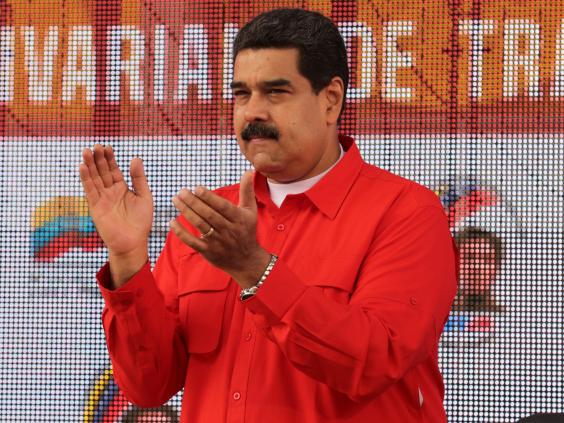
President Nicolas Maduro, 54, a former bus driver, has been presiding over a creeping collapse of his country’s economic and democratic wellbeing pretty much since the day he was elected, narrowly, in 2013 following the death from cancer of his mentor, Hugo Chavez. The slow-burn nature of the crisis is one reason the world has had so much trouble keeping any focus on it.
Predictions of the imminent demise of Maduro and, indeed, of Chavez’s entire leftist experiment – his Bolivarian socialist revolution – are made with near tedious regularity. “Corruption, falling oil prices and talk of a coup: The end of Chavez's socialist dream in Venezuela”, trumpets a dispatch I wrote two years ago. The dream may be dead. The regime, however, lives on.
In truth, the top court, stacked with pro-government cronies, began neutering the legislature the moment the opposition won control of it in a landslide in December 2015, essentially nullifying any and every law it passed. It also ensured the stymying of a constitutional attempt by the opposition to seek the removal from office of Maduro before the end of his term in 2018.
But does this latest ruling, which declares that either the court itself or another institution of its choosing will take over the functions of the legislature, mean a line has finally been crossed? Has Maduro shed any last pretence of preserving democracy in Venezuela?
This is the realisation that is starting to dawn. “President Maduro is making the population of his country hostages to his own power ambitions,” a German government spokesman declared. “If the division of powers is broken, then democracy is broken,” Spanish Prime Minister Mariano Rajoy observed. Even the US State Department under the hermit leadership of Secretary of State Rex Tillerson managed a pallid public statement of opprobrium.
It creates a new level of pickle for the Organization of American States, OAS, which last month twice debated suspending Venezuela’s membership, stepping just short each time amidst deep acrimony. But that was before the court’s action, which the OAS has now characterised as a “self-inflicted coup d’état perpetrated by the Venezuelan regime against the National Assembly, the last branch of government to be legitimised by the will of the people of Venezuela”.
Suspension from the OAS, if it comes, would be a strong message but a symbolic one. Other steps by the international community could be on the table, including the widening of the few US sanctions already placed on individual officials of the regime. The most recent, issued by the Trump administration, singled out Vice President Tareck El Aissami as an alleged drug kingpin.
But at the UN in New York, still nothing. The two South American countries currently on the Security Council, Bolivia and Uruguay, have shown no interest in putting Venezuela on the agenda. Bolivia’s leftist leader, Evo Morales, would be especially reluctant.
Meanwhile, Russia has made its position clear. “External forces should not add fuel to the fire to the conflict inside Venezuela,” the Kremlin said. “We are confident in the principle of non-interference in internal affairs.” Let them cook in their own juice, in other words.
The wonder, perhaps, is that ordinary Venezuelans have not yet risen in anger. But they are afraid and cynical. Huge street protests in 2014 in several cities left 43 people dead and achieved little. Maduro responded by jailing Leopoldo Lopez, the main opposition leader, who remains behind bars. Other opposition figures have been carted off to prison, sometimes in the dead of night. Newspapers critical of the regime have been shut down. Foreign news outlets such as the National Public Radio of the US (NPR) have been denied access to report from the country.
Yet how much longer can this really go on? People can only be worn down so far. The IMF predicted in 2016 that inflation could top 1,640 per cent this year. According to one survey, three quarters of the population lost an average of 19 pounds in body weight last year because there is so little to eat. This in what was once one of the most prosperous countries in the world.
If a popular rebellion comes, it may start with the poor – once Chavistas – pouring from the hillside slums, or favelas, into central Caracas beating their cooking pans or wielding more dangerous kinds of weapons. But if it doesn’t there is still the chance that the institutions of government will resurface to take the steps needed. Tellingly, the calling out of the president by some braver voices of government has already begun. Luisa Ortega, the powerful Attorney General and usually an ally of regime, said the muzzling of the legislature amounted to a “rupture of the constitutional order”. She added: “It’s my obligation to express my great concern to the country”.
The opposition, a sometimes fractious coalition of competing parties, will take her words as a sign that the regime may be starting to fracture from within. And they will continue to hope that the military, which so far has stood by the president, chooses this as the moment to begin nudging him out of power. Wishing for military intervention carries its own perils, of course.
Weren’t we meant to be past this in South America? It’s been almost 30 years since Brazil, Argentina, Bolivia, Uruguay, Chile and Paraguay shed their dictatorships. Cuba has remained the one nation shorn of all democratic tradition. It behoves us at least to pay close attention to Venezuela now as it teeters on the brink of reversing the trend and becoming number two.