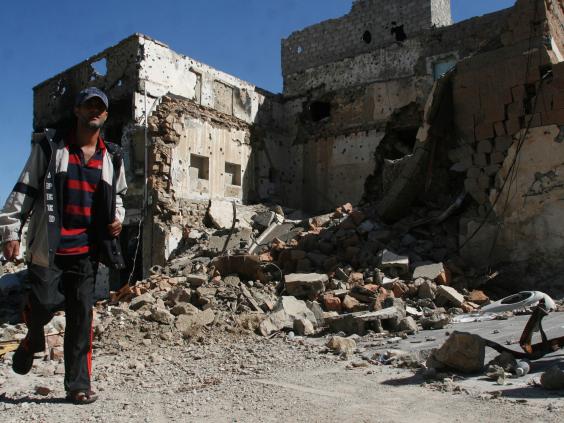
The world is ignoring the worsening humanitarian crisis in war-torn Yemen, the senior UN humanitarian official in the country has warned.
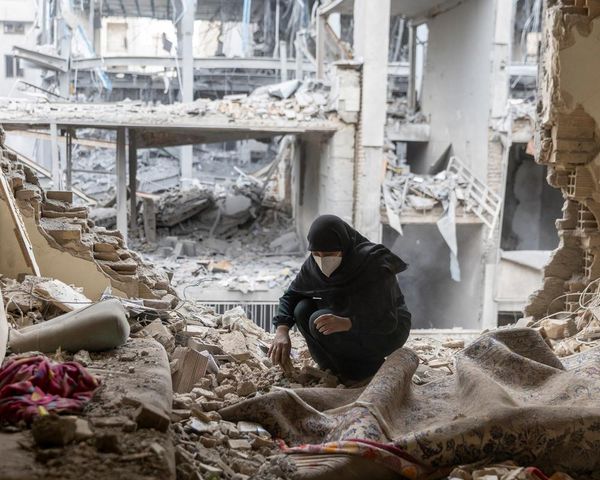
Nearly two years of war between a Saudi-led Arab coalition and the Iran-allied Houthi movement has worsened the plight of millions of Yemenis.
Even before the start of the conflict in March 2015, Yemen was suffering a humanitarian crisis including widespread hunger, brought on by decades of poverty and internal strife.
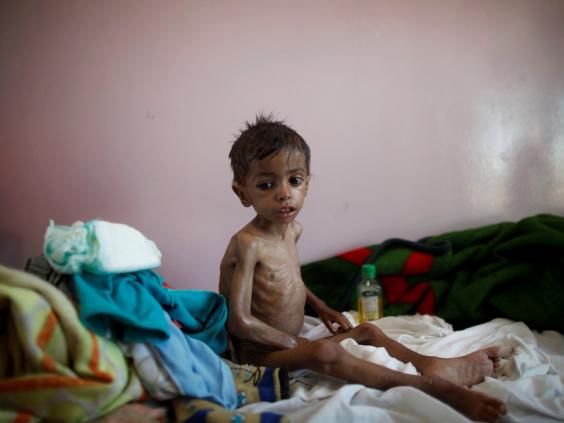
Around half of Yemen's 28 million people are "food insecure," according to the United Nations, and seven million of them do not know where they will get their next meal.
"The humanity doesn't work anymore here," Jamie McGoldrick, the UN humanitarian coordinator in Yemen, told the BBC.
"The world has turned a blind eye to what's happening in Yemen... right now we are so under-resourced for this crisis, it's extraordinary."
Yemen descended into civil war in March 2015 when Iran-backed Shia Houthi rebels took over the capital of Sanaa. Shortly afterwards, a Saudi-led coalition of Middle Eastern states began a bombing campaign at the request of the exiled government.
More than 10,000 people have been killed and nearly 37,000 wounded during the war.
In an interview with the BBC, Mr McGoldrick described the worsening consequences of the conflict.
"Familes are just not able to feed their families. Families are not able to treat their kids who are sick," he said.
"You've got hospitals here who have massive numbers of kids who are born prematurely, and that's a combination of stress and the ability for mothers to feed themselves. You look at the banking centre, it no longer works."
He said one and a half million civil servants had lost their jobs over the last three months.
"So that's more than half of the country without any possibility of looking after themselves. And that's the scale of it."
He added: "The airport is closed in Sanaa. The ports coming into Hodeidah, which serves 80 per cent of this country for food and fuel and all the other medicines they need, is completely restricted.
"People feel as though they're trapped here."