
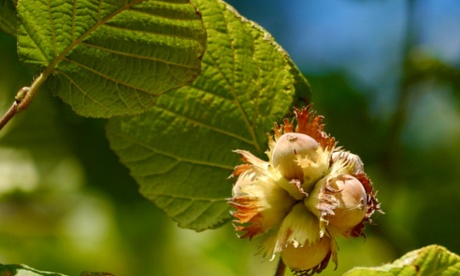
After a morning of rain, the woods are fresh and vibrant again in ways they haven’t been for a while. The sun is strong, and in a clearing before the lane, shines through leaves as if they were green glass.
Most hazel leaves have singed edges as life begins to withdraw from the margins, draining down veins back into the branches. On the ground below are scatterings of hazelnuts, plucked but left uneaten.
Usually they have been split by squirrels or delicately chiselled by dormice. Seeing them ripe and whole feels odd, like finding a picnic with special food left abandoned in the wood.
This is a deceptively busy time. The air is still and quiet, but for a passing raven’s oaths and the drone of light aircraft the skies are high and empty.
The ground is where the action is: ramblers with maps and walking poles follow old ploughed up ways across harvested fields turned to turn a profit. Shotguns bring down pheasants or rabbits.
Each leaf that spins and twirls through air in its own unique dance touches down to be found by worms and fungi, sucked into the rot which feeds the tree.
Those leaves not ready to fall are still turning sunlight into woodland.
Looking into hazel leaves, I catch the silhouette of a wasp against the sun. The wasp is on the other side of the leaf and looks like a shadow puppet seen through a screen against green light.
The wasp moves, quick-slow, in an erratic shadow play. She may be hunting aphids or collecting honeydew or following a scent trail across the surface of the leaf, but from the underside she appears as a little demon enacting a magic lantern phantasmagoria.
Her dance feels full of symbolic meaning even if I can’t understand it. Then, at leaf’s edge, wasp and shadow meet.
As the wasp crawls over the edge, so her shadow puppet climbs into her. There is a moment when the two are seen together and another when they are one. When that happens the wasp flies away.
Twitter:@DrPaulEvans1













