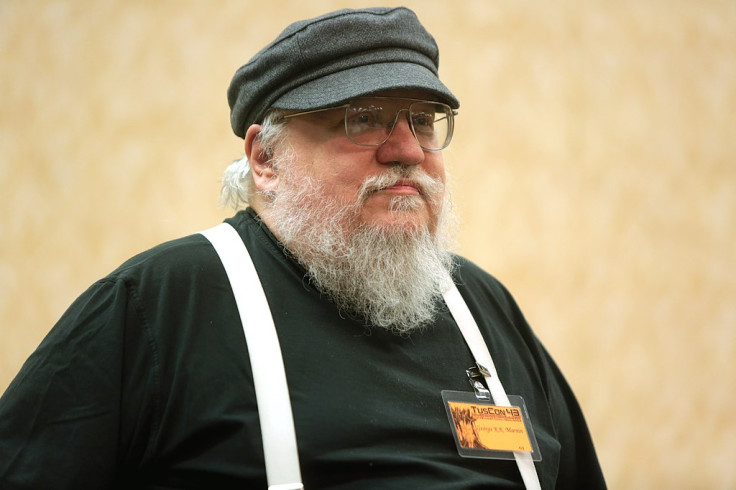
For fantasy readers, The Winds of Winter has become less a forthcoming novel and more a test of faith as they have spent 15 years waiting for George RR Martin to finish it.
In that same window, Brandon Sanderson has released dozens of novels, broken crowdfunding records, and now confirmed he is in talks with AAA video game studios about a Mistborn adaptation. For fans watching from the sidelines, the contrast could not be sharper.
Martin's sixth A Song of Ice and Fire novel remains incomplete. In updates throughout late 2023, the author estimated he had roughly 400 to 500 pages left in a manuscript expected to exceed 1,500 pages.
As of January 2026, he has described himself as 'struggling' with the remaining chapters while juggling executive producer duties on HBO projects, including House of the Dragon and A Knight of the Seven Kingdoms, which premieres on 18 January 2026.
In the vacuum left by Martin's delays, Sanderson emerged not just as a prolific alternative but as a blueprint for how an author should handle the siren song of Hollywood.
'We Don't Have to Care': Sanderson's Financial Independence
In an interview with Nerd of the Rings, Sanderson explained why a Mistborn film adaptation is not his priority. 'We've done well enough that we don't have to care,' he said, referencing his 2022 Kickstarter campaign that raised over $41.7 million from more than 185,000 backers. That figure remains the highest-funded Kickstarter in the platform's history.
This financial independence allows Sanderson to reject offers that do not meet his creative standards. 'I want a filmmaker with passion for the material and talent to do it justice,' he told attendees at Celsius 232.
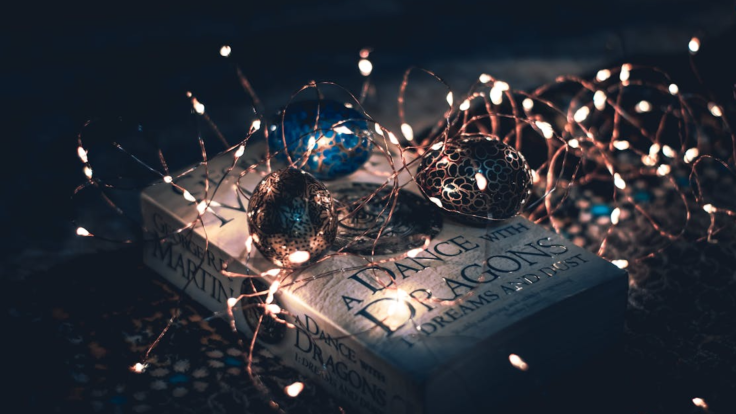
The Author Who Refuses to Let The Winds of Winter Syndrome Take Root
The primary fear for any fantasy fan is that a screen adaptation will cannibalise the author's time, leading to the same stagnation that has plagued The Winds of Winter. Sanderson is acutely aware of this 'Martin Problem.'
Sanderson has frequently cited Denis Villeneuve's work on Dune as the gold standard he hopes to replicate, seeking a director who grew up loving the source material rather than one looking for a generic 'content' play. However, he is also being transparent with his 'Sandersonites' about the cost of such a project.
In his annual 'State of the Sanderson' address, he warned fans that if a Mistborn movie deal is finalised, he will likely have to hit the pause button on his writing—specifically on the upcoming Ghostbloods series.
Sanderson recently confirmed that the first book of the Ghostbloods trilogy (Mistborn Era 3) is largely complete, with a firm release date set for late 2028. He plans to write all three books in the trilogy before the first one is published to ensure narrative continuity.
He expects to be 'very involved' in any production to ensure the books' soul remains intact. The difference here is honesty; Sanderson is giving his readers a 'heads-up' rather than leaving them in the dark for a decade.

Why Quality Control Matters More Than The Winds of Winter Hype
While George RR Martin has spent the last several years executive producing a dizzying array of Game of Thrones prequels and sequels (including the ongoing House of the Dragon and the upcoming A Knight of the Seven Kingdoms), the actual conclusion to his original saga remains out of reach. This has led to a significant rift in the fandom, with many now doubting if the series will ever be finished. Sanderson, conversely, has built his reputation on reliability.
While he recently revealed that he is in talks with AAA game studios for a Mistborn video game project, he remains steadfast that his primary job is finishing the books. His readers are eager for a Cosmere movie precisely because they trust his work ethic. They know that if he steps away from the keyboard for a year to sit in a director's chair, he will actually return to finish the job.
The stakes for a Mistborn adaptation are incredibly high. For Sanderson, the goal isn't just to see his name in lights, but to create a cinematic universe that mirrors the complexity of his writing. He has even joked that 'Hollywood only noticed him because of the money' from his Kickstarter, but he is using that sudden interest as leverage to ensure he isn't sidelined as other authors have been.
By refusing to rush, he is protecting his intellectual property from the 'adaptation fatigue' that has hit other franchises. He isn't interested in a superficial cash-in; he's interested in a legacy that doesn't leave his readers waiting 15 years for a resolution that might never come.