If you forget for a minute that the GRU doesn’t actually exist – it was reformed and renamed several years ago – you’d conclude that not since the days of the KGB has a three letter acronym caused quite so much alarm in the West.
This week, the British, Dutch and American governments effectively declared war on the GRU, Russia’s military intelligence service. It was responsible, said UK foreign minister Jeremy Hunt, of mounting a “reckless and indiscriminate” cyber campaign with impunity; and it would be exposed. Sure enough, a day later, four alleged GRU officers were exposed.
It was an unprecedented step, taken jointly by the UK and Dutch governments. But it was followed soon after by more revelations and an indictment from the United States that listed in great detail the alleged crimes of these men and another three agents in Moscow. They had tried to hack the Organisation for the Prohibition of Chemical Weapons (OPSW), anti-doping agencies, FIFA, and another 36 sporting agencies, it alleged.
Not for the first time this month, the GRU became the world media’s most fashionable bogeyman. Strangely, there was little talk of the FSB, the security agency that superseded the KGB, or of the organisation running foreign spies, the SVR. They were almost the good guys. As with Robert Mueller’s previous indictment, the GRU had been singled out – shamed as a crazy service out of control, making unenforced errors.
Some suggested the west might even engage on a course of encouraging Russia’s other security agencies to accelerate the president’s tilt away from supporting the GRU’s more risky undertakings.
On one level, the logic of singling out the GRU makes sense. These were the GRU’s missteps, continuing a whole catalogue of documented blunders.
Somehow, they had thought nothing of sending four officers under real names to snoop on the OPCW, leaving a trail of evidence back to the GRU. Somehow, they thought it was a good idea for the officers to travel together and meet an embassy official under CCTV. Somehow, they thought it was OK to register officers’ cars in databases accessible on the black market – an oversight that could possibly reveal the identities of another 300 agents.
The GRU, too, has also become much more assertive in western overseas operations than perhaps ever before.
For long periods of Mr Putin’s rule, the GRU was almost absent from the big intelligence table, without no obvious role in a shrinking empire. But its fortunes turned in 2008, after the war in Georgia, when the army realised it needed better intelligence for delicate operations. Another turning point came four years later, with the appointment of Valery Gerasimov as chief of the General Staff.
“Their horizon widened, and with supply came demand,” says Tatyana Stanovaya, CEO of the political analysis firm R.Politik. “And they settled into this new role just as Putin began to reject his own idea that Russia needed to be friends with the west.”
Talk of a spat between the FSB and GRU is nonsense
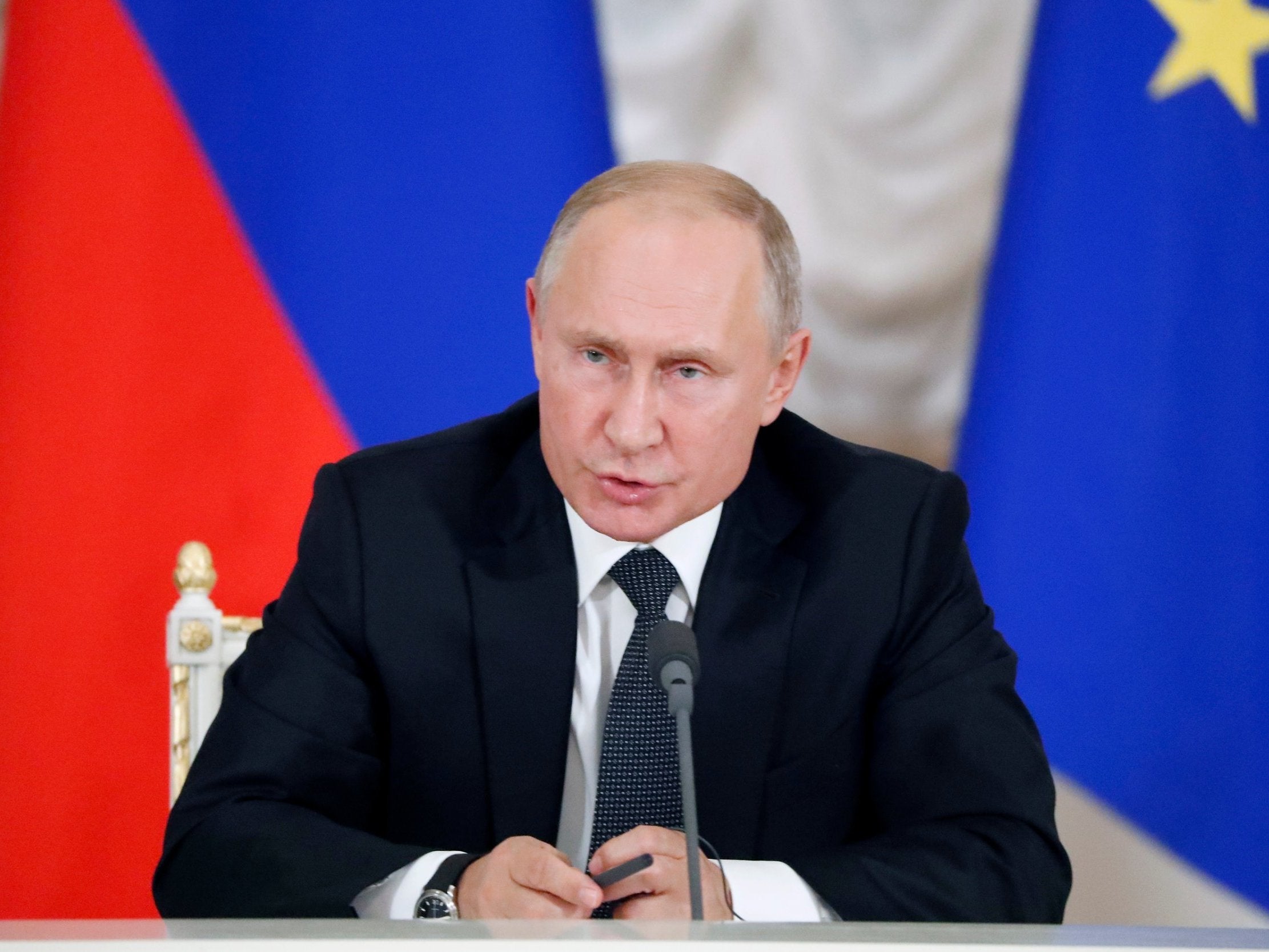
The GRU effectively became a favourite attack dog for a leader no longer interested in playing by the rules. As Mr Putin broadened his horizons, so too they moved to the next gear, moving beyond the traditional strategic horizon of the post-Soviet space. Beginning in late 2014, they began to play an important role in cyber operations, and they sharpened their field skills in eastern Ukraine and Syria.
According to some sources, the success of this more brazen approach has, indeed, caused a certain level of inter-agency enmity – the kind that some in the West seems to be hanging its hopes on.
In one version, minister of defence Sergei Shoigu is said to be on bad terms with the FSB. In another, the elite SVR is said to be condescending of the GRU given the mistakes they have made. Some have even drawn attention to a statement SVR chief Sergei Naryshkin made about the Skripal poisoning. While describing the affair as “sewn-up provocation”, he pointedly said it had been carried out “unprofessionally”. Had that been a thinly veiled criticism of the GRU?
According to Ms Stanovaya, there has certainly been a growth in the number of inter-agency conflicts since the Skripal scandal. Officers have complained that the GRU had not been professional enough and were putting their president on the line. At the same time, she notes, systemic loyalty to the president guards against any major excesses, including leaks and hostile briefing. The first rule in Russia's secret world is allegiance to Putin.
Other sources suggest that talk of inter-agency tensions is overblown.
“Talk of a spat between the FSB and GRU is nonsense,” says Andrei Soldatov, author of The New Nobility and specialist on Russia’s secret services. “On the other hand, the GRU is being told to rein in their operations and concentrate on damage control. The FSB is being brought in to investigate leaks, and one doesn’t happen without the other.”
Western hopes that these changes will lead to less aggressive Russian intelligence policy in the longer term are, however, likely to be disappointed. The leader has shown little sign of turning against his men.
“For Putin, these guys are still heroes, living modestly, and risking their own lives to protect the motherland,” says Ms Stanovaya. “How can he criticise them? No, he’ll give them more muscle. Any step back would be seen as a recognition of defeat.”