RUOK PVO?
It’s been almost two years since Tony Abbott was interviewed by Peter van Onselen on his Sunday politics show on Sky News. “PVO”, as he is known, makes no secret of his frustration that the PM, for whom he once worked as an adviser, refuses to come on his show. The prolific journalist is also a professor at the University of Western Australia and a contributing editor at the Australian. Australian Agenda is a joint production between Sky News and the Australian and PVO works closely with the Oz’s editor-at-large Paul Kelly, a regular panellist and joint interviewer.
On Saturday the PM agreed to a pre-recorded interview with Kelly and sat down for a rare face-to-face with him and his colleague from the Oz, Greg Sheridan. PVO was nowhere to be seen. He tweeted his annoyance on Saturday: a pic of the Sky set with Abbott facing Kelly and Sheridan and the words “Tony Abbott in the hosts chair!”
Behind the scenes at Sky tempers were running even hotter. The pre-recorded interview was slated to be broadcast during Australian Agenda on Sunday morning but PVO told Sky producers he would not introduce it, even threatening to resign. Eventually it was aired late on Saturday afternoon – in a graveyard timeslot.
We asked PVO what had happened and he was candid: “The PM didn’t want me to interview him and I am not going to look like an idiot and throw to an interview that I haven’t been part of when I am the host of the show.” He added: “They organised it for the day before and I wasn’t invited.”
So close yet so far...the PM was here yesterday, I'll be sitting here today. #AustralianAgenda pic.twitter.com/ZLA4w5HslC
— Peter van Onselen (@vanOnselenP) March 14, 2015
Traill mix
Kim Traill got her big break as a contestant on the groundbreaking ABC series Race Around the World in 1997, graduating to become a professional video journalist for Foreign Correspondent and 7.30.
She was a full-time VJ for SBS’s Dateline for five years between 2000 and 2005, shooting 20 documentaries, mainly from the former Soviet Union.
In 2009 she wrote a book about the collapse of the USSR and she speaks fluent Russian and German. Now based in Vienna, Austria, as a freelance journalist, Traill pitched a story to the new Dateline EP Bernadine Lim in January – after the Charlie Hedbo massacre – about the radicalisation of young Muslims in Austria.
Last Tuesday Dateline broadcast the story with a London-based freelance journalist, Danielle Isdale, as the reporter, and gave Traill no credit on screen or on the SBS website.
Traill told the Beast she felt initially misled by SBS into thinking she would be the reporter on the story she had found, and that Isdale was being sent over only to help her because time was of the essence. But when Isdale asked to be filmed with the talent Traill became increasingly frustrated and refused to sign the contract, though she continued to work on the program.
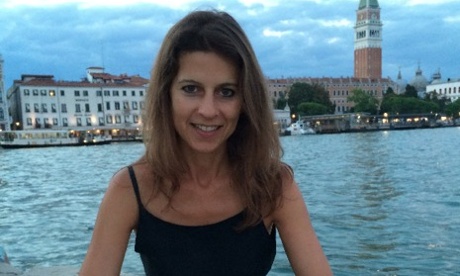
Before filming, SBS sent Traill a contract; she raised some issues and did not sign it. After filming had finished and once Traill had seen an initial cut, she again raised issues in the contract with SBS staff but did not receive a response.
The dispute continued over several weeks and the program eventually went to air without Traill signing the contract sent to her by SBS, which pertained the rights to her footage.
But SBS insists it had a “contract on foot” with Traill because she undertook the work and they deny misrepresenting the nature of the work she was asked to do.
She has now been paid. SBS says she won’t receive any residuals if the program is resold overseas because it retains the copyright. A spokeswoman issued the following statement to the Beast: “SBS has a contract with Ms Traill and SBS rejects any claim that it does not have the rights to broadcast the material in question.”
This is the second dispute over copyright Dateline has had this year with a former contractor. The Gold Walkley winner Mark Davis was criticised last month by the SBS managing director, Michael Ebeid, for using the material he shot himself in a Four Corners report for ABC TV.
Puccini’s aria moment
Jo Puccini has been named the new executive producer of the ABC’s 7.30 program, replacing Sally Neighbour, who left to head up Four Corners. Puccini said she was excited and honoured to be taking over and looked forward to working with Leigh Sales and the team “to continue to deliver the agenda-setting journalism, analysis and interviews the program’s audience expects”.
The former editor of the national reporting team, Puccini is married to the head of current affairs at the ABC, Bruce Belsham, earning the power couple the nicknames Brian (Loughnane) and Peta (Credlin). While Puccini has held a number of management roles at the ABC, including EP of Media Watch, there is some sensitivity around the appointment because of the relationship.
The ABC changed the interview panel and adjusted the reporting lines to take account of this. “ABC News has observed strict protocols to counter the risk of actual, perceived or potential conflict of interest which might arise from this situation,” an ABC spokeswoman told the Beast.
“The merit-based selection process for 7.30 EP was run entirely by director of news Kate Torney and a selection panel consistent with ABC rules and which did not include the head of current affairs. Ms Torney and [head of newsgathering Craig] McMurtrie will deal with 7.30 EP performance management, travel authorisation and personal reimbursements. Any staff disputes will be referred to Ms Torney and/or Mr McMurtrie as required. Normal upward referral will apply on general program matters.”
Torney praised Puccini as a fine editorial leader. “Under her leadership the national reporting team has become a vital part of ABC News, further developing our investigative capacity and delivering original reporting for television, radio and digital news audiences across the nation,” she said.
Pay to play: Turnbull v Murdoch
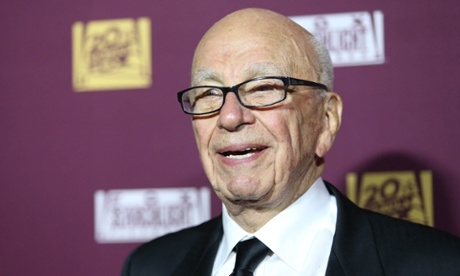
Given Rupert Murdoch’s rather endearing habit of tweeting his thoughts and feelings so freely and without a filter, it has become a lot easier to interpret News Corp Australia’s position on certain issues, in particular media policy. “Aust!,” Murdoch tweeted on Monday. “Turnbull’s plans to scrap certain rules suit buddies at Nine. Can’t oppose dumping all regs but not this. Nice to see how MT plays”.
The tweet was Murdoch’s reaction to Turnbull’s proposal to deregulate media ownership rules – except the anti-siphoning list which gives free-to-air TV exclusive rights to popular sport. (News Corp Australia half-owns Foxtel, which would love to get its hands on the sport which is now shown on free-to-air.) News Corp Australia’s chief executive, Julian Clarke, was clear where he stood: “It is critical that any package of reform includes severely reducing the length of the outdated anti-siphoning list; which is the longest such list in the world, covering over 1,300 sporting events, and has the effect of reducing the public’s access to sporting events.”
The next day Murdoch loyalist and News Corp Terry McCrann was on the case. “The anti-siphoning imposes critical negatives on Foxtel. It limits its ability to get programming in its own right to build eyeballs; and it forces Foxtel to pay what is effectively a tax to one or more of the FTA-TV networks to get secondary access to programming.”
The other proposals, which would change the rules about who can own what in what market, were of course not slammed by Murdoch because they mean he could go out and buy Channel Ten the next day, if he so desired. On Tuesday, Turnbull hit back at Murdoch’s tweet in an exclusive interview with Fairfax, saying ordinary Australians should still be able to watch major sporting events for free.
“The policy question for government is simply whether we want to continue with a free-to-air television system where ordinary Australians, who may not be able afford a Foxtel subscription, can nonetheless watch their favourite sport on free to air TV?” the communications minister told the Australian Financial Review. ‘‘This is a very Australian arrangement. In many countries, pay TV has been able to secure the rights to major sporting codes thus requiring sports fans to pay for a subscription.”