Labor MPs perform for cameras in The Killing Season
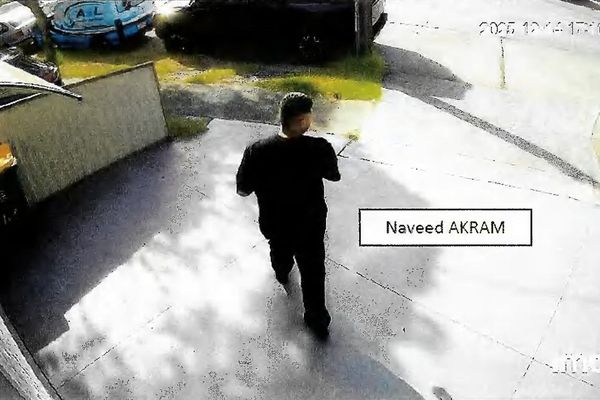
Many viewers were fascinated by the re-enactments of the highly charged events in episode two of The Killing Season, shown on ABC TV on Tuesday night. The best example is Senator Sam Dastyari, then the New South Wales ALP state secretary, who was filmed making phone calls to operatives on a Melbourne street (on an iPhone 6 which didn’t exist in 2010).

But what might surprise viewers is how many of the all-star political cast agreed to film the extra sequences to be used as overlay in conjunction with archival footage and interviews. We checked with Aunty and the list includes: Wayne Swan, Tony Burke, Chris Bowen, Anthony Albanese, Alan Griffin and Joel Fitzgibbon. And yes, even the leads themselves: Kevin Rudd and Julia Gillard.
The cameramen usually shot the extra footage with two cameras: one shooting in a rough way to look like genuine news footage and the other in a smooth way to create a stylish way to get in and out of archival footage. While the re-enactments were criticised as distasteful by some, everyone agrees the result was a magnificent documentary. Sarah Ferguson’s The Killing Season again attracted almost one million viewers in the five capital city markets alone.
Midwinter revelries remain off the record
To more contemporary drama. The working journalists who attended Wednesday’s Midwinter Ball in Canberra’s Parliament House – which raised $340,000 on the night and more than $3.2m so far in total – were told by the press gallery president, Sky News’s David Speers, that the entire evening was off the record. If anything newsworthy happened, they were not supposed to report it. “Gallery colleagues, for anyone attending the ball on Wednesday night … the whole thing is off the record,” Speers wrote to them. “This includes the speeches from the PM and opposition leader. No cameras, no tweeting, no reporting. There will be a brief period at the start as usual for crews to get some shots of the room. If you have any concerns/questions – please see me.”
A few of those gallery members he emailed did indeed voice their concerns with him, we hear. Speers told Weekly Beast: “I made the decision in consultation with the ball committee, press gallery members and the leaders.”
However, not everyone was happy with the agreement, and others said it was simply unworkable. At an event where half the guests were not journalists but business people and partners – all of whom were not bound by the journalists’ code of ethics – it was a ridiculous rule, probably insisted on by the political leaders themselves. Gallery members say if something genuinely newsworthy happened there would have been a stampede to file, off the record or not. And there was no shortage of tweets.
Seven’s image takes a hit over Chris Bath resignation
The resignation of Chris Bath from Seven after 20 years has been a PR disaster for the network. A carefully-crafted press release with warm words from chairman Kerry Stokes – “Channel Seven will always have a place for Chris, in the meantime however, I wish her every success for the future” – did not stop the negative press. Bath is a popular personality on and off the screen and is one of Seven’s most familiar faces. On Wednesday Sydney’s Daily Telegraph had already moved on to asking when Seven was going to dump its other news anchor, Mark Ferguson.

“While Chris Bath’s shock decision to quit Channel Seven shifts some of the spotlight back on former Sunrise anchor Melissa Doyle, it also begs the question — when will the network finally call time on the failed experiment of their number one Sydney newsreader, Mark Ferguson?” the Tele asked.
The fact is Seven News is failing and management has always blamed the newsreaders rather than the tired bulletin itself. Nine News has beaten Seven News in the ratings for the past four years. On Tuesday night Nine’s bulletin, hosted by Peter Overton, beat Seven News by 122,000 viewers. After fighting hard to win the role of main news anchor in 2009, Bath was dumped last year and replaced by Ferguson – who has not improved the ratings at all. It is well known at Seven that Bath did not get on with news management, in particular Sydney news director Chris Willis.
When asked about her feud with Willis by the Tele, Bath did not deny it. “There is nothing wrong with robust debate. I don’t know of a newsroom without tension. But over the years I have worked with some of the greats. People like Ian Cook, and from time to time Ian Cook and I had some fairly full and frank discussions and I ended up reading a eulogy at his funeral.”
Adding further fuel to the fire, the anti-Bath camp at Seven have leaked stories suggesting she quit over money, making her sound like a diva. “Seven executives perceived the half a million dollar salary as generous to Bath, given she was no longer the face of Seven News Sydney,” Sharri Markson wrote in the Australian.
Some may be shocked by the $700,000 to $800,000 salary the 48-year-old was earning, but in commercial TV that is standard if you’re the host of a prime time news show. Bath’s predecessor Ian Ross was the first newsreader to earn more than $1m – and that was for just four days a week. The salaries are so high because when an on-air personality attracts an audience the advertising dollars are not far behind.
Photographic memories are safe, insists Fairfax
Stung by widespread reports about losing control of its priceless photographic collection to a business in Little Rock, Arkansas, the Sydney Morning Herald has been trying to repair the damage to its reputation. After agreeing to a cut-price deal to digitise its collection, some of the archive is now trapped in an Arkansas warehouse and the business is in receivership.
After a series of detailed reports by ABC correspondent Lisa Millar, the Herald editor Darren Goodsir, tweeted a link to what he said was the “real story” on Fairfax’s photo archives. “Some really upsetting misreporting from @ABCnews on this issue,” Goodsir said. Both Millar and the host of PM, Mark Colvin, hit back, saying the comment was a “bit rich” after Goodsir had been invited by the ABC to give the company’s perspective.
This week, Fairfax issued a press release saying it had reached an agreement with the receiver. “We are pleased to be able to resume this important work,” Goodsir said. “The digitisation work is already well progressed, and once the tagging process is completed, our valuable archive of images will become searchable and accessible – and most importantly, preserved for the future.”