Review on ABC bias: a ‘distraction’ or new necessity?
In December 2013, ABC chairman Jim Spigelman announced the ABC would produce a series of editorial audits to tackle allegations of editorial bias head on.
The audits would be conducted by people outside the ABC and would be on top of all the other checks and balances the ABC is already subject to. It was an unashamed attempt to appease a Coalition government intent on slashing the public broadcaster’s budget. It screamed, “Look, we’re doing something about allegations of bias”. It didn’t work, of course, and in May last year the ABC budget was cut anyway and hundreds of people lost their jobs and several programs were axed. But the editorial audits are here to stay and some retired journalists are even making good money out of them.
The ABC won’t reveal what former Australian Financial Review editor Colleen Ryan was paid for her contentious review released this week, but we can tell you the annual report documents that former 60 Minutes producer Gerald Stone was paid $39,000 to review the ABC’s asylum seeker coverage and former BBC executive Andrea Wills was paid $17,241 to review the ABC radio interviews with the prime minister and the leader of the opposition during the 2013 federal election campaign.
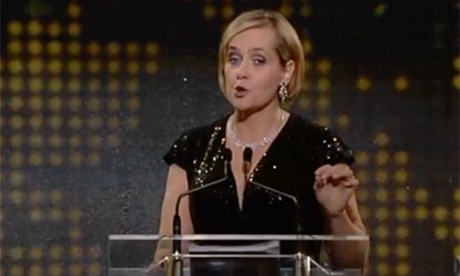
This week the fourth review, undertaken by Ryan, was released. It found, among other things, that Sarah Ferguson’s TV interview on 7.30 with treasurer Joe Hockey was aggressive and the “tone of the questioning in this particular interview could have been interpreted by some viewers to be a potential breach of the ABC’s impartiality guidelines”.
The ABC’s director of news, Kate Torney, has rejected the review’s findings on that point, as have prominent broadcast journalists including Mark Colvin, Quentin Dempster and Kerry O’Brien. But the review garnered damaging headlines such as “Sarah Ferguson interview with Joe Hockey ‘breached ABC bias guidelines’: review” and “ABC host Sarah Ferguson breached bias rules with Hockey interview”.
According to the head of editorial policies, Alan Sunderland, the interview did not breach editorial guidelines at all. “Sarah’s interview with the treasurer stands now, as it always has, as an excellent example of a strong news-making interview that the ABC was proud to air, and we hope there are plenty more like it,” Sunderland wrote on the Drum. “It has not been found to breach any editorial policies.”
But the damage is done and the reports will be used by the ABC’s enemies as “proof” of bias. What a spectacular own goal for Aunty. We asked Ferguson how she felt about all the fuss and she said she stood by the interview. “I want to get back to doing my job,“ Ferguson told the Weekly Beast. “It’s a distraction from the job I am doing, and trying to do well. I would rather be in the edit suite talking about the Labor documentary than this.” Ferguson is finishing off a series on the Rudd and Gillard governments to screen in June.
The fatigue of war
Nine may have had some painful last-minute legal issues with its two-parter on Gina Rinehart, House of Hancock, but at least the Sunday night drama paid off in terms of ratings, attracting 1.4m viewers for both episodes. Unlike Nine’s expensive miniseries Gallipoli – three years in the making – which slumped from 1.1m in week one to just 580,000 viewers in week two. The relatively late start of 9pm on a school night may be to blame – but perhaps the unprecedented decision to make the entire series available on streaming service Stan played a part too. Or maybe the audience is already sick of Gallipoli programs – and it’s only February.

But back to Gina Rinehart and her 11th hour bid to view and edit the miniseries about her colourful life. Whether Australia’s richest person actually watched the show when her legal team got their hands on it, after an extraordinary Saturday court hearing, we’ll never know. But her instructions were to cut certain scenes out, about four minutes in total, and Nine agreed. So what scene distressed her the most? Sources say it turns out it wasn’t any particular legal or financial point which was hotly disputed but rather a scene right at the end in which Rinehart was not looking her best. The scene which we will never see is of a contemporary Rinehart, played by actress Mandy McElhinney with the aid of a fat suit and prosthetics, striding across the Pilbara with mine explosions going off in the background. Nine agreed to leave the unflattering shots on the editing suite floor.
Middleton spruiks Sky
Broadcaster Jim Middleton is a really nice guy who had a terrific 44-year career at the ABC. Made redundant after the Australia Network was shut down by the Coalition, Middleton took up a position at Sky News Australia in Melbourne, a pay TV outfit which is constantly at war with the ABC’s News 24. Middleton has taken on the role of chief ABC critic, bursting into print in the Australian on Monday with a piece about how Sky is so much better than the ABC, “Lean and hungry Sky puts Aunty to shame. And what we’ve got [at Sky] is pretty top class — a newsbreaking 24-hour news service, run on the smell of an oily rag, the sweat, the initiative and enthusiasm of youthful staff, guided by a handful of terrifyingly overworked older hands,” Middleton enthused. “My brief experience is that Sky is generally both faster and more authoritative than the cumbersome competition.”
Middleton said while Sky did such a great job with just 200 staff, ABC News 24 did a lacklustre job with 1,500 employees of ABC News at its disposal. What no one at Sky likes to talk about, though, is that most of their material is sourced from channels Nine and Seven, as Sky simply doesn’t have camera crews to send out of the road. Most of the news conferences you see are coming from feeds from other channels, while the ABC has to film all its own material.
But the strangest line was the one about who has the bigger audience. Overall, the ABC outrates Sky, but Middleton wrote that in pay TV homes they prefer Sky: “There is no statistically reliable way of comparing Sky News’s audience with ABC News 24, but suffice to say that in those households with Foxtel, Sky News significantly outrates its public competitor.” If there is no “statistically reliable” way of comparing them, perhaps they shouldn’t be compared. But here are the facts: pay TV is in an estimated 30% of metro households. In those households Sky News reaches about 10% of people each week and News 24 reaches about 6%. However, not all pay TV homes have access to HD channels – which means not all of them are even getting News 24. Confused? The reaction to Middleton’s piece from many of his former colleagues and friends within the ABC has been more bemusement, and some disappointment, than anger.
Beheading picture in public interest: press council
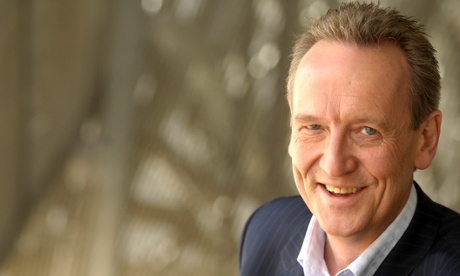
Last August there was much debate about the publication around the world of a photograph of American journalist James Foley about to be beheaded. The Daily Telegraph published it on page one with the headline “Barbarians behead US journalist in grotesque propaganda clip. PURE EVIL”.
The image showed Foley in an orange jumpsuit kneeling in front of a hooded person holding a long knife. After receiving a complaint, the Australian Press Council considered whether it had breached the standards of practice, namely to “avoid causing or contributing materially to substantial offence, distress or prejudice, or a substantial risk to health or safety, unless doing so is sufficiently in the public interest.”
The council concluded that while it did cause substantial offence, the public interest test won out and it was not a breach of its standards. “This is mainly because there was a very strong justification in the public interest due to the extreme behaviour about which it was reasonable to believe readers should be well-informed,” the adjudication said. But the council said publishing the image on an inside page would have reduced “the risk of offence or undue harm to children and others including those who merely saw it in passing”.
The Monthly to Meanjin
Former Good Weekend feature writer and Monthly editor John van Tiggelen has been appointed as editor of literary journal Meanjin, but he won’t start until February 2016.
Van Tiggelen edited the Monthly for two years before stepping down to become a staff writer. He has finished up with the Monthly and told Beast his focus for 2015 would be his children.
Meanjin has been owned by MUP since 2008. CEO Louise Adler said, “John is an experienced magazine editor; he is also a superb writer with a very broad range of interests, and an impressive contact book. His promise to readers is that Meanjin will publish the finest writers and will always be capable of surprise.”
The magazine is celebrating its 75th anniversary this year.