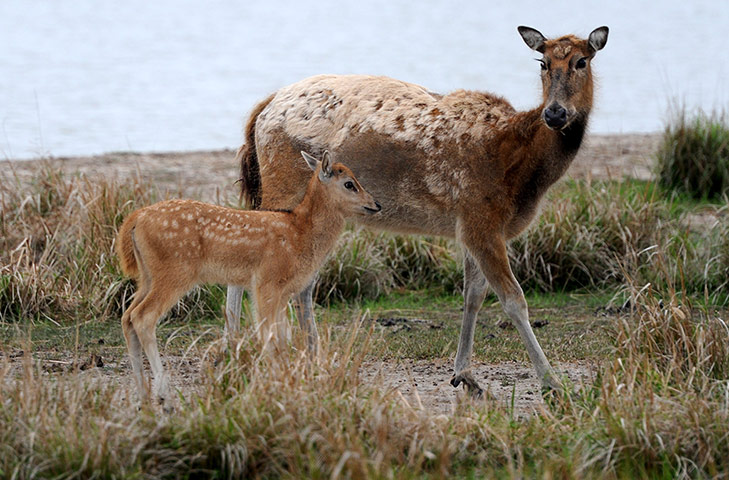
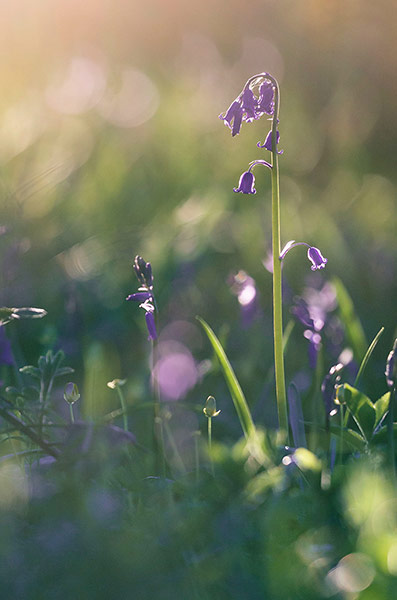
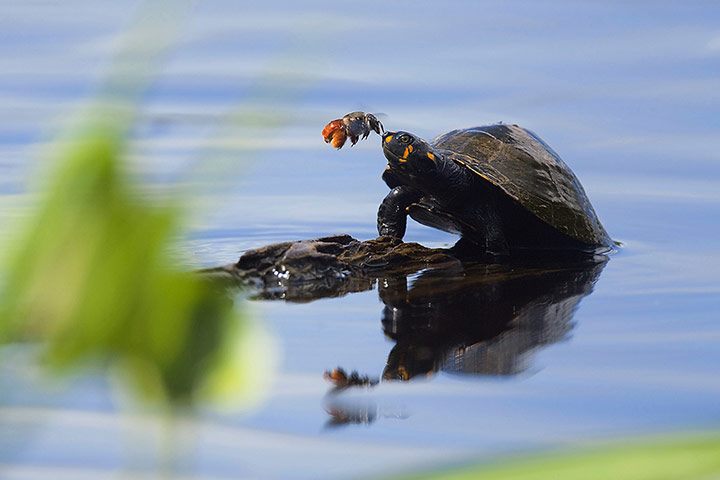
Père David's deer (Elaphurus davidianus), also known as the milu, a species of deer that is currently extinct in the wild. The Dafeng Milu National Nature Reserve in Yancheng City, Jiangsu province, east China, has the world's largest milu populationPhotograph: Han Yuqing/CorbisBluebells in a field in Pembrokeshire, WalesPhotograph: Drew Buckley/Rex FeaturesA solitary bee drinks the tears from a yellow-spotted river turtle in Yasuní national park, Ecuador. The endangered yellow-spotted river turtle cannot easily brush them away while the solitary bee needs the sodium. The unusual interaction, believed to be the first time seen between these two animals, was captured by Dr Oliver DanglesPhotograph: Olivier Dangles/Barcroft
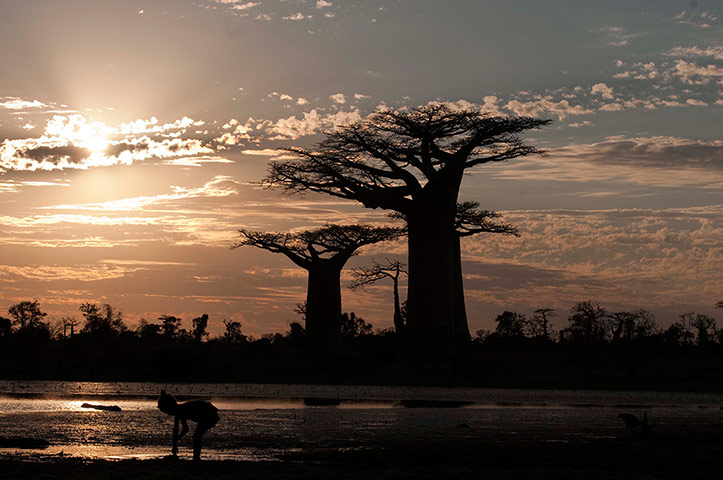
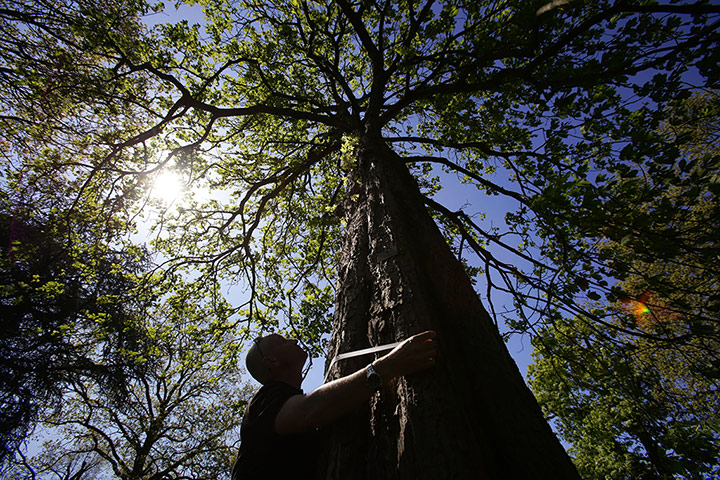
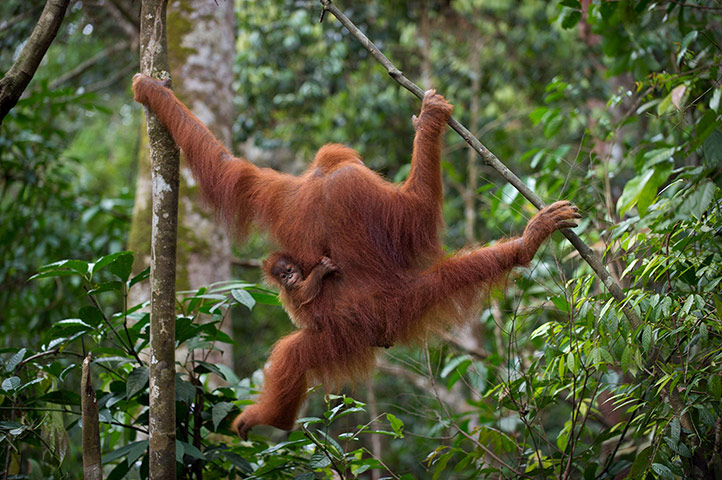
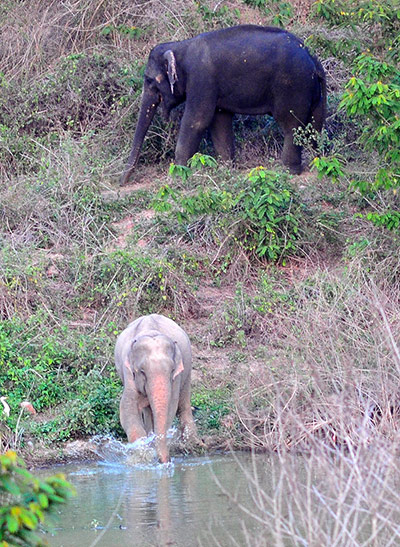
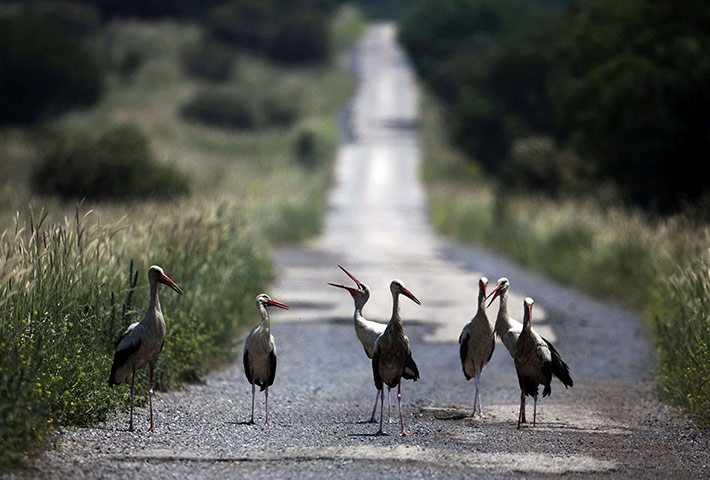
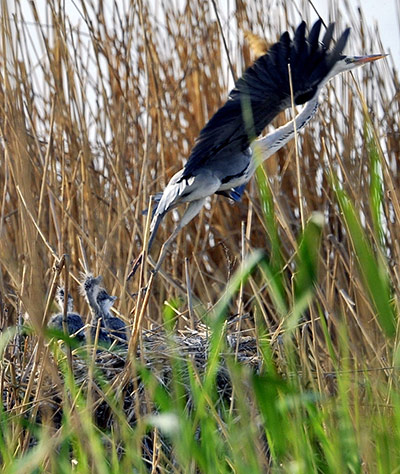
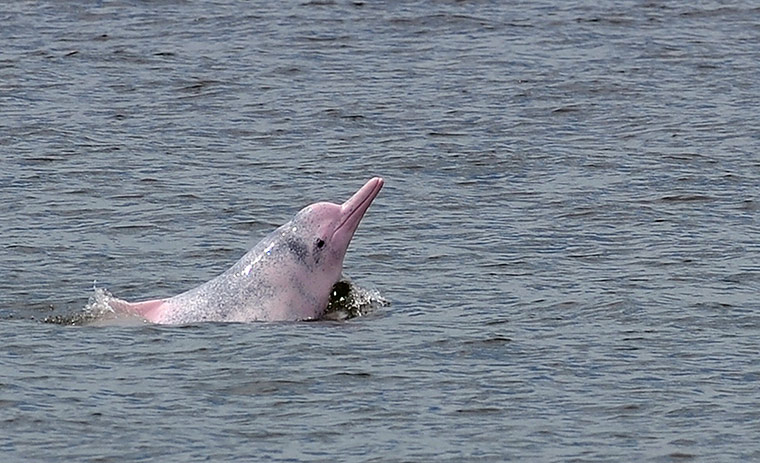
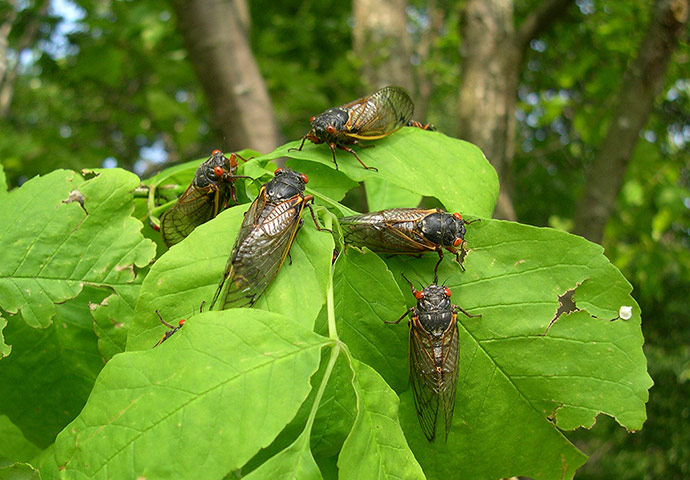
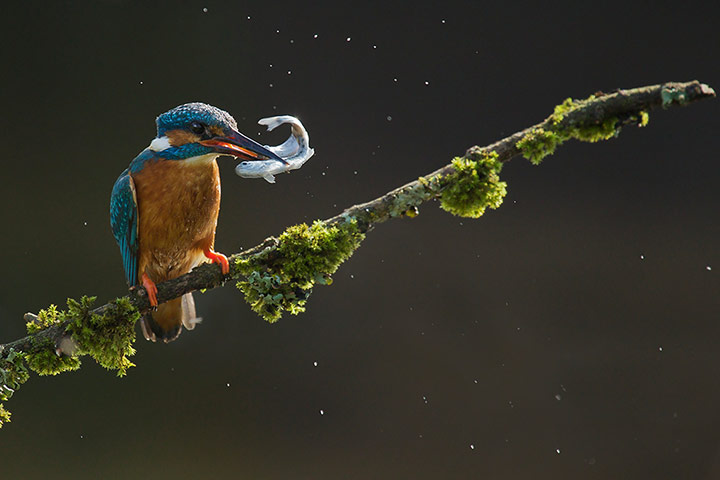
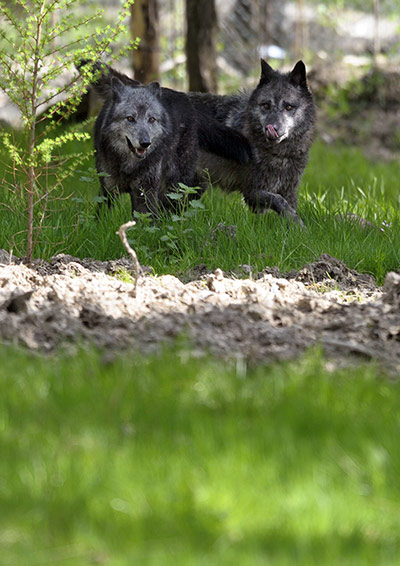
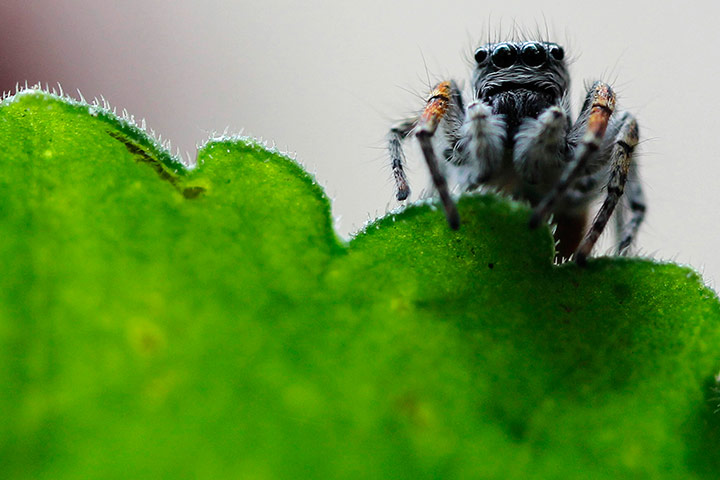
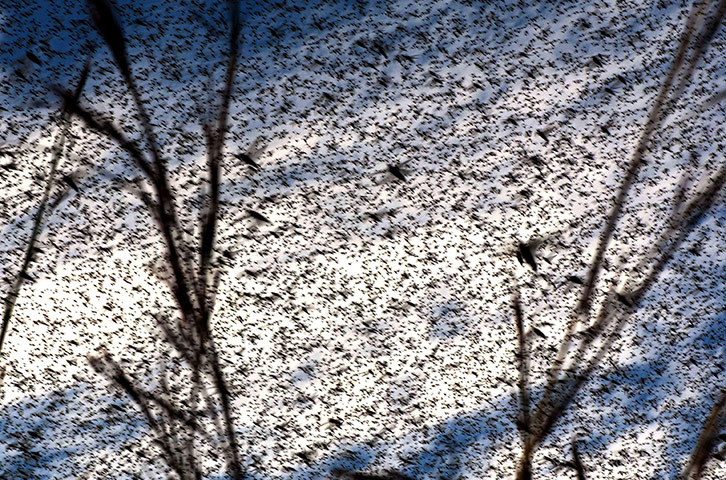
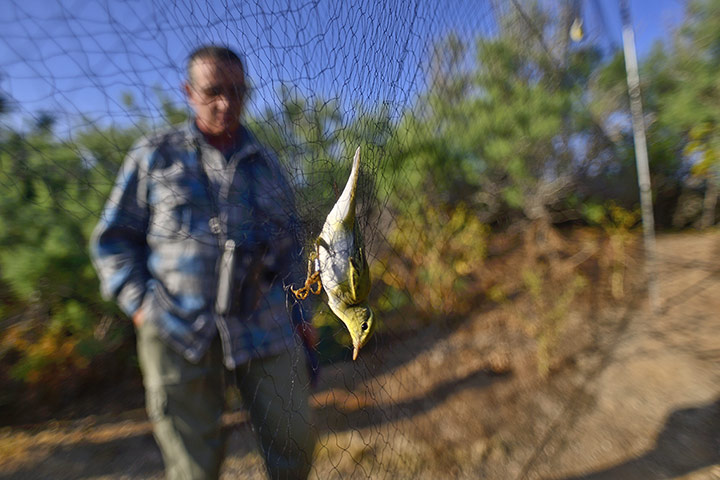
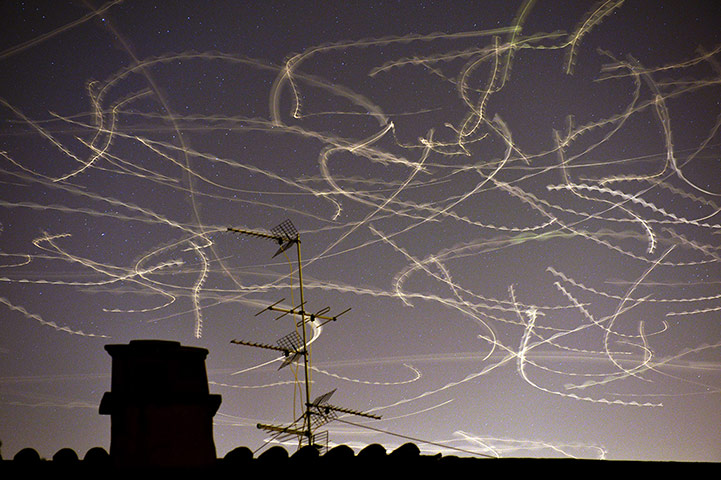
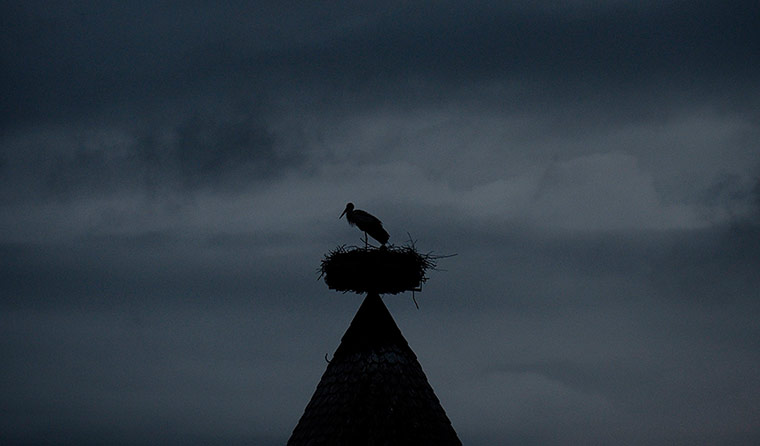
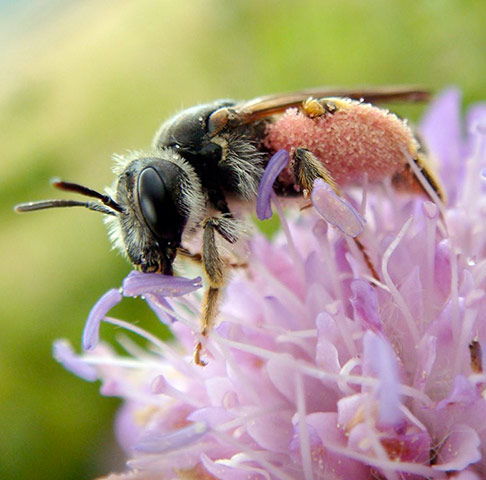
Baobab trees at sunset in Mandabe, south-west Madagascar. The IUCN has unveiled the first iteration of its new 'red list of ecosystems', a ranking of habitats worldwide. The system is modeled on the organisation's 'red list' of threatened species, which now serves as the global standard for assessing the extinction risk of plants and animals. Like the species ranking system, the ecosystem list will identify whether an ecosystem is vulnerable, endangered, or critically endangered. The list applies across terrestrial, freshwater and marine ecosystems, potentially helping governments prioritise conservation effortsPhotograph: He Xianfeng/CorbisMembers of the public are being asked to spot the 'six most unwanted' pests and diseases threatening UK trees, as part of a citizen science survey. In this picture, survey trainers - who will go out into communities to help local groups run the project - from Opal (Open Air Laboratories) measure a Hungarian oak tree at Kew Gardens, west LondonPhotograph: Yui Mok/PAAn endangered Sumatran orangutan carries her baby through branches in the forest of Bukit Lawang, part of the vast Leuser national park, on Indonesia's Sumatra island. Alarm is growing at a plan that would open up new swaths of forest to mining, palm oil and paper companies, and could put orangutans and other critically endangered species at even greater riskPhotograph: Romeo Gacad/AFP/Getty ImagesA rare albino elephant in Kaeng Krachan national park in Phetchaburi province, Thailand. In Thai ancient tradition, the rare elephant is regarded as sacred and becomes the property of the Thai monarch. Park officials have raised concerns that the white elephant will become a top target for poachersPhotograph: STR/EPAWhite storks on a road in Israeli-occupied Golan Heights, near the border with Syria. The birds are long-distance migrants, traveling to Europe and Africa. They avoid crossing the Mediterranean Sea by making a detour via the Levant, as they depend on air thermals during their flight which do not form over a large body of waterPhotograph: Menahem Kahana/AFP/Getty ImagesAn egret flies from a nest in the Shahu Lake in north-west China. A large number of migratory birds fly to the area every year to rest and feedPhotograph: Liu Quanlong/CorbisA Chinese white dolphin or Indo-Pacific humpback dolphin, nicknamed the pink dolphin, swims in waters off the coast of Hong Kong. Conservationists warned this week that Hong Kong may lose its rare species unless urgent action is taken against pollution and other threatsPhotograph: Daniel Sorabji/AFP/Getty ImagesMagicicada septendecim cicadas are pictured in West Virginia. Any day now, billions of cicadas will crawl out of the earth after 17 years underground and overrun the US east coast. They will arrive in such numbers that people from North Carolina to Connecticut will be outnumbered roughly 600 to onePhotograph: Chris Simon/University of Connecticut/ReutersA kingfisher with its catch on the River Salwarpe near Droitwich Spa, Worcestershire, England, captured by wildlife photographer Sylwia DomaradzkaPhotograph: Sylwia Domaradzka/Barcroft Media/Sylwia Domaradzka/Barcroft MediaTwo of the six Canadian timber wolves (Canis lupus occidentalis), also known as Mackenzie Valley wolves, introduced to the animal park of Sainte-Croix, Rhodes, eastern FrancePhotograph: Jean-christophe Verhaegen/AFP/Getty ImagesA spider on a plant in Amman, JordanPhotograph: Muhammad Hamed/ReutersA swarm of locusts flying over Mandoto Village, Ambatakazo, Madagascar. The biblical-sized plague is threatening the livelihoods of people in Madagascar, more than 90% of whom earn a living from agriculturePhotograph: He Xianfeng/CorbisA wood warbler (Phylloscopus sibilatrix) caught in a mist net for ringing, Ghadira nature reserve, during BirdLife Malta Springwatch Camp. Bird ringing is an important conservation tool to investigate aspects of bird ecology and biology such as survival rates, population age structure, breeding success rates and migrationPhotograph: David Tipling/Rex FeaturesThis picture, taken with a slow exposure, shows seagulls flying in the sky over Rome Photograph: Gabriel Bouys/AFP/Getty ImagesA white stork in its nest on a turret of Castle Hohenberg, Hohenberg an der Eger, GermanyPhotograph: Filip Singer/EPAThe scabious bee is one of the largest solitary bees in the UK. It is declining because meadow cutting and grazing regimes do not give the field scabious, upon which it relies, a chance to flower. Many of the UK's 250 bee species are in trouble, according to a report from the University of Reading and Friends of the Earth, with intensive farming, urban sprawl and coastal development blamed as well as pesticidesPhotograph: John Vallender/BWARS
Sign up to read this article
Read news from 100’s of titles, curated specifically for you.