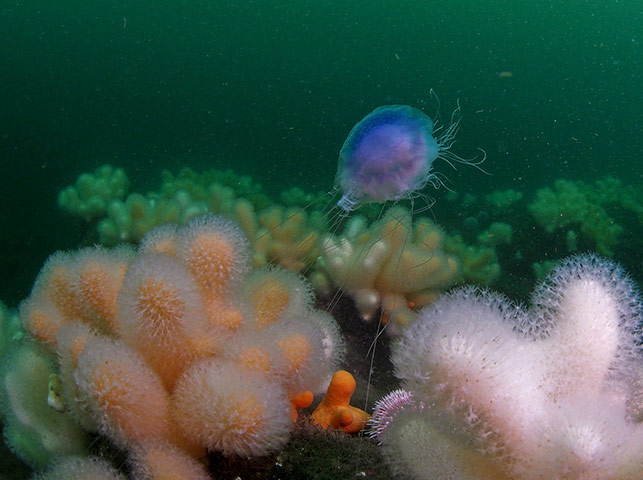
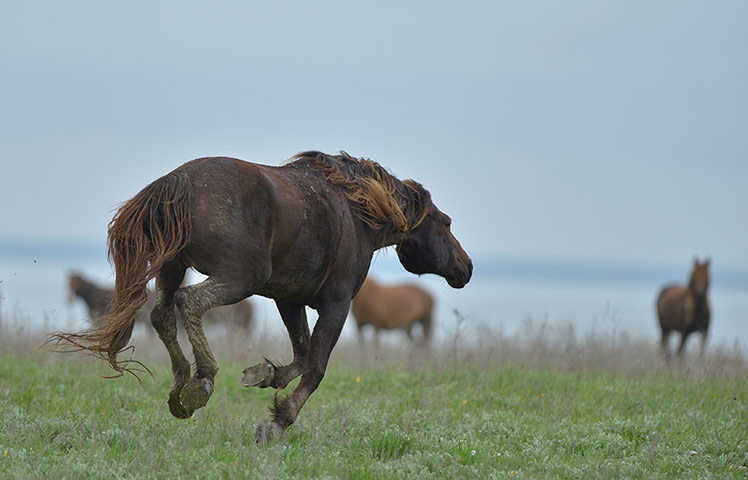
A bee collects nectar of a lavender flower in Stuttgart, Germany. The EU last week banned fipronil, found in insecticides widely used to spray crops and in gardens, after scientific evidence linked it with the declining bee populationPhotograph: Franziska Kraufmann/AFP/Getty ImagesBlue jellyfish caught on soft corals at St Abbs marine reserve on 13 July 2013Photograph: Peter Bardsley/Green Shoot/FlickrA wild horse gallops along Vodny Island in Rostov Nature Reserve, Russia. The wild horses of Vodny Island have been marooned for 60 years. The Manuch mustangs as they are now known were cut off from the mainland when a canal was built in 1953. They had originally been tame, but after getting a taste of freedom, became too wild to corral again. They have since bred into a huge herd famed as the largest and longest lived wild population in RussiaPhotograph: Igor Shpilenok/Barcroft Media
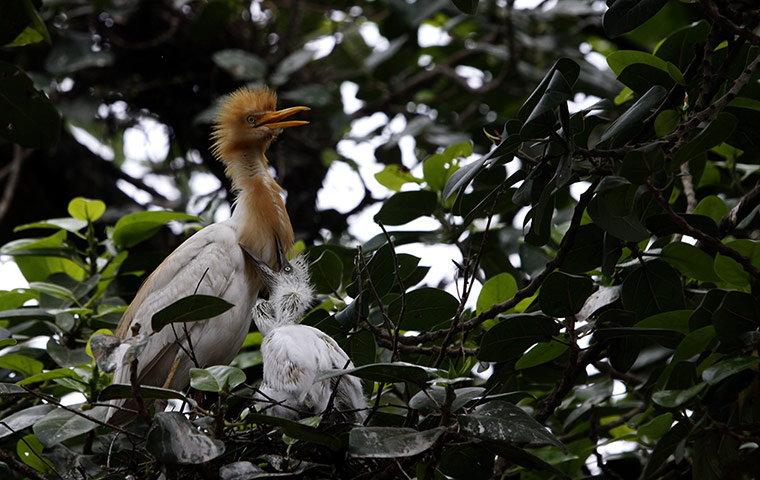
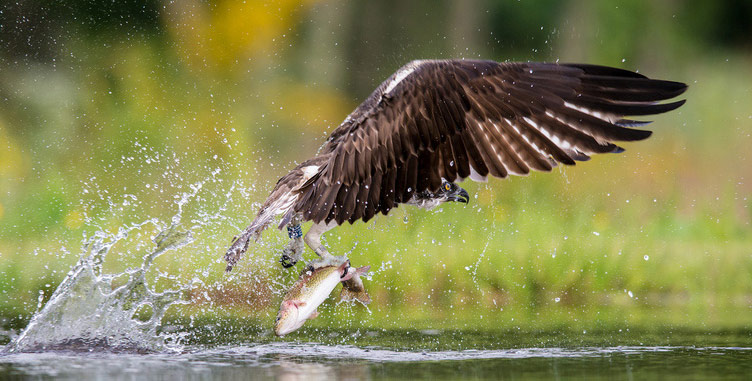
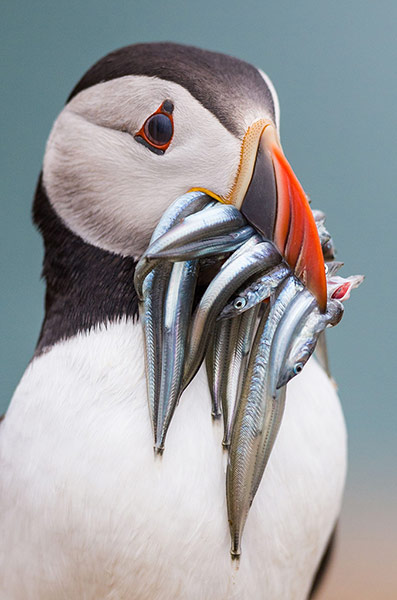
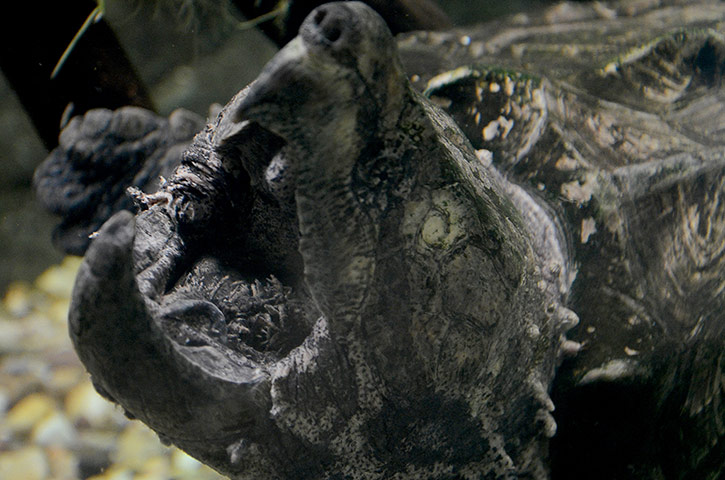
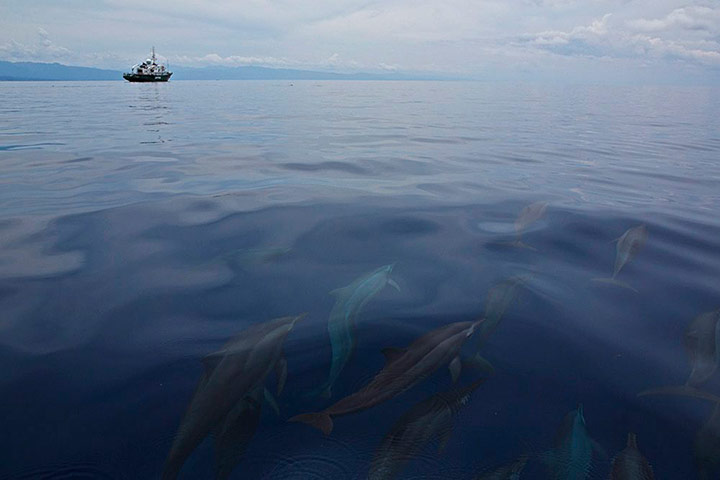
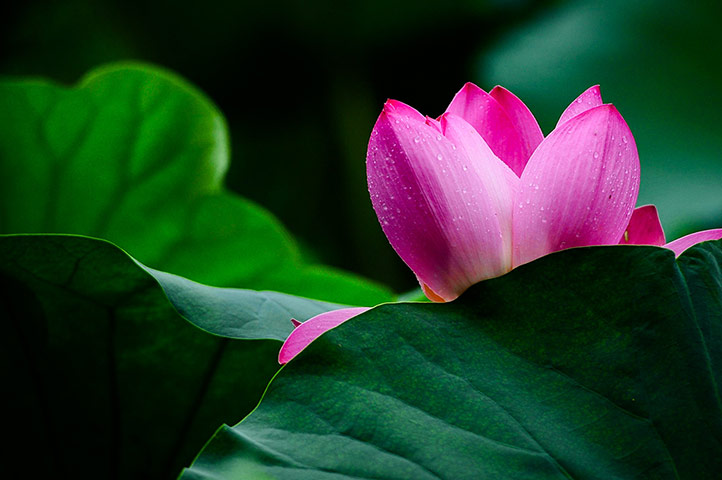
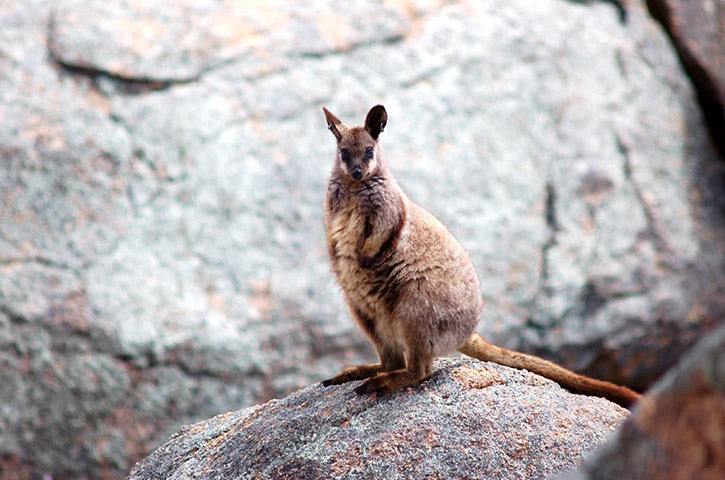
Newly hatched chick of cattle egret bird sits near to its mother in tree branches on the outskirts of eastern Indian state Orissa's Bhubaneswar. Cattle egret birds nest their eggs on the begins of the monsoon seasonPhotograph: Stringer/CorbisOsprey catching a fish at Rothiemurchus Fishery Photograph: Chris Wilson/Green Shoots/FlickrA rare Javan langur eats leaves upon arrival at a quarantine area of Javan Langur Centre outside Malang, in eastern Java island to acclimatise in preparation for release into a natural habitat in two months. Six British-bred Javan langurs were flown from Britain by the Aspinall Foundation which runs the Howletts Wild Animal Park for release in their natural habitat in Java island as part of a wildlife conservation programmePhotograph: Aman Rochman/AFP/Getty ImagesPuffins, Skomer Island, Pembrokeshire, Britain. Puffins have specialised beaks that enable them to carry a large number of fish at the same time. They will push each fish to the back of their mouth with their tongue, where ridges at the top of their bill secure them in place. This allows the puffin to keep their mouth open to catch more fish. Skomer Island measures two by 1.5 miles and lies just of the Pembrokeshire coast and is home to one of the most important puffin colonies in the countryPhotograph: Drew Buckley/Rex FeaturesA mating pair of Large Heath butterflies (Coenonympha tullia) at their only remaining lowland site in Lancashire. Large Heaths only occur on wet bogs, and drainage, peat digging and conversion to agriculture has massively restricted this once-widespread butterfly. The pair kept flying, the smaller female always carrying the larger male while they were connected. The female is the uppermost butterfly with the smaller eyespotsPhotograph: Tim Melling/Green Shoots/FlickrThe alligator snapping turtle, Macrochelys temminckii, know as the dinosaur of the turtle world, is the largest freshwater turtlePhotograph: Jorge Sanz/CorbisSpinner dolphins at a distance from the Greenpeace ship M/Y Esperanza in waters of the Tanon Strait, located between the provinces of Cebu and Negros Oriental, Philippines. According to Greenpeace, dolphins face numerous threats such as fishing, chemical pollution and even land based pollution like plastics. Greenpeace said that the Tanon Strait is home to 11 out of the 24 species of cetaceans, or marine mammals, in the PhilippinesPhotograph: Steve De Neef/Greenpeace/EPAMonitoring officers Emily Huntingford, Sally Richardson and Imogen Nicholson and Fisheries officer Laura Bullock of the Environment Agency search a remaining pool of water in dried bed of the River Teme, Brampton Bryan, in north Herefordshire, for fish that have become trapped due to the water levels falling after the recent spell of hot weatherPhotograph: Joe Giddens/PADead stingrays lie on the tourist beach of Chachalacas, 35 kilometers from Veracruz, Mexico, 17 July. According to media reports, more than 350 rays and manta rays appeared on the beach due to unknown causes Photograph: Coral Carballo/EPAA sea otter basks in the summer sunlight while eating pollock, at Rubha near Ullapool, Rossshire, Scotland, UKPhotograph: Murdo MacLeod/GuardianA lotus flower blossoms at the scenery spot of the Daming Lake in Jinan, capital of east China's Shandong ProvincePhotograph: Guo Xulei/CorbisA black-flanked rock wallaby at Nangeen Hill Nature Reserve in Western Australia's Wheatbelt region. Threatened rock-wallabies are being fenced-in at a new sanctuary in Nangeen Hill, about 200 km east of Perth, Australia, in an attempt to save the species from extinction.Photograph: Craig Pentland/EPASmoke rises from shrubs and trees after a fire on Mitcham Common in south London 18 July. The Met Office raised its heatwave warning for south-west England and the West Midlands to level threePhotograph: Luke Macgregor/Reuters
Sign up to read this article
Read news from 100’s of titles, curated specifically for you.