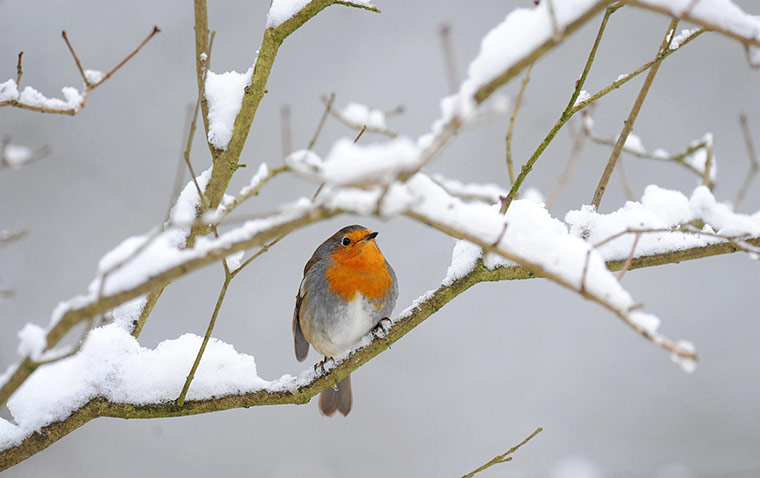
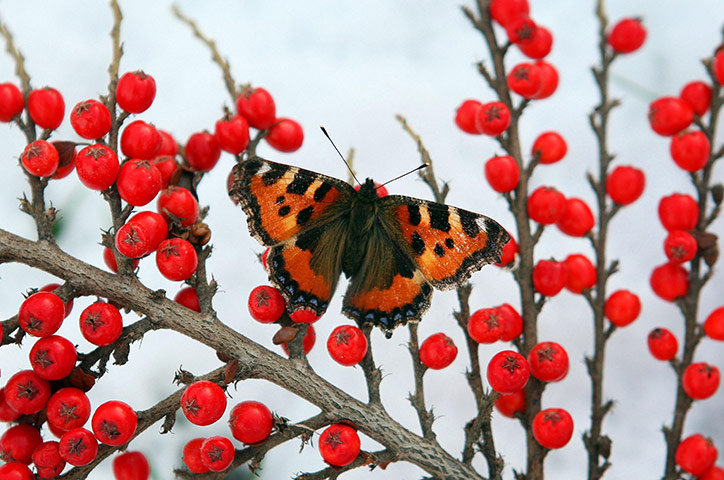
A robin sits on a snow-covered branch in Allenheads, Hexham, as snowfall continues to sweep the north of EnglandPhotograph: Owen Humphreys/PARose-ringed parakeets roost in a copse in Wormwood Scrubs Park on 6 December in London, England. Approximately 2,500 parakeets roost in the copse at the centre of Wormwood Scrubs which has been designated by English Nature as an important site of natural significancePhotograph: Oli Scarff/Getty ImagesA butterfly sits on red berries between snow showers in the Scottish Borders, as snow and ice brought disruption to roads as the country faced its first bout of wintry weather. A study puiblished on 7 December says that almost three-quarters of the UK's butterfly species have seen numbers decline in a decade. The report by wildlife charity Butterfly Conservation and the Centre for Ecology and Hydrology (CEH) revealed that 72% of species had suffered declines in populationsPhotograph: David Cheskin/PA
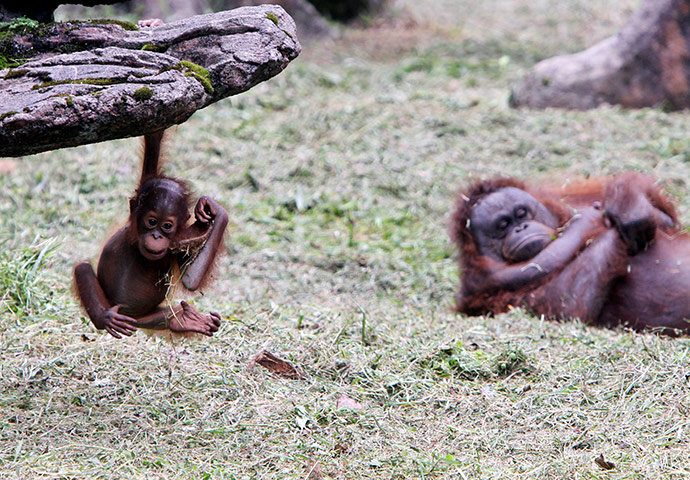
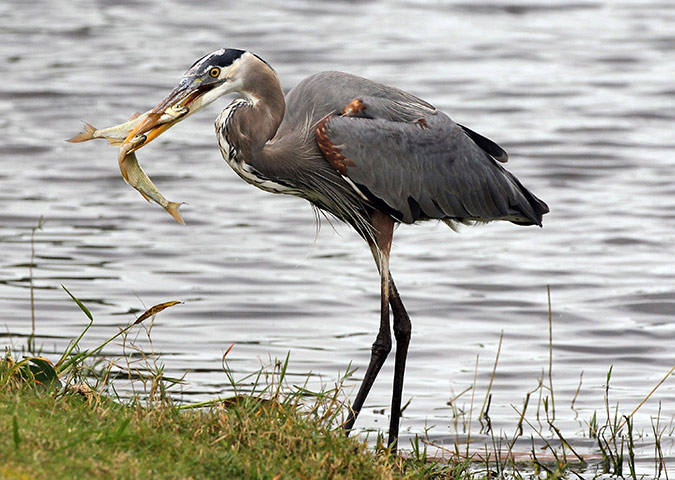
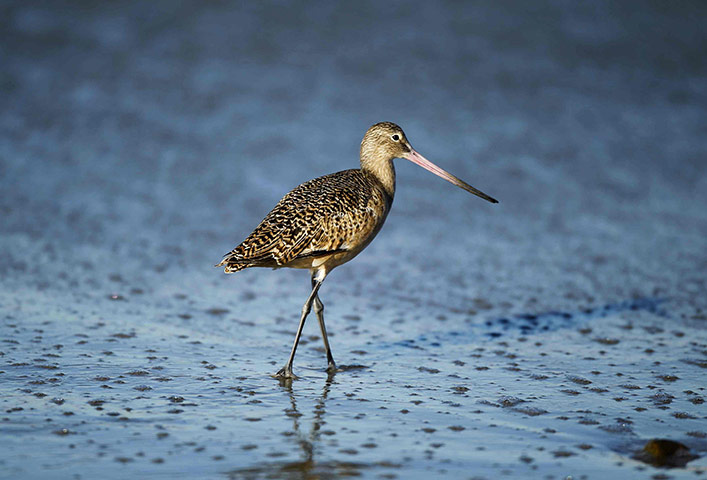
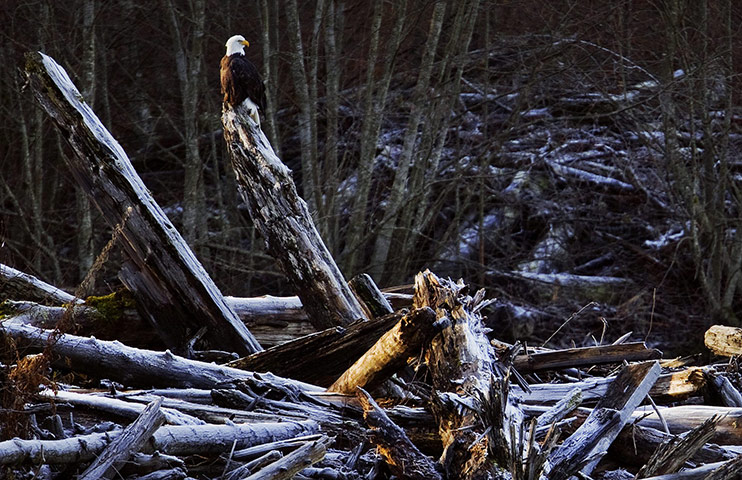
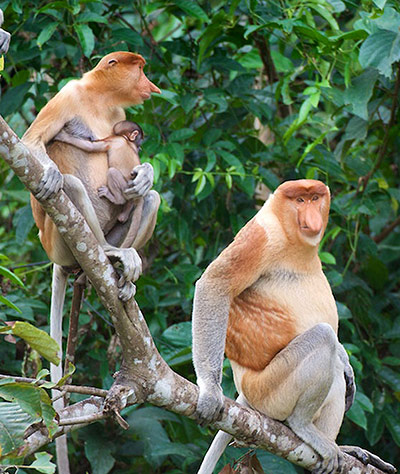
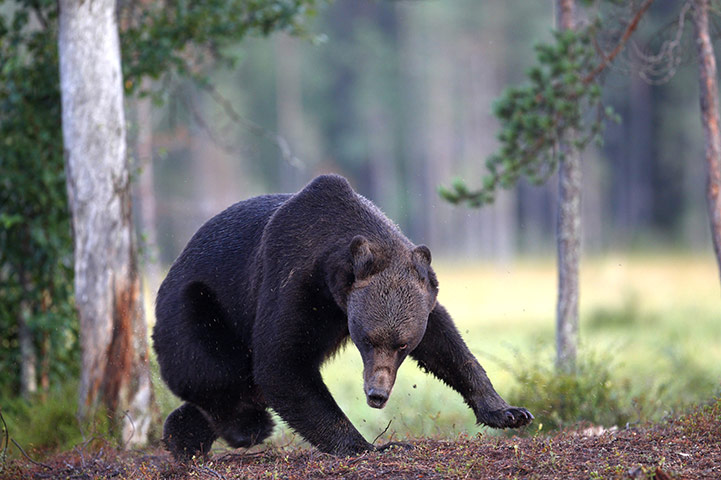
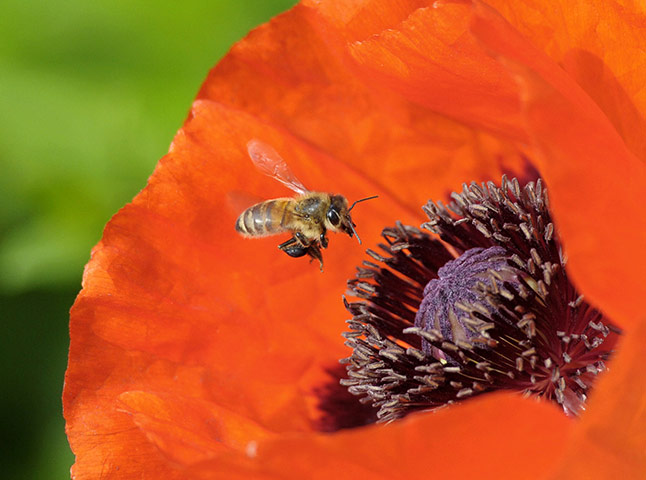
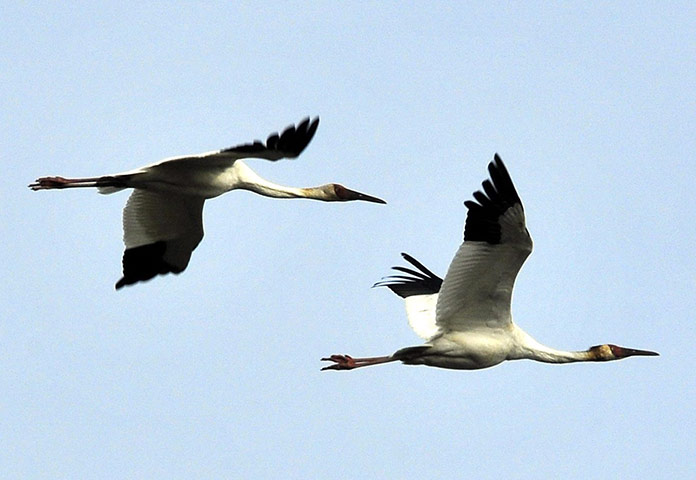
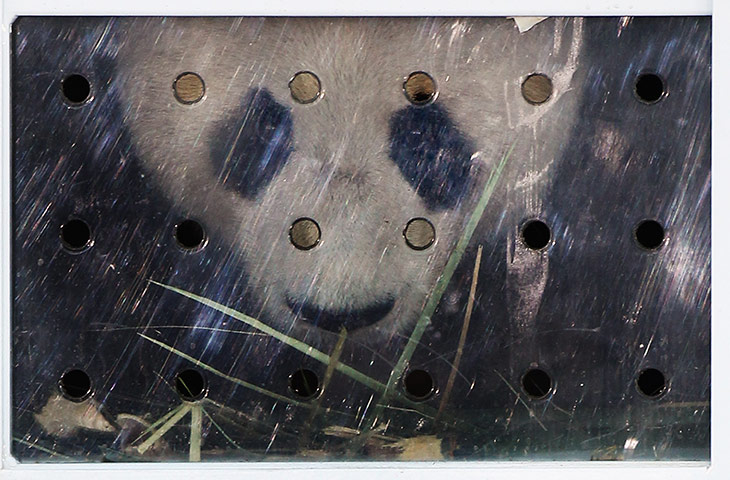
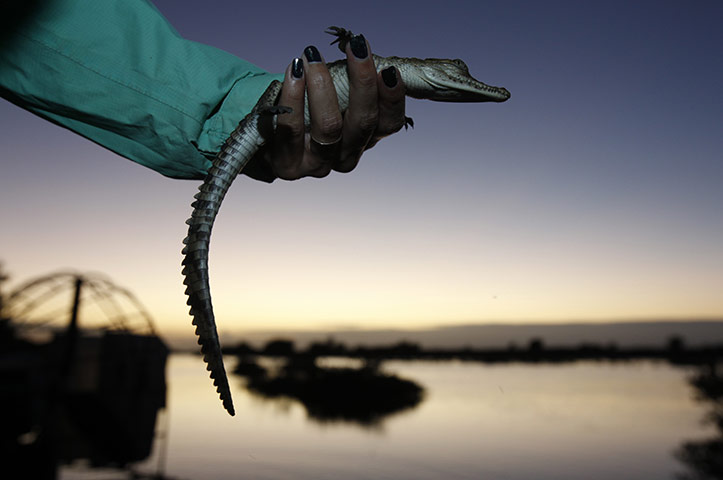
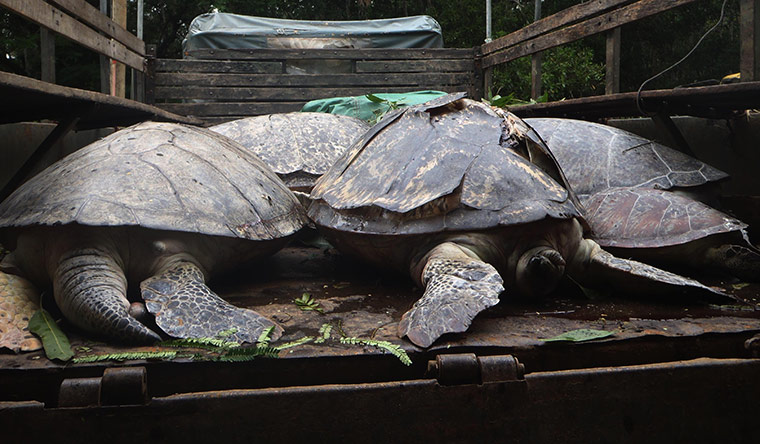
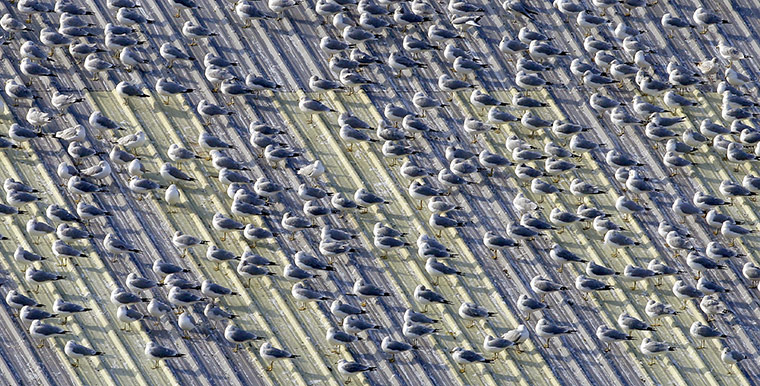
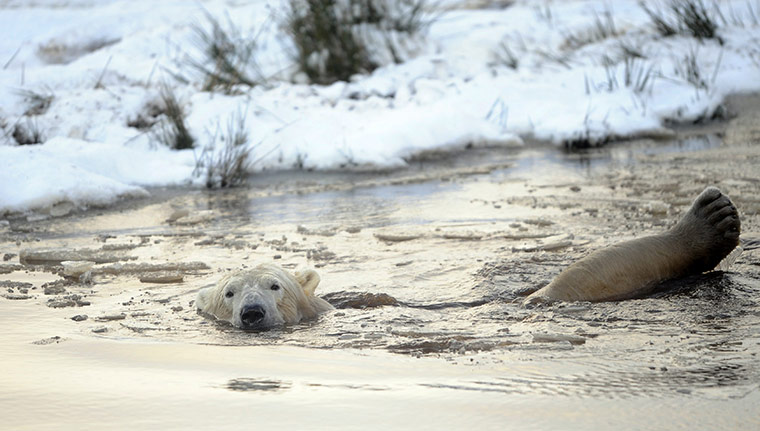
Riana, a 13-month-old female Bornean orangutan plays as her mother, Tari, sleeps at Taman Safari in Cisarua, Indonesia. Less than 66,000 wild orangutans are thought to remain in the forests of Borneo and Sumatra, and more than half of that population has been lost since 1950, because of poaching and their rainforests being replaced by palm oil plantations for food and biofuel productionPhotograph: Mast Irham/EPAA great blue heron with two fish in its beak in Daytona Beach, FloridaPhotograph: Sam Greenwood/Getty ImagesA marbled godwit sea bird looks for food along the surf line of the Pacific Ocean in Cardiff, California Photograph: MIKE BLAKE/REUTERSA bald eagle sits on wood debris along the Squamish River in Squamish, British Columbia north of Vancouver. The eagles gather in the area each winter to feed on salmon chum in the local riversPhotograph: Andy Clark/ReutersExpanding palm-oil plantations in Malaysian Borneo are rapidly eating into the habitat of the rare proboscis monkey and causing its numbers to decline sharply, officials warned on 7 December. The reddish-brown primate, which is named for its distinctive large and fleshy nose, is found only on Borneo, a large island divided up between Malaysia, Indonesia and Brunei Photograph: Rudi Delvaux/AFP/Getty ImagesA bear running through the border between Finland and Russia, nicknamed no-man's land because because it is a popular feeding place for large carnivores. The wildlife photographer Tom Schandy hid out to capture dramatic pictures of bears and wolves which came to feed on a dead moose. He said: 'During the course of the night eight bears and three wolves fought over the carcass. On occasion the bears and wolves would stand up to each other in order to get more of the fresh meat. Two of the bears even fought each other for the moose by standing on their hind legs and battling. Their roars sent shivers down my spine' Photograph: Tom Schandy/Rex FeaturesA giraffe licks its lips at Houston zoo in the USPhotograph: Johnny Hanson/APA honeybee approaches the blossom of a poppy flower in Ludwigsburg, Germany. Honeybees perform a 'dance' to communicate with each other that mimics signals in the brain, a finding that could shed light on how decisions are made, scientists said on 8 December. 'The decision-making mechanisms in nervous systems and insect societies are strikingly similar,' said the study in the journal SciencePhotograph: Thomas Kienzle/AFP/Getty ImagesTwo Siberian cranes flying over the South Korean border city of Paju. The endangered migratory birds fly to South Korea from Siberia to spend the winterPhotograph: Jeon Sun-hee/EPAChinese Panda Yang Guang arrives at Edinburgh airport. The eight-year-old pair of giant pandas arrived on a specially chartered flight and will be the first to live in the UK for 17 years. Edinburgh zoo is hopeful that the pandas will give birth to cubs during their 10-year stay in ScotlandPhotograph: Jeff J Mitchell/Getty ImagesA wildlife biologist holds a small crocodile that will be released into one of the cooling canals adjacent to the Turkey Point nuclear power plant during a night-time crocodile survey in Homestead, Florida. The crocodile monitoring program began in 1978, a year after employees stumbled upon a crocodile nest in the plant's cooling canal system. The initial goal was to ensure that the plant did no harm to the species but over the past three decades it has helped raise the number of crocodiles to more than 1,500 today. It is now classified as threatened, a small step toward the species survivalPhotograph: Wilfredo Lee/APNine dead green sea turtles seized from six Chinese fishermen at Puerto Princesa city port, Palawan province, south-western Philippines. The world population of turtles is estimated to have declined by 80% over the past 50 years, and the WWF says trends indicate that in the next 50 years marine turtles may vanish from eastern Africa. Kenya's turtles are seeing nesting sites being reduced by erosion, and are killed by pollution and poachingPhotograph: APSeagulls on a corrugated metal roof in Cleveland, USPhotograph: Amy Sancetta/APWalker, a 58-stone polar bear, plays in a pond on his third birthday at the Highland wildlife park in Kincraig, Scotland. The BBC has denied misleading viewers over footage shown on the Frozen Planet series of a polar bear tending her newborn cubsPhotograph: Russell Cheyne/Reuters
Sign up to read this article
Read news from 100’s of titles, curated specifically for you.