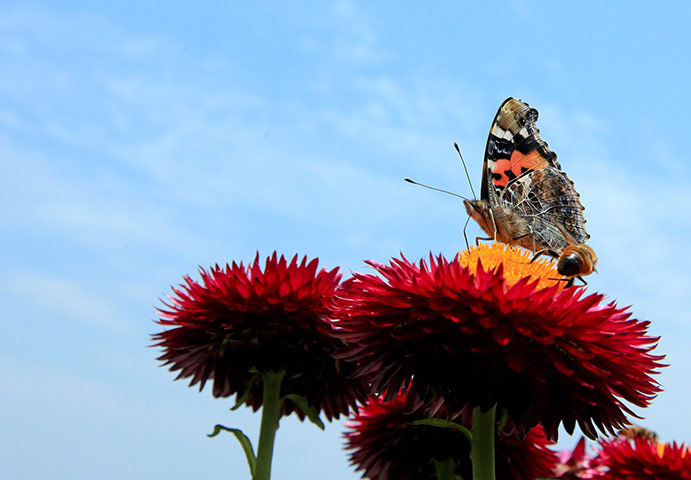
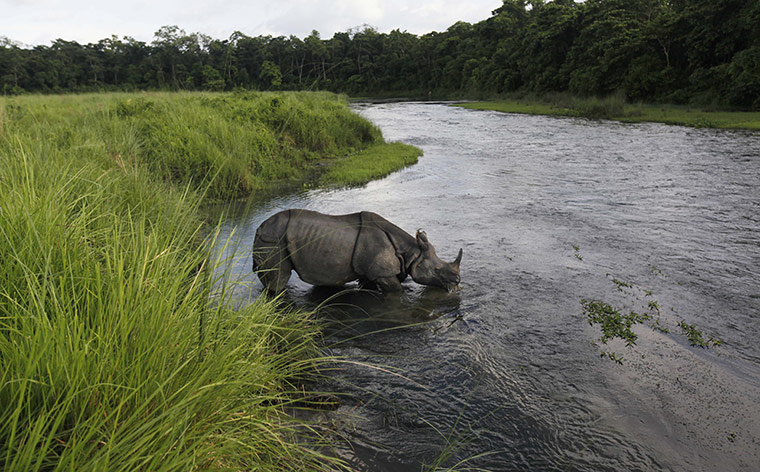
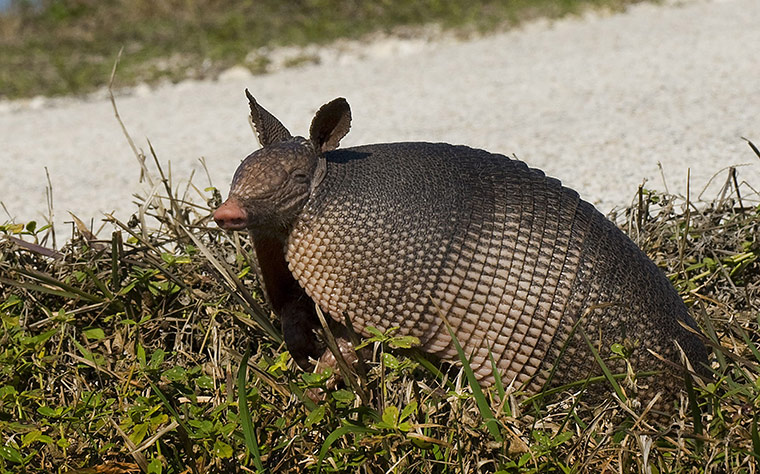
A butterfly sits on a flower in a garden in Dhulikhel near Kathmandu, NepalPhotograph: Narendra Shrestha/EPAA greater one horned rhino drinks from a river in Janakauli community forest bordering Chitwan National Park in Nepal. Increased security and close work with the local community has led to a significant rise in Nepal's rhinoceros population over the past three yearsPhotograph: Gemunu Amarasinghe/APAn armadillo in Cape Canaveral, Florida. A strain of leprosy found in armadillos has been identified in dozens of people in southern United States, indicating the skin disease can be transmitted directly from animals to humansPhotograph: Jim Watson/AFP/Getty Images
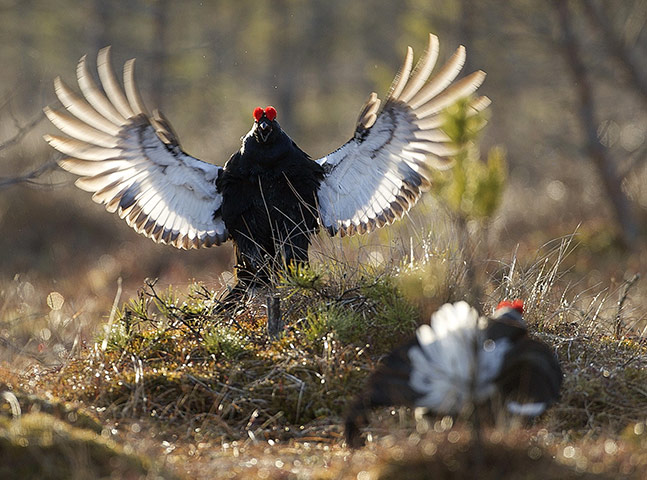
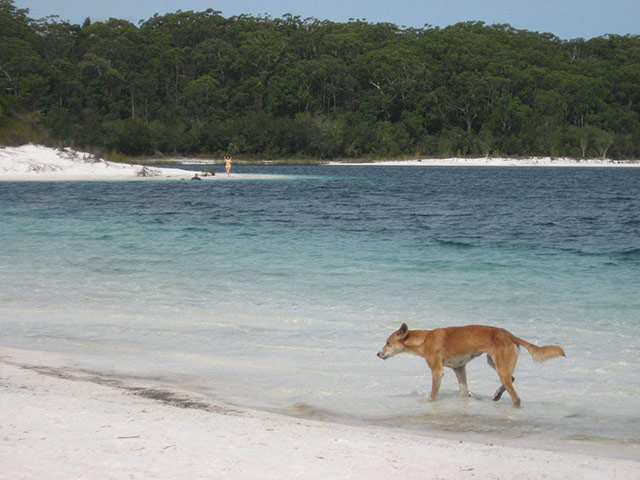
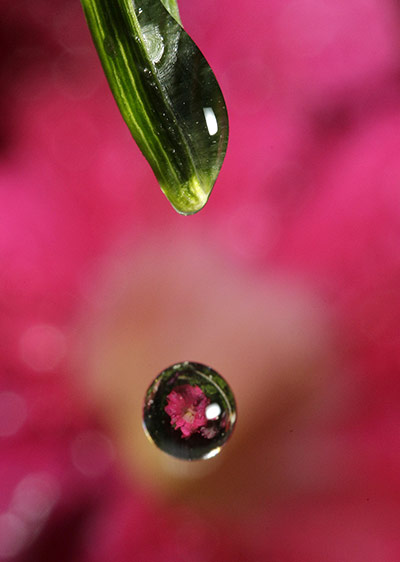
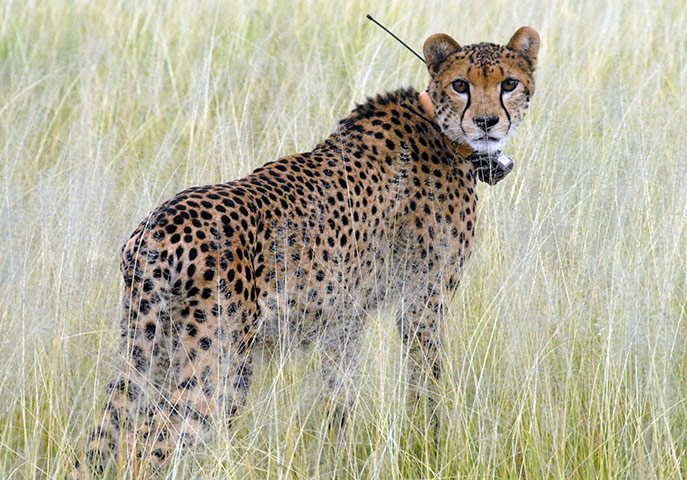
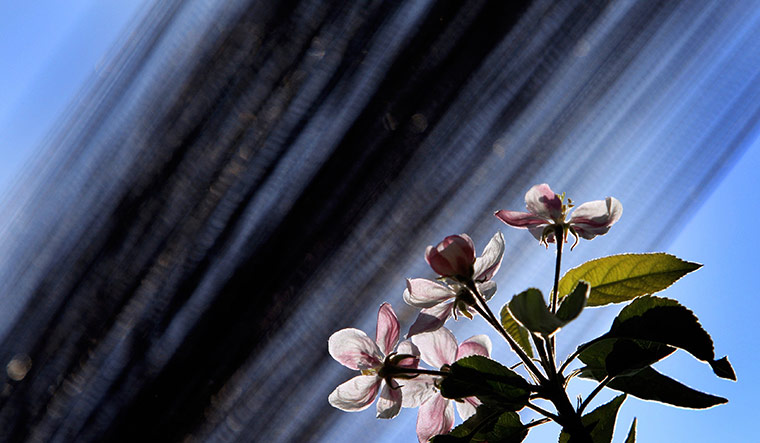
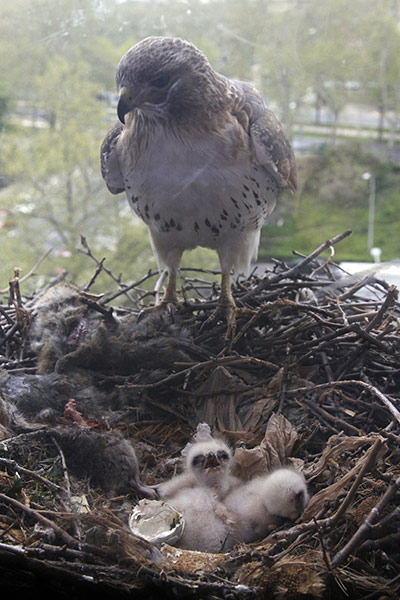
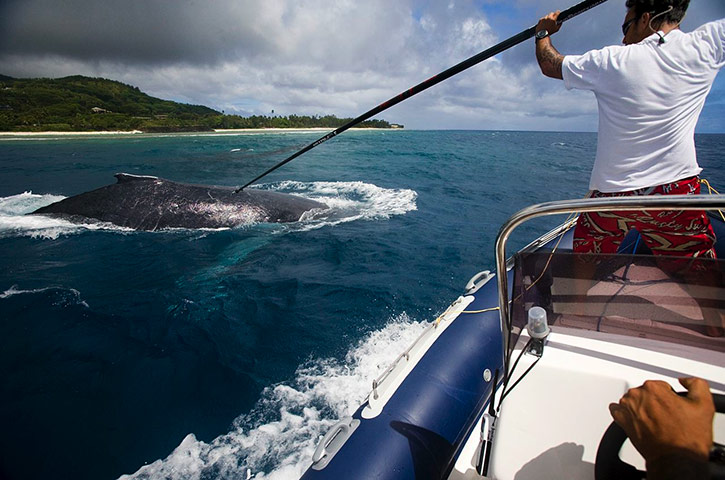
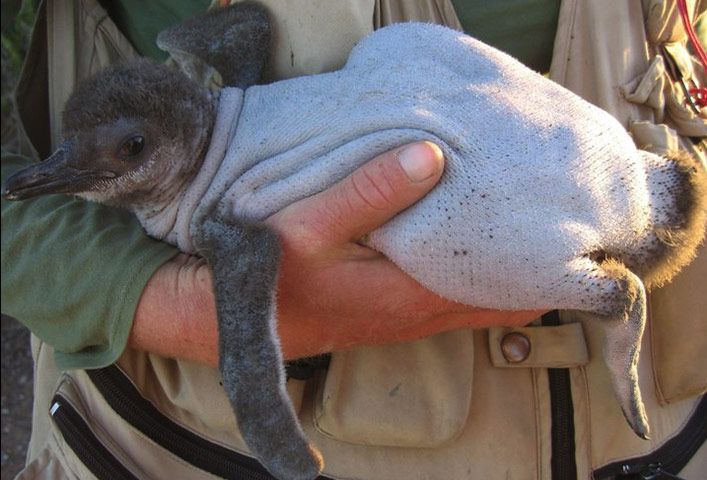
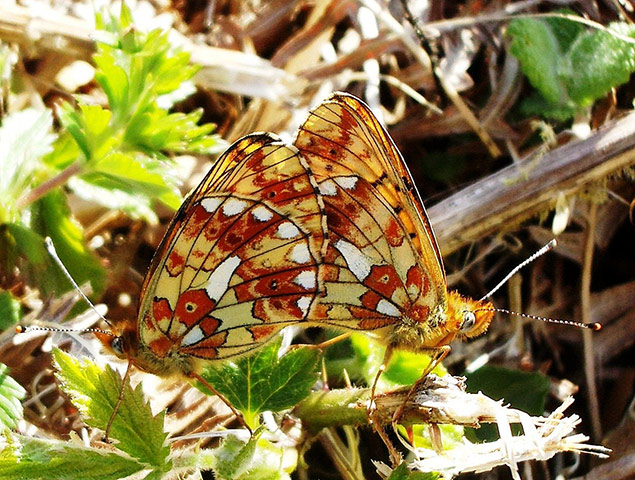
Black grouses amid a courting ritual in the Berezinsky reserve, east of Minsk, BelarusPhotograph: Vasily Fedosenko/ReutersA dingo at the freshwater Lake McKenzie on Fraser Island in Queensland, Australia. A three-year-old girl escaped with bite wounds when attacked by two dingoes this week. Both dogs responsible for the attack have been caught and destroyed following a search by park rangersPhotograph: Fraser Island Dingo Preservation Group /Christian Valenzuela/EPAA petunia is captured through a raindrop Overland Park, Kansas. Widespread rain across much of the mid-west led to flood warnings being issued in several statesPhotograph: Charlie Riedel/APA turtle perches on a stone in the Japanese garden in Berlin's Erholungspark Marzahn parkPhotograph: Thomas Peter/ReutersThree adult cheetahs confiscated from a wildlife trader in Tanzania are now free after being released back into the wild last weekend. The male and one female cheetah were fitted with satellite collars before they were released to ensure they settle in well to their new homePhotograph: A. Harris/ZSLA brown hare (Lepus europaeus) pricks up its ears in Hegyeshalom, HungaryPhotograph: Attila Kovacs/EPAApple blossom in Tettnang, southern GermanyPhotograph: Karl-josef Hildenbrand/AFP/Getty ImagesA chinchilla tree rat (Cuscomys ashaninka), of Cordillera de Vilcabamba, Peru. This is one of many new species revealed this week that were discovered between 1997 and 1998 on expeditions led by Conservation International's Rapid Assessment Programme. The chinchilla tree rat is pale grey and possesses a stocky build, has large claws and is characterised by a white stripe along its headPhotograph: Conservation InternationalA red-tailed hawk stands above its newly hatched young in Philadelphia. It is the third straight year a mating couple has returned to its unusually urban nest on a ledge at the city's science museumPhotograph: Matt Rourke/APA humpback whale is fitted with a satellite transmitter. Humpbacks have navigational skills that are as yet unexplainedPhotograph: Paul Hilton/PAA featherless Magellanic penguin chick. WCS researchers are investigating why these penguin chicks lost their feathers before they could achieve their full tuxedo splendorPhotograph: Jeffrey Smith/WCSTwo magnificent pearl-bordered fritillaries mating. A UK survey has revealed record numbers of this rare butterfly, which has been seen earlier than usual this year due to warm weatherPhotograph: Gary Pilkington/Devon Wildlife TrustBonobo apes, a primate unique to Congo and mankind's closest relative, rest at a sanctuary just outside the capital Kinshasa. It has been discovered that bonobos have more advanced communication than was previously thought. They are at risk of extinction due to more than a decade of conflict in central AfricaPhotograph: Goran Tomasevic/Reuters
Sign up to read this article
Read news from 100’s of titles, curated specifically for you.