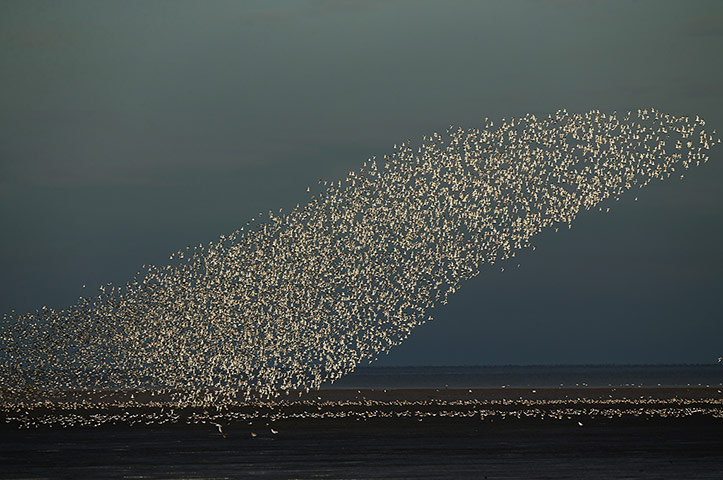
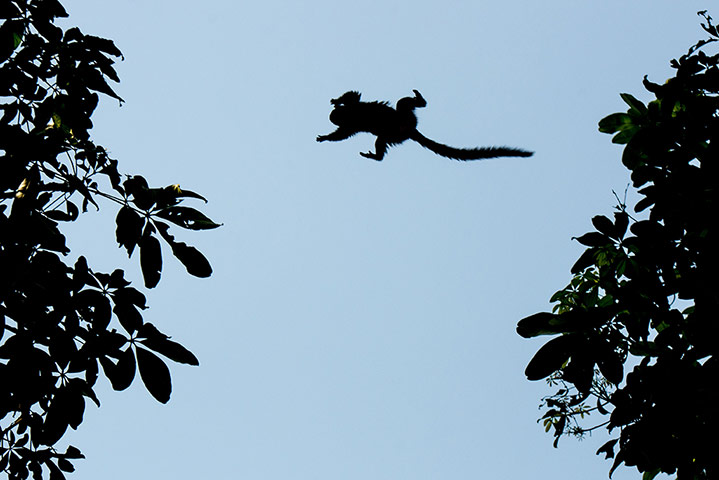
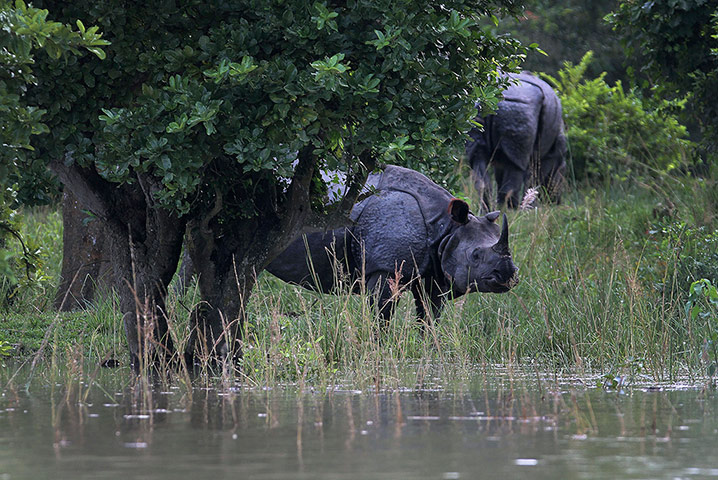
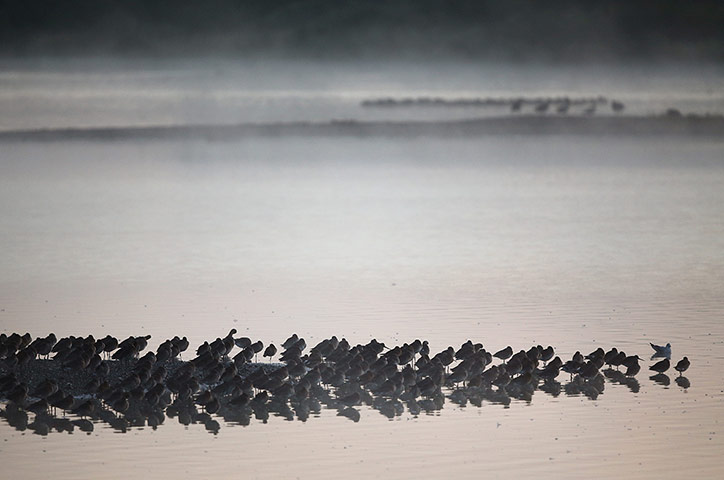
Waders flock together seeking new feeding grounds during the incoming tide at the RSPB's Snettisham nature reserve, England. The reserve lies on the edge of The Was', one of the most important bird estuaries in the UK, supporting more than 300,000 birds. A few times every year higher than average tides force thousands of waders including knot, oystercatchers, sanderlings, black and bar tailed godwit and plover to take flight, and advance up the mud flats in search of food. The event is one of the most incredible wildlife spectacles in the UKPhotograph: Dan Kitwood/Getty ImagesA wild marmoset jumps between trees in Rio de Janeiro, Brazil. Marmosets are highly active, living in the upper canopy of forest trees, and feeding on insects, fruit, leaves and the gum inside tree trunksPhotograph: Yasuyoshi Chiba/AFP/Getty ImagesOne-horned rhinoceros stand at the flooded Pobitora wildlife sanctuary in Assam, India. Assam is home to the world's largest concentration of the rare rhino. According to the Press Trust of India, 90% of the sanctuary has been inundated by overflowing rivers forcing animals to migrate to higher groundsPhotograph: Anupam Nath/AP
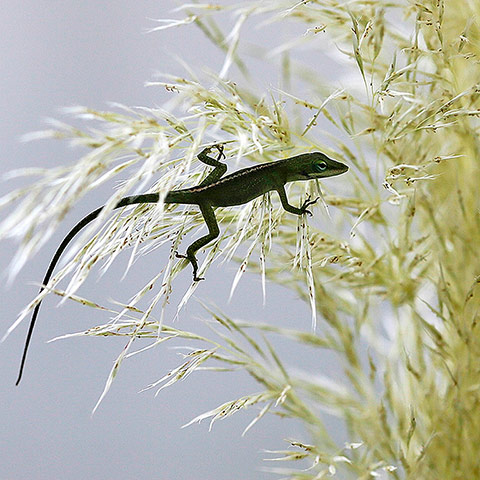
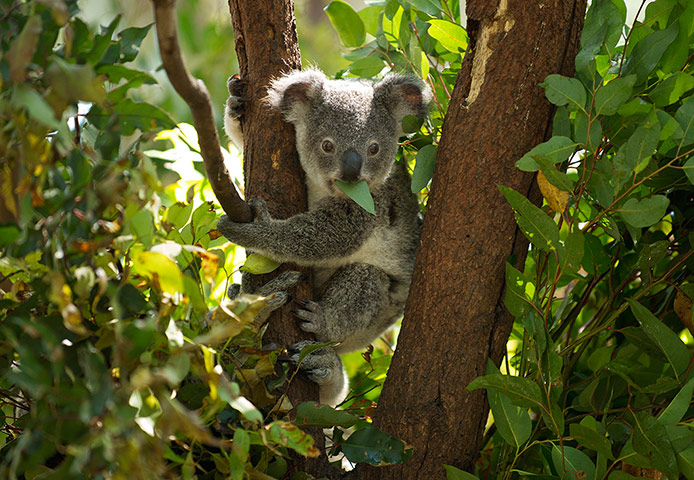
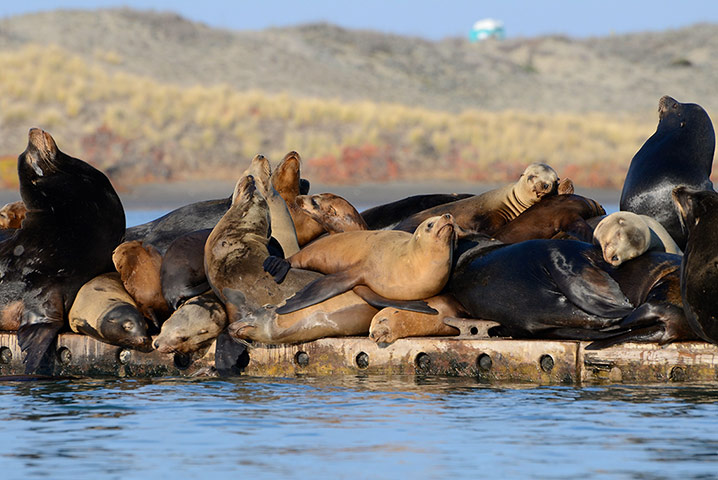
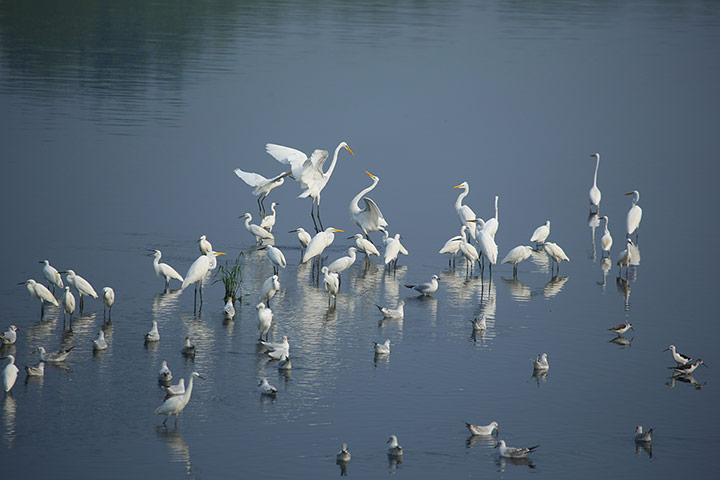
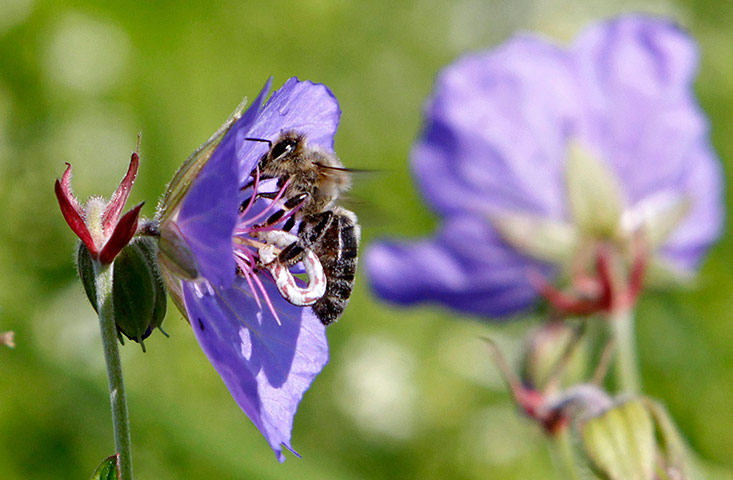
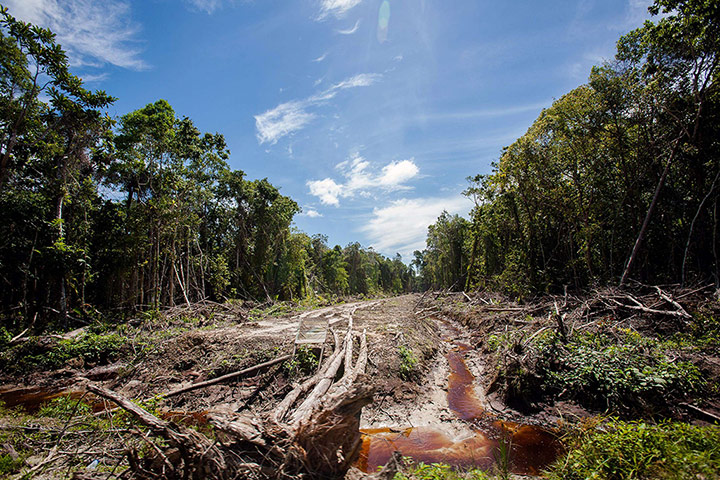
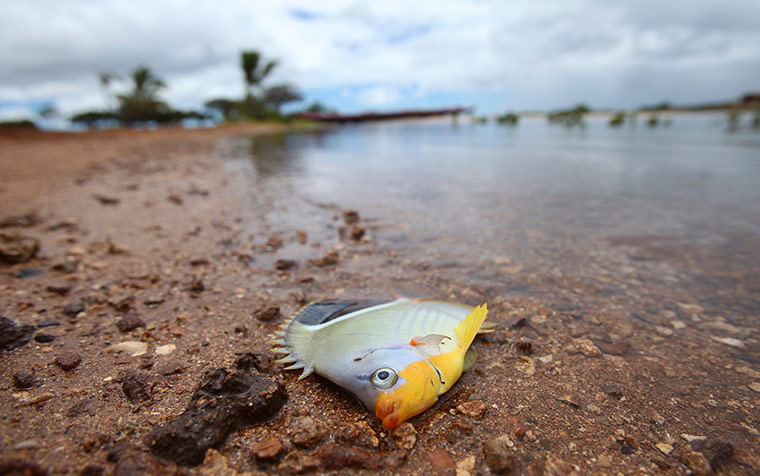
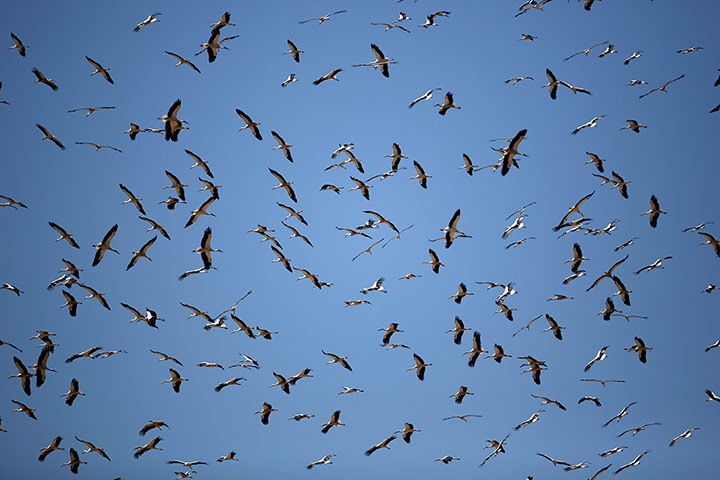
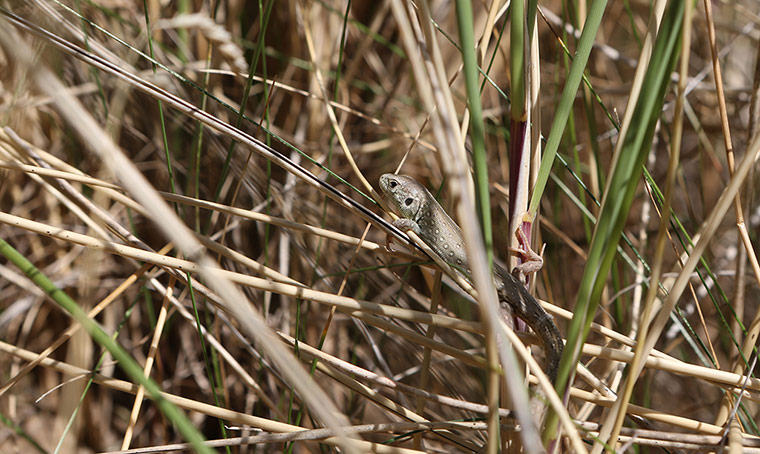
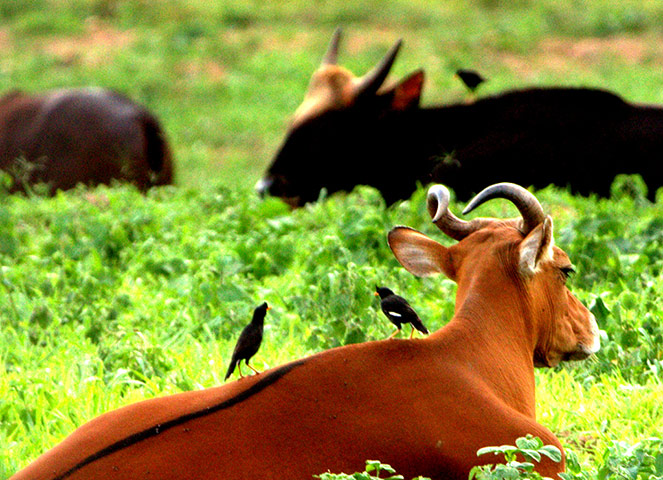
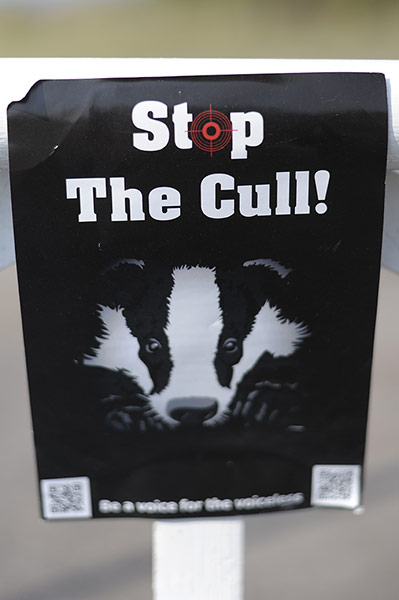
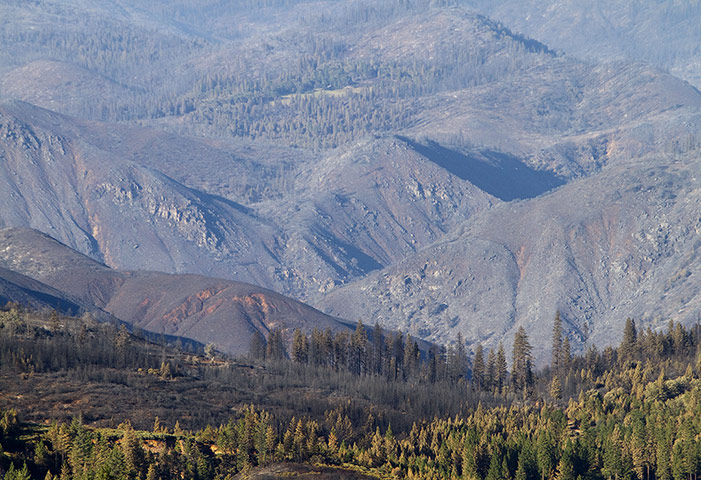
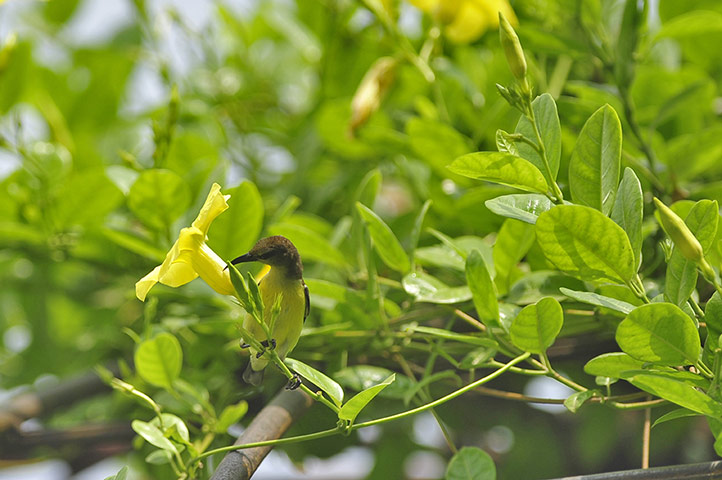
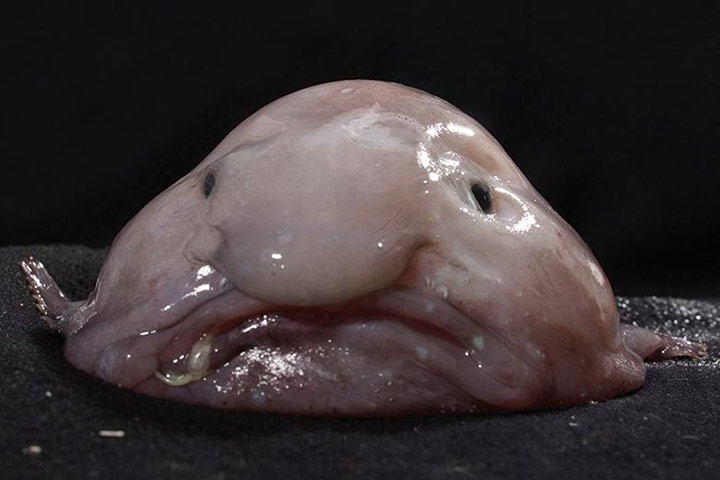
A green anole lizard hangs in pampas grass in New Orleans, Louisiana. The change from green to brown (and vice versa) can be triggered by temperature, background colour or their moodPhotograph: The Times-Picayune/Barcroft MediaA young koala feeds on gum leaves at the Currumbin wildlife sanctuary on the Gold CoastPhotograph: DAVE HUNT/EPASea lions try to keep warm and dry by sleeping on top of each other on a crowded pier in Moss Landing, California. Male sea lions average more than 600lbs (272kg) in weight while female sea lions are just over 200lbs (90kg)Photograph: Michael Yang/Rex FeaturesEgrets at the wetland of the Futuan river in Rizhao city, east China's Shandong provincePhotograph: Zheng Peibo/CorbisA bee collects pollen from a flower at Vaclav Havel airport in Prague. Honey produced by the bees are checked for its quality and presence of pollutants to help the Vaclav airport to collect pollution data about the environmentPhotograph: David W Cerny/ReutersAn access road is constructed in a peatland forest being cleared for a palm oil plantation in Trumon subdistrict, Aceh province, on Indonesia's Sumatra island. As south-east Asia's largest economy grows rapidly, swaths of biodiverse forests across the archipelago of 17,000 islands have been cleared to make way for paper and palm oil plantations, as well as for mining and agriculture. The destruction has ravaged biodiversity, placing animals such as orangutans and Sumatran tigers in danger of extinction, while also leading to the release of vast amounts of climate change-causing carbon dioxide. Indonesia is the third biggest emitter of greenhouse gases, after China and the USPhotograph: Chaideer Mahyuddin/AFP/Getty ImagesA dead fish washed ashore is seen in Keehi Lagoon after a massive molasses spill from a Matson cargo ship in Honolulu, Hawaii on 12 September. Health officials warned swimmers, surfers and snorkelers in Hawaii to stay out of the waters near Honolulu after the leak of 1,400 tonnes of molasses killed hundreds of fish, potentially attracting sharksPhotograph: Hugh Gentry/ReutersA flock of storks passes over the sky near the Mount of Olives in Jerusalem, Israel. The Society for the Protection of Nature in Israel (SPNI) said the birds' annual migration season is due to begin. SPNI expects to see more than half a billion birds, including more than 300,000 storksPhotograph: Abir Sultan/EPAA sand lizard, which was hatched at Chester zoo, is released into its natural habitat on the sand dunes at Gronant, Flintshire as part of a long-term project to help the UK's rarest lizard. Conservationists will release 400 sand lizards at seven sites in England and Wales this week as they try to restore the species and its historic range. Sand lizards live only on sand dunes and lowland dry heath, and have vanished from much of England and Wales in the face of loss and fragmentation of their habitat due to development and changes to how land is usedPhotograph: Peter Byrne/PABanteng (foreground) and gaur (background) face a multitude of threats, a report by WWF has revealed. Thirteen ungulate species (animals with hooves) found in the Greater Mekong region are close to extinctionPhotograph: Wayuphong Jitvijak/WWF-ThailandA sign outside 'Camp Badger' near Watchet in Somerset where protesters opposed to the badger cull are gathering. A minimum of 2,081 badgers must be killed in Somerset but sources say less than 100 have been shot in two weeksPhotograph: Tim Ireland/PALooking north toward the charred hillsides surrounding the Tuolumne River canyon from from the summit of Smith Peak in Groveland, America. More than 4,000 firefighters battled wildfires in California, which have so far destroyed 31 homes and 80 outbuildings, according to the California Department of Forestry and Fire ProtectionPhotograph: Zuma/Rex FeaturesPurple-rumped sunbird found in Bangladesh, searching for nectar on a flower in Dhaka. The avifauna of Bangladesh includes a total of 466 species, of which one has been introduced by humans, and 12 are rare. Three species listed are extinct in Bangladesh, and 35 species are globally threatenedPhotograph: Firoz Ahmed/CorbisThe blobfish has been voted the world's ugliest animal after a campaign set up by the Ugly Animal Preservation Society to raise awareness for endangered and aesthetically challenged animalsPhotograph: Greenpeace/Rex FeaturesWaders gather after seeking new feeding grounds during the incoming tide at the RSPB's Snettisham nature reserve Photograph: Dan Kitwood/Getty Images
Sign up to read this article
Read news from 100's of titles, curated specifically for you.