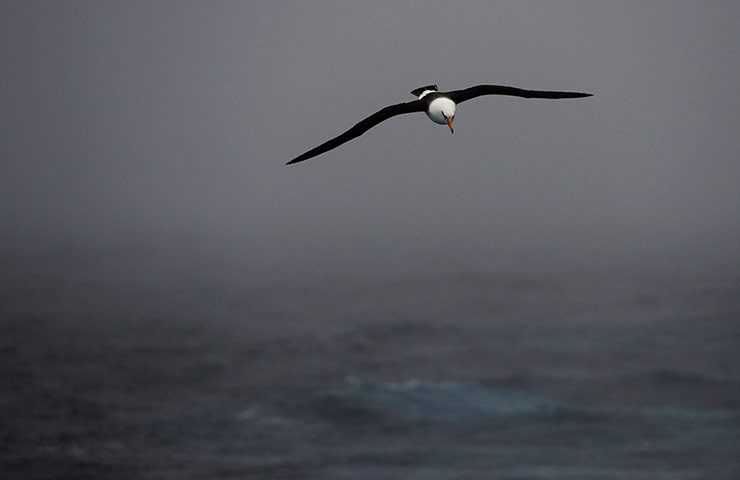
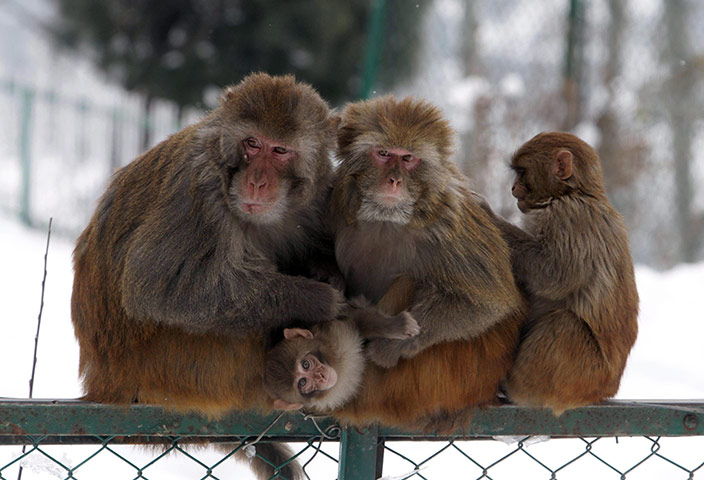
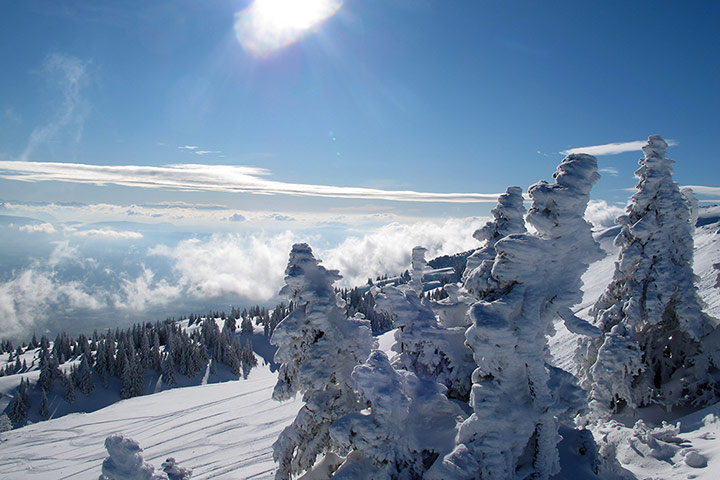
A black browed albatross in flight as the Aurora Australis navigates its way through pack ice and small icebergs in Antarctic waters in the Southern Ocean. Stronger winds have helped the wandering albatross fly faster and breed more successfully, said French and German scientists. However, the study published in the US journal Science cautioned that those benefits may be short-lived if the globe continues to warm and wind speeds shift further in the coming decadesPhotograph: Dean Lewins/EPAA monkey family huddles to keep warm as the sub-zero temperatures hit Tanmarg, India. The valley is witnessing severe cold as mercury has dipped to a -5C during nights in Srinagar, while tourist resort area of Gulmarg is freezing with -16CPhotograph: Farooq Khan/EPATrees covered with snow in the Jura mountains above Crozet, FrancePhotograph: Frank Jordans/AP
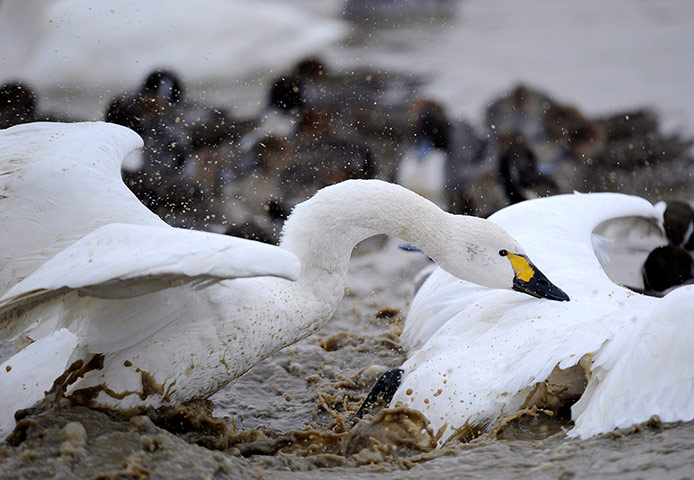
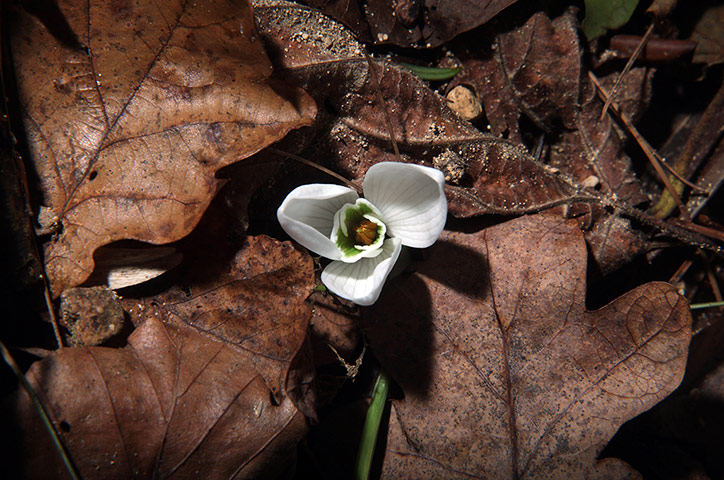
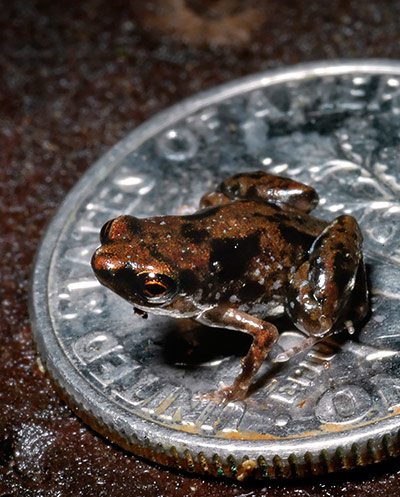
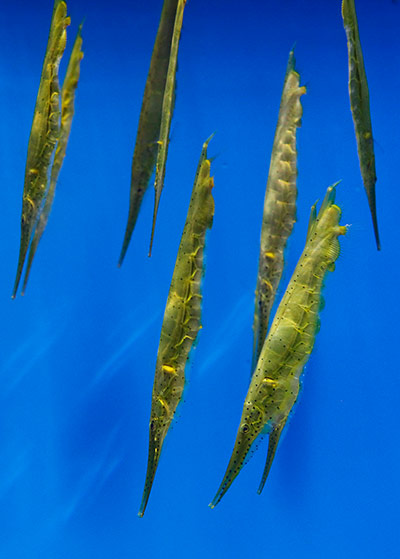
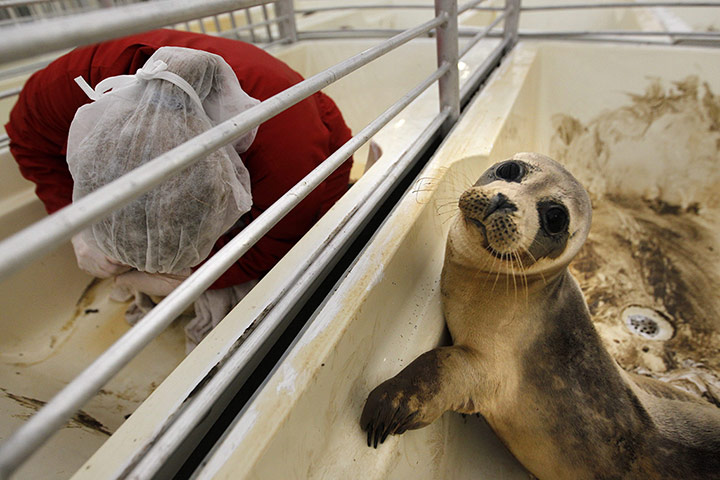
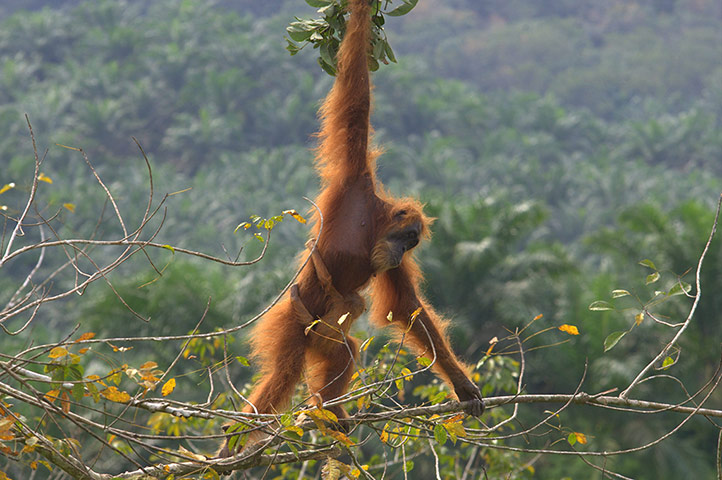
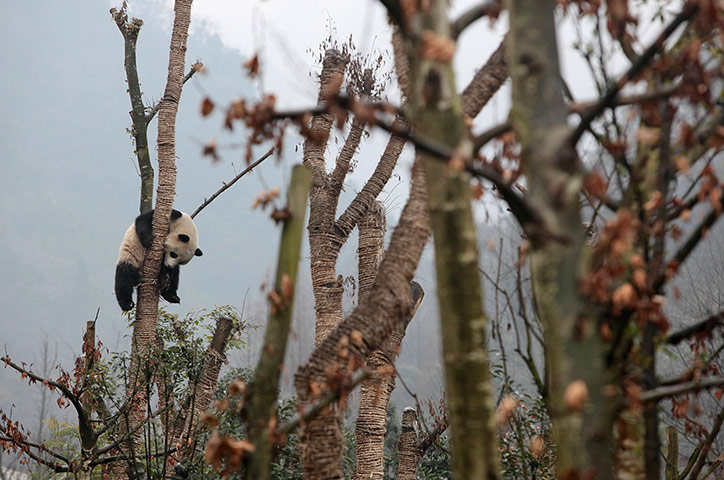
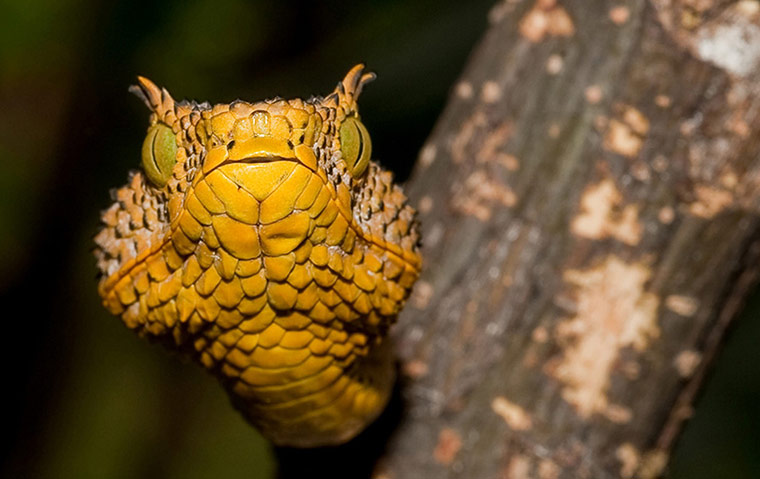
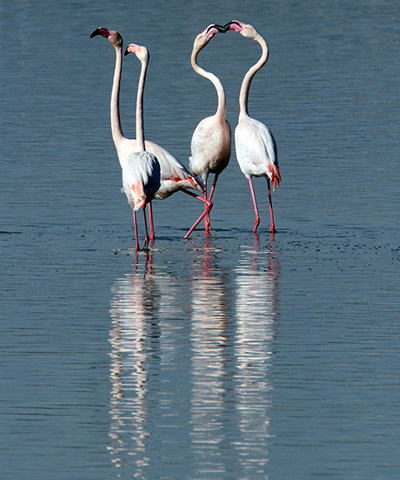
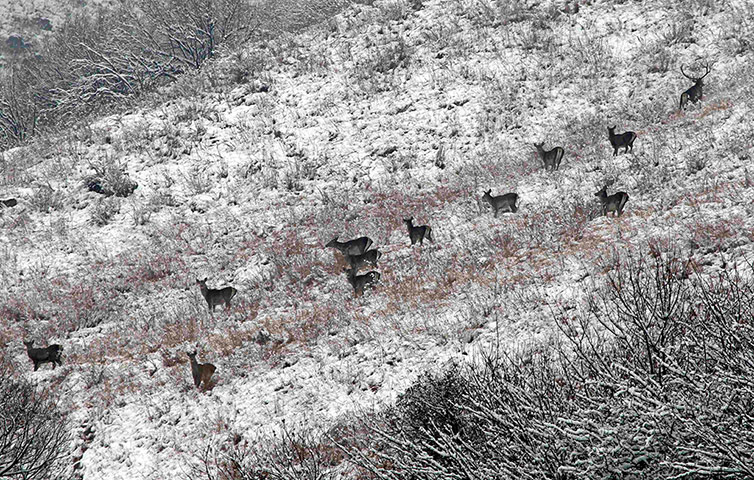
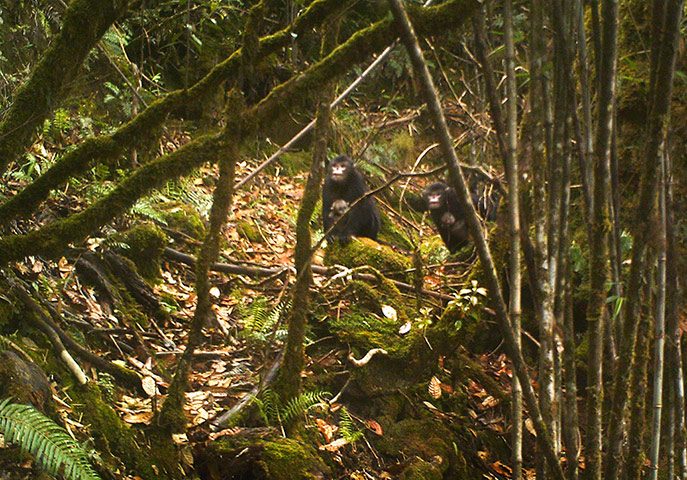
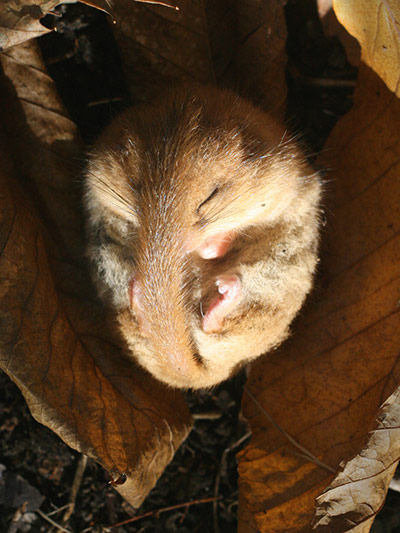
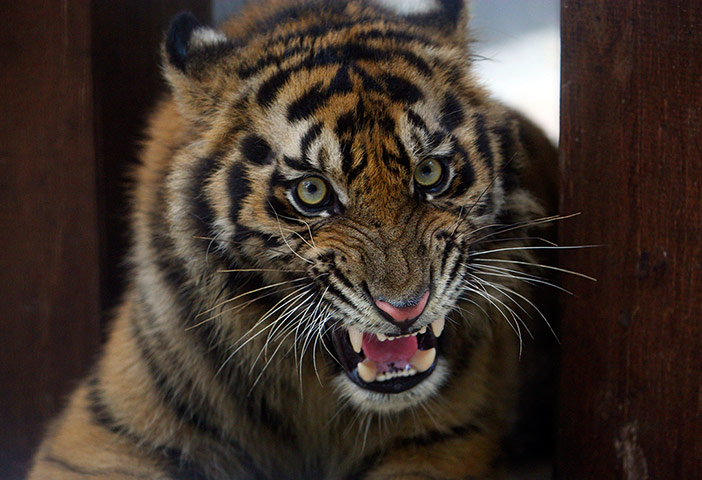
Swans battling in a flooded rice field in Motono, near Tokyo, Japan. In November 1992, a local man started to take care of six swans after they found shelter in a rice field close to his house. By feeding them and providing a flooded rice field as a place to rest, more and more swans came each year. Hundreds of swans are now coming from Siberia during winter time and the place is now known as the 'swan sanctuary'Photograph: Franck Robichon/EPASnowdrops already in early bloom. The unseasonably warm weather has seen wild flowers burst into bloom months ahead of schedule. However weather forecasters are warning of a return to colder temperatures as a widespread frost is expected over the weekendPhotograph: Matt Cardy/Getty ImagesA frog sits on a US dime near the Amau River in Papua New Guinea. The species has been claimed as the world's smallest invertebratePhotograph: Christopher Austin/APShrimpfish swim at the Two Oceans aquarium in Cape Town, South Africa. Shrimpfish are also known as razorfish and are found in relatively shallow tropical parts of the Indian and Pacific oceans. These fish are nearly transparent and flattened from side to side with long snouts and a sharp-edged belly. They swim in a synchronised manner with their heads pointing downwardsPhotograph: Nic Bothma/EPAA seal in a bathtub at the seal sanctuary in Pieterburen, the Netherlands, which was flooded with seals weakened during last week's stormy weather. There are about 360 seals at the sanctuary which normally just has room for about 80 animals. A tent containing bathtubs and small swimming pools was placed on the premises to accommodate the extra numbersPhotograph: CATRINUS VAN DER VEEN/EPAAn orangutan and its baby swing at the top of the rubber tree in Sawang Rimba village, Indonesia. Reports state that a number of environment NGOs working together with the government of Aceh were forced to move hundreds of orangutans into nearby forests because of the changes of orangutan habitat into palm oil plantations, rubber plantations and the massive illegal loggingPhotograph: Hotli Simanjuntak/EPAA giant panda sits in a tree at a panda breeding centre in Dujiangyan, Sichuan province, China. The giant panda is among six young giant pandas which were bred in captivity and were released as a group of 'pioneers' into an enclosed forest in Sichuan province. The release is the first step of a project aiming to help the endangered species to adapt to the wild environment and eventually survive in the wildPhotograph: China Daily/ReutersA newly discovered snake at an undisclosed location in Tanzania. The striking black-and-yellow snake is called Matilda's horned viper, measures some 60cm and has horn-like scales above its eyesPhotograph: Tim Davenport/WCS/AFP/Getty ImagesFlamingos at Larnaca salt lake in Larnaca, Cyprus. Flamingos stop over on the Mediterranean island in the winter, and have appeared in larger numbers this yearPhotograph: Katia Christodoulou/EPAKashmiri red deer, or hanguls, on the snow-covered mountains of Dachigam wildlife sanctuary after a snowfall, on the outskirts of Srinagar. The hangul population has fallen in the Kashmir valley owing to poaching and the loss of natural habitat. However, the number of hanguls has since increased to 220 in the sanctuary, wildlife officials said on SundayPhotograph: Danish Ismail/ReutersThis shot is among the first pictures of newly discovered Myanmar snub-nosed monkey, Kachin state, BurmaPhotograph: FFIFor the first time in the RSPB’s 40-year ownership of Wolves Wood in Suffolk, signs of the rare and elusive dormouse were discovered last weekPhotograph: Liz Cutting/RSPBAn estimated two-year-old Sumatran tiger named Bima that was caught by villagers in October last year, growls inside his observation cage in Perawang, Indonesia. Indonesia's endangered elephants, tigers and orangutans on Sumatra island are threatened by habitat loss and poaching. Bima will be released back into the wild in AprilPhotograph: Tatan Syuflana/AP
Sign up to read this article
Read news from 100’s of titles, curated specifically for you.