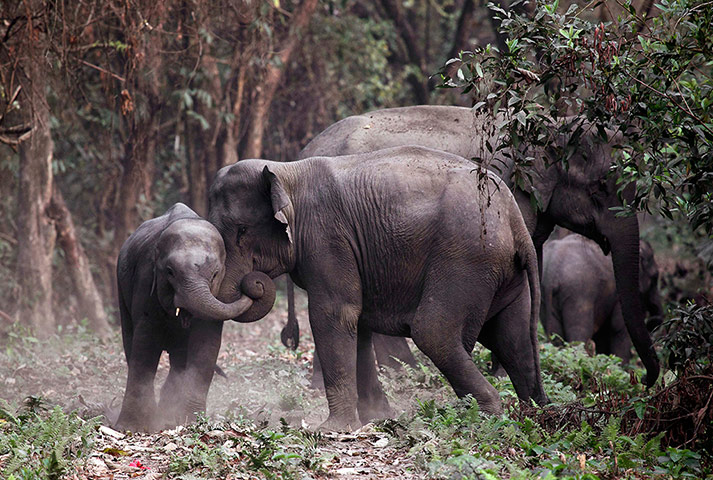
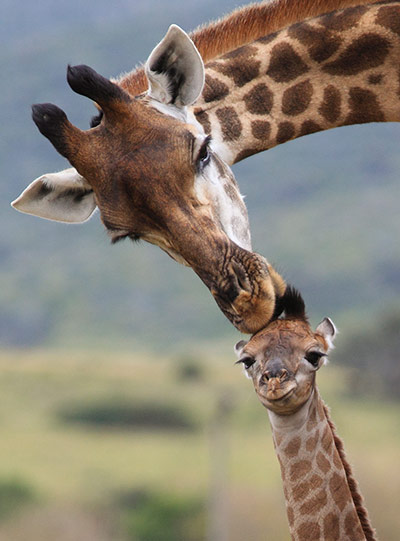
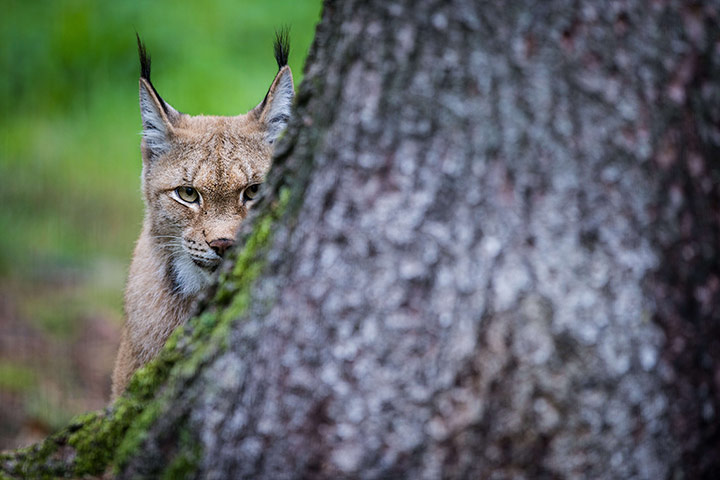
A herd of elephants is seen playing with each other as they walk in the shade of jungle in Assam, IndiaPhotograph: Ajay Jain/Barcroft IndiaA mother giraffe tends to her month-old calf at the Kariega game reserve in Eastern Cape, South Africa. The photo was taken by assistant head park ranger Jacques Matthysen, who stumbled across the pair while out searching for lions among the reserve's 10,000 hectares of pristine wildernessPhotograph: Jacques Matthysen/Barcroft MediaAn Eurasian lynx is pictured in its enclosure at the Hundshaupten deer park in Hundshaupten, southern Germany. In the wild, the Eurasian lynx can be found in European and Siberian forests as well as in south and east AsiaPhotograph: David Ebener/AFP/Getty Images
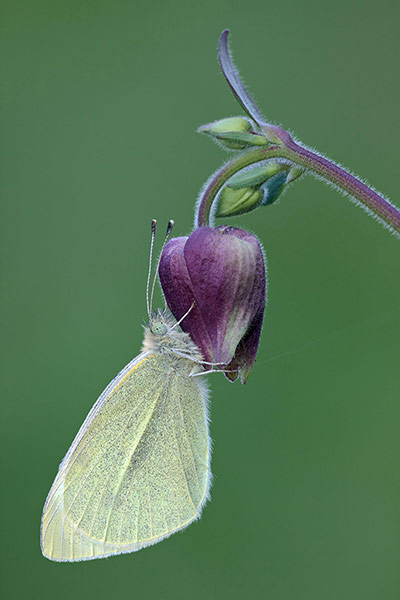
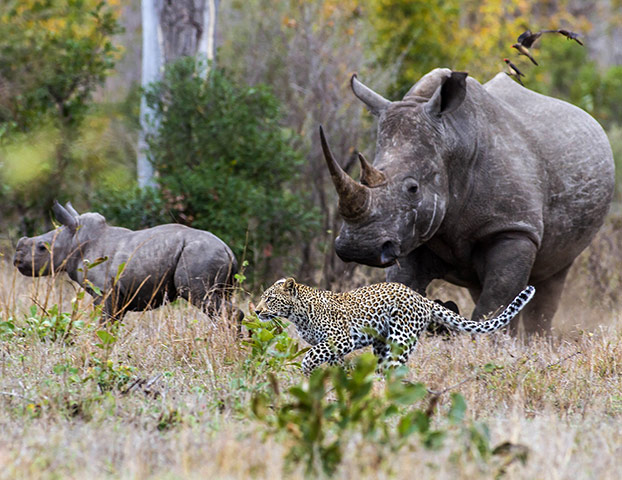
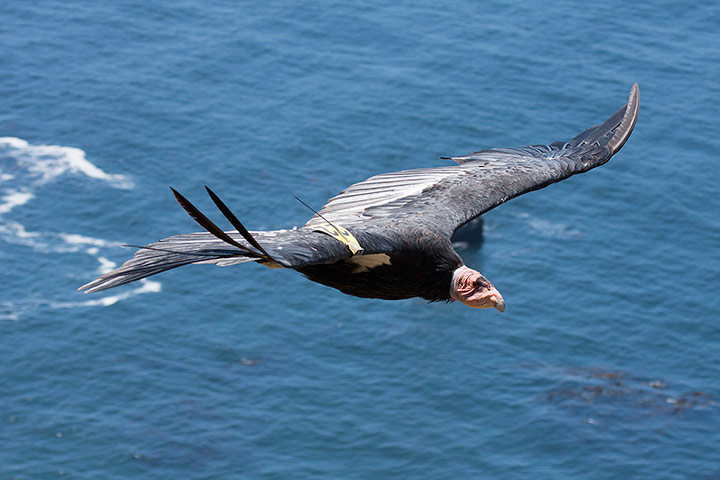
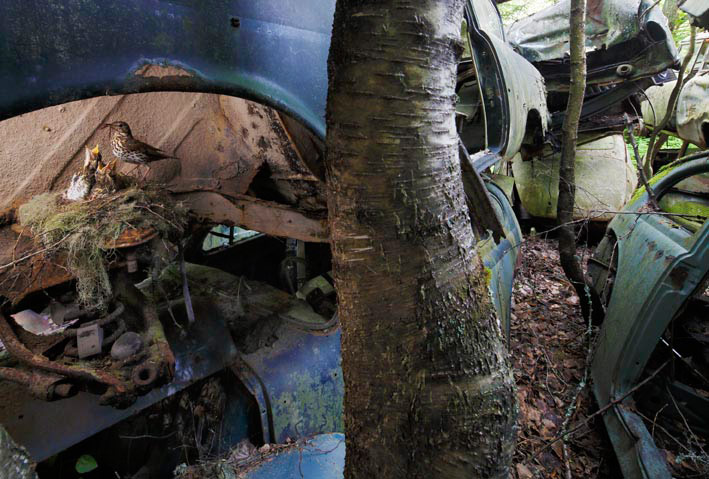
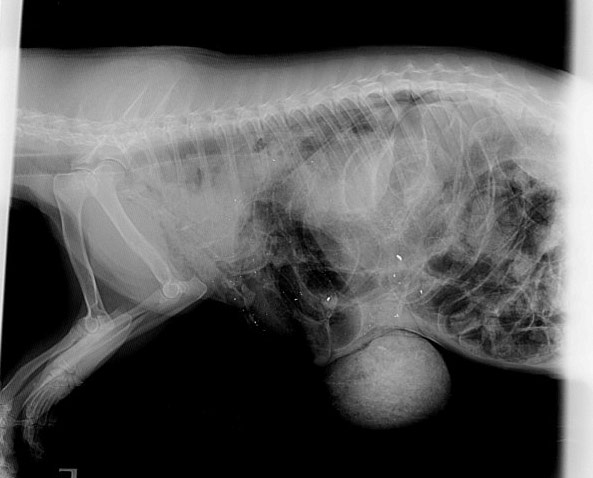
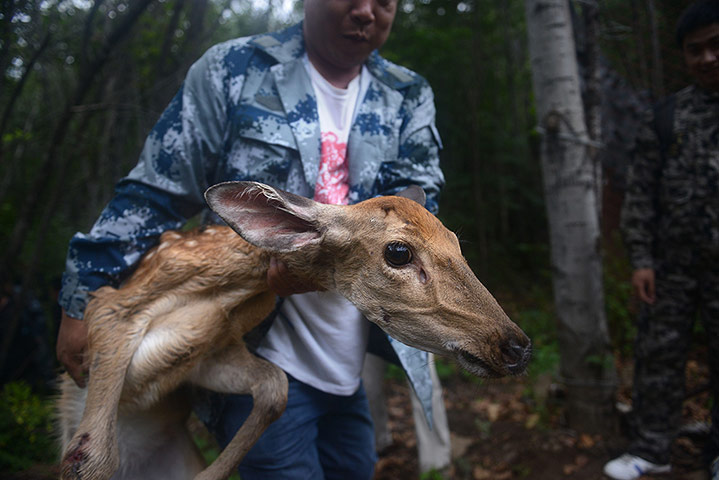
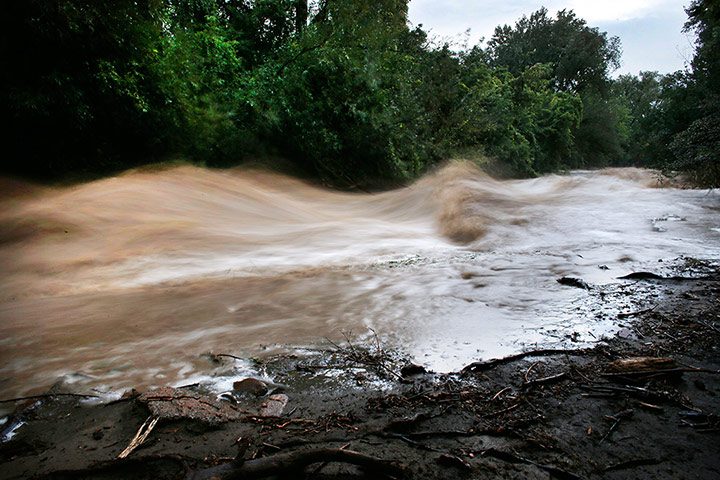
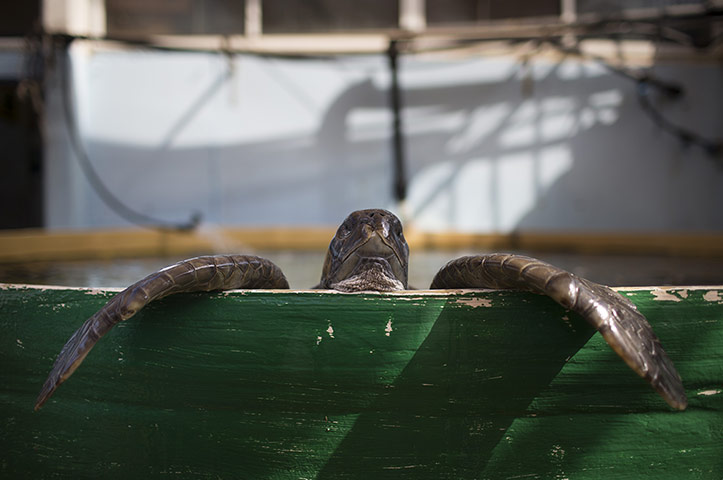
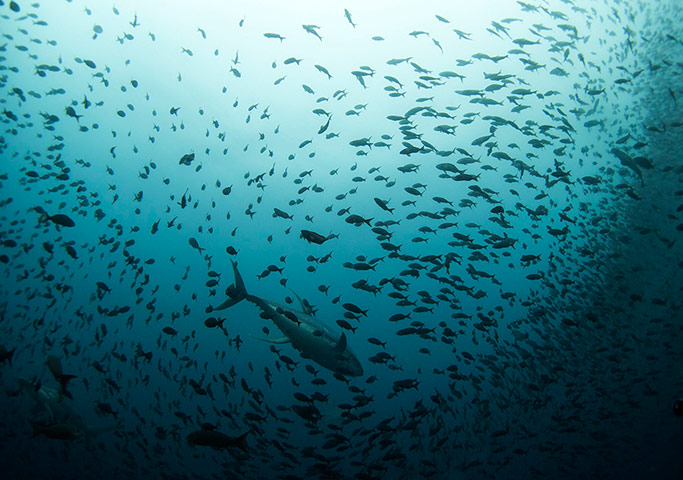
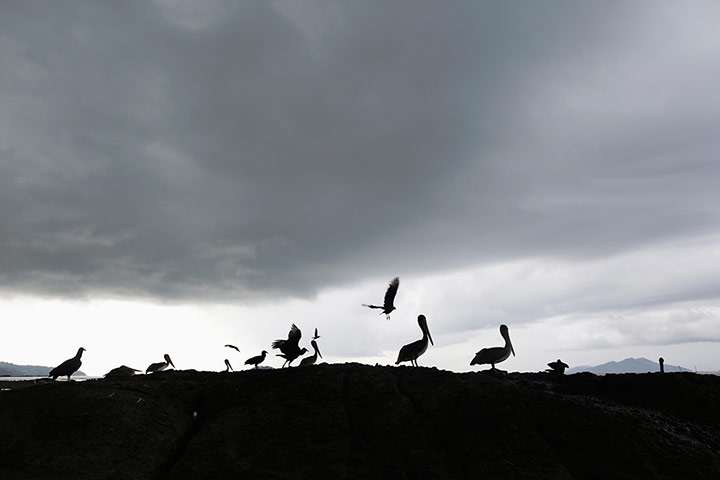
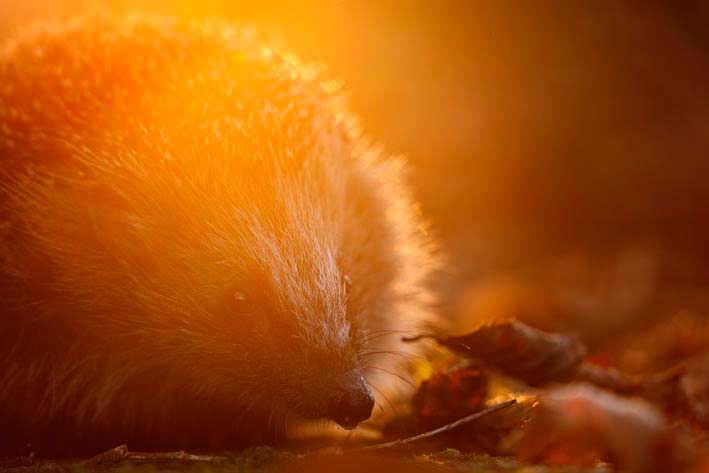
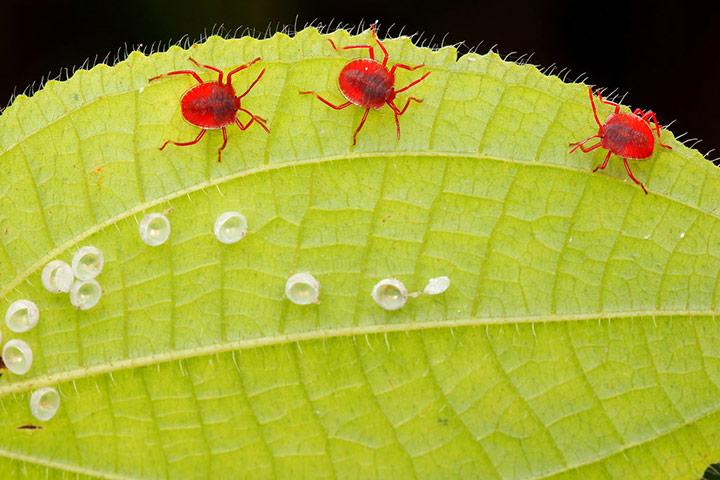
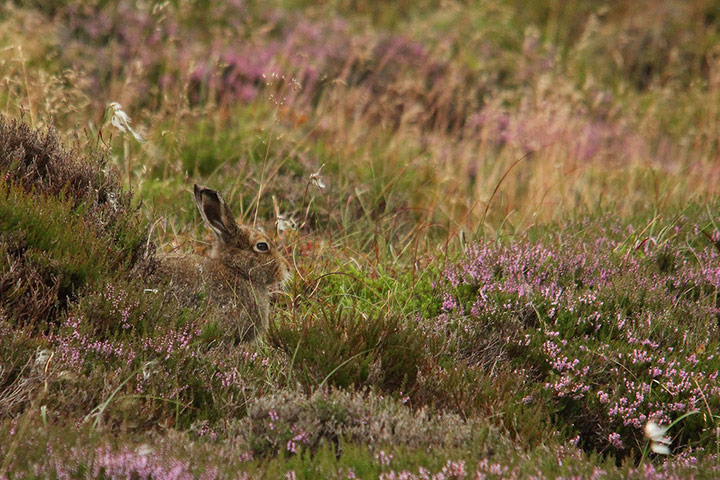
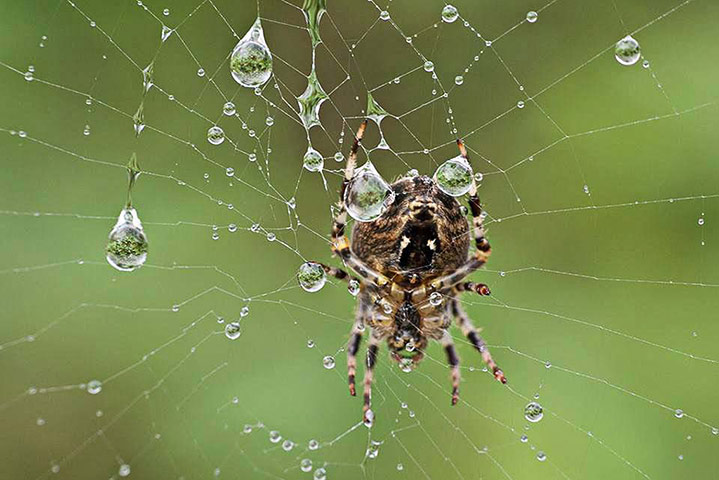
A hot summer has helped butterflies bounce back after a string of poor years, an annual survey has revealed. Warm, sunny spells in July and August significantly boosted numbers compared with 2012's washout summer, which was the worst year on record for the insects, wildlife charity Butterfly Conservation said. Butterfly spotters counted almost twice as many individual butterflies on average in this year's Big Butterfly Count, in which members of the public spend quarter of an hour counting all the butterflies they see, than in last year's cold, wet conditions. Overall, four times as many butterflies were recorded, with a record-breaking 46,000 people counting more than 830,000 butterflies and day-flying moths across the UK over three weeks in July and AugustPhotograph: Heath McDonald/Butterfly Conserv/PAA rhino cow charges a young leopard to protect her calf in the Sabi Sands private game reserve on August 21, 2013 in Mpumalanga, South Africa. The 30kg cat was stalking the pair as a game, but quickly realised it had bitten off more than it could chew after misguidedly deciding to try and take on about two tonnes of rhino Photograph: Lee Whittam/Barcroft MediaA condor in flight in Big Sur, California. In the coastal redwood forests of Big Sur, scientists seeking to solve a mystery about why dozens of endangered condors are having problems reproducing think they have uncovered the culprit: the banned pesticide DDTPhotograph: Tim Huntington/APNorwegian photographer Pål Hermansen has won the 2013 Fritz Pölking award with his photography story Car Cemetery - A Wildlife Reserve. The shy song thrush couple chose the perfect nesting ground in an old Opel to raise their young. 'Nature conservationists in the local municipality would like to see the cars removed, while culture conservationists want to make it a cultural monument. I hope that the nature conservationists will begin to realise that nature is already doing a good job in taking this site over and that they eventually join the culture conservationists to make it a combined nature and culture reserve'Photograph: Pål Hermansen/GDT Fritz Pölking Prize 2013The first photographs have emerged of what appears to be a badger killed in the controversial culls taking place in England. A single high-velocity bullet killed the animal, passing right through it, the vet who examined the carcass told the Guardian. Most badgers she had seen shot before the cull had been peppered with gunshot, Dr Elizabeth Mullineaux saidPhotograph: Pauline Kidner/Secret World Wildlife RescueA WWF staff member carries an injured sika deer which will be served as food for the Amur tigers in Lanjia forest near Wangqing county of Yanji, northeast China's Jilin province. High in the mountains of northeastern China, about 20 Amur, or Siberian, tigers – the world's largest living feline – still survive, and conservationists looking to preserve the endangered species are working to increase numbers of prey for the big cats to kill and eat.Photograph: WANG ZHAO/AFP/Getty ImagesBoulder Creek roils at high speed after days of record rain and flooding, at the base of Boulder Canyon, Colorado, 13 September 2013. People in Boulder were ordered to evacuate as water rose to dangerous levels amid a storm system that has been dropping rain for a week. Rescuers struggled to reach dozens of people cut off by flooding in mountain communities, while residents in the Denver area and other areas were warned to stay off flooded streetsPhotograph: Brennan Linsley/APZSL Animal Photography Prize 2013, category size matters, adult winner. A Giant Trophy for a Small Ant by Bence Mate Photograph: Bence Mate/ZSL Animal Photography Prize 2013A blind green turtle in its pool at the sea turtle rescue centre where the breeding stock of green turtles undergoes a weekly washing and weighing on 15 September in Mikhmoret north of Netanya, Israel. From transplanting turtle nests during the nesting season to protected beaches, through the rescue and treatment of wounded turtles brought in by fishermen or washed up on Israel's shores, to the development of a long-range breeding program for the threatened green turtles, the volunteers and staff of the Israeli Nature and Parks Authority are doing their best to protect the creatures. The numbers have dwindled in the Mediterranean to an estimated 450 nesting female Green turtles and about 2,500 nesting female loggerheads. Far removed from man-made obstacles and protected from their natural predators such as crabs, foxes and birds, the hatchlings make their race to the sea with the hope that more than 20 years later they will return to the same beach to ensure the species survivalPhotograph: Uriel Sinai/Getty ImagesA jellyfish (Bougainvillia superciliaris) with a hitchhiking amphipod (Hyperia galba). The vast majority of animals with which we share our planet go almost unnoticed, eclipsed by the bigger, more charismatic creatures such as the mammals, amphibians and reptiles. A book published this week – Animal Earth: The Amazing Diversity of Living Creatures by Ross Piper – seeks to redress this imbalance by providing an unbiased tour of the 35 lineages of the animal kingdom in all their bizarre beauty and varietyPhotograph: Alexander Semenov/Animal Earth/Thames & HudsonA tuna swims among a school of fish. The Hong Kong government has issued a shark fin and bluefin tuna ban for their official dining, on the conservation of both species. According to IUCN, out of 468 shark species, 74 are listed either as threatened species. Annually, up to 73 million sharks are killed to satisfy the enormous demand. Bluefin tuna are particularly vulnerable to overfishing. Over the past four decades, the Atlantic bluefin tuna has declined by at least 51% and is now listed as endangered by the IUCN red listPhotograph: Jorge Silva/ReutersVultures and pelicans sit on a rock on the shore of the ocean in Veracruz on the outskirts of Panama CityPhotograph: Carlos Jasso/ReutersGDT Fritz Pölking junior prize 2013: The garden resident. One or two hours after sunset hedgehogs leave their day-time hiding places and roam suburban gardens looking for food. Photograph: Hermann Hirsch/GDT Fritz Pölking Junior Prize 2013Unidentified newly hatched insects in the Malaysian rainforest, by Hardy BackyardgeoPhotograph: Hardy Backyardgeo/FlickrHare in flowering heather, taken by Derbyshire Harrier Photograph: Derbyshire Harrier/FlickrA garden spider, Araneus diadematus, in South Norwood country park. Submit your wildlife photography to our Flickr groupPhotograph: Peter Martin/Green Shoot/Flickr
Sign up to read this article
Read news from 100's of titles, curated specifically for you.