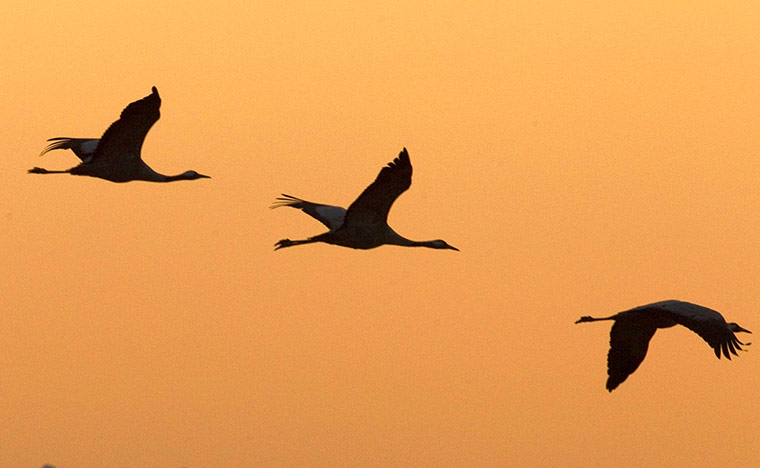
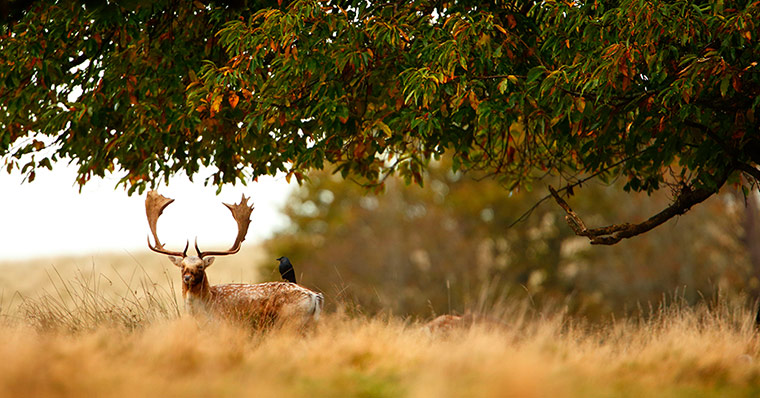
Migrating cranes fly over the Hula Lake ornithology and nature park in northern Israel. The Hula valley is a stopping point for hundreds of species of birds along their migration route between the northern and southern hemispheresPhotograph: Baz Ratner/ReutersA crow sits on the rump of a fallow deer stag grazing under autumnal trees at Petworth Park in West SussexPhotograph: Chris Ison/PAA red squirrel jumping from rock to rock in the Kielder Forest in Northumberland Photograph: Owen Humphreys/PA
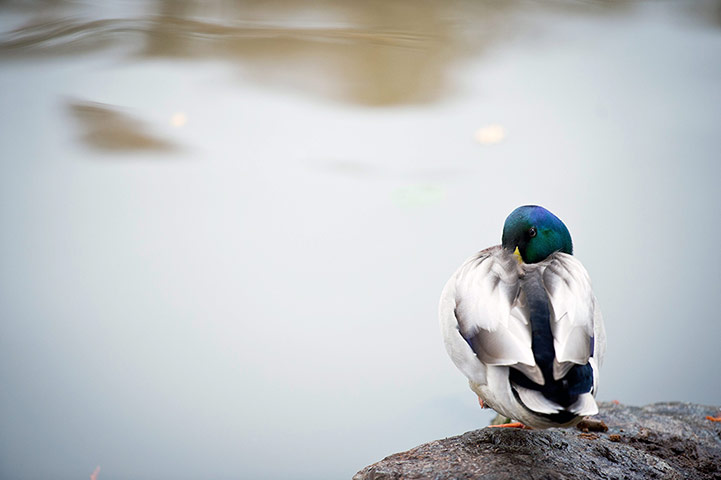
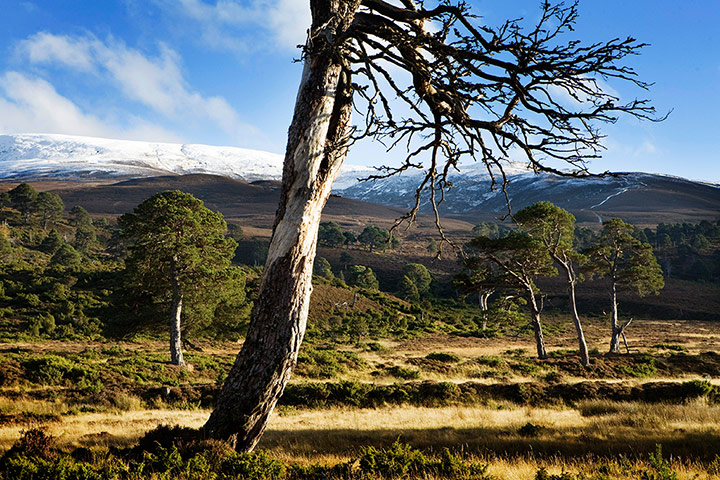
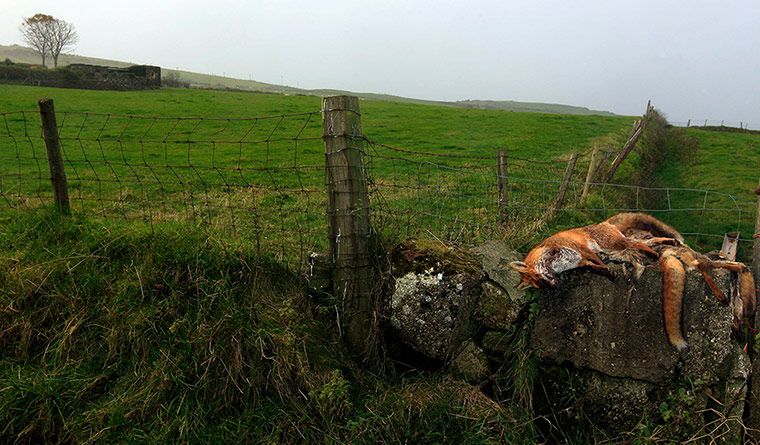
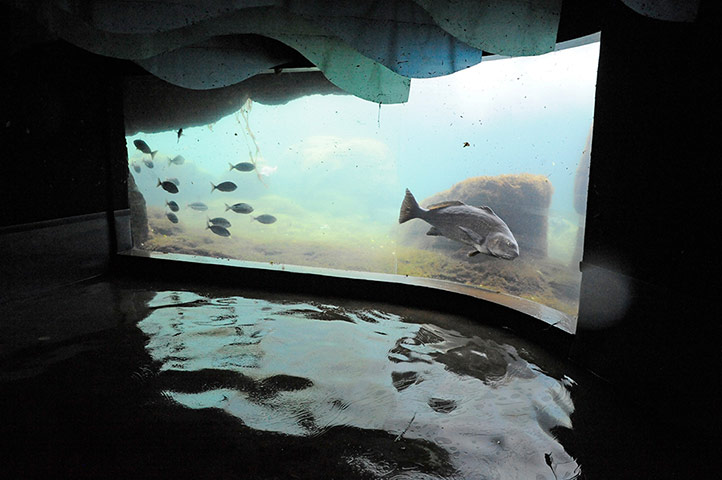
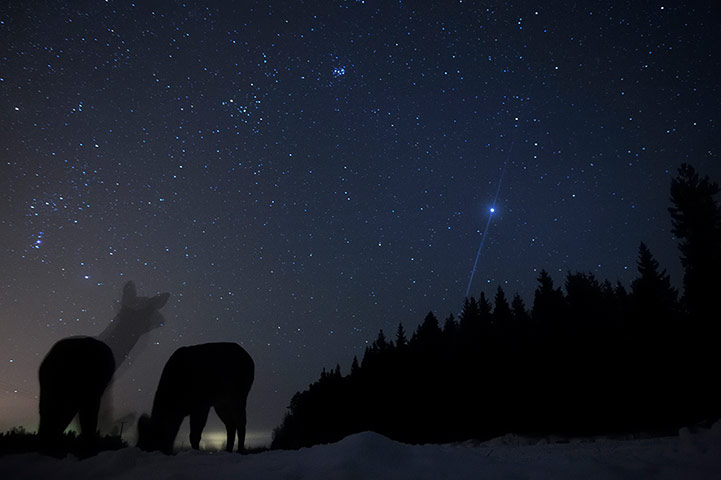
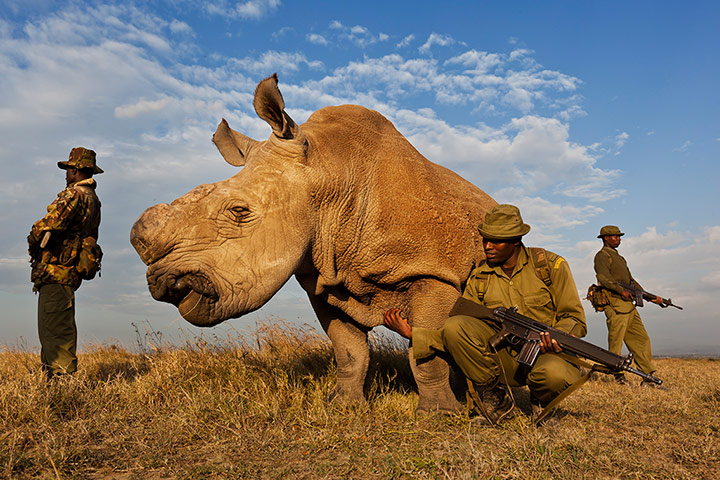
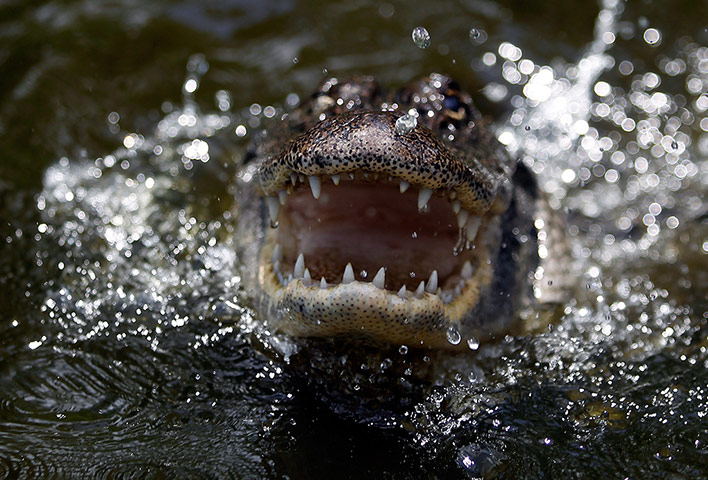
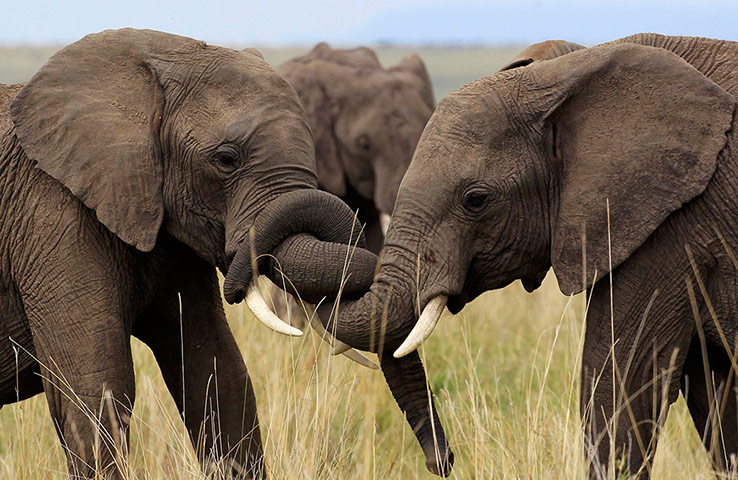
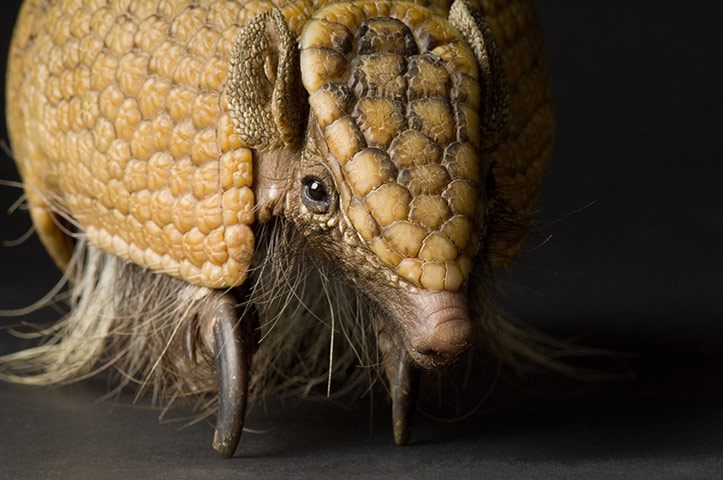
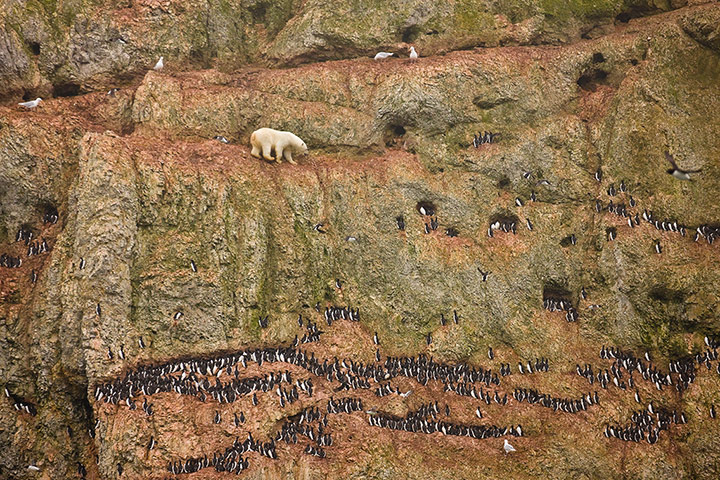
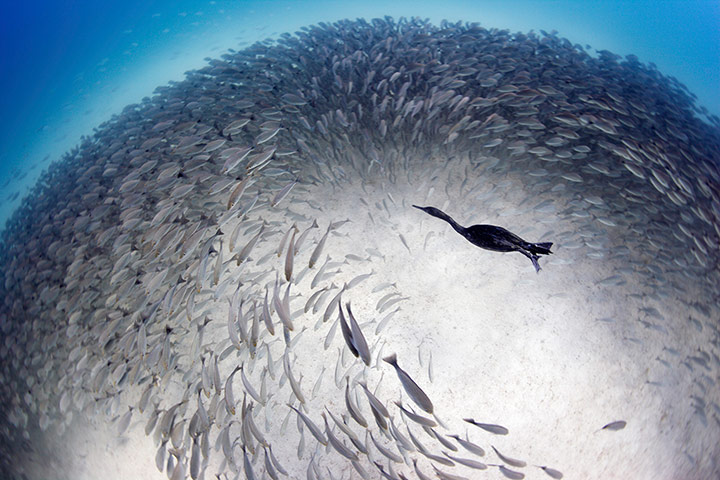
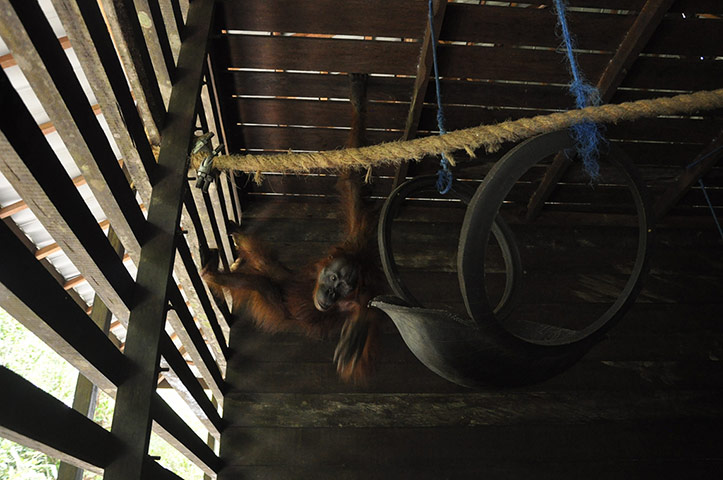
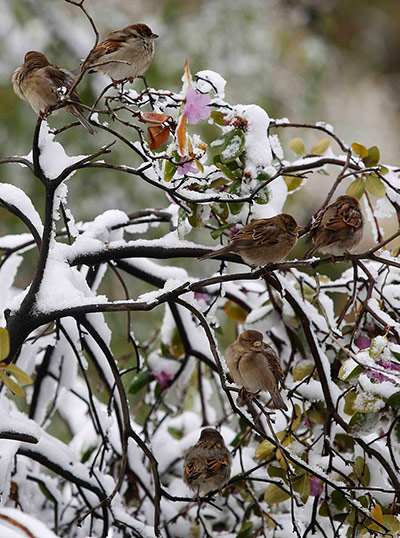
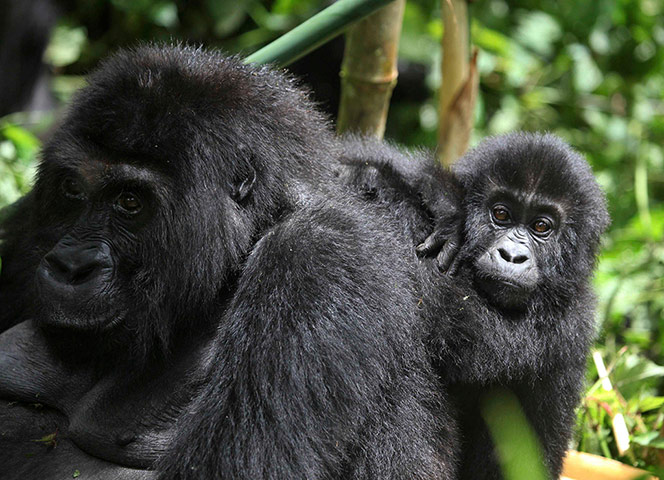
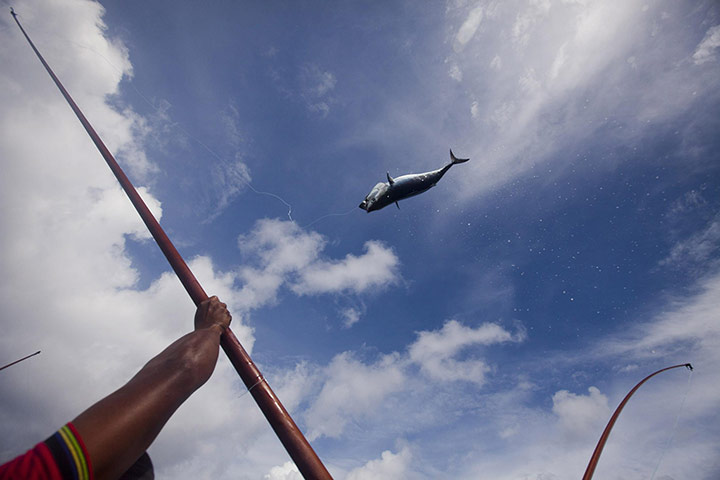
A mallard nestles into its feathers by the side of Roehrensee Lake in Bayreuth, GermanyPhotograph: David Ebener/EPARemnants of the Caledonian Forest. The scots pines of Glen Feshie near Kingussie in the Cairngorm mountain range in the Scottish Highlands. Scientists have pinpointed the Scots pine as the next well-loved British tree species that could fall victim to foreign pathogens. They believe that the expected devastation triggered as ash dieback disease sweeps Britain could soon be followed by a second invasion. Pinus sylvestris is considered to be particularly vulnerable because two major pests that attack it have already established themselves in western Europe: the pine wood nematode, a worm that infects pine trees and causes pine wilt, and the fungus Fusarium circinatum, which causes the disease pitch cankerPhotograph: Murdo MacLeod/GuardianA young ash tree infected with ash dieback on a Woodland Trust Site near Framlingham, south-east England. The deadly fungal disease, which causes leaf loss and crown dieback, has already affected up to 90% of ash trees in parts of Denmark and has now been found in the wild in Britain. Ash trees are the third most prevalent tree in Britain, but their contribution to the woodland canopy is such that their loss could mean the end of many animal and plant habitatsPhotograph: Darren Staples/ReutersDead foxes are seen placed on a dry stone wall near Fair Head in the Glens of Antrim, northern Ireland November 7, 2012. Foxes that have been culled during the night are left on display for the landowner to view. Photograph: Cathal Mcnaughton/ReutersA black drum fish at Coney Island's New York Aquarium swims in the water of the "Sea Cliffs" exhibit, in front of flood waters that inundated the aquarium during superstorm Sandy. Unless power is restored soon, the aquarium says it may have to relocate 12,000 creatures, including walruses, sharks, sea turtles, penguins and a giant octopusPhotograph: Julie Larsen Maher/APGDT European wildlife photographer of the year's overall winner: The Stargazer by Tommy Vikars from Finland. Vikars said: 'I buried my sound-isolated camera box in the snow nearby. In my warm hide about 50 metres away, I was ready with the camera's remote release. l used my other camera and a 300mm lens to check the scene. It was extremely difficult to see what was going on at the feeding place even though I had exhausted ISO and exposure values to their absolute maximum to give me at least a slight idea when to trigger the camera. I took many photographs, but often the deer would move too fast or in the wrong direction given the long exposure time'Photograph: Tommy Vikars/2012 GDT European Wildlife Photographer2012 World Press Photo competition, first prize: Rhino Wars by Brent Stirton South Africa An anti-poaching team guards a northern white rhino, part of a 24-hour watch, at Ol Pejeta Conservancy in Kenya, 13 July 2011. The park is home to four of the world's remaining eight northern white rhinos, the world's most endangered animal. Despite the fact that rhinoceros horn is illegal worldwide, demand is rising steeply as a newly wealthy Asian middle class is able to afford the prized substance, previously the province of the rich. With rhinoceros horn worth more than gold, the animals are the target of poachers. South Africa alone lost over 400 rhinos to illegal poaching in 2011. It is estimated there are only 16,000 rhinos left in the world, and the animal faces extinction Photograph: Brent Stirton/Getty Images/NG/2012 World Press PhotoCrocodiles and alligators' snouts are more touch-sensitive than human fingertips, a new study shows. Alligators have 4,000 tiny, raised black spots on their heads, along their jaws, inside their mouths, and between their teeth. Crocodiles have about 9,000. Scientists have known about these bumps – called integumentary sensory organs – for more than 100 years, but until now their purpose was a mysteryPhotograph: David Grunfeld/Getty ImagesElephants play at the Maasai Mara game reserve in KenyaPhotograph: Thomas Mukoya/ReutersThe Brazilian three-banded armadillo, Tolypeutes tricinctus, will be the mascot of the 2014 FIFA World Cup which will take place in Brazil. The species was believed to be extinct until it was rediscovered in 1988 in a handful of locationsPhotograph: Joel Sartore/NG/AlamyThe first prize in the Nature Singles category of the World Press Photo competition 2012 was won by American photographer Jenny E Ross. The picture shows a male polar bear climbing precariously on the face of a cliff above the ocean at Ostrova Oranskie in northern Novaya Zemlya, attempting to feed on seabird eggsPhotograph: Jenny E. Ross/AP/2012 World Press PhotoThe GDT European Wildlife Photographer competition underwater world category winner: The pursuit by Cristobal Serrano. Serrano said: 'At a depth of 20 meters, lying face up on the sandy bed of the Sea of Cortez, Baja California, I was constantly forced to change my position since it was impossible to say from which direction the bird would come. With my fisheye lens l also wanted to get as close as possible to the action. Finally, everything fell into place: in my immediate vicinity the cormorant plummeted bullet-like into a shoal of grunts, scattering them in all directions to isolate individual fish'Photograph: Cristobal Serrano/2012 GDT European Wildlife PhotographerA female Bornean orangutan named Aan, rescued from an oil plantation in the Indonesian part of Borneo where she had been roaming for over a month, has survived an operation to remove 32 of the 104 air gun pellets in her body. Orangutan awareness week runs from 12-18 NovemberPhotograph: Orangutan Foundation UKSmall birds huddle together as four inches of snow covers the ground in Central Park after a nor'easter struck with high winds and heavy precipitation in many of the same communities affected by hurricane Sandy, in New York NovemberPhotograph: Chip East/REUTERSLowland gorillas in the Kahuzi-Biega national park in South Kivu, eastern Democratic Republic of Congo. The gorilla population of the park was devastated during the successive wars which swept Congo, with hundreds dying in the fighting. Kahuzi-Biega national park - named after two mountains within its boundaries - is now the only place where tourists can legally see gorillas in CongoPhotograph: ReutersPole and line fishermen land skip jack tuna in the Maldives. Pole and line fishing is a selective, sustainable and equitable method of catching tuna. The Greenpeace flagship Rainbow Warrior is on an expedition in the Indian Ocean to expose overfishing and to highlight the problems associated with excessive tuna fishing, unsustainable and illegal fishing practicesPhotograph: Paul Hilton/Greenpeace
Sign up to read this article
Read news from 100’s of titles, curated specifically for you.