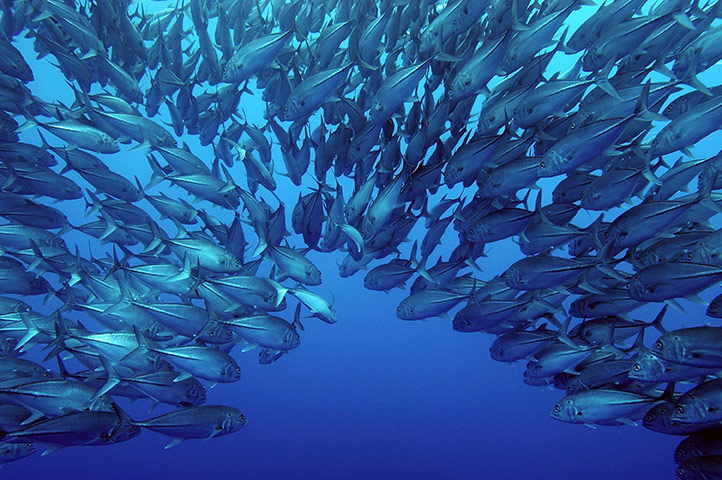
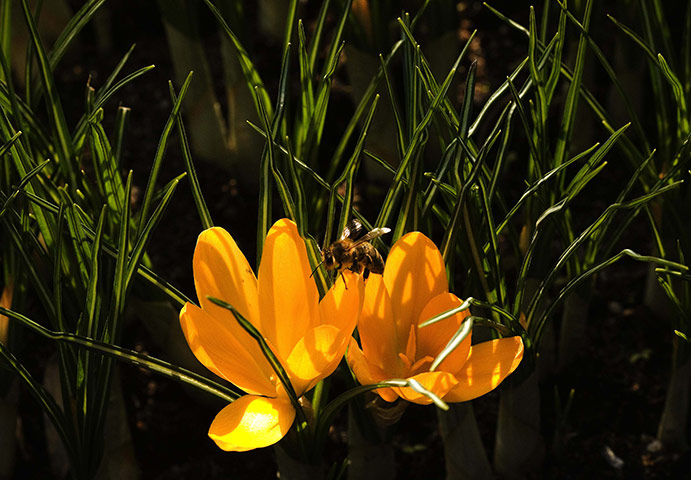
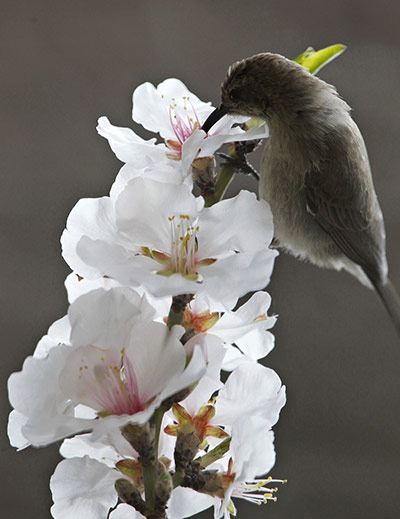
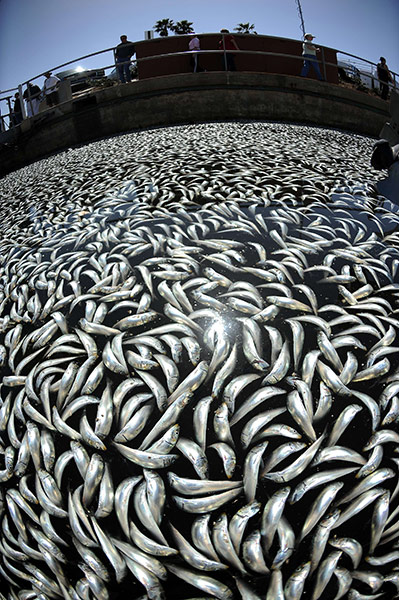
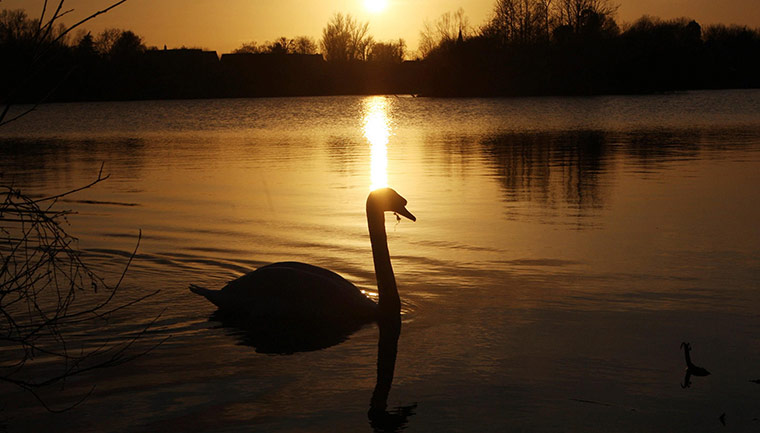
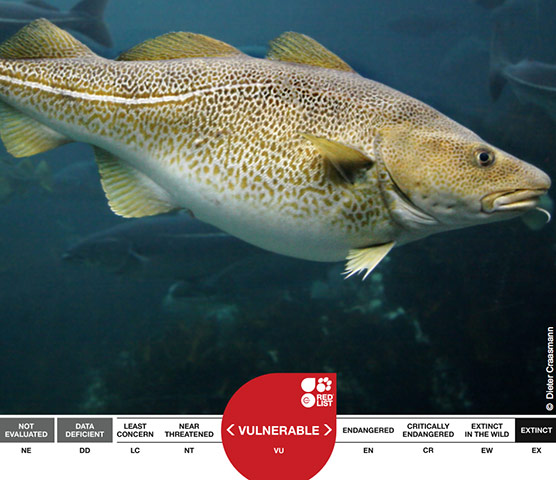
Bigeye jacks found schooling by the thousands. A large new marine protected area around Cocos Island will offer endangered marine species such as hammerhead sharks and leatherback turtles, as well as fish stocks that are important to local communities, the chance to recover from increasing pressures, Conservation International saysPhotograph: Sterling Zumbrunn/Conservation InternationalGlobalisation is killing bees, as bee pests and diseases are being passed swiftly around the world thanks to the opening up of trade, says a UN studyPhotograph: Michael Buholzer/ReutersA bird feeds on nectar from an almond blossom Photograph: Ali Jarekji/Reuters
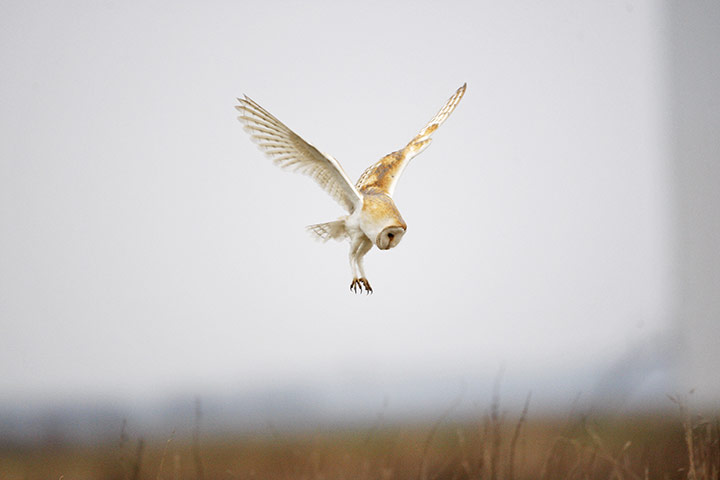
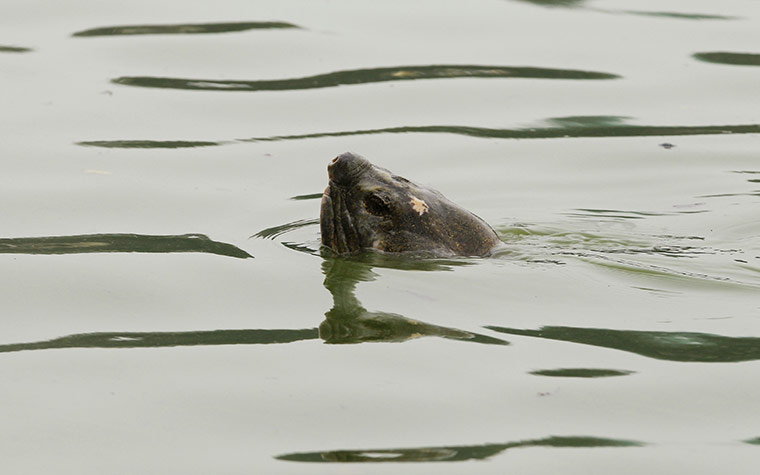
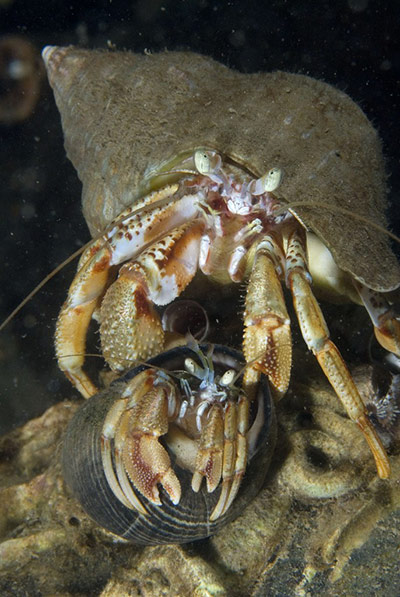
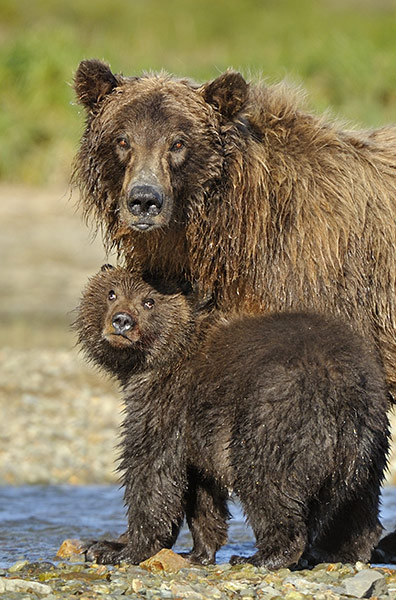
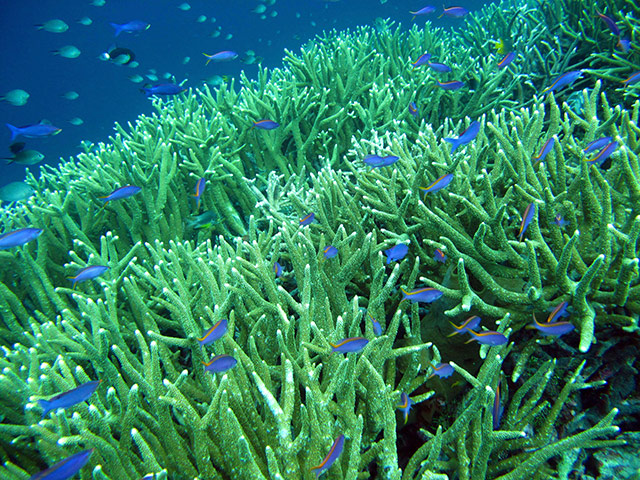
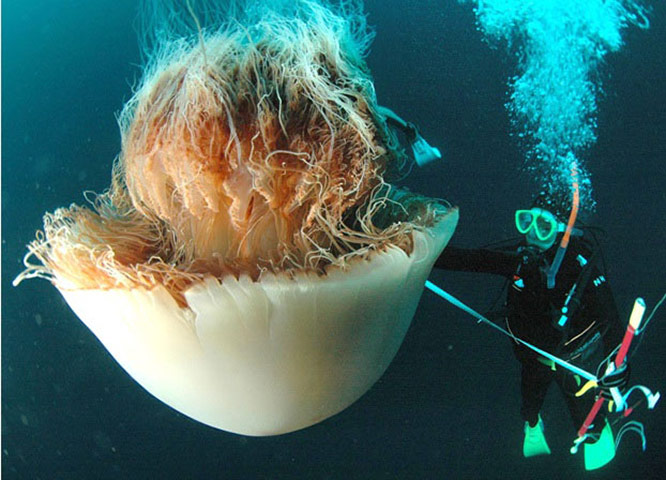
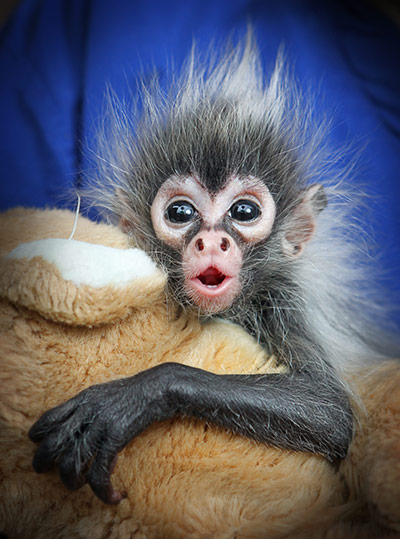
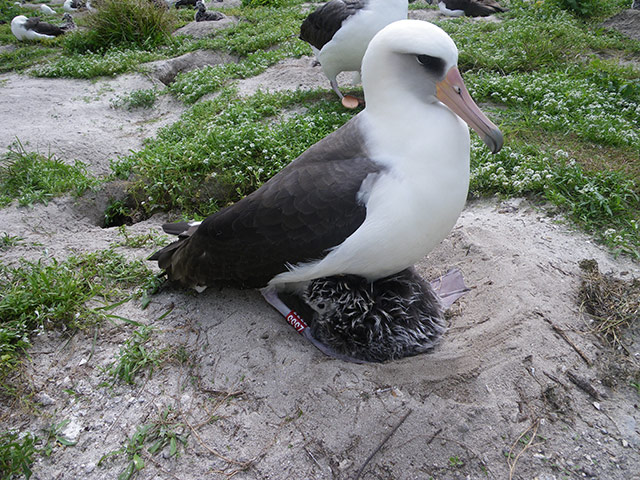
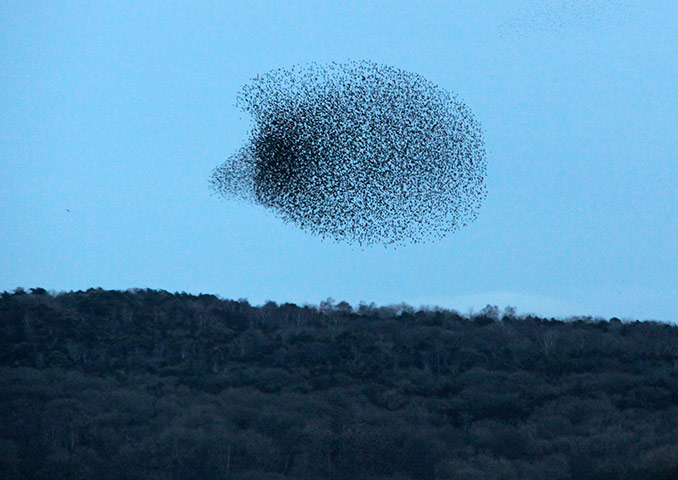
A barn owl on Nicholas Watts' farm. The land tended by Watts has been in his family for four generations but his conservationist approach is far from traditional. Watts and Vine House Farm have recently been awarded the Countryside Alliance awards ‘Eastern Region Enterprise’ awardPhotograph: Nicholas Watts/Vine House Farm/The Wildlife TrustsA giant freshwater turtle swims in Hanoi's Hoan Kiem. The turtle's health is in serious condition and requires treatment. The state established a team of animal experts, veterinarians and scientists to capture the rare turtle and administer treatment. The turtle, which is considered sacred in Vietnam, eluded capture on TuesdayPhotograph: Kham/ReutersLarge male hermit crabs carry small females around prior to mating, generally dragging them by the shellPhotograph: Paul Naylor/The Wildlife TrustsA piping plover takes its four newborns under its wing to keep them warmPhotograph: Michael Milicia/Solent News & PhotoA mother grizzly bear with one of her cub. Mating season is from June to July but often an embryo doesn't actually begin to develop until the mother begins her winter hibernation. On average, female grizzlies give birth to two cubs, caring for them for the next two to three years. When they're first born, cubs only weigh around a pound and are both blind and furless Photograph: Andy Rouse/Rex FeaturesFish swim over healthy coral in Indonesia's Wakatobi archipelago, a thriving marine paradise, packing an abundance of life that supports 100,000 people and contributes millions of dollars to Indonesia's economy. Last year, coral bleaching caused by higher sea temperatures wreaked havoc across the Coral Triangle, a region of rich tropical reefs spanning much of south-east Asia and almost all of IndonesiaPhotograph: Rod Salm/AFP/Getty ImagesA diver is dwarfed by a giant jellyfish that plagues the Sea of Japan. Giant jellyfish, thought to be from Chinese waters, have been floating into the Sea of Japan and wreaking havoc on the Japanese fishing industry, officials say Millions of the creatures, each weighing almost 450 pounds with a bell reaching almost 7 feet across and trailing a tangle of long, stinging tentacles, have moved into the Sea of Japan every summer since 2002, LiveScience.com reported Wednesday. Photograph: Yomiuri ShimbunA seven-week old baby spider monkey born at Melbourne zoo in AustraliaPhotograph: Alex Coppel/Rex FeaturesA Laysan albatross named Wisdom who is at least 60 years old has been spotted by wildlife officials raising a chick at the Midway Atoll national wildlife refuge in the Pacific Islands. The bird has worn out five bird bands since she was first banded in 1956 - she is the oldest US wild bird on recordPhotograph: John Klavitter /USFWSA murmuration of starlings over the RSPB nature reserve, Leighton Moss, the largest reedbed in north-west England. According to the RSPB, the starling is of great conservation concern. In recent years, the population has crashed by over 70%, meaning the birds are now on the critical list of UK birds most at risk. The RSPB is working with farmers and land owners to encourage land management that benefits starlings and other wildlifePhotograph: Neil Bland /RSPBMillions of dead fish floating in a marina in Redondo Beach, south of Los Angeles, California. Experts said the fish may have died from lack of oxygen because of algae, while locals wondered if high winds overnight might have caused itPhotograph: Gabriel Bouys/AFP/Getty ImagesA swan swims as the sun sets over Wraysbury, MiddlesexPhotograph: Steve Parsons/PAThe Atlantic cod, Gadus morhua, is listed as ‘vulnerable’ on the IUCN 'red list' of threatened species. This species is found on both the eastern and western shores of the northern Atlantic Ocean and feeds on a variety of food items including plant life, crustaceans and small fishes (including juveniles of their own species). The rapid economic growth of the United States, during the 18th and 19th centuries, is sometimes attributed to the incredible magnitude of the cod fishing industry in the north-west Atlantic. Since the 1970s, however, there has been a catastrophic crash of annual catches and it is now estimated that over 70% of the western Atlantic cod stock has been decimated from its historical levePhotograph: IUCN
Sign up to read this article
Read news from 100’s of titles, curated specifically for you.