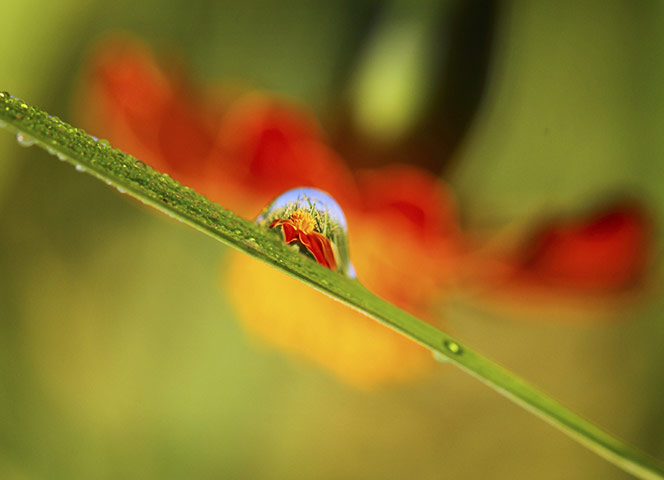
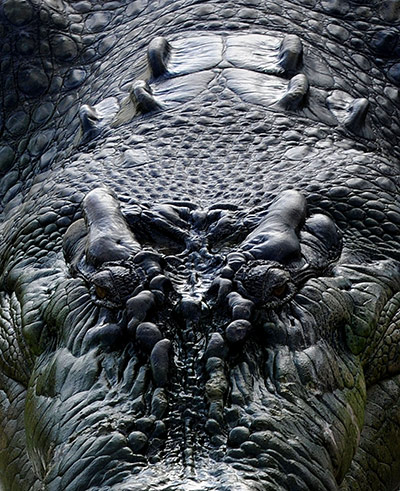
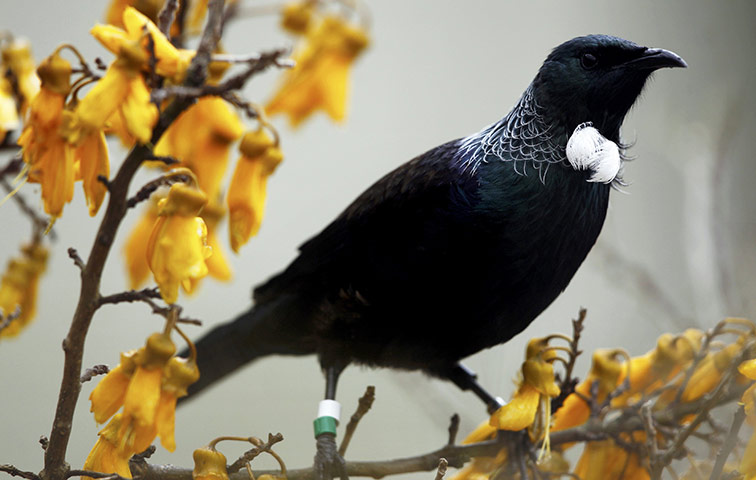
A marigold flower is reflected on a dew drop on the leaf of a paddy during the early morning in Lalitpur, IndiaPhotograph: Navesh Chitrakar/ReutersLolong, a one-tonne, 6.4 metre, crocodile believed to be the biggest ever to have been caught, in a caged pen in the southern Philippine town of Bunawan. Deep inside the Philippines' largest marshland, tribespeople who once revered crocodiles as mystical creatures say they now feel terrorised by themPhotograph: Jay Directo/AFP/Getty ImagesA Tui, a native bird of New Zealand, sits on a Kowhai tree at Mount Victoria, on the coast of Wellington, New ZealandPhotograph: Marcos Brindicci/Reuters
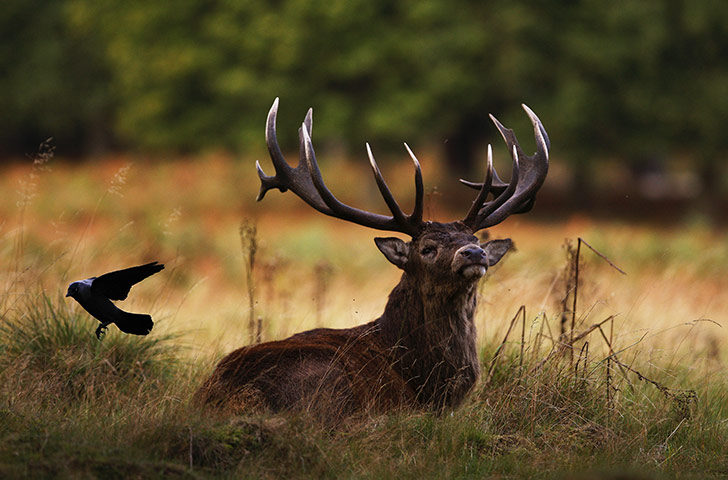
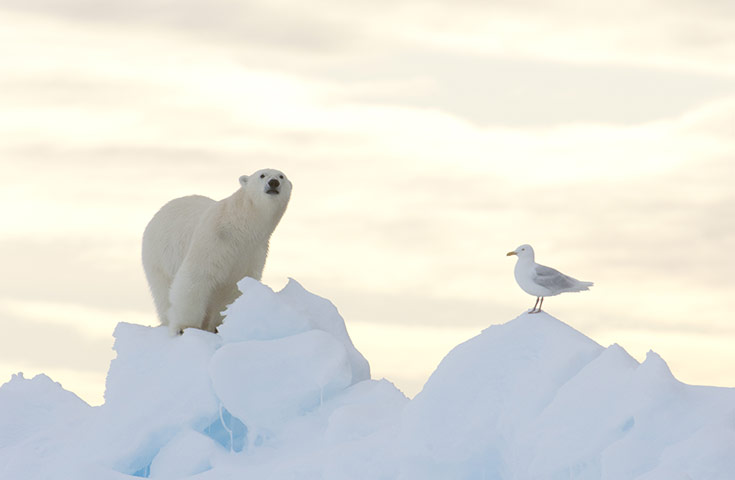
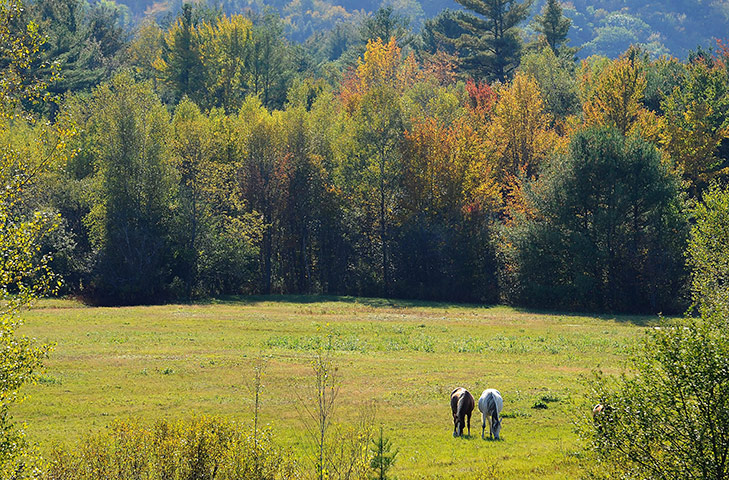
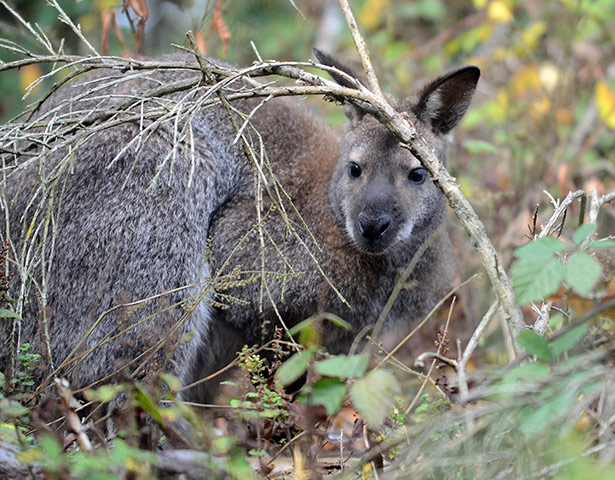
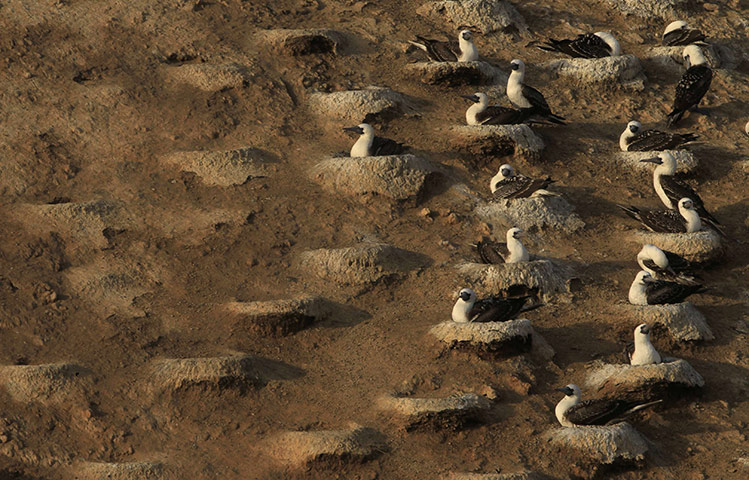
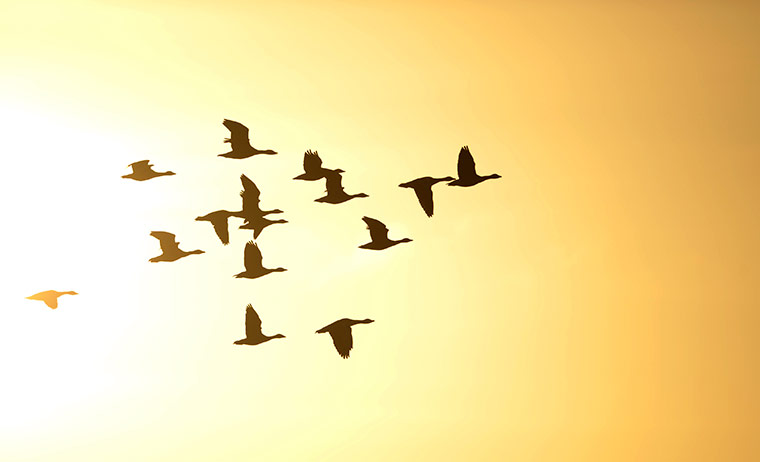
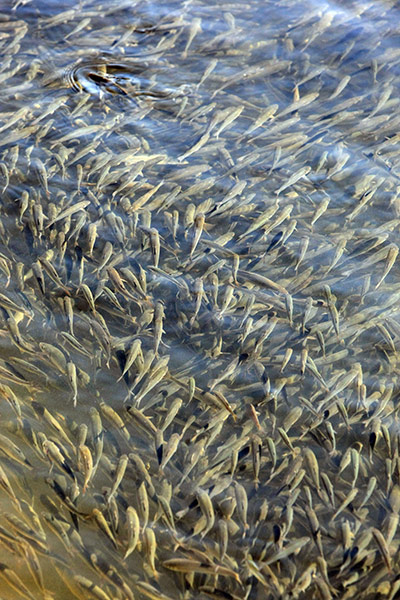
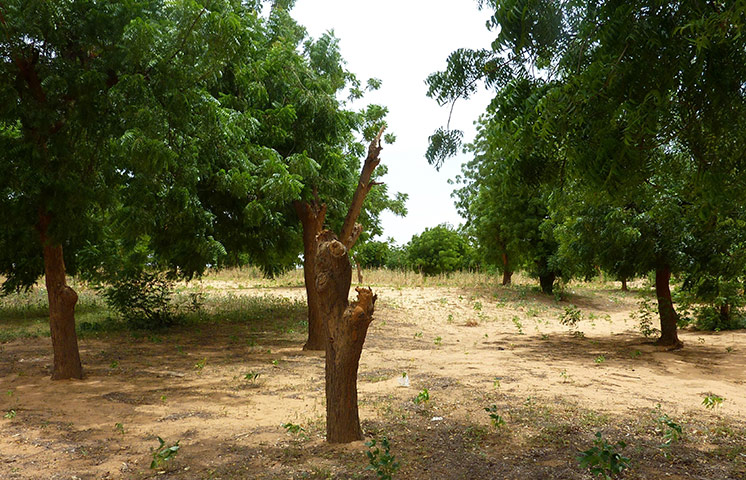
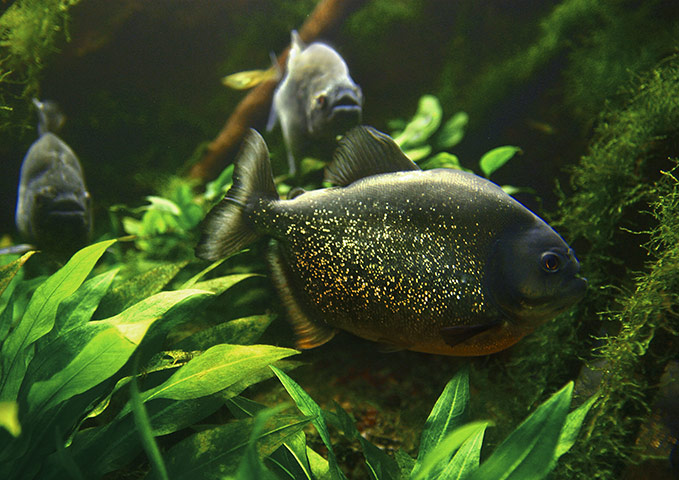
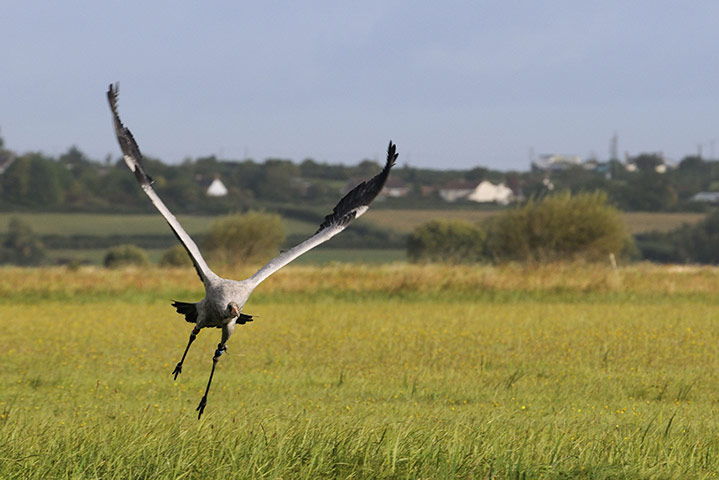
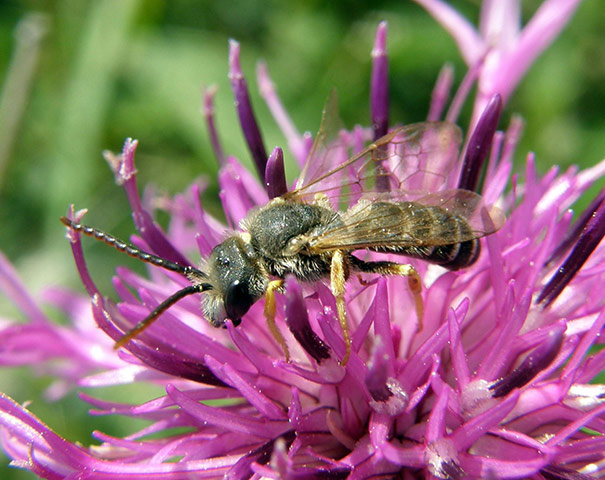
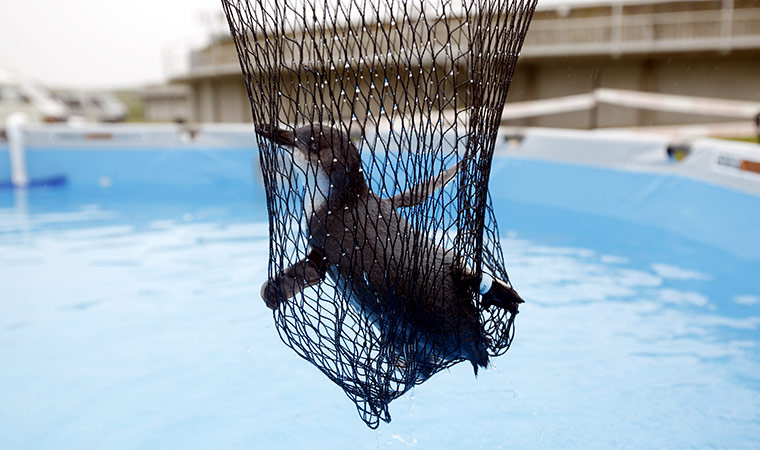
A bird flies off after attempting to land on a resting red deer stag after sunrise at Richmond Park in London. Autumn sees the start of the rutting season where the stags and bucks bellow in an attempt to attract femalesPhotograph: Dan Istitene/Getty ImagesPolar bear and arctic gull at the floe edge, Lancaster Sound, Nunavut, CanadaPhotograph: Louise Murray/Rex FeaturesHorses graze on a warm afternoon in Woodstock, in the US state of Maine. Tourists flock to the northeastern states during autumn to see the leaves turn red Photograph: CJ GUNTHER/EPAA Bennett's Tree-kangaroo hides in a wood near Marburg-Hermershausen, Hesse, Germany. Police said that the animal had escaped from a breederPhotograph: Andreas Schmidt/EPABoobies nest on the Ballestas island, south of Lima in Peru. Along with 21 other islands, Ballestas is home to nearly 4 million migratory birds such as guanays, boobies and pelicans, whose excrement is said to make the world's finest natural fertiliserPhotograph: Pilar Olivares/ReutersGeese fly over a field in Linum in the eastern German state of Brandenburg. The migratory birds rest in Linum before continuing their journey to southern Europe, where they will winterPhotograph: Johannes Eisele/AFP/Getty ImagesA tightly-packed school of carp swims toward a stream entering Yeongnang Lake in the city of Sokcho on South Korea's east coast. The freshwater fish are believed to seek the fresh water of the stream because of contamination in the lake caused partly by an inflow of sea water and rises in temperaturePhotograph: Yonhap News Agency/EPAA view of a cut tree inside the 'green belt', outside the city of Niamey, in Niger. The green belt project was designed to stop the advance of the Sahel desert by creating a large protected forest area, but logging and illegal use of land have seen it halve, from 2,000 hectares to 1,000Photograph: Boureima Hama/AFP/Getty ImagesWild meerkats living in the Kalahari desert in southern AfricaPhotograph: University of ZurichThe sounds piranhas use to communicate have been studied by researchers, revealing they bark before a fightPhotograph: AlamyA juvenile common or Eurasian crane (Grus grus) taking off from a meadow in Somerset. About 400 years after their species disappeared from the UK, common cranes can once again be seen over the marshlands around Somerset. In 2010, a flock of 20 were released into the Somerset Levels as part of the Great Crane ProjectPhotograph: NPL/Rex FeaturesThe solitary bee Halictus eurygnathus was last seen in Britain in 1946, but has now been found at seven sites in East Sussex, according to research by entomologist Steven FalkPhotograph: Buglife/PAVolunteers take an oiled little blue penguin out of the pool after the recovering session at the wildlife facility in Tauranga, New Zealand. The penguins were rescued after the container ship Rena ran aground and began leaking fuelPhotograph: Natacha Pisarenko/AP
Sign up to read this article
Read news from 100's of titles, curated specifically for you.