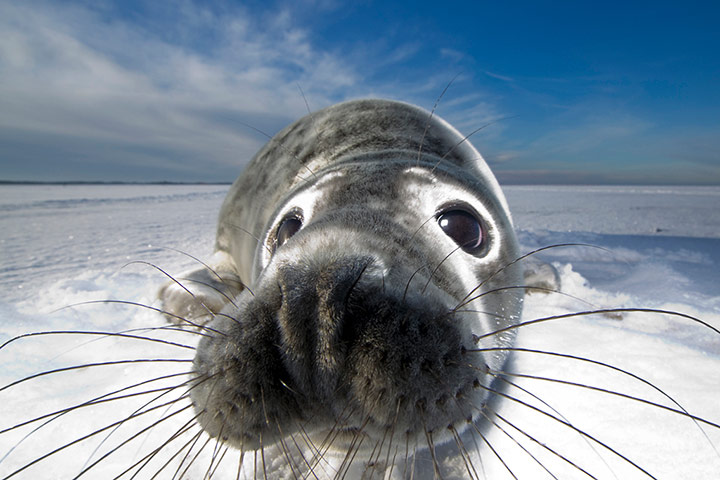
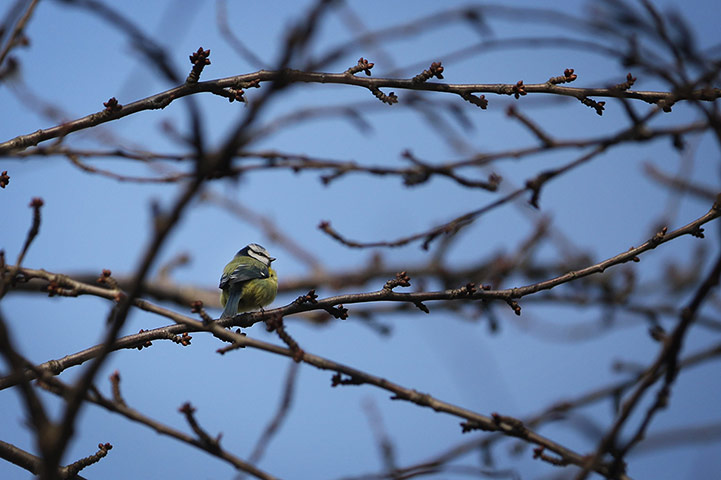
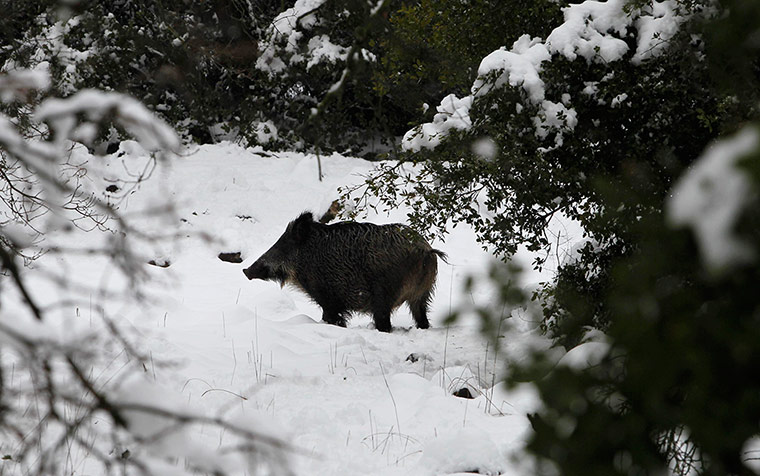
Grey seal, by Mark Smith. The British Wildlife Photography awards are now open for entriesPhotograph: Mark Smith/BWPAA blue tit sits in the trees in St James's Park in London, England. After a recent cold snap Britain is expected to see a short period of unseasonably mild weather after one of the driest Februarys on record, according to the Met OfficePhotograph: Dan Kitwood/Getty ImagesA wild boar roams in the snow near Kibbutz Merom Golan in the Golan Heights, near Israel's border with SyriaPhotograph: Baz Ratner/Reuters
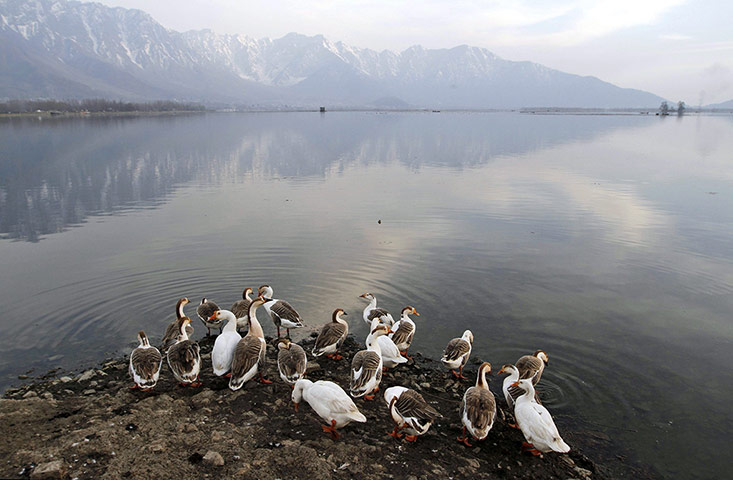
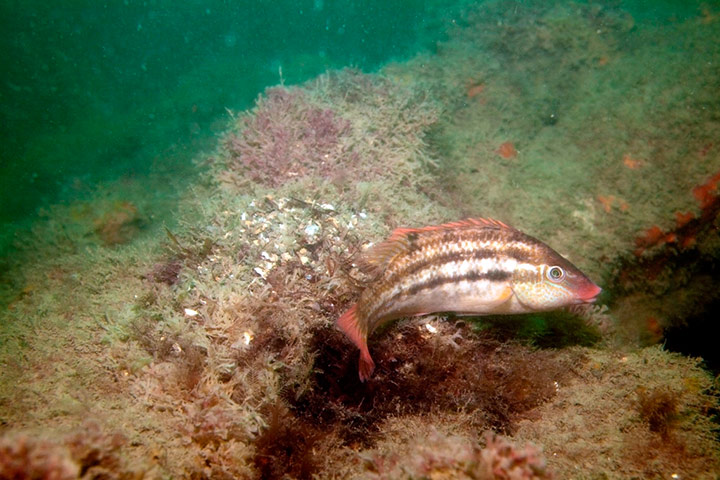
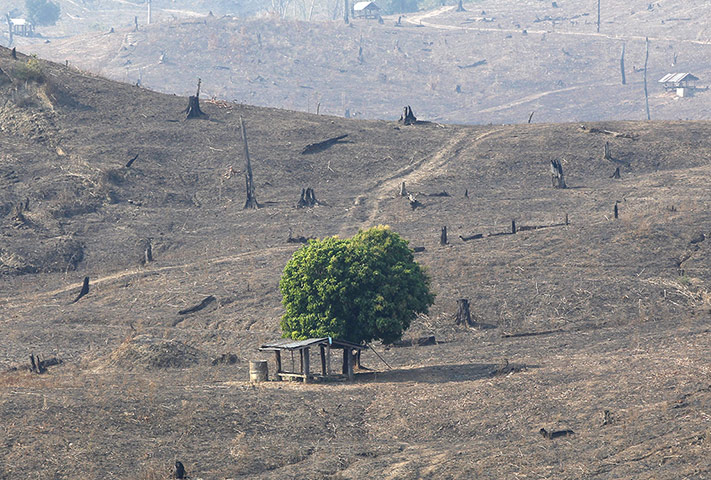
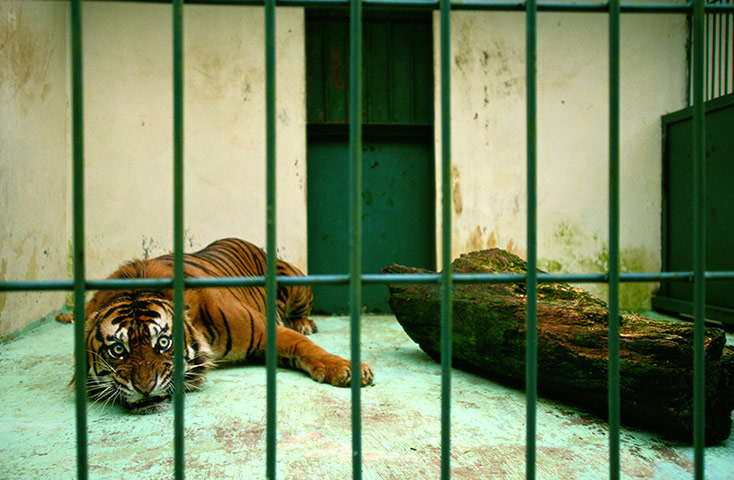
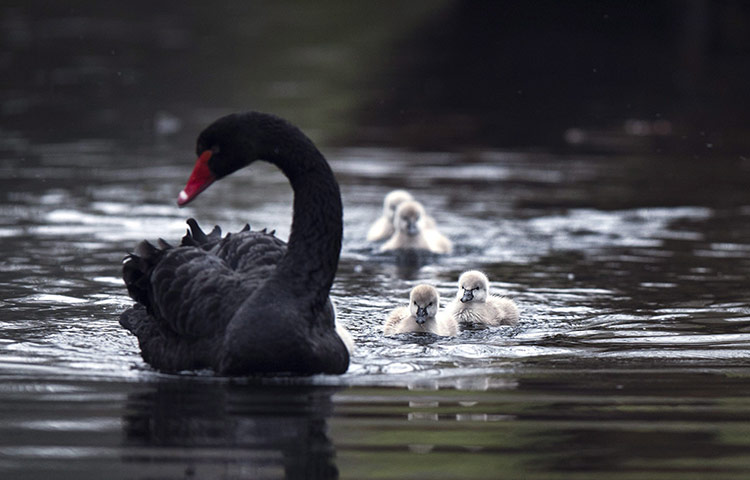
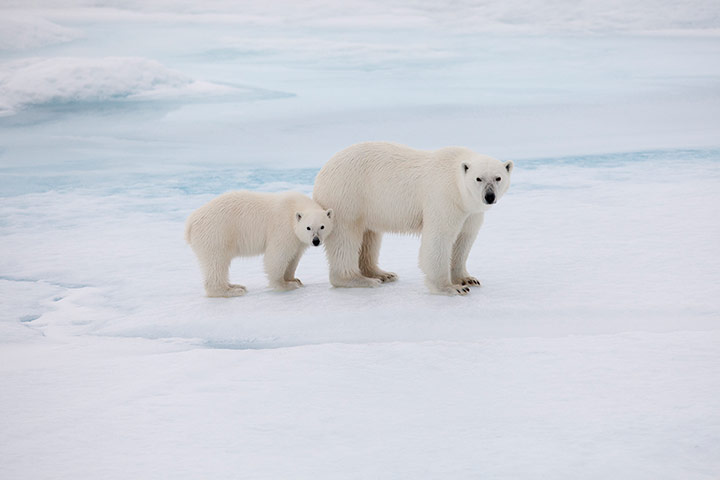
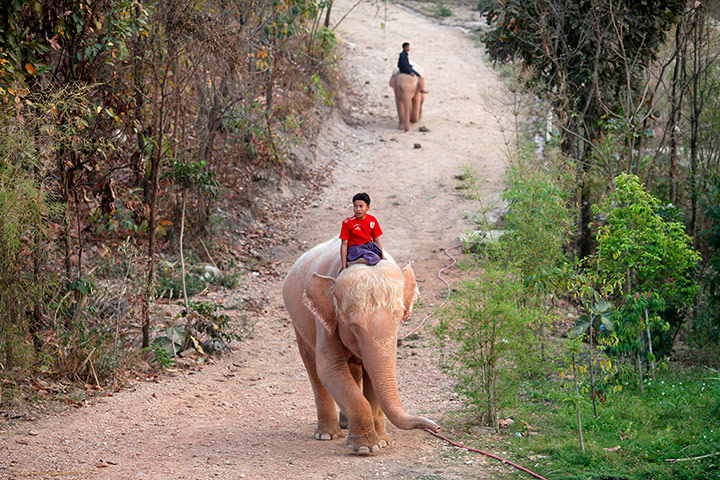
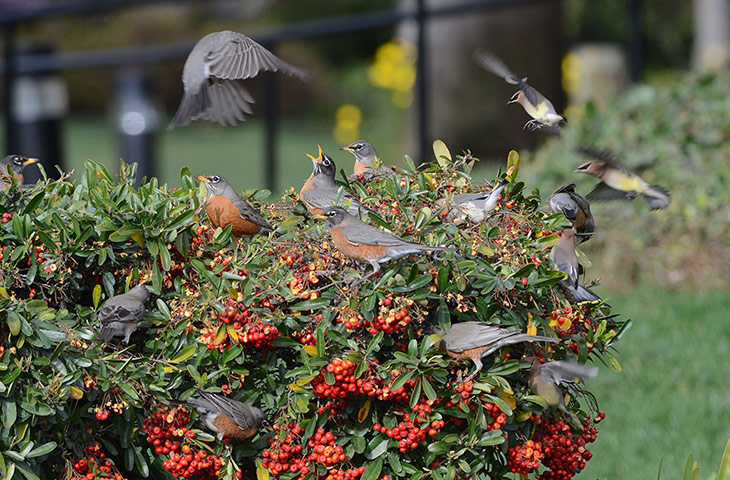
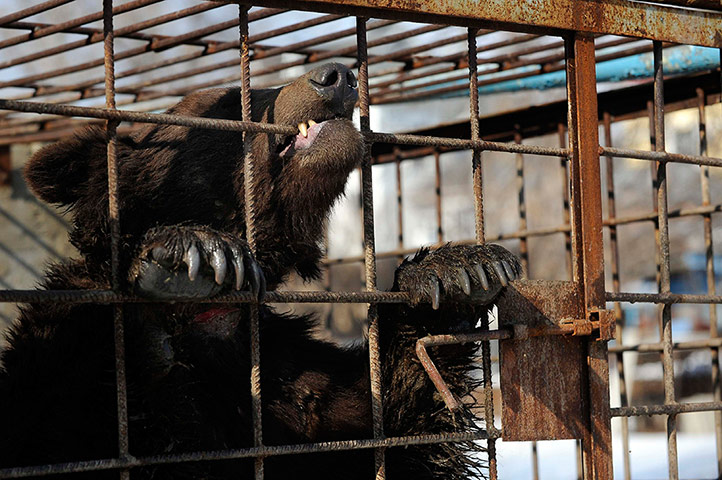
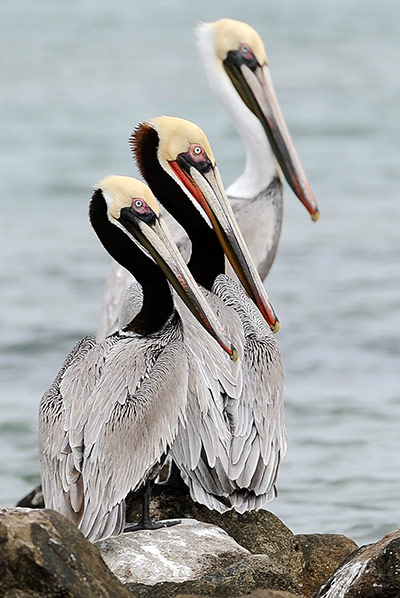
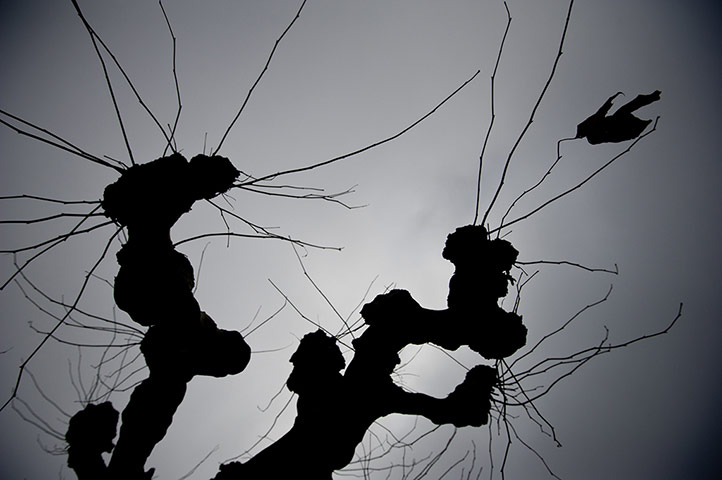
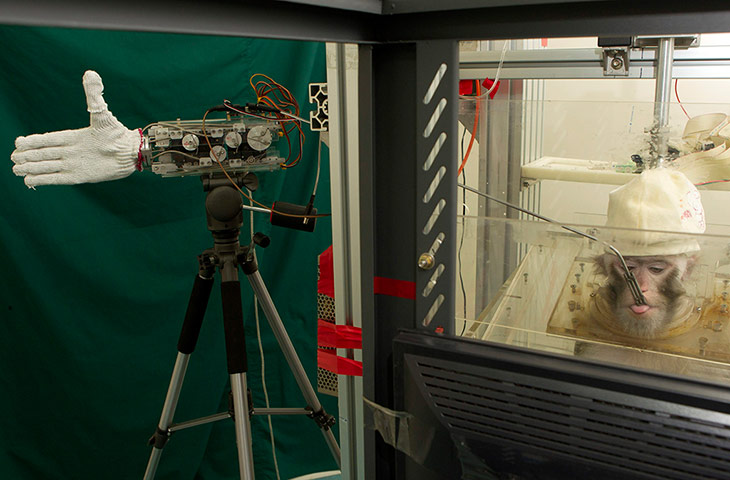
A flock of geese gathers on the banks of the Dal Lake in Srinagar, the summer capital of Indian Kashmir. There has been a considerable improvement in the weather in Indian Kashmir the India Meteorological Department of the Ministry Of Earth Sciences said on 26 February, with temperatures expected to rise up to 12C and only light snow expectedPhotograph: Farooq Khan/EPABaillon's wrasse at nest, Poole Bay, Dorset, UK. The secret lives of rare fish are revealed in new photos released by Dorset Wildlife Trust. The winning images from the annual Dorset Seasearch underwater photography competition include an extraordinary photograph of a rare and beautiful fish at its nest site, showing what is believed to be previously unrecorded breeding displayPhotograph: Matt Doggett/Dorset Wildlife TrustOne green tree left in hills of burnt-out brown and deforested land, near Mae Chaem, northern Thailand. Smog and dust-particle levels have soared to the worst levels in five years, crossing six northern Thai provinces. Poor visibility has delayed aircraft from landing and diverted other flights in at least two northern airports. Farmers who slash and burn fields at the end of the annual dry season in their traditional agricultural practices and have ignored warnings to stop the burnings are blamed for the pollutionPhotograph: Barbara Walton/EPAAfter years of incarceration, this Sumatran tiger remains anxious. It is part of a captive-breeding programme in Jakarta. The habitat of the endangered Sumatran tiger is being rapidly destroyed in order to make tissues and paper packaging for consumer products in the west, new research from Greenpeace showsPhotograph: Michael K. Nichols/NG/Getty ImagesFive cygnets swimming behind their mother in the Merwestein Park in the centre of Dordrecht, the NetherlandsPhotograph: Robert Vos/EPATwo polar bears, a mother and her cub, observed from the deck of the Arctic Sunrise, while it was moored to an ice floe in the Fram Strait on the edge of the Arctic OceanPhotograph: Nick Cobbing/GreenpeaceMen ride white elephants near Uppatasanti Pagoda in Burma's new capital city, Naypyitaw Photograph: Soe Zeya Tun/ReutersAmerican robins and cedar waxwings fly in from nearby trees in Mountain View, California. A robin on the bush gives a squawk as another robin tries to landPhotograph: Michael Yang/Rex FeaturesPotac, a three-year old bear, bites the bars of his four square metres cage in Luhansk. Potac was kept by his owner, the head of a Luhansk regional children's public organisation to train hunting dogs. The Vier Pfoten (Four Paws) animal welfare organisation, together with authorities, confiscated the bear so it can be transferred to the Synevyr National Nature Park. In 2011, the Ukrainian minister of ecology and natural resources, Zlochevsky Mykola, announced a ban on the poor private captivity of brown bearsPhotograph: Mihai Vasile/Vier Pfoten/REUTERSThree pelicans sit on rocks, off Shamrock Island near Aransas Pass, Texas. Shell Oil is paying $500,000 for the first phase of a $2.3m project to restore the island, a nesting habitat for more than 20,000 birdsPhotograph: Pat Sullivan/APA withered leaf hangs on a branch of a tree silhouetted against the grey sky in Meersburg at Bodensee, southern GermanyPhotograph: Tobias Kleinschmidt/AFP/Getty ImagesJianhui, a five-year-old monkey, prompts a mechanical arm via brain signals at a laboratory of Zhejiang University in Hangzhou. A tiny sensor implanted in Jianhui's brain is allowing the monkey to control a mechanical arm to reach and grab food and drinks, scientists with east China's Zhejiang University announced on Monday afternoon. The technology, brain-machine interface (BMI), could help people with paralyzing conditions, according to Zheng Xiaoxiang, the professor leading the research groupPhotograph: China Daily/Reuters
Sign up to read this article
Read news from 100’s of titles, curated specifically for you.