Get all your news in one place.
100’s of premium titles.
One app.
Start reading
The Guardian - UK
The Guardian - UK
Environment

The week in wildlife

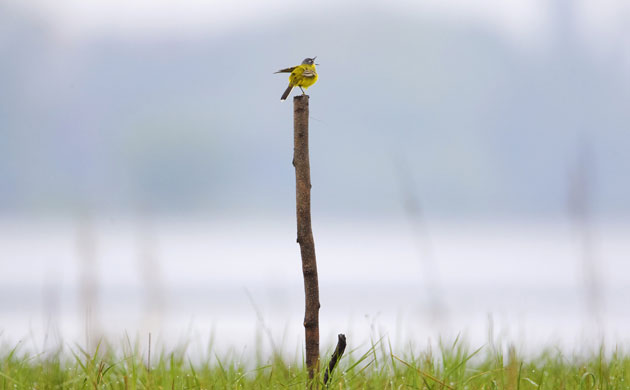
Week in wildlife: A yellow wagtail sings on the bank of Pripiat river near Turov
A yellow wagtail (Motacilla flava) sings on the bank of the Pripyat river near the village of Turov, about 270km south of Minsk, Belarus
Photograph: Vasily Fedosenko/Reuters
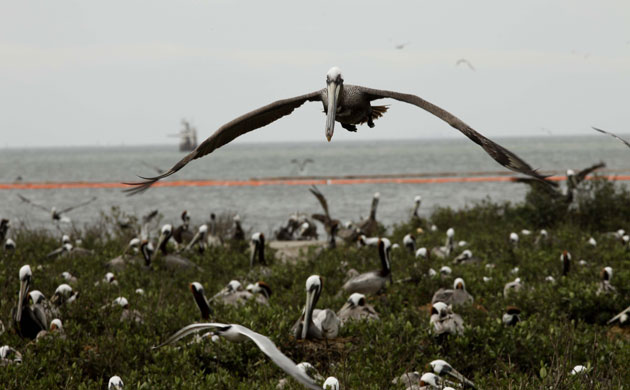
Week in wildlife: Oil spill Deepwater Horizon
Oil booms are seen offshore as Brown pelicans nest on Breton Island off the coast of Louisiana in the Gulf of Mexico. Wildlife in the Breton National Wildlife Refuge, created by Theodore Roosevelt, are vulnerable to the oil spill resulting from the explosion and sinking of the Deepwater Horizon oil rig last week. See the National Audubon Society's website for further information
Photograph: Gerald Herbert/AP
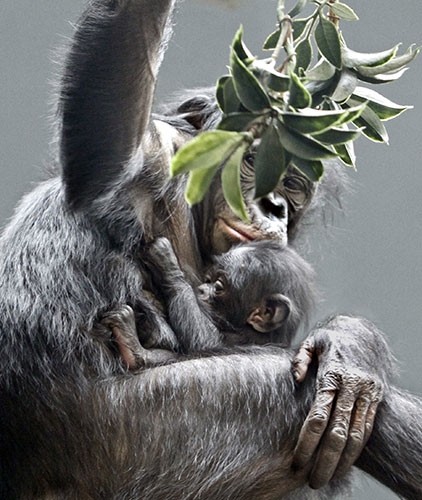
Week in wildlife:  A female bonobo, holds her 4-week-old baby
A female bonobo holds her four-week-old baby in their enclosure at the Cincinnati zoo, where it was introduced to the public on 29 April
Photograph: Al Behrman/AP
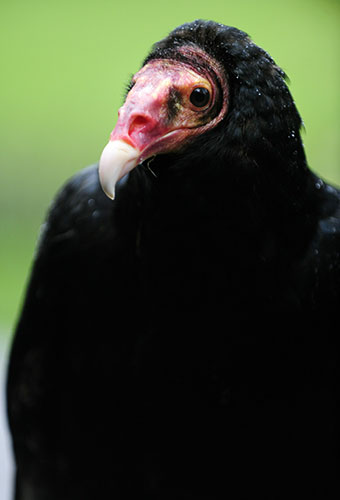
Week in wildlife: A Turkey vulture
A Turkey vulture, undergoing training to detect human remains, is presented at Walsrode's Bird Park. The vulture, usually able to detect decaying flesh at an altitude of 1,000 metres, will be used to find the bodies of missing persons in wooded areas or on difficult terrain
Photograph: John Macdougall/AFP/Getty Images
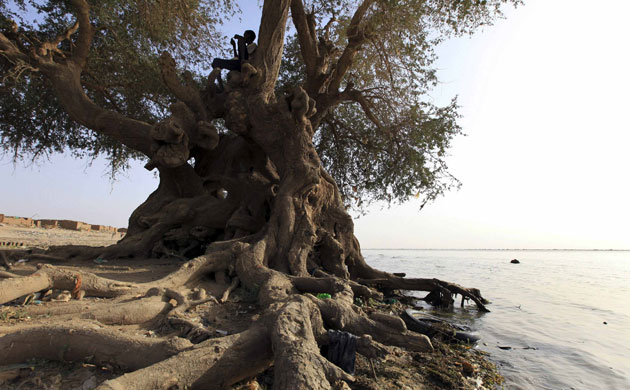
Week in wildlife: A boy rests in a tree at the river Nile in Khartoum
A boy rests in a tree overlooking river Nile in Khartoum, Sudan
Photograph: STR/Reuters
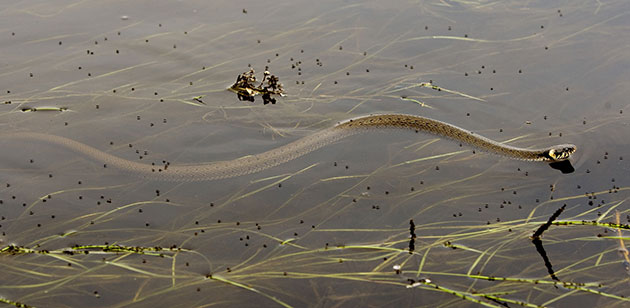
Week in wildlife: A water snake swims in Pripiat river near the village of Turov
A water snake swims in the Pripyat river near Turov, Belarus
Photograph: Vasily Fedosenko/Reuters
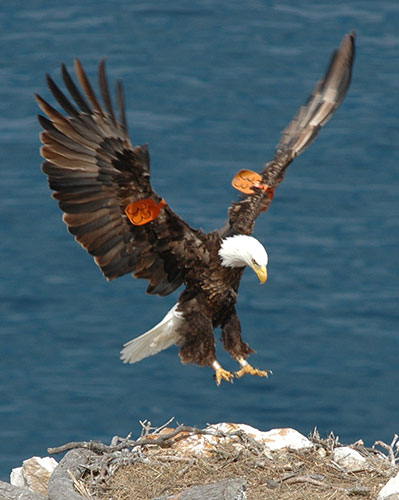
Week in wildlife: An adult bald eagle is landing into a nest
An adult bald eagle, wearing red tracking tags put in place by biologists, returns to its nest. An unprecedented study of bald eagle diet will provide wildlife managers with the information necessary to reintroduce bald eagles to the channel islands off California. The scientists, including researchers from the Carnegie Institution's Geophysical Laboratory, found that eagles fed mainly on sea birds from about 20,000 to 30,000 years ago until the 1840s and 50s, when humans introduced sheep. These sea birds provided an abundant source of meat for the local eagle population, until widespread use of the pesticide DDT wiped out the predators in the 1960s
Photograph: Peter Sharpe/Institute for Wildlife Studies
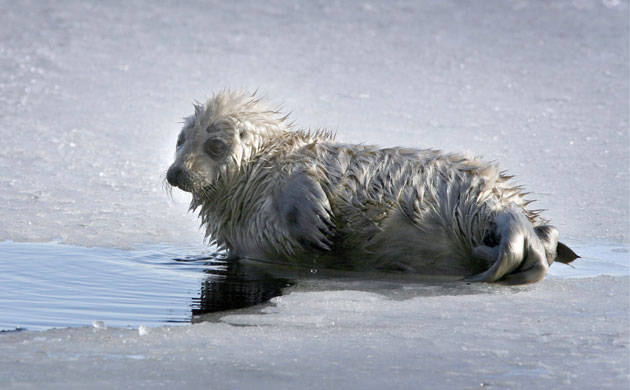
Week in wildlife: EU says Finland must save rare freshwater seals from extinction
A reclusive Saimaa ringed seal pup in Savonlinna, eastern Finland. There are only around 260 Saimaa ringed seals (Phoca hispida saimensis) in the lakes of south-eastern Finland. The European Union's executive has said that the country must take urgent steps to protect its population of rare freshwater seals before they are wiped out. The EU's law on nature protection, the habitats directive, lists the Saimaa seal as a priority for protection - imposing strict limits on activities that might endanger the animals, such as net-fishing
Photograph: Timo Sepp L Inen/EPA
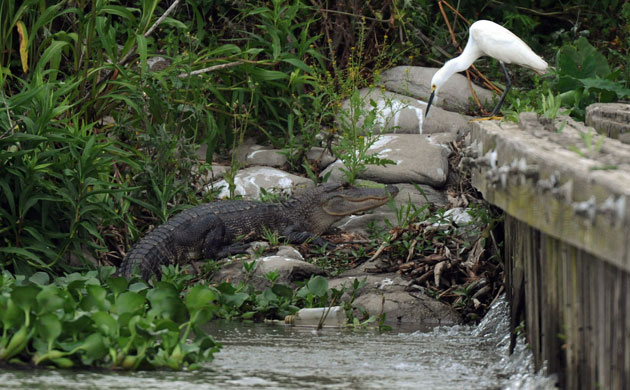
Week in wildlife: Oil spill Deepwater Horizon : A Heron sits beside an Alligator
A heron inspects an alligator in the fragile wetlands next to the Mississippi river near Venice in Louisiana, which is in the path of oil spreading from the BP Deepwater Horizon platform disaster
Photograph: Mark Ralston/AFP/Getty Images
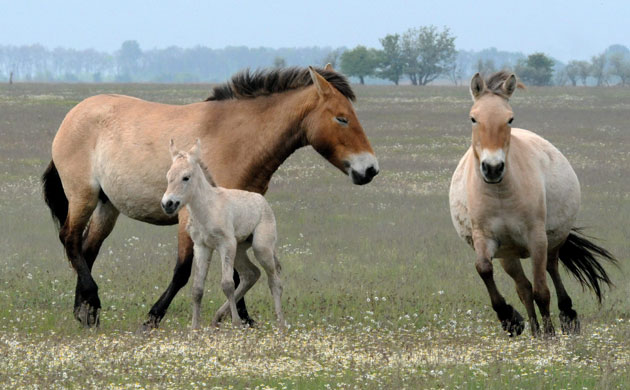
Week in wildlife: Foal of Przewalski wild horses
A wild Przewalski mare (Equus przewalskii) and her foal are seen next to another horse (right) in the Hortobagy National Park, some 200 kms east of Budapest. The Przewalski or Asian wild horse is an ancient and nearly extinct species originating in Mongolia. It was rediscovered by Russian army officer and explorer Nikolai Przewalski in Mongolia at the end of the 19th century. In 1997, the Hortobagy National Park joined the European Endangered Species Breeding Programme (EEP) of the Federation of European Zoos and 21 przewalski horses were settled there. These days, 137 specimens live in the natural reserve of Hortobagy, with the birth of 30-35 foals expected this May
Photograph: Tibor Olah/EPA
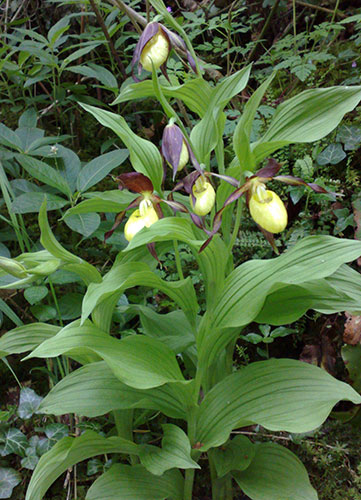
Week in wildlife: Lady's Slipper orchid at Silverdale Golf Course in Carnforth
A rare Lady's Slipper orchid at Silverdale golf course in Carnforth, Lancashire – the last remaining flowering plant of its kind in the wild in Britain. The flower is so rare that it will receive police protection from thieves when it blooms later this month
Photograph: Lancashire Police/PA
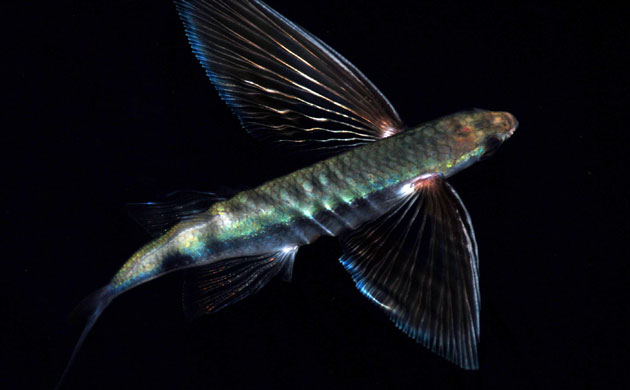
Week in wildlife: Marine life is at risk as oil spill reaches Louisiana
Flying fish, like this one swimming at night 30 miles from the Deepwater Horizon explosion, are among many forms of marine life at risk form the ongoing crude oil leak
Photograph: Christopher Berkey/EPA
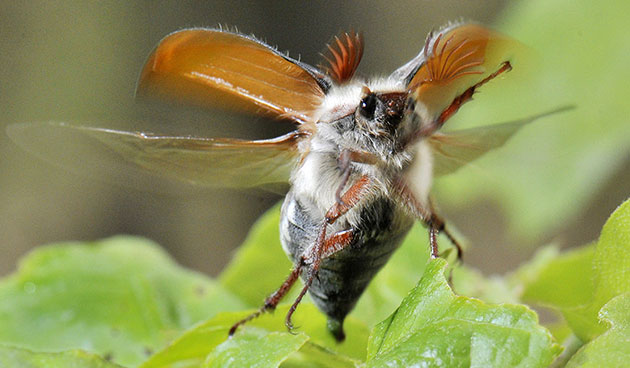
Week in wildlife: Billions of may beetles in German woods
A may beetle flies near Darmstadt, Germany. Before their life cycle comes to an end in four to six weeks' time, billions of may beetles will exit the soil and devour the leaves of the surrounding trees. Massive numbers of may beetles appear once every four years
Photograph: Boris Roessler/EPA
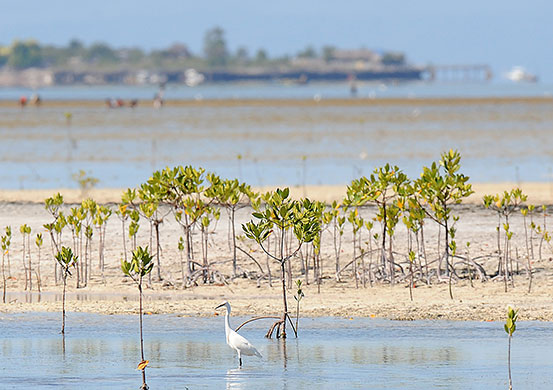
Week in wildlife: an egret looks for food in the reserve Olango island, Cebu
An egret looks for food in the reserve of San Vicente village, Olango island, in the Philippines' Cebu province. Sightings of the yellow-beaked, green-legged bird are becoming less frequent, according to BirdLife International
Photograph: Ted Aljibe/AFP/Getty Images
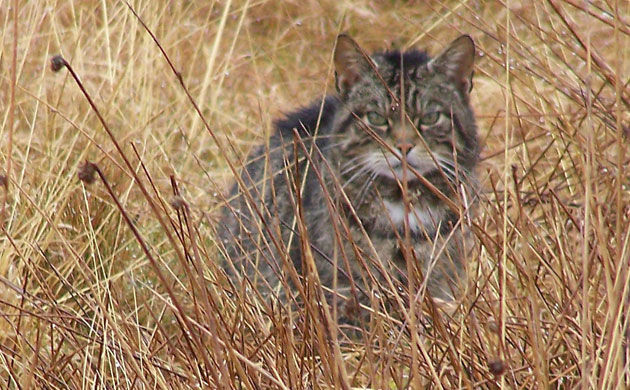
Week in wildlife: Wildcat spotted on island
A photo of a rare Scottish wildcat taken on the remote island of Mull. Experts are speculating that the animal somehow swam to its new home from the mainland. There have been unconfirmed sightings on the island before but these photos, taken by holidaymaker Peter Harris, give the clearest pictures yet
Photograph: Peter Harris/PA
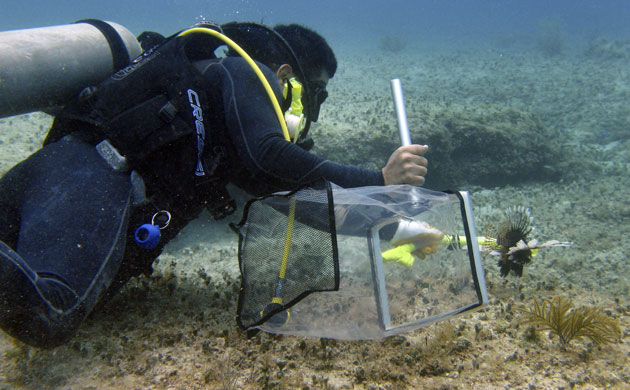
Week in wildlife: lionfish near a coral reef along the Cozumel coast in Mexico
Mexican biologist Abelardo Brito tries to catch a lionfish near a coral reef along the Cozumel coast in Mexico. The tropical native fish of the Indian and Pacific oceans have colonised large swaths of the eastern seaboard, the Caribbean and recently the Gulf of Mexico, and threatens to wreak ecological chaos as far away as South America
Photograph: Miguel Tovar/AP
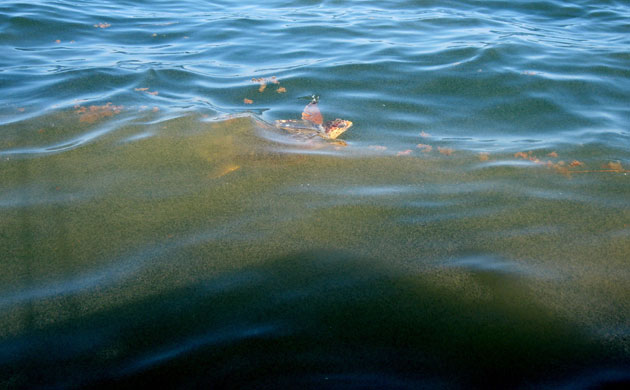
Week in wildlife: Oil spill affects Louisiana Gulf Coast
A sea turtle swims through the oil spill from the Deepwater Horizon disaster
Photograph: National Wildlife Federation/EPA

Sign up to read this article
Read news from 100’s of titles, curated specifically for you.
Already a member? Sign in here
Related Stories
Top stories on inkl right now
One subscription that gives you access to news from hundreds of sites
Already a member? Sign in here
Our Picks
Fourteen days free
Download the app
One app. One membership.
100+ trusted global sources.