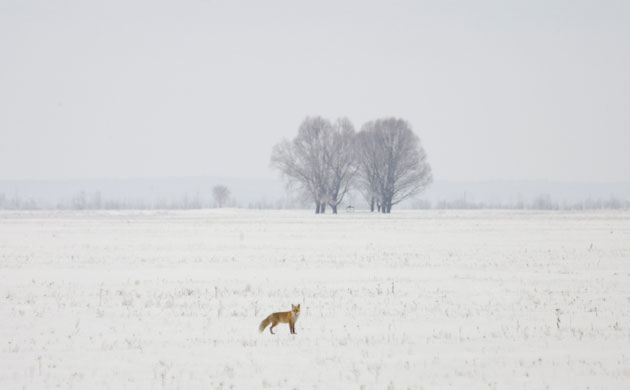
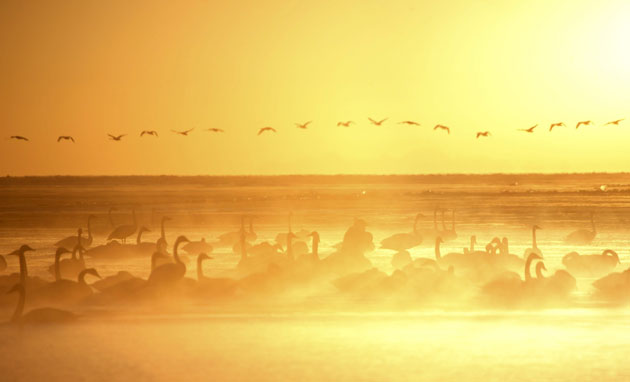
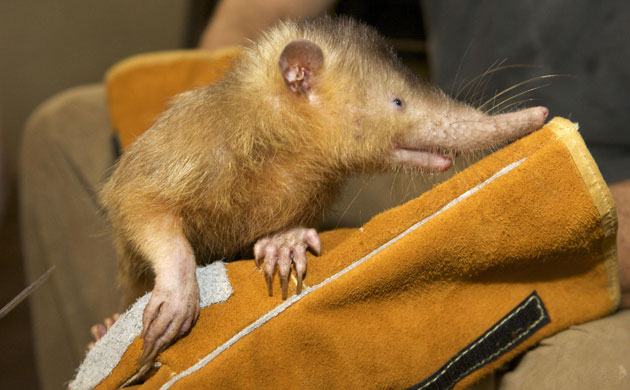
Novosiolki, Belarus: A fox stands in a field just outside the 18-mile exclusion zone around Chernobyl. Despite radiation, wildlife in and around the exclusion zone has flourished since people left the area after the 1986 nuclear disasterPhotograph: Vasily Fedosenko/ReutersGangcha County, China: Whooper swans rest on the Qinghaihu Lake at Garila village. Whooper swans from Bayanbulak in north-west China's Xinjiang Uygur Autonomous Region spend winter at Qinghaihu Lake. According to state media, China has stepped up a nationwide network for the testing of bird flu virus after a woman died from the H5N1 bird flu virus on 5 January in BeijingPhotograph: China Photos/Getty ImagesDurrell Wildlife Conservation Trust handout of a rare endangered mammal, the Hispaniolan solenodon, which has been caught in a live trap and filmed for possibly the first time. The strange looking shrew-like creature with a long snout has venomous teeth. Only two solenodon species exist today, one in Haiti and the Dominican Republic, and the other in CubaPhotograph: Gregory Guida/PA
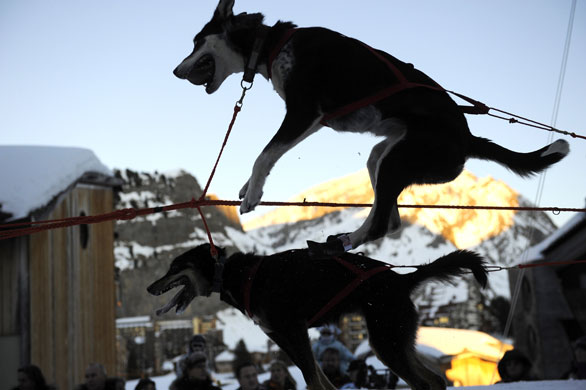
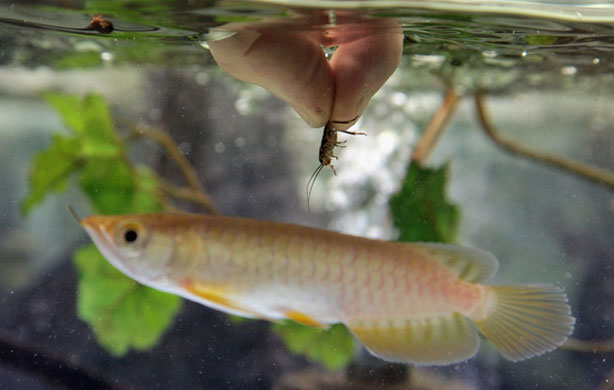
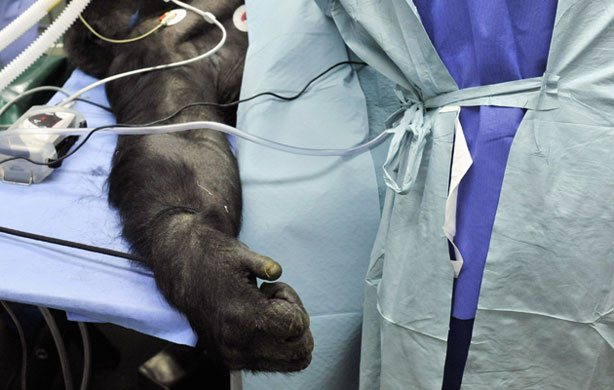
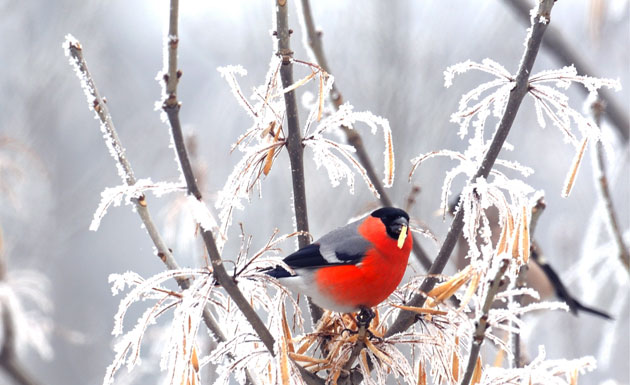
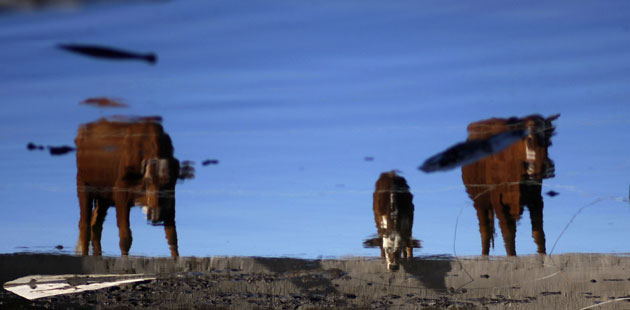
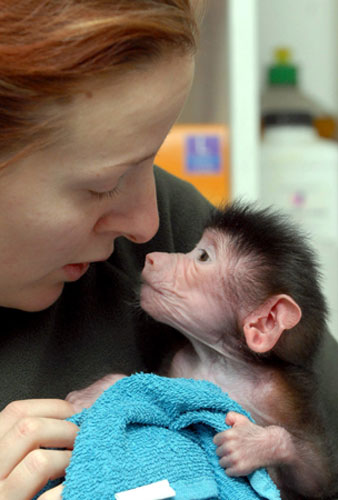
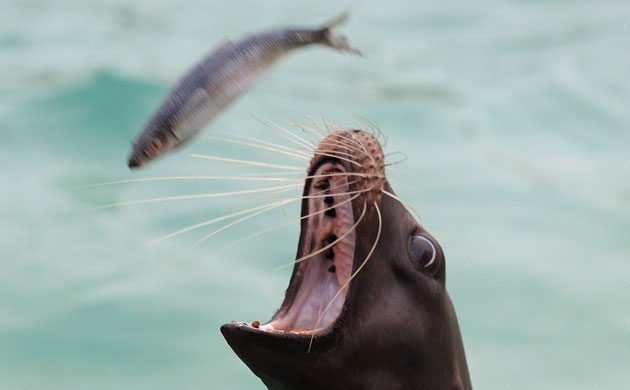
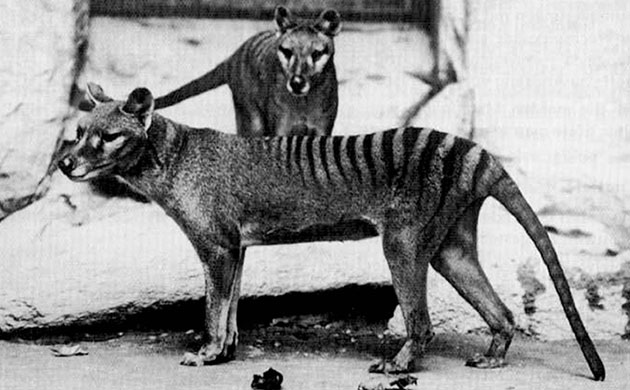
Avoriaz, France: Dogs wait before the start of La Grande Odyssee 2009, a two-week race through the French and Swiss Alps, covering 620 milesPhotograph: Fred Dufour/AFP/Getty ImagesBristol, UK: A baby dragon fish, one of 15 recently bred at Bristol Zoo Gardens, swims past a cricket in the nursery tanks. Dragon fish are native to south-east Asia, where their ownership is a sign of wealth and status, and are listed as endangered by the International Union for Conservation of NaturePhotograph: Matt Cardy/Getty ImagesBudapest, Hungary: Budapest Zoo's oldest gorilla Liesel is operated on to remove a tumourPhotograph: Pool/ReutersSofia, Bulgaria: A bird collects leaves from a frozen tree in a park during cold weather. Arctic weather spread across Bulgaria taking temperatures to a new low for the year of -19C in the some parts of the countryPhotograph: Vassil Donev/EPATostado, Argentina: Cows are reflected in a pond on a drought-affected ranch in northern Santa Fe province, 500 miles north of Buenos Aires. Argentina is facing one of its worst droughts in history with many reservoirs and dams at record low levels, local media reportedPhotograph: Marcos Brindicci/ReutersPecs, Hungary: Muki, a one-month-old Hamadryas baboon (Papio hamadryas), looks at her keeper at the Pecs Zoo. The baby baboon is fed by keepers because her mother abandoned herPhotograph: Ferenc Kalmandy/EPAStuttgart, Germany: A sea lion catches a fish thrown by a zoo keeper during feeding time at Wilhelma Zoo. Even though most animals at the zoo currently avoid their outside enclosures, sea lions do not mind the sub-zero temperaturesPhotograph: Bernd Weissbrod/EPAWashington, US: Smithsonian Archives handout photo of two Tasmanian tiger cubs at the National Zoo in Washington DC in 1902. A genetic study of the extinct Tasmanian tiger, or thylacine, carried out on preserved museum specimens suggest that the species may have been too inbred to survive, say researchers. The last thylacine, named Benjamin, died at Hobart zoo in Tasmania on September 7 1931. Thylacines were wolf-like marsupial carnivores which carried their young in pouches like a kangarooPhotograph: Smithsonian Archives/PA
Sign up to read this article
Read news from 100’s of titles, curated specifically for you.