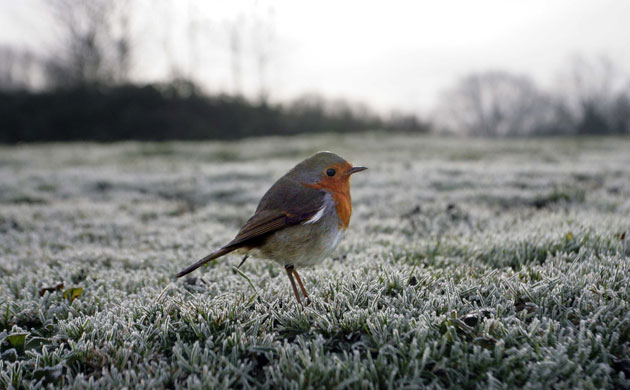
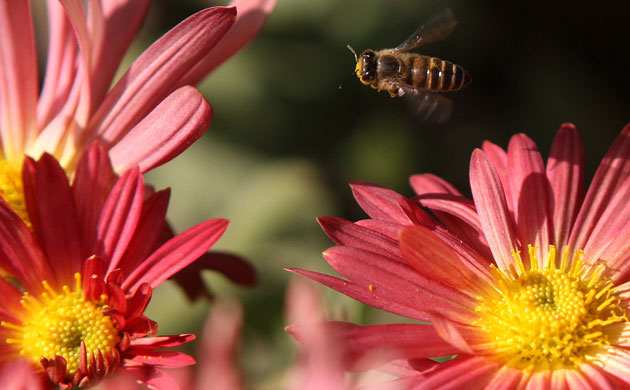
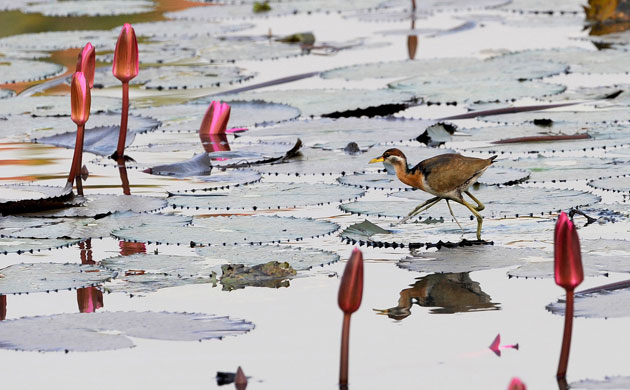
A Robin perches on frozen grass at Kingsbury Water Park in Kingsbury, Tamworth today December 01, 2009 which is officially the first day of winter.Photograph: Steve Woods/guardian.co.ukA honeybee hovers over a flower in Kathmandu on November 27, 2009. Beekeeping is popular among Nepalese farmers in rural villages. Photograph: Prakash Mathema/guardian.co.ukA migranting bird walks on water lily leaves in a lake at Jahangirnagar University some 32 kilometers from Dhaka on November 24, 2009. Experts have suggested that chickens on rooftops may be particularly susceptible to catching diseases from infected migrant birds, which fly along the densely populated Nile valley during their migration period. Photograph: MUNIR UZ ZAMAN/guardian.co.uk
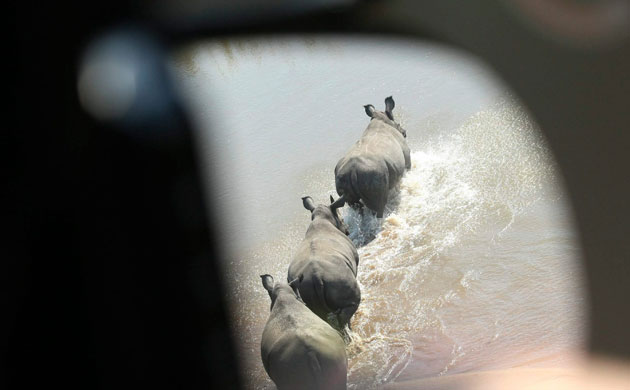
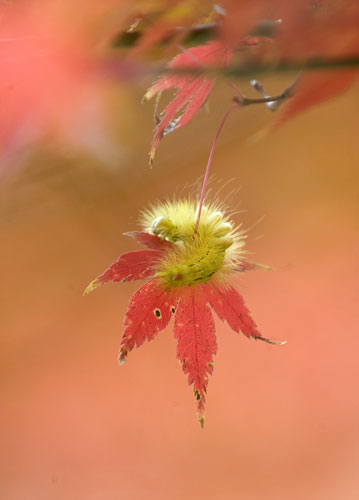
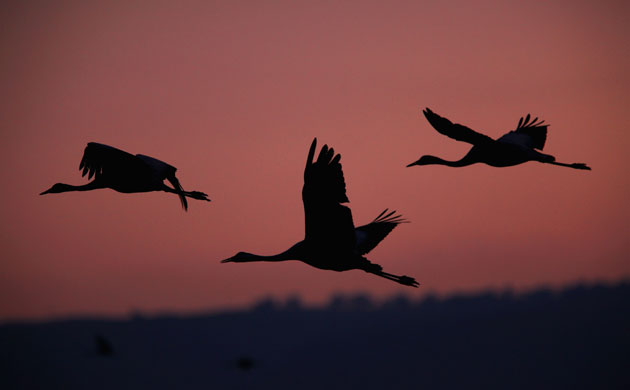
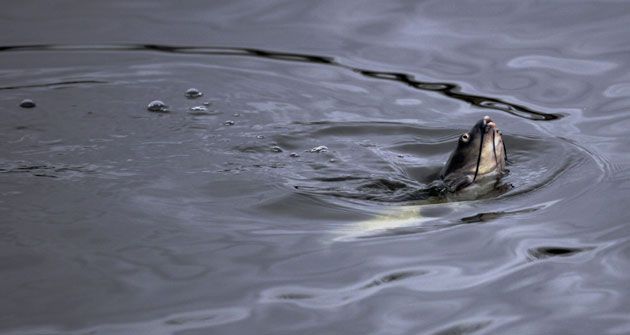
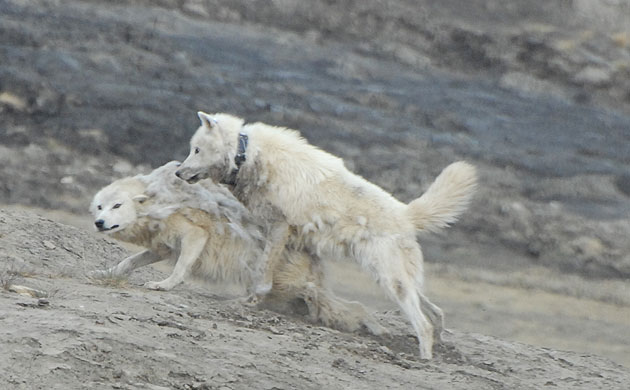
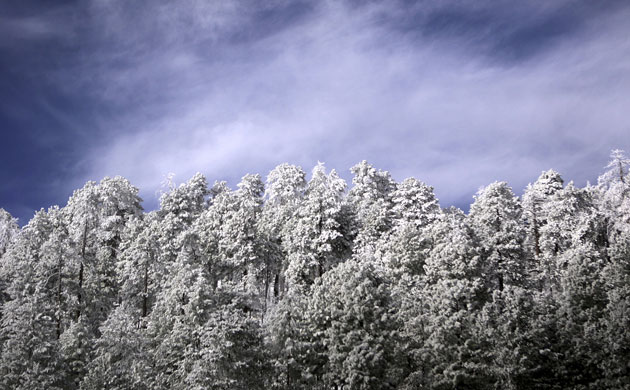
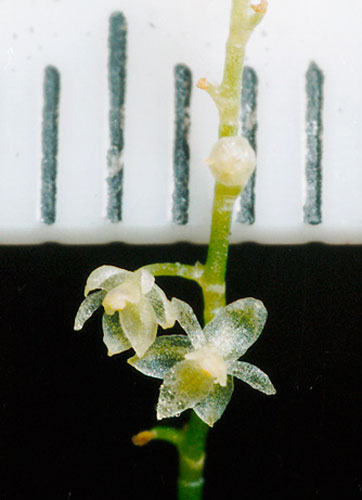
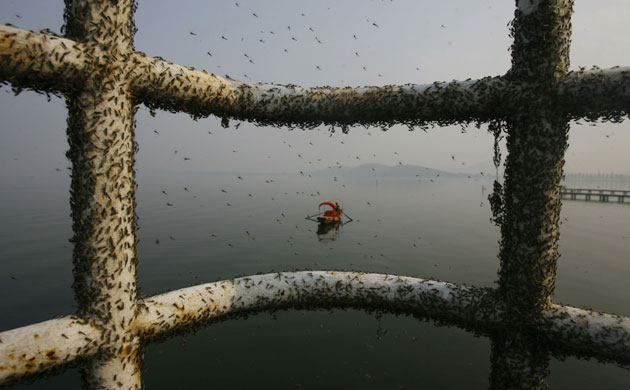
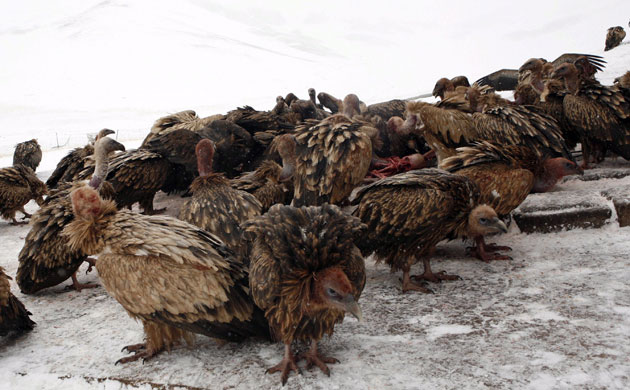
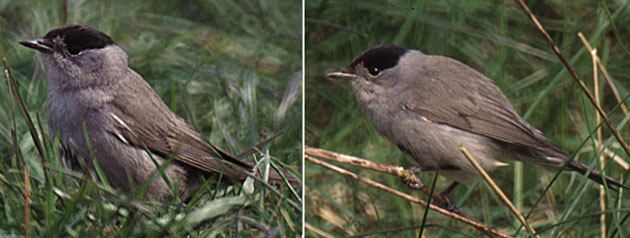
Go with story Dec. 1, 2009 — Rhino poaching worldwide is on the rise, according to a new report by TRAFFIC and the International Union for the Conservation of Nature (IUCN) http://www.iucn.org/?4289/Rhino-poaching-surges-in-Asia-and-Africa. Rhinos walking through water are viewed from a helicopter as large scale anti-poaching campaign is launched in Kruger National Park on November 26, 2009 in South Africa. Authorities started to mark black and white rhinos in the park with electronic chips. This initiative comes after losing 41 rhinos between January and October in 2008, reducing the total to 36.Photograph: Gallo Images/guardian.co.ukA yellow caterpillar climbs on a red maple leaf in a park in Ohara town, Chiba province east of Tokyo, Japan, 27 November 2009. The autumn foliage is in full colors as the Tokyo area expects clear and warm autumn skies for the weekend. Photograph: Everett Kennedy Brown/guardian.co.ukMigrating cranes take off at dawn on November 27, 2009 after spending the night at the Hula Lakes in northern Israel. The tens of thousands of cranes which break their southward migration to and from Africa from as far away as Siberia spend a few days at the lakes feeding in farmers' fields and gathering their strength for their onward journeys. An estimated 500 million birds fly over the Holy Land twice a year in their annual migrations. Photograph: David Silverman/guardian.co.ukTo go with story http://www.nrdc.org/media/2009/091202.asp A fish breaches the waters surface in the Chicago Sanitary and Ship Canal December 3, 2009 in Lockport, after a toxic chemical was dumped on a nearly 6-mile stretch of the canal as part of state and federal efforts to keep the voracious and invasive carp from reaching the Great Lakes. Crews will be patroling in search of the Asian carp for the next few days.Photograph: M. Spencer Green/guardian.co.ukTo go with story In July the scientists, one from the United States, the other from Canada, put the satellite collar on Brutus, the leader of his wolf pack, on remote Ellesmere Island, only 600 miles from the North Pole. Their goal – to finally find out what these “North Pole wolves” do in the long, dark days of winter in one of the harshest areas of the world. http://www.usgs.gov/newsroom/article.asp?ID=2351&from=rss_home Map can be seen at http://internationalwolfcenter.blogspot.com/A couple of hours after being immobilized for collaring, Brutus, a wolf being studied by USGS scientists, appears to have fully recovered. He returns to his pack mates and demonstrates dominance behavior over a younger male wolf. Note that Brutus has a stiff, aggressive stance and upright tail, while the younger male cowers. Photograph: Dean Cluff/guardian.co.ukSnow covers Ponderosa pine trees near Mt. Lemmon, Arizona, on Monday, Nov. 30, 2009, after an overnight storm storm. Mount Lemmon, which is northwest of Tucson, received three inches of snow as of 7 a.m., according to the National Weather Service. Photograph: Jill Torrance/guardian.co.ukTo go with story http://news.nationalgeographic.com/news/2009/12/091203-worlds-smallest-orchid-picture.html The world's smallest known orchid, part of the Platystele genus, —just over 2 millimeters (0.08 inch) across and nearly see-through—has been discovered nestled in the roots of another flower in Ecuador, Lou Jost, an ecologist with the EcoMinga plant-conservation foundation announced this week.Photograph: Lou Jost/guardian.co.ukThree-week-old Sykes' Monkey baby Whoopie plays with a peanut at the zoo in Hanover, Germany, 02 December 2009. Sykes' Monkeys originally stem from Africa and live on fruit, nuts, buds and insects. Whoopie stuck closely to her mother Maggie in the first weeks of her life but now she jumps and climbs around the enclosure on her own.Photograph: Jochen Luebke/guardian.co.ukGnats, or small biting flies, gather on railings along the East Lake in Wuhan, Hubei province November 26, 2009. Gnats appear in the lake due to water pollution and they will leave once the temperature in the area drops in about half a month's time, according to experts, local media reported. World leaders will meet in Copenhagen in December to try and agree a new deal to fight climate change.Photograph: Stringer Shanghai/guardian.co.ukVultures eat up the remains of a deceased during a Tibetan sky burial ritual in Dari county in northwest China's Qinghai province 27 November 2009. Sky burial is a Buddhist ritual where a body is offered to nature or animals like birds of prey. Tibetans believe in rebirth which means that there is no need to preserve the bodies.Photograph: Alex Lee/guardian.co.ukA United Kingdom-migrating blackcap at left, and a Mediterranean-migrating blackcap at right. For story http://www.sciencedaily.com/releases/2009/12/091203132144.htm The split that the researchers observed followed the recent establishment of a migratory divide between southwest- and northwest-migrating blackcap (Sylvia atricapilla) populations in Central Europe after humans began offering food to them in the winter. The two groups began to follow distinct migratory routes -- wintering in Spain and the United Kingdom -- and faced distinct selective pressures. Under that pressure, the two groups have since become locally adapted ecotypes. (Ecotypes represent the initial step of differentiation among populations of the same species, the researchers explained. If ecotypes continue down that path, they can ultimately become separate species.)Photograph: Martin Schaefer/guardian.co.uk
Sign up to read this article
Read news from 100’s of titles, curated specifically for you.