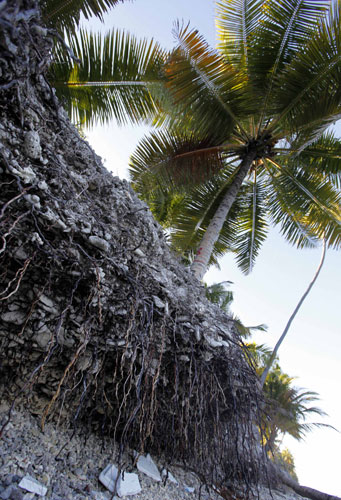
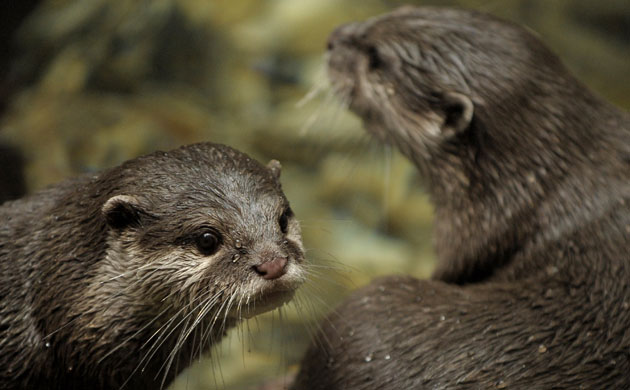
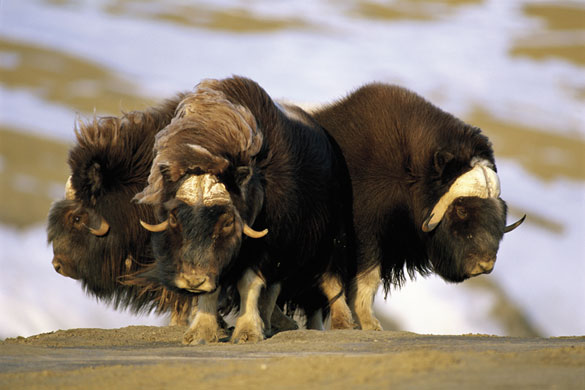
Palm trees are endangered by erosion at a beach at Fuvahmulah, Maldives, December 9, 2009. Photograph: Reinhard Krause/guardian.co.ukThe Oriental small-clawed otters (or Asian small-clawed otter) can be seen in their enclosure at the Sea Life Centre at Timmendorfer Strand, northern Germany on December 9, 2009. Oriental small-clawed otters are the smallest otter species in the world.Photograph: Philipp Guelland/guardian.co.ukPolar bears, long recognized as the poster child for climate change, are not the only species feeling the impacts of climate change. In a new report titled “Species Feeling the Heat: Connecting Deforestation and Climate Change,” The Wildlife Conservation Society (WCS) http://www.wcs.org/new-and-noteworthy/%7E/media/Files/pdfs/speciesBrochure%20fin2%2012%202%2012.ashx profiles more than a dozen animal species and groups impacted by changing land and sea temperatures, shifting rain patterns, exposure to new pathogens and disease, and increased threats of predation. Among them is one of the planet’s oldest existing mammals, the musk ox. Musk ox, a species that dwells in the harsh environment of the Arctic tundra. This Pleistocene relic faces a higher risk of predation by grizzly bears, as more bears may move northward into the oxen’s tundra home. This photograph is part of a current exhibition shown in Copenhagen 100 places to see befor Photograph: Paul Nicklen/guardian.co.uk
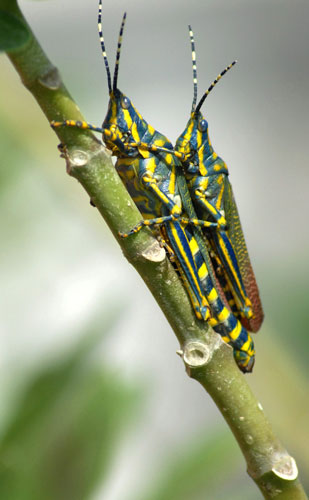
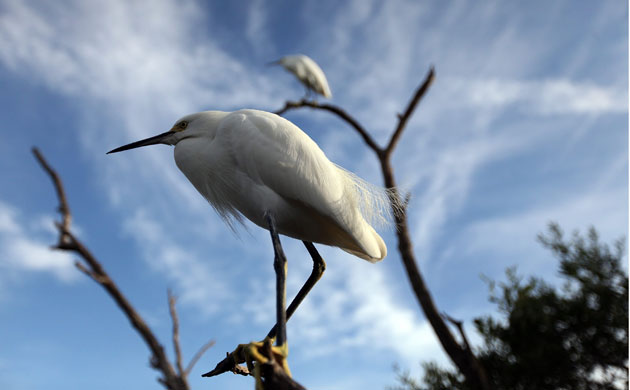
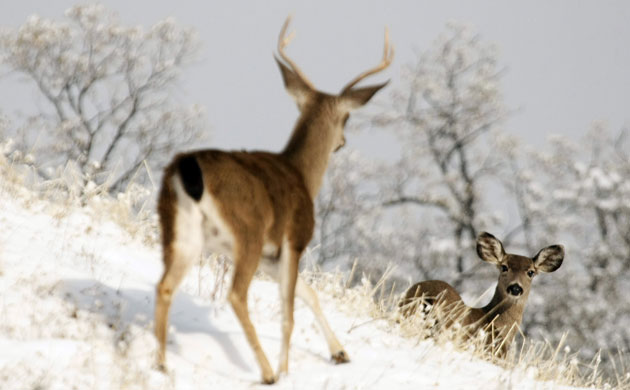
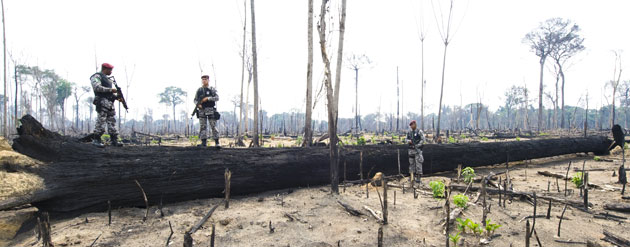
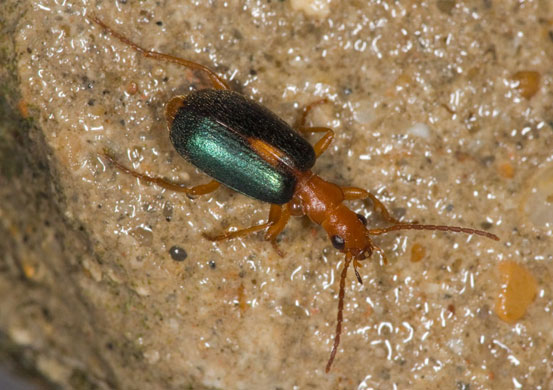
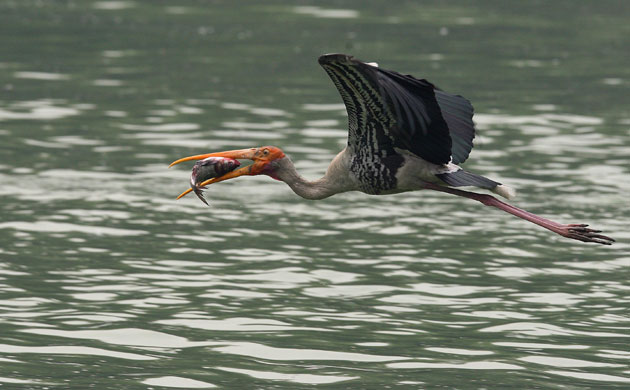
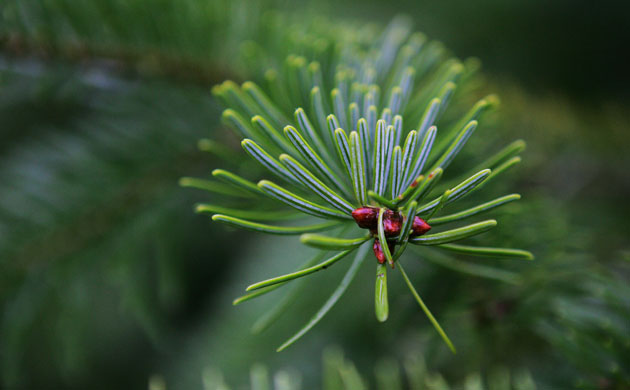
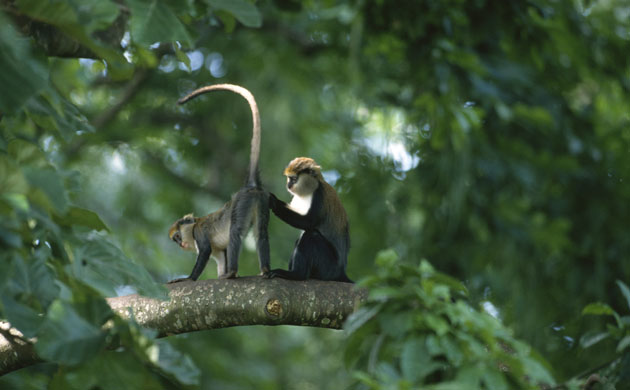
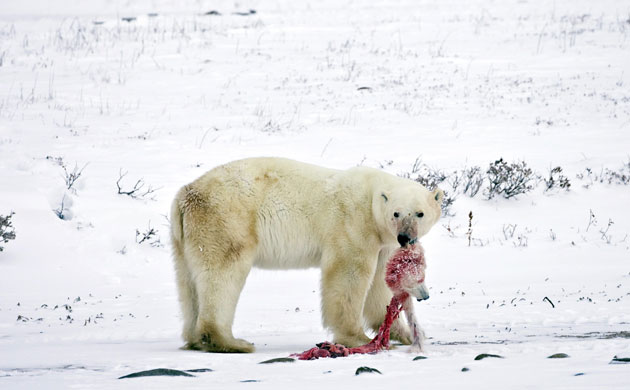
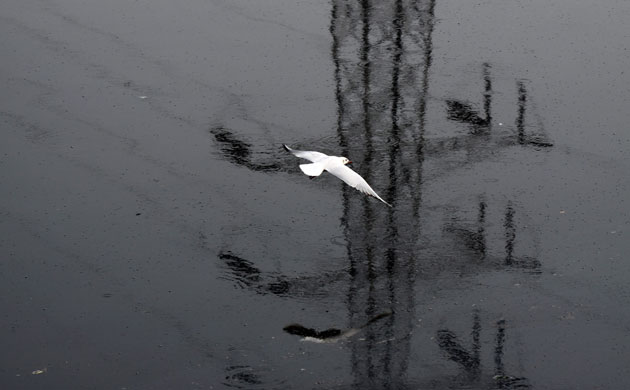
A pair of one of the species of Grasshopper family mates are seen on a shrub branch in Chennai, India, December 6, 2009. Photograph: Nathan G./guardian.co.ukClouds move over a palm tree at a resort island at the Male Atoll December 8, 2009. Photograph: Reinhard Krause/guardian.co.ukA Snowy Egret is seen at the Florida Keys Wild Bird Rehabilitation Center on December 8, 2009 in Tavernier, Florida. The center which cares for sick and injured birds came close to shutting down because of the lack of donations due to the economic downturn this summer, but recently donations have come through due to publicity about the plight of the center. The center continues to need donations to operate the place that founder Laura Quinn, a retired teacher, began almost 20 years ago. They treat and release about 700 birds a year and permanently care for about 90 birds as well as having daily feedings for wild birds in the area.Photograph: Joe Raedle/guardian.co.ukDeer walk on a hillside after a snowstorm on Mt. Hamilton in San Jose, December 7, 2009.Photograph: Marcio Jose Sanchez/guardian.co.ukNational Force soldiers stand on the huge trunk of a burnt nut tree in an illegally deforested area of the Jamanxim National Forest, state of Para, northern Brazil, November 29, 2009. With 1,3 million hectares, the Jamanxim National Forest is today a microsm that replicates what happens in the Amazon, where thousands of hectares of land are prey of illegal woodcutters, stock breeders and gold miners.Photograph: Antonio Scorza/guardian.co.ukA Streaked Bombardier Beetle that was found by an environmental team during this week’s search of the Thames Barrier (see doc in my email)Photograph: Bill Unwin/guardian.co.ukCaught in the act....A painted stork flies with its lunch held between its beak at New Delhi Zoo on 10 December 2009.Photograph: Harish Tyagi/guardian.co.ukThe pine needles of a fir tree can be seen in a forest near the northern German town of Guestrow where People can choose which tree they want for their Christmas tree in this forest. Photograph: Danny Gohlke/guardian.co.ukA study carried out in Ivory Coast has shown that monkeys of a certain forest-dwelling species called Campbell's monkeys (Cercopithecus campbelli) emit six types of alert calls. The primates combine these calls into long vocal sequences which allow them to convey messages about social cohesion or various dangers, including predation. The results reveal the most complex example of "proto-syntax" yet discovered in a non-human species. http://www2.cnrs.fr/en/1613.htmPhotograph: Ingo Bartussek/guardian.co.ukA male polar bear carries the head of a polar bear cub it killed and cannibalized in an area about 300 km (186 miles) north of the Canadian town of Churchill in this picture taken November 20, 2009. Climate change has turned some polar bears into cannibals as global warming melts their Arctic ice hunting grounds, reducing the polar bear population, according to a U.S.-led global scientific study on the impacts of climate change. Photograph: Stringer/guardian.co.ukReflection of an electric high-tension tower falls on polluted water of Yamuna River as a bird fly past in New Delhi, India on 05 December 2009. Photograph: Anindito Mukherjee/guardian.co.uk
Sign up to read this article
Read news from 100’s of titles, curated specifically for you.