Get all your news in one place.
100’s of premium titles.
One app.
Start reading
The Guardian - UK
The Guardian - UK
Environment

The week in wildlife

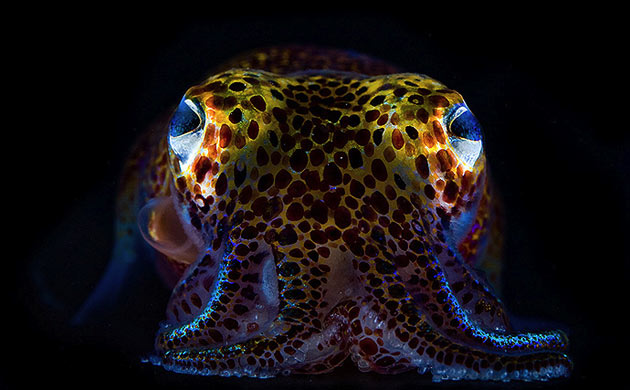
week in wildlife: The Hawaiian Bobtail Squid, Euprymna scolopes
The Hawaiian bobtail squid, Euprymna scolopes, has a clever way of duping predators during its nightly activities. Scientists have discovered that the squid uses a symbiotic luminescent bacteria to light up its underside, so that upwards-looking predators don't see a dark, edible form silhouetted against a moonlit or starlit sky. Instead, hungry sharks or other fish see only sky
Photograph: Mattias Ormestad/kahikai.org
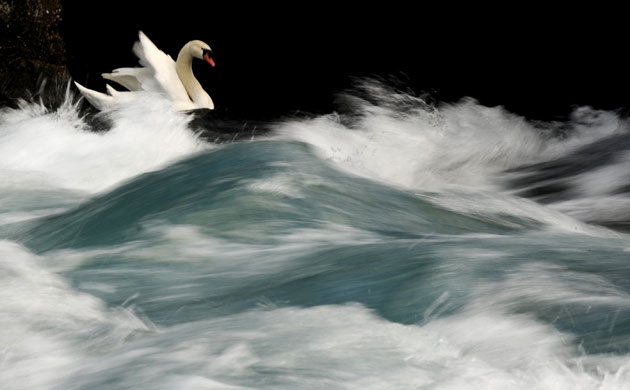
Week in Wildlife: Swan swims at the river mouth between the River Drim and Ohrid Lake
A swan battles rough waters where the River Drim enters the Ohrid Lake in the city of Struga, Macedonia. The water level of the lake this week reached 24cm above the high-water level because of flooding
Photograph: Ognen Teofilovski/Reuters
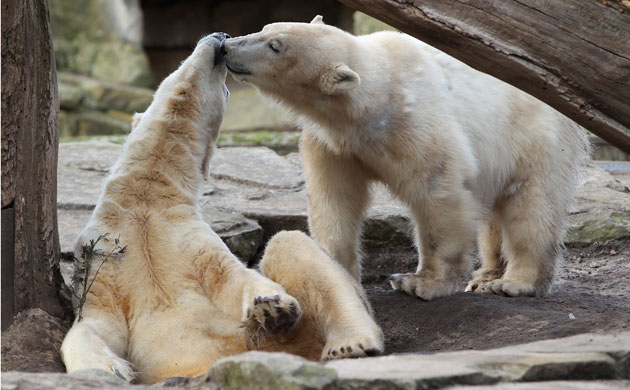
Week in Wildlife: Knut Enjoys Giovanna's Company
Polar bears Knut (left) and Giovanna in at their enclosure at the Berlin zoo on 4 March 4. This week, an animal rights group called for Knut - who shot to global stardom as a cub in 2007 - to be castrated to avoid incest with his cousin. The three-year-old was given Giovanna as a female companion last year, but the German branch of People for the Ethical Treatment of Animals (Peta) warned against their mating after finding that the pair had the same grandfather. Any offspring would threaten the genetic diversity of the polar bear population in Germany and risk exposing the bear couple to a condition known as 'incest depression', head of the branch Frank Albrecht said
Photograph: Sean Gallup/Getty Images
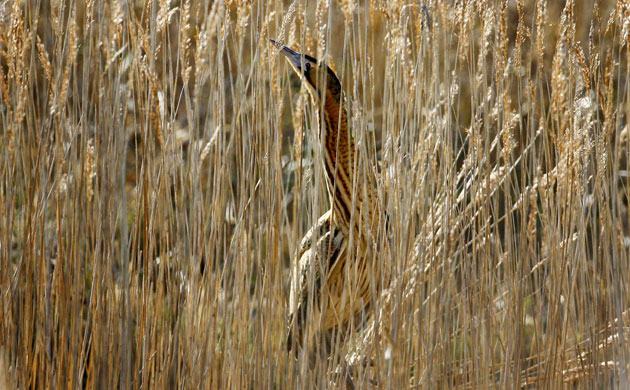
Week in Wildlife: A rare Bittern takes shelter in a reedbed
A rare bittern has been released back into the wild at the RSPB Nature Reserve in Dungeness, Kent, after it was found injured there several weeks ago and nursed back to health at an RSPCA animal hospital
Photograph: Gareth Fuller/PA
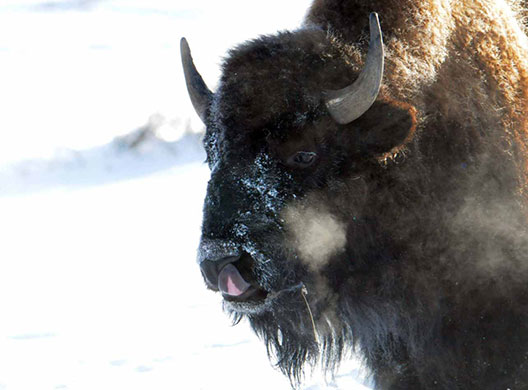
Week in Wildlife: American Bison
The next 10 to 20 years could be extremely significant for restoring wild populations of American bison to their original roaming grounds, the IUCN said this week. But for this to happen, more land must be made available for herds to roam free, government policies must be updated and the public must change its attitude towards bison, the conservation body warned
Photograph: Steve Zack/WCS
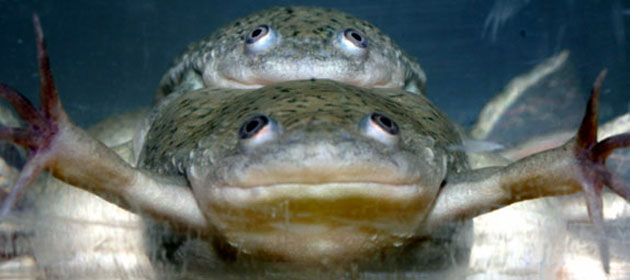
Week in Wildlife: Leopard frogs  are suffering the effects of atrazine in Midwest
Leopard frogs, Rana pipiens, native to parts of Canada and United States, are suffering the effects of atrazine researchers reported this week. Atrazine, one of the most commonly used and controversial weedkillers, can turn male frogs into females
Photograph: UC Berkeley/Tyrone Hayes/Reuters
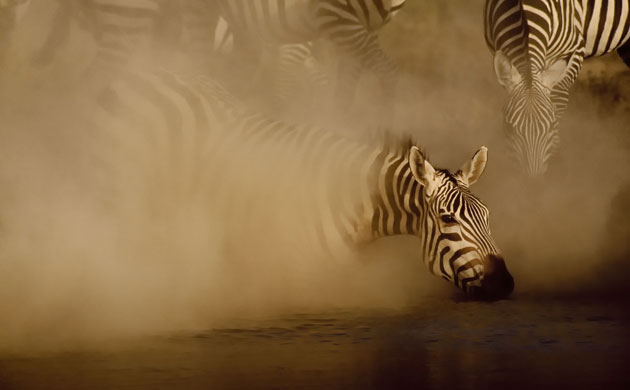
Week in wildlife: herd of Zebras, Great Rift Valley, Kenya
Photographer Greg du Toit almost entirely submerged himself inside the watering hole in the Great Rift Valley, Kenya, to capture a herd of zebra on camera
Photograph: Greg du Toit/Barcroft Media
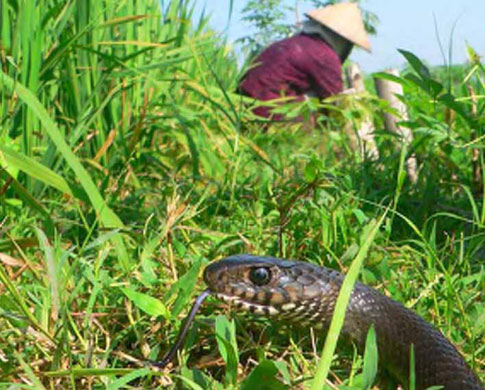
Week in Wildlife: Oriental Rat Snakes
Oriental rat snakes are threatened in Java, Indonesia, because government-set quotas to control over-harvesting and illegal trade are being widely flouted, wildlife trade monitoring group Traffic reported this week. The species has been commercially harvested since the 1970s to supply the fashion industry and the exotic meat and traditional medicine trade
Photograph: Mark Auliya/TRAFFIC Southeast Asia
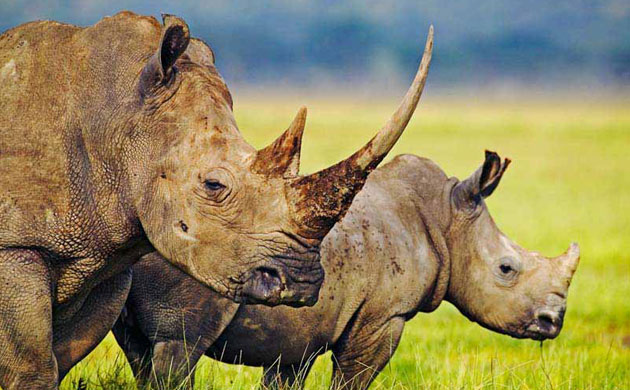
Week in Wildlife: The release of six alleged rhino poachers in Zimbabwe
The release of six alleged rhino poachers from custody two weeks before a meeting of the largest wildlife trade convention is emblematic of the chronic lack of political will to enact enforcement efforts required to save this endangered species, WWF said this week. A Zimbabwean court has granted bail to six men arrested at Bubye Valley Conservancy, home to Zimbabwe's largest remaining rhino population, in connection with rhino poaching. Charges included illegal possession of firearms and illegal possession of a rhino horn. Rhinos in southern Africa are being poached for their horns, used in Asian medicines
Photograph: Martin Harvey/WWF-Canon
Week in Wildlife: California tiger salamander
A California tiger salamander. State wildlife officials ruled this week that the tiger salamander deserves protection as a threatened species, subjecting landowners to more scrutiny if they want to build or farm in the amphibian's habitat
Photograph: Michael G. van Hattem/AP
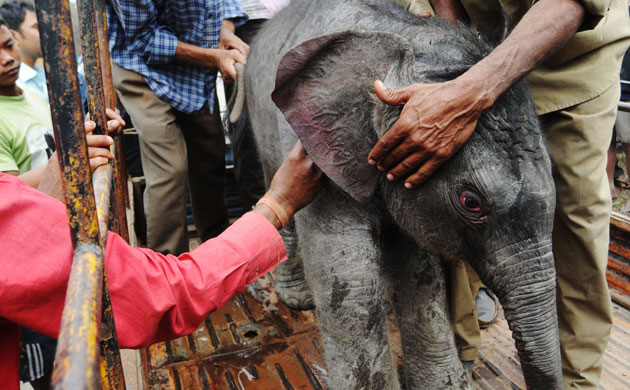
Week in Wildlife: A newborn baby elephant, in Deepor Beel Wildlife Sanctuary , Guwahati
A newborn baby elephant is taken away from the site of an accident near a railway track after two adult elephants were knocked down by a train in Deepor Beel wetland on the outskirts of Guwahati. One wild elephant was killed on the spot and another pregnant female was injured before giving birth to this calf. The two elephants had apparently strayed away from the main herd. Last year another Indian state announced it would build the world's first 'flyover' routes for elephants to save them from accidents on roads and railways
Photograph: STR/AFP/Getty Images
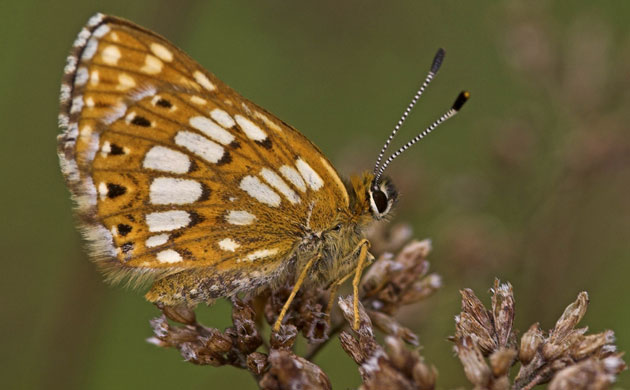
Week in wildlife: Duke of Burgundy butterfly
Britain's rarest butterfly, the Duke of Burgundy, is teetering on the brink of extinction after suffering its worst summer since records began. Fifty years ago this small, pugnacious insect was a common sight in English woods, but intensive farming and changing woodland management mean it is now found in significant numbers in just five countryside colonies
Photograph: Peter Eeles/AP
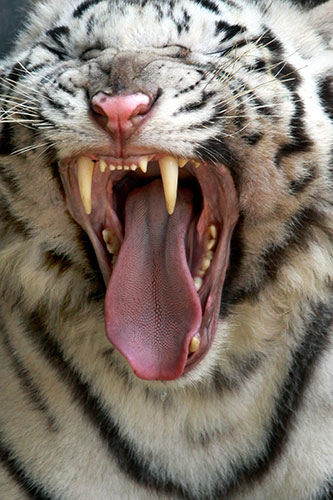
Week in wildlife: White Tiger from China
Baring its fangs, a white tiger (Panthera tigris tigris) flown to Sri Lanka from China on an animal exchange programme is introduced to the public at the National Zoological Gardens in Colombo. An endangered species, the white tiger is an animal with a recessive gene that creates the pale colouration. It is neither albino, nor a sub-species. Though rare it is generally found in China, India, Bhutan, Nepal, Bangladesh and Burma. This is the first time it has been brought to Sri Lanka and attracted large crowds on the first day of exhibition
Photograph: M.A.PUSHPA KUMARA/EPA
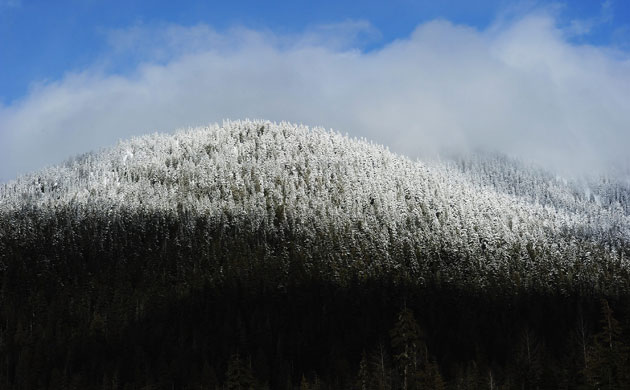
Week in Wildlife:  Snow covers trees on a hilltop at Whistler Olympic Park, Canada
Snow covers trees on a hilltop at Whistler Olympic Park, Canada, as the games closed
Photograph: Shaun Botterill/Getty Images
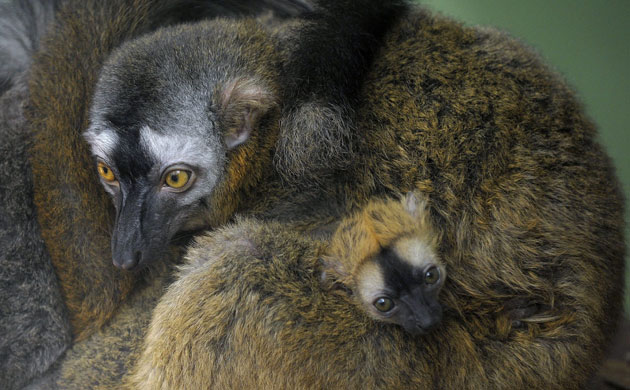
Week in Wildlife:  A red-fronted lemur  mother is seen with her offspring
A red-fronted lemur (Eulemur fulvus rufus) female with her four-month-old baby in Budapest zoo
Photograph: Attila Kovacs/EPA
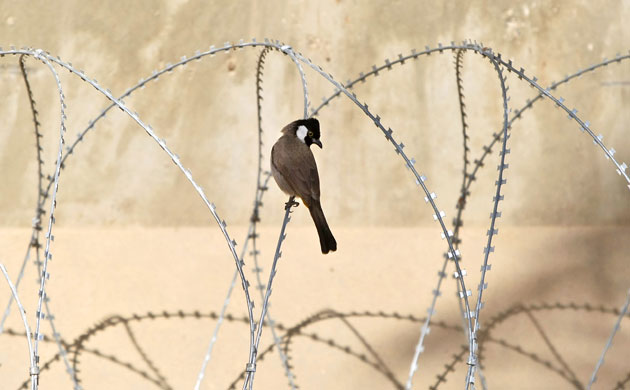
Week in Wildlife: A bird perches on razor-wire
A bird perches on razor-wire at the US army's Camp Blue Diamond in Ramadi, Iraq
Photograph: Ben Curtis/AP
Sign up to read this article
Read news from 100’s of titles, curated specifically for you.
Already a member? Sign in here
Related Stories
Top stories on inkl right now
One subscription that gives you access to news from hundreds of sites
Already a member? Sign in here
Our Picks
Fourteen days free
Download the app
One app. One membership.
100+ trusted global sources.