Get all your news in one place.
100’s of premium titles.
One app.
Start reading
The Guardian - UK
The Guardian - UK
Environment

The week in wildlife

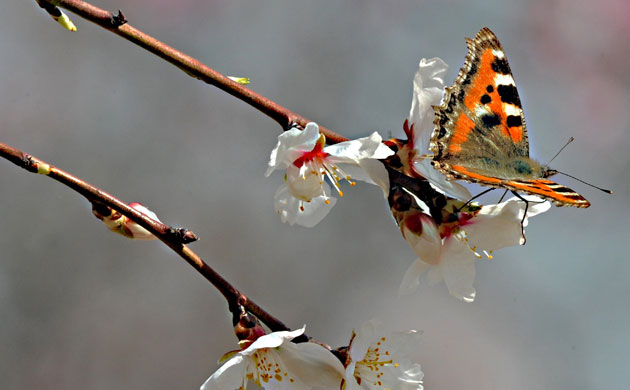
Week in wildlife: A butterfly rests on an almond blossom in an orchard at Badamwari, Kashmir
A butterfly rests on almond blossom in Srinagar, India
Photograph: Tauseef Mustafa/AFP/Getty Images
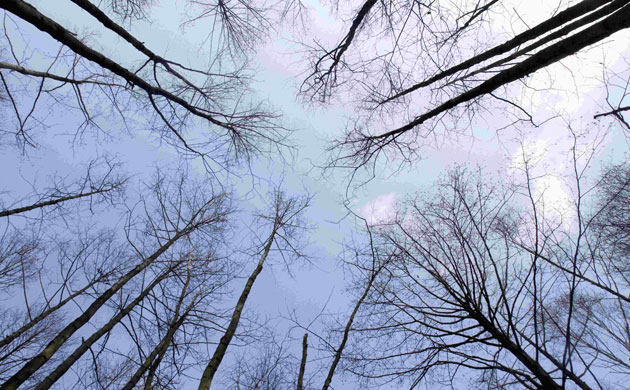
Week in wildlife: Leafless trees are seen in a marsh near the village of Sporovo
Scandinavian scientists have discovered that a species of birch tree has developed an extraordinary defence from attack by herbivores. From neighbouring marsh tea plants, a birch will absorb chemical compounds that ward off animals such as feeding moths, then emits them itself. These birches are in a marsh near Minsk, Belarus
Photograph: Vasily Fedosenko/Reuters
Week in wildlife: Malai baby giraffe
An affectionate scene at Safari West wild animal preserve in Santa Rosa, California, where Jamala, left, introduces her new baby to the rest of the herd
Photograph: Emma Rose Burgess/AP
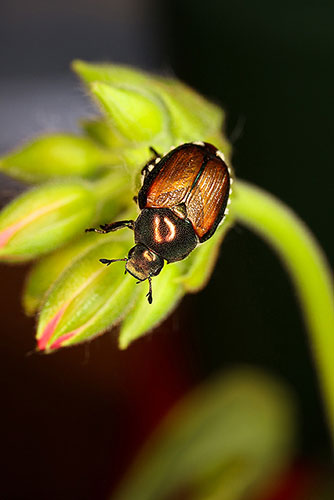
Week in wildlife:  Japanese Beetle
Geraniums may hold the key to controlling the Japanese beetle, which feeds on nearly 300 plants and costs the ornamental plant industry $450m damage each year, according to scientists with the Agricultural Research Service. Geranium petals paralyse the beetle for up to a day, by which time a predator has often gobbled it up. Meanwhile in the UK, the wildlife minister Huw Irranca-Davies has given the go-ahead for the release of the psyllid, an insect that will help stop the spread of Japanese knotweed, a devastating plant which costs the UK more than £150m a year to control and clear
Photograph: Stephen Ausmus/ARS
Week in wildlife: A cattle egret in the lake of Las Garzas eco-park, Colombia
A cattle egret (Bubulcus ibis) soars in the Las Garzas eco-park in Cali, Colombia. In the park's 4.7 hectares, some 74 species of tree, 109 species of bird, and 11 species of mammal can be found
Photograph: Luis Robayo/AFP/Getty Images
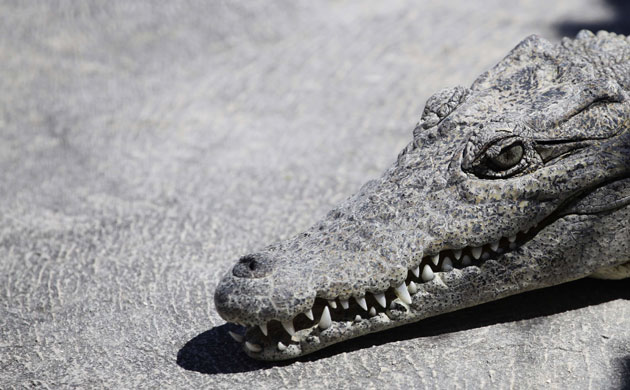
Week in wildlife: A crocodile rests at Zapata Swamp Biosphere Reserve Park, Cuba
A crocodile rests at a breeding centre in the Zapata Swamp biosphere reserve park, Cuba. The wetlands of Cuba represent about 4% of the island's territory and include habitats with unique and ideal vegetation for manatees, crocodiles, fish and turtles
Photograph: Desmond Boylan/Reuters
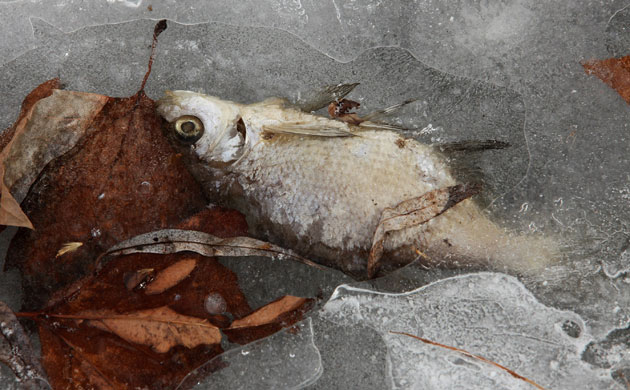
Week in wildlife: A dead fish lies in ice at frozen Lietzensee Lake Berlin, Germany
A fish lies partially entombed in a frozen lake in Berlin, Germany. The severe German winter has kept the lakes in darkness and prevented the production of oxygen, causing the fish to suffocate
Photograph: Sean Gallup/Getty Images
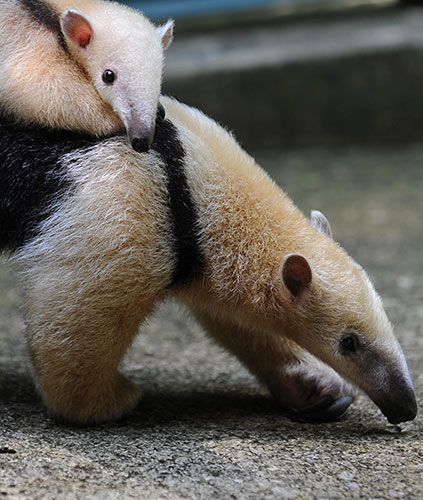
Week in wildlife: A female anteater carries her baby, Rio de Janeiro, Brazil
A female anteater (Tamandua mirim) carries her baby at Rio de Janeiro zoo, Brazil. It is the first birth of this highly endangered species at the zoo
Photograph: Vanderlei Almeida/AFP/Getty Images
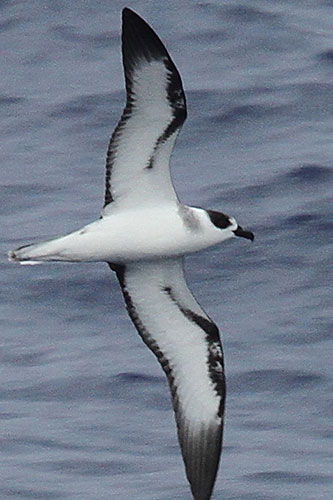
Week in wildlife: The Vanuatu Petrel
Back to sea: Excited bird enthusiasts spotted several small flocks of rare Vanuatu petrels in a remote corner of the Pacific – the first time the species has been seen over the water since it was discovered more than 80 years ago
Photograph: P. Harrison/Seabirds Handbook Project
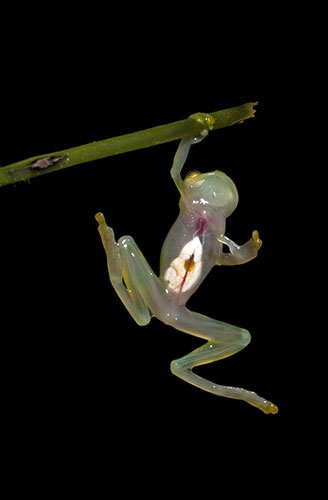
Week in wildlife: A glass frog from western Ecuador
The incredible sight of the glass frog – whose transparent abdominal area allows you to see its internal organs. A team of American and Ecuadorian scientists working for Reptile and Amphibian Ecology International discovered a treasure trove of previously undiscovered species in a rare and dwindling ecosystem in west Ecuador
Photograph: Paul S. Hamilton/RAEI.org/Rex Features
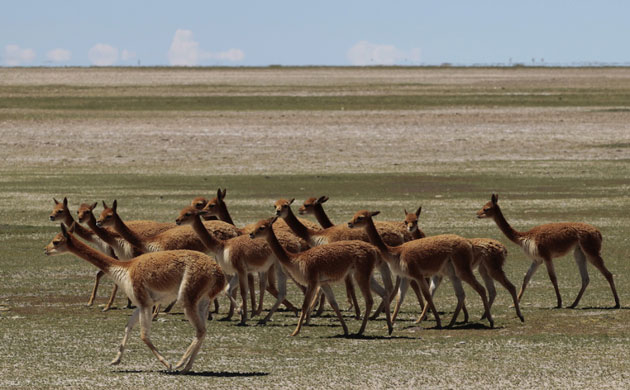
Week in wildlife: Camelids, known as
Vicunas – a part of the camelid family alongside llamas and camels – gather between the salt flats of Uyuni and Coipasa in Bolivia
Photograph: David Mercado/Reuters
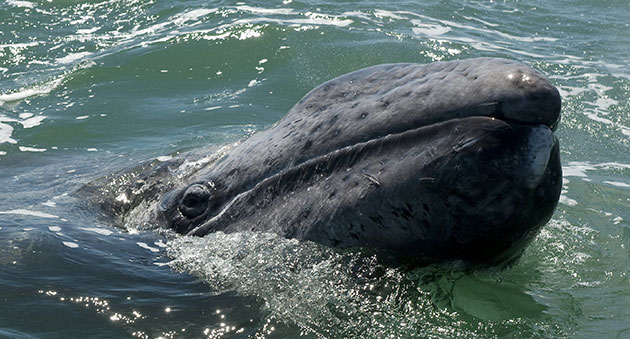
Week in wildlife: A grey whale calf emerges from the water at the San Ignacio Lagoon, Mexico
A Pacific grey whale calf peeps out of the San Ignacio lagoon, Mexico. The whales have been protected since 1947 and are at the centre of the area's whale-watching industry. Their numbers have dropped by a third from around 26,000 in the late 1990s. Scientists say that the decline was caused by melting Arctic ice impacting their food chain, which includes small fish, crustaceans, squid and other tiny organisms
Photograph: Omar Torres/AFP/Getty Images
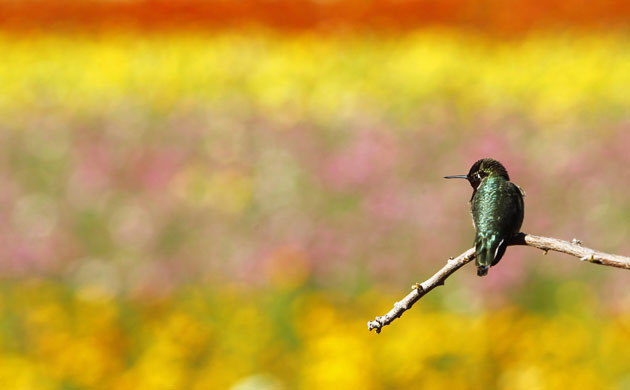
Week in wildlife: A hummingbird rests on a tree branch at the Flower Fields in Carlsbad
A hummingbird looks out over 50 acres of the giant tecolote ranunculus plants. During their six- to eight-week bloom period, the flowers attract thousands of visitors each year to this spot in Carlsbad, California
Photograph: Mike Blake/Reuters
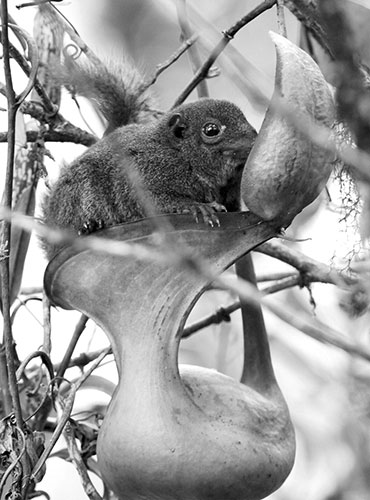
Week in wildlife: the giant montane pitcher plant of Borneo feeds on tree shrews poo
An astonishing discovery from the island of Borneo. Botanists have found that world's largest carnivorous plant, the montane pitcher, the subject of much curiosity in this field, has an extraordinary relationship with tree shrews. The pitcher lures in the shrews with its tasty nectar – as it does to the ants and spiders which it then eats – but the shrews instead defecate into the pitcher by way of marking territory, thus returning the favour by providing vital nutrients to the plant
Photograph: Lijin Chin/Monash University
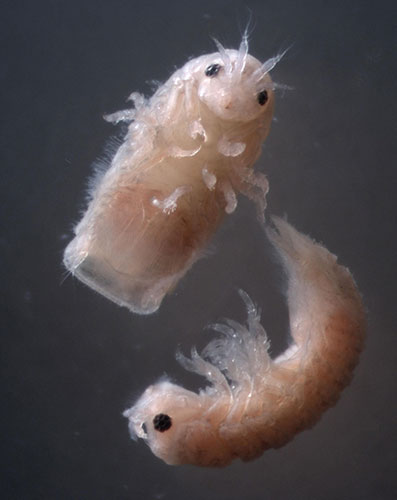
Week in wildlife: Gribbles may lead to biofuel breakthrough
A team of British researchers has learned that gribble have a gift for digesting wood not seen in any other organism. Enzymes produced by the tiny creatures are able to break down woody cellulose and turn it into energy-rich sugars. This excites scientists investigating green fuel sources because it means gribble could hold the key to converting wood and straw into liquid biofuel
Photograph: Dr Simon Cragg and Graham Malyon/PA
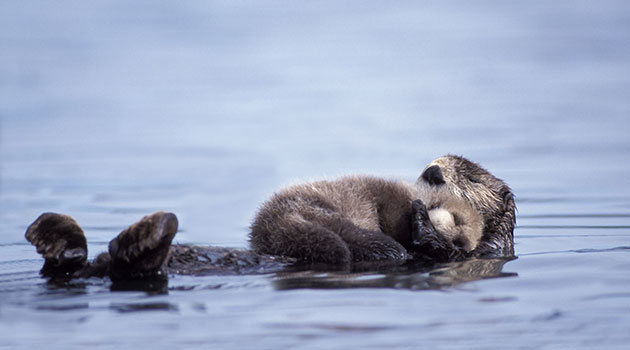
Week in wildlife: OTTER CUB STAYS DRY- ON MUM
A sleepy young sea otter catches a dry 40 winks on the Saw Mill Bay in Prince William Sound, Alaska
Photograph: Steven J. Kazlowski/Solent News & Photo Agency
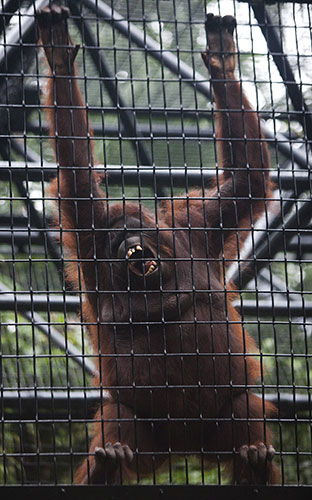
Week in wildlife: Orangutan at the Zoological and Botanical gardens in Hong Kon
An orang-utan chews on the bars of its enclosure at the Zoological and Botanical gardens in Hong Kong. Animal welfare campaigners are questioning whether facilities at the gardens are outdated and express concerns over the psychological wellbeing of the orang-utans. Meanwhile, studies on the animals in Borneo have found that their calls are more complex than first thought. More than merely a tool for socialising and attracting mates, the calls are nuanced with information on the identity and the context of the caller
Photograph: Paul Hilton/EPA
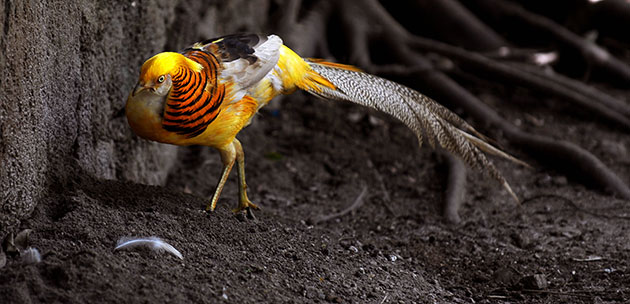
Week in wildlife: A golden pheasant
A golden pheasant (Chrysolophus pictus) at the zoo in Rio de Janeiro, Brazil, which breeds species at risk of extinction. A call has gone out from not-for-profit publisher WILDGuides for photographs of the world's rarest birds for the next instalment of their popular rare birds yearbook
Photograph: Vanderlei Almeida/AFP/Getty Images

Sign up to read this article
Read news from 100’s of titles, curated specifically for you.
Already a member? Sign in here
Related Stories
Top stories on inkl right now
One subscription that gives you access to news from hundreds of sites
Already a member? Sign in here
Our Picks
Fourteen days free
Download the app
One app. One membership.
100+ trusted global sources.