Get all your news in one place.
100’s of premium titles.
One app.
Start reading
The Guardian - UK
The Guardian - UK
Environment

The week in wildlife

week in wildlife: Gulf Deepwater Horizon Oil Spill Begins To Reach Land
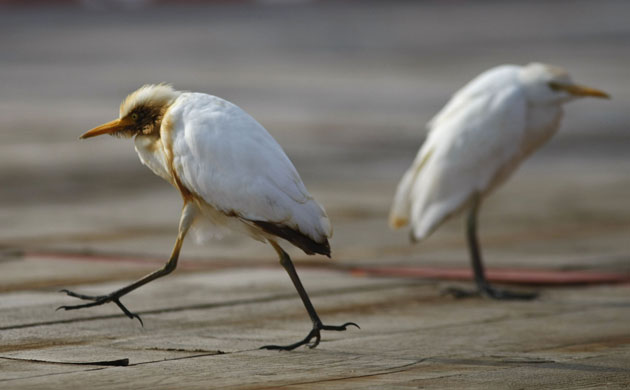
Oil-stained cattle egrets walk on the deck of a supply vessel at the site of the Deepwater Horizon oil spill in the Gulf of Mexico, off the coast of Louisiana
Photograph: Gerald Herbert/AP
week in wildlife: 2010 British Society of Underwater Photographers competition
This image of a sea hare, taken by Robert Bailey, was highly commended in this year's British Society of Underwater Photographers awards, an annual print competition that is part-judged by The Wildlife Trusts.
Photographers are urged to capture the essence of ‘living seas’ – the colourful, diverse and often surprising wildlife and habitats found around UK coasts.
Click here for a gallery of all the winning images
Photograph: Robert Bailey/The Wildlife Trusts
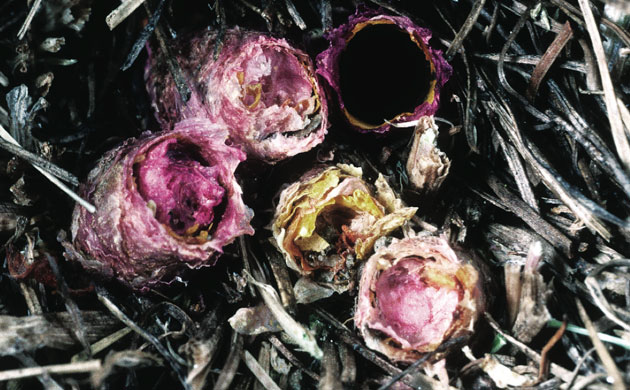
Week in wildlife: nests from petals of solitary bees, Osmia avoseta
A rare species of solitary bee found in the Middle East, Osmia avosetta, constructs its nests from petals and mud, creating chambers of pink, yellow, blue, and purple for its larvae. The colorful nests make moist, secure chambers for the larvae to grow, feast on nectar and pollen laid by its parents, and build a cocoon to wait out the winter. This behaviour was discovered on the same day by teams in Turkey and Iran, where the insects are mostly found
Photograph: J.G. Rozen/AMNH
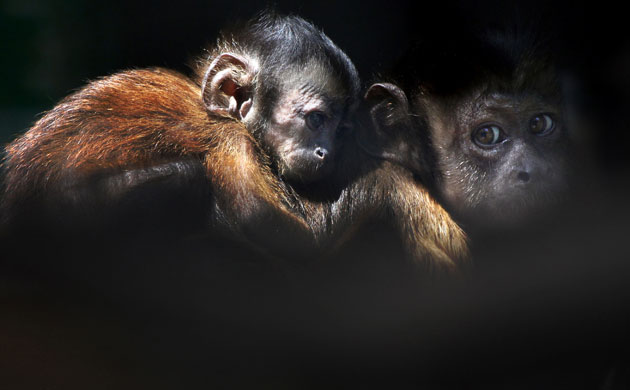
week in wildlife: A baby capuchin monkey clings to its mother
A baby Capuchin monkey clings to its mother at the Chiba zoological park near Tokyo, Japan. In the wild, these monkeys are found in Central and South America, but are threatened due to habitat destruction, hunting and live capture for pets
Photograph: Itsuo Inouye/AP
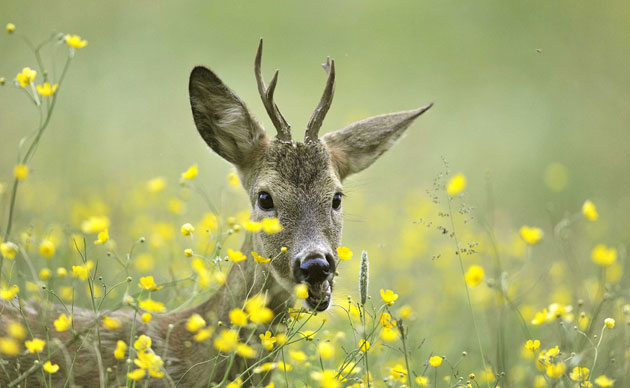
week in wildlife: A buck eats grass in a field near Medvode
A buck eats grass in a field near Medvode, Slovenia
Photograph: Srdjan Zivulovic/Reuters
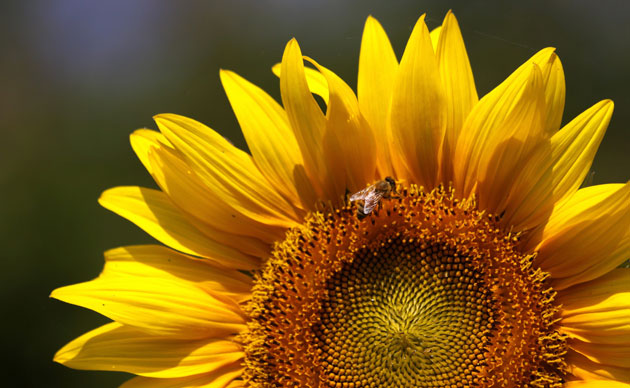
week in wildlife: A honey bee collects nectar and pollen from a fully grown sunflower
A honeybee collects nectar and pollen from a fully grown sunflower in a field near the city of Amritsar, northern India
Photograph: Raminder Pal Singh/EPA
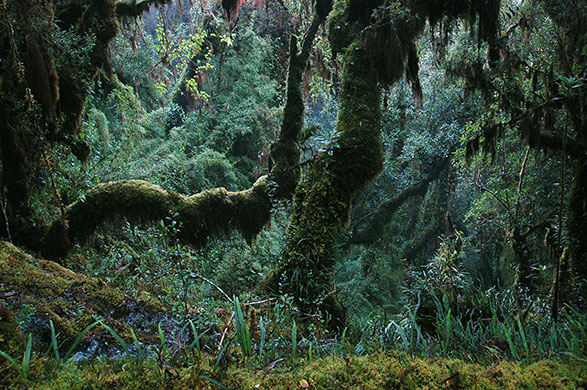
week in wildlife: Global Climate Change Driving Lizards to Extinction
A cloud forest habitat in southern Peru. Cloud forests are a rare type of evergreen mountain forest found in the tropics where the local climate causes cloud and mist to come into regular contact with the forest vegetation. These forests are very important as they support distinct ecosystems and contain a disproportionately large number of the world’s endemic and threatened species
Photograph: Ignacio De la Riva
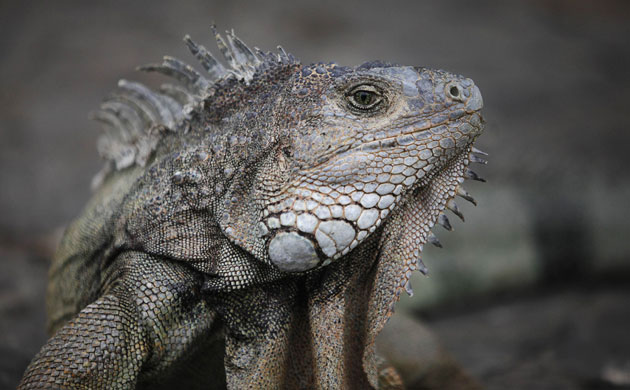
week in wildlife: An iguana is seen at Bolivar Park in Guayaquil
An iguana at Bolivar park in Guayaquil, Ecuador
Photograph: Guillermo Granja/Reuters
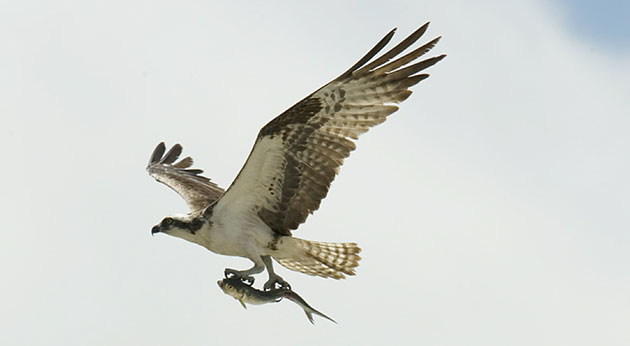
Week in wildlife: An Osprey flies overhead carrying a fish
An osprey carries a fish in Cape Canaveral, Florida
Photograph: DON EMMERT/AFP/Getty Images
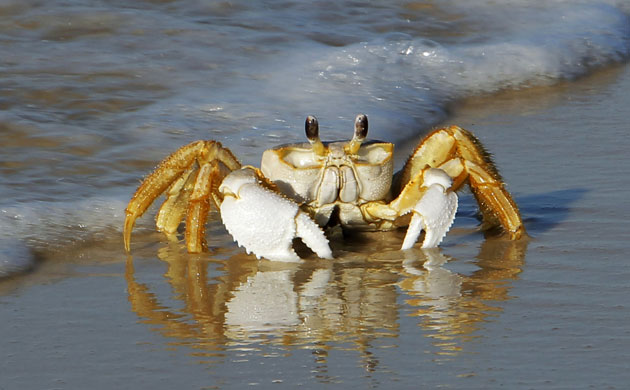
week in wildlife: Gulf Deepwater Horizon Oil Spill Begins To Reach Land
A crab sits on the shoreline on the beach on Dauphin Island, Alabama, one day after tar balls from the Deepwater Horizon oil spill washed up onshore. The spill — a slick more than 130 miles long and 70 miles wide — threatens hundreds of species of wildlife, including birds, dolphins, and the fish, shrimp, oysters and crabs that make the Gulf Coast one of the nation's most abundant sources of seafood
Photograph: Brian Snyder/Reuters
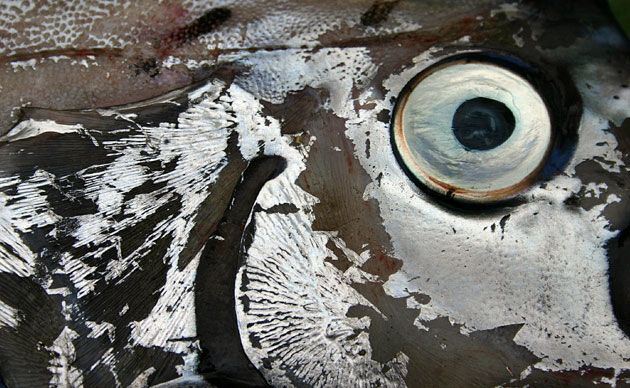
week in wildlife: The eye of a
The eye of a giant oarfish. A maritime expert says this 12-foot (3.65m) specimen - the world's largest bony fish - has been found in Swedish waters for the first time in 130 years. Also known as the 'king of herrings', the dead fish was picked up by a west coast resident who found it floating near the shore
Photograph: Roger Jansson/AFP/Getty Images
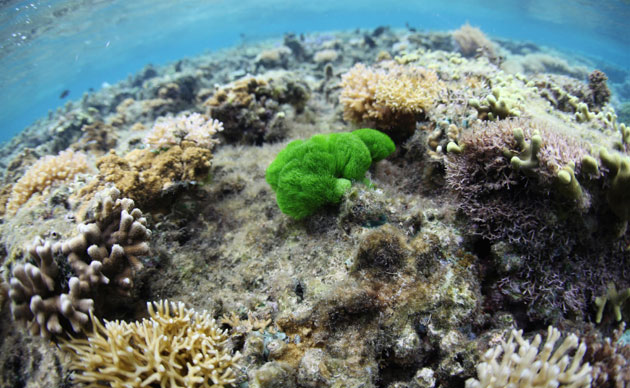
week in wildlife: Seaweed threat to coral reefs
Turtle weed (Chlorodesmis fastigiata) growing on a coral reef. Scientists found this week that this seaweed, along with several other common species in both the Pacific Ocean and the Caribbean, can kill corals upon contact by releasing deadly chemicals
Photograph: Georgia Tech Photo/PA
week in wildlife: Pond life 2010
Environmentguardian.co.uk is collecting the best photos of water boatmen, beetles, snails, alderflies, frogspawn, damselfly larvae and other pond wildlife. Just add your photos to our pond life Flickr group
Photograph: witsendnj /Flickr
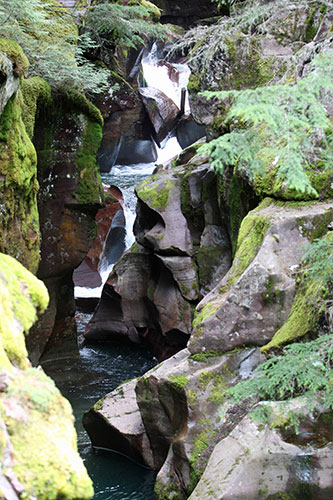
week in wildlife: Water flows past Avalanche Gorge in Glacier National Park in Montana
Water flows past Avalanche Gorge in Glacier national park in Montana, United States. The million-acre park celebrates its 100-year this week. The glaciers are currently being studied to measure the effects of climate change. It is estimated that if current warming trends continue, there will be no glaciers left in the park by 2020
Photograph: Michael Albans/AP
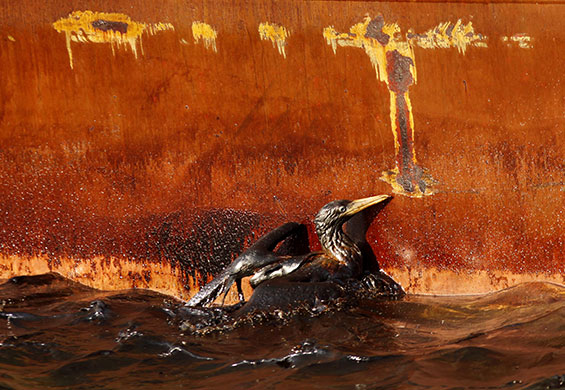
Week in wildlife: Oil spill Deepwater Horizon : An oil soaked bird
An oil-soaked cormorant struggles against the side a supply vessel at the site of the Deepwater Horizon spill in the Gulf of Mexico. Oil sticks to birds' feathers, damaging the 'waterproofing' and buoyancy and exposing them to hypothermia. Birds also try to clean to oil off their feathers, which results in the animal ingesting the oil and damaging its internal organs. Apart from oil spills, millions of water birds die every year due to oil from from jet skis and motorboats, and waste oil that is washed off streets and into storm drains after rain
Photograph: Gerald Herbert/AP
Sign up to read this article
Read news from 100’s of titles, curated specifically for you.
Already a member? Sign in here
Related Stories
Top stories on inkl right now
One subscription that gives you access to news from hundreds of sites
Already a member? Sign in here
Our Picks
Fourteen days free
Download the app
One app. One membership.
100+ trusted global sources.