Wolf Hall (BBC2) | iPlayer
Better Call Saul (Netflix) | Netflix
The Gift (BBC1) | iPlayer
Asylum (BBC4) | iPlayer
Bob Servant (BBC4) | iPlayer
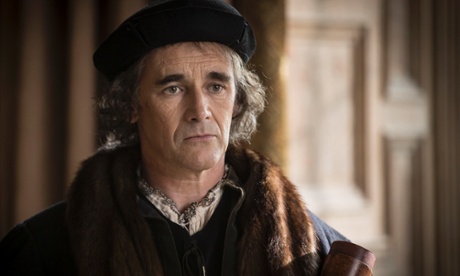
Back briefly and delightedly to Wolf Hall, and the reasons for its naming are becoming clearer by the week. Homo homini lupus, man is wolf to man. This refers of course mainly to Tom Cromwell’s vertiginous positionings high between the swift snares of king, parliament, church, the people and women (chiefly the vengeful Ms Boleyn, ever with gore on her mind, as if she has in dripping dreams foretold her own miscarriages, and her own very end); never since, surely, has one man trodden a more deft nor fraught political path through such a laughably dangerous web. But Thomas, also, has his own glistening tooth and claws, and this week got them stuck, albeit reluctantly, into Thomas More.
This was the episode which most reflected the closest comparable filmic masterpiece, A Man for All Seasons. There was the trial, the betrayal by weaselly Richard Rich, the final breaching of More’s silence – and what a breach when it came; this was the longest suicide note in history – and even the Lady Alice’s visit to Cromwell to beg for her unloved, infuriatingly pious, husband. But there were two surprises. One: Paul Schofield’s 1966 More had been thought unsurpassable, but now I’m not so sure. Anton Lesser brought a much more flawed humanity, redolent with past filths. And, in Hilary Mantel’s subtle hands, Cromwell we now believe took no joy whatsoever in More’s death, and was actively if silently beseeching his recanting of a wholly lost cause. Mark Rylance managed this, of course, just with his eyes. Two sad green eyes, shedding from snake-green to warm-green and back again. Silently managing with only the eyes to actively if silently beseech the recanting of a flawed man from a lost cause. There have been worse actors. Roger Moore’s eyebrows just couldn’t have cut it. This remains impassioned, authentic, sublime.
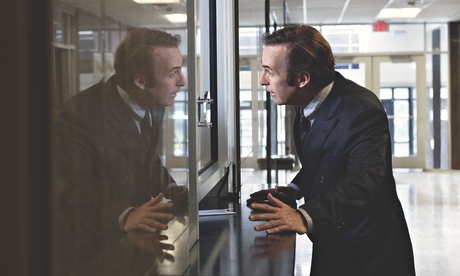
Better Call Saul was, I had been reliably informed by an American friend, underwhelming. It’s demonstrably not, even though it has large shoes to fill, arriving as the prequel to the possibly over-garlanded Breaking Bad. Set in 2002, it begins to tell the story of the Bad Lawyer, just before he became a Bad Lawyer.
Goodness, he isn’t even called Saul Goodman yet. He’s still simple beleaguered Jimmy McGill, with a cramped office in a Korean nail-parlour, a piece-a-shit junk car with mismatched panels and, back then, the vestiges of a faint conscience. Star Bob Odenkirk, a kind of older, balder, less pretty, better John Cusack, was cigarette-paper close to, by the end of the second episode, shedding not as he should have the car, but all twitches of conscience thanks to a failed scam and an offer from a clever Puerto Rican. He is already ready to metamorphose into Saul.
This is all shot through with creator Vince Gilligan’s love of Bad America: his trademark standoffs between clever and deluded (“The money is not ‘beside the point’. The money is the point”), his trademark cinematography, sidewalk diners and brownstone bars, Edward Hopper with a sudden grudge against mankind, his unexpectedly casual from-nowhere whipcracks of real tension. It’s terrific, and I can watch it from the start, and so avoid the OCD geekery which accompanied Breaking Bad (“You missed, like, series one? End of life! Spazmageddon! Dude, you’re, like, so, jeez, like, loser!” And that was just George Osborne. It is only a television programme. And may I request that you speak to me in a semblance of English.)
The Gift, as it was so clearly meant to, made me cry a little at the end, but also made me feel that I was being forcibly manipulated so to do, as I feel after every Richard Curtis film or, for differing reasons, any visit to Nando’s.
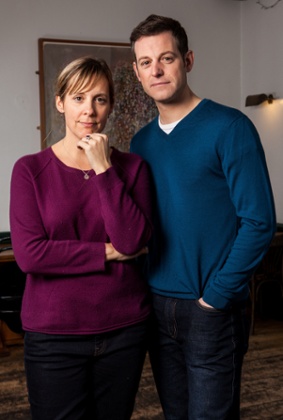
Mel Giedroyc and Matt Baker are great tried’n’true presenters, and we have to be grateful for the fact that they weren’t, for instance, Davina McCall and Keith Lemon. Mel was wise and kind and played it straight, and reunited an ancient biddy with her long-lost German boyfriend, whom she had done wrong by and from whom now, after two heartily abusive marriages, wanted forgiveness. Hermann had had a happy 50-year marriage in Philadelphia. Hermann was a gent, and nice enough to make it roughly work out. Far better was the tale of a squaddie in south Antrim, now an amputee, but joyously married, and alive, and here reunited with his helicopter saviour.
Both tales were purportedly about “closure”. But… two years in the making? Two years just to get us to shed an easy tear?
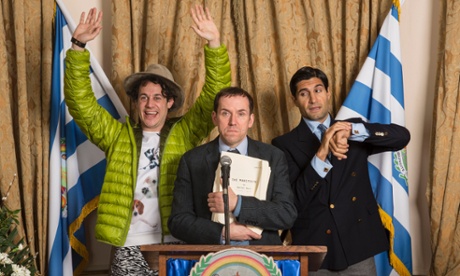
Asylum, despite Ben Miller, isn’t (yet) funny. The premise is fine, the Julian Assange story played for laughs (not that the real-life tale involves any less bathos, hubris and other words the Greeks did best). Miller plays it for high-minded pompous, as a GCHQ whistleblower holed up for 14 months in the London embassy of “El Rico”, a banana republic which purely wants to stick a finger up to America but finds Dan Hern (Miller) an increasingly ungrateful and unwelcome guest, simply bored and boring and having lost his media cachet. So El Rico – look at the funny banana republic, welcoming to an embassy ball the funny North Koreans! – also brings to shelter one Ludo Backslash, a mittel-European wanted by urgent Hollywood dollars for having streamed for fun every major film for years.
Much of the conception is by Kayvan Novak, who also appears as the “herpes in a suit” ambassador’s plotting son, and Dustin Demri-Burns is the amiable Backslash, and these two alone, never mind Miller, should have guaranteed laughs. But it was written by none of them, and that shows: it has too few quirks, a too-obvious incompetent lawyer, one plot device (a misheard word) so old it’s got rust on its moss, and too many stereotypes which were old in the 70s. Come out of the 70s! With your hands UP.
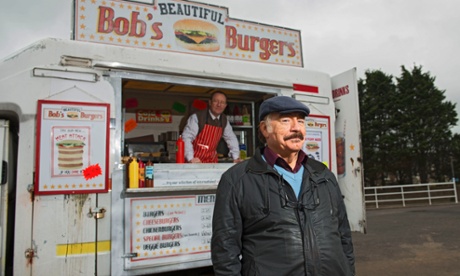
Similarly, Bob Servant, despite Brian Cox, and my having loved his first outing, isn’t (yet) funny. Cox and Miller are deeply talented comedy actors, let down here by pilot scripts. I know that the writer of the second, Neil Forsyth, is capable of far greater nuanced stuff, and a fine pawky Dundonian sense of humour, than which there are few finer this side of Brooklyn, and can only hope that he and Cox haven’t already alienated audiences. BBC4 prides itself on “experimental”, but these should have been sure things. Wh’appen?







.png?w=600)