
Things We Won’t Say About Race That Are True (Channel 4) | 4oD
Raised By Wolves (Channel 4) | 4oD
Back in Time for Dinner (BBC2) | iPlayer
Eat to Live Forever With Giles Coren (BBC2) | iPlayer
Ordinary Lies (BBC1) | iPlayer
The row over Nigel Farage’s so sweet, so silly call for a blanket repeal on anti-discrimination laws in the workplace has hugely overshadowed Things We Won’t Say About Race That Are True, a unique and brave and telling hour from Trevor Phillips and from Channel 4. In truth, the Farage segment was perhaps the least interesting chunk.
He seemed nervous, arrived late, and was described by Phillips as “disarmingly affable”, but for once, actually, wasn’t. Trev asked at least one highly pertinent question. “Am I responsible for… for you?” “I saw you personally as being very much part of the problem,” said Nige, and you can be the judge of how disarmingly affable that looks in cold print.
The basic premise was that Trevor, once the biggest of cheeses in the fight against discrimination, has now undergone a Damascene conversion. “I’m completely convinced now that we were utterly wrong,” he said. In seeking (for the finest of reasons) to find increasingly fraught legal ways to outlaw prejudiced behaviour, went his argument, a generation of white Britons has grown to feel, rightly or wrongly, shamed and/or confused, and increasingly unable to speak openly about any aspect of race. Inter alia, he spoke of an award-winning advert (the European/African/Asian/racist brain sizes one) that had ticked all the boxes, but research revealed “no evidence it changed a single racist’s mind, but what it did achieve was to make white people feel they were being accused – in the dock for something they hadn’t done. It’s not about what you want to believe,” he continued, “it’s about what’s true.”
There were a good many such clear-eyed nuggets abounding. I winced only a little at the imagined reaction – and, sure enough, a certain paper did, essentially, crow, “We told you so!” and imply Trev should be canonised – but couldn’t find fault with his lucid courage. Whether it was in rejigging the old formulas of colour prejudice to a new mantra – “Unwittingly, we gave birth to an ugly new doctrine. All whites are alike; all whites are guilty, and tainted; no white person can criticise a person who’s not white” – or revisiting the shocking tales of Victoria Climbié and Rotherham, in which everyone in a position to help signally failed, largely through being hogtied by fear of finger-pointing, this did in one simple hour what both leftist muddlethink and rightist bigotry have struggled for a decade to articulate. His list of things we won’t say about race included bullet-points (that, in general broadwash terms, “Jews are rich and powerful”; “the white poor are the new black”; “the real taboo isn’t ‘black c**t’, it’s ‘black boss’”) designed to shock, and shock they did, especially in seeing the c-word flashed up on screen, but Phillips fought valiantly and ultimately successfully to argue, with solid data, that “there’s no prejudice in numbers”. His conclusion, after this riveting, if exhausting, programme? “We’re all going to have to become much more ready to offend each other.” Amen to that.
A good week for Channel 4, actually. Caitlin Moran, who will soon surely be so well known she can go about being known by just her first name (just so’s you know, the opening syllable is “Cat”, as in “cat”, not “Kate”, for befuddling but I seem to remember nice reasons), has again given us something good, in addition to journalism and her runaway bestseller, How to Be a Woman, in the shape of a highly moreish comedy.
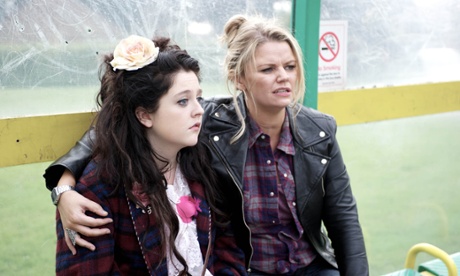
Raised By Wolves, essentially the story of her own Wolverhampton childhood and co-written with her sister Caz, aims to celebrate that relentlessly ignored televisual beast, the witty and bright working class. It won’t be to absolutely everyone’s taste – bigots who like to lump the poor under the adjective “feckless”, thickos who like their humour less subtle, that distinct super-breed of men who still think lady-periods unmentionable – but it was very sweet, will get even funnier, and is crackling with talent to celebrate, in young Helen Monks and Alexa Davies and this opener’s standout star, Pulling’s Rebekah Staton. I worry only that the trend, in both broadcasting and newspapers, is increasingly biased these happy days against female writers who are a) terrifyingly bright and funny, and b) technically below the salt, in terms of privileged ability to fund themselves through three-year internships for sod-all pay. Thank goodness historically, then, for Caitlin, for Julie Burchill, for our own Barbara Ellen, but shall we see many of their likes again?
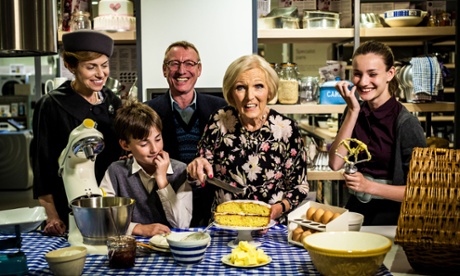
It wasn’t a bad week either for award-winning Times columnists. After Caitlin we had Giles Coren: all we needed was the announcement of Ben Macintyre as director general, and surely no bad thing there. Giles – allegedly an, ahem, difficult chap on occasion to work with, on account of having all that massive brain to lug about – was nothing but charming ease as he popped up twice. In Back in Time for Dinner, in which he only had to pop up occasionally to set the rules, the lovely Robshaw family are being sent to style and eat their way through the decades, complete with period wallpaper, period potato peelers, period frustrations – yadda yadda, been done before, but seldom with such a delightfully accommodating and thus far unwhiny family. It’s great; it’s on for a whole six luscious weeks; but I’m also greatly disturbed by my having gone online to check how to use a 1950s tin opener. None in the family could; it can’t be that bloody hard, so I checked. There are thousands of postings, YouTube and the rest, explaining how to employ not even a 1950s appliance but a modern tin opener. Is our world so dumb?
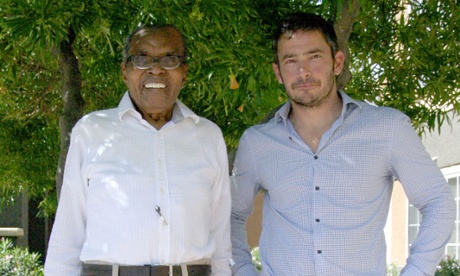
Mr Coren was, later in the week, seeking to Eat to Live Forever – longer, anyway, than his adored father – by seeking out a diet for life. He went to America, to be drily dismissive of the fruitarian mob, and profanely ditto of the palaeo-diet (“this whole caveman thing is a massive pile of arse”) but bonded, warily, with a couple of affirmed calorie-restricters who might, indeed, live to 120 but don’t look like they’re having any fun at all (count the minutes of fun they’ll have in life: none) in the process. Finally, he met Bernando, who says he’s 113 and was a very nice man, and Giles also thought so. Fruit, fish and veg, maybe a bit of lamb twice a year. That’s the very ticket. And don’t smoke, and everything in moderation, even moderation.
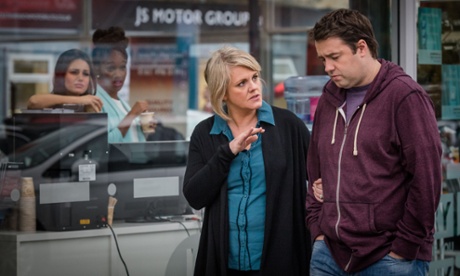
Ordinary Lies, the new Danny Brocklehurst vehicle, was a delight, and revealed that Jason Manford can not just act, but manage it with great subtlety. The story is of a workplace and the lies that lie within it, and the opener stretched the bounds of credulity – chubby drunk car-salesman is late again and lies about his wife having died – but didn’t at any stage snap them. Worse things happen at sea. Bring on Mackenzie Crook, and the rest of the tales.