The Missing (BBC1) | iPlayer
Black Mirror: White Christmas (C4) | 4 On Demand
Steph and Dom Meet Nigel Farage (C4) | 4 On Demand
The Fall (BBC2) | iPlayer
We’ll miss you, The Missing. We’ll miss most of you. We’ll miss Jimmy Nesbitt in a career-defining performance – or perhaps career-buggering: can he ever again nip back to lairy cheeky-chap rot-com after this? He shouldn’t care: there’ll be a deserved gong in this.
We’ll miss Tcheky Karyo, surely the new Jean Reno, for his smokily empathetic French flic and his utterly invaluable facial hair, which was often the only clue as to whether we were in ’06 or ’14. Jimmy tried to help by looking more or less drawn or wistful, but for all that his face was often a battlefield of subtleties, his default setting was, it must be said, “silent, threatening snarl”, which wasn’t much help with the calendar.
We’ll actually miss the mad, gaunt beauties and sinister small-town ministrations of Chalons du Bois, which may be the kind of France (actually Belgium, but… you know) you seldom want to be lost in, but still had its otherly charms. We probably won’t particularly miss Frances O’Connor’s constant weeping – that hanky must have been made of Kevlar – nor the (to my mind) impenetrable subplot involving the unfeasibly weaselly, even for British journalists, British journalist and the corrupt Moroccan cop. But above all we’ll certainly miss, in these short, saccharine, sugar-rush days, the glories of a sharp and clever and labyrinthine eight-part serving of meat to get our teeth into. Even the red herrings were delicious. And we’ll miss Ken Stott’s still-haunting character, Ian Garrett, and wonder anew at the mask of relentless bonhomie that can cover outrageous repugnance.
For those who haven’t seen the last episode… well, you should have. It’s been five days now. It was all a lousy accident, as semi-signalled at the end of the penultimate part, with the husband from the Hotel l’Eden falling off the wagon in a tumble of broken Pernod glasses and driving over poor Ollie, who had been entranced by a fox. As Alain weaved and sobbed over the body, we heard Tony’s (Nesbitt’s) increasingly frantic cries for his boy, echoes from the mesmerising opener back in October. This one wasn’t as good – but how could it have been?
We had a couple of grim twists – Ollie not being dead yet, but about to be very much so, thanks to the diligent work ethic of an appalling Albanian mafiosi; and Tony Hughes ending the series and, for all we know, his days refusing to accept the inevitable, tramping the dirty snows of breeze-block Moscow with black beard and by now wholly mad eyes.
This last episode was deemed unsatisfying by many, a MacGuffin to wrap up the strands, but to my mind it worked: an appalling accident is what it baldly was, and fates often twist on such meaningless coincidences, but – oof – how writers Harry and Jack Williams worked to put us through the emotional treadmill by spotlighting every nuance of all the very personal ramifications. I stand and applaud them, and Mr Nesbitt.
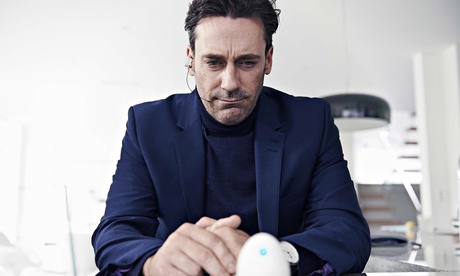
And I didn’t have to starve for too long in search of equally gamey broth, in the reliable shape of Charlie Brooker’s Black Mirror: White Christmas. Mr Brooker takes few prisoners when it comes to those possessed of pygmy imaginations, which is meet and right for grown-up telly. So within 90 minutes we were introduced to the concept of “blocking” an individual as one would an ex-Facebook friend, but actually doing so in real life (thanks to everyone in the near future having chosen to implant so-called Z-Eyes, hooked up of course to the net: do keep up); the blockee appears only as a greyed-out shadow and may neither call nor approach.
Then to the concept of extracting an “egg” of consciousness, a kind of Mini-Me, purely to toil in a tiny, white, closed cyberjail at the tasks of keeping the real-life Me fed and watered and kept at the right temperature and with the toast done just so: basically, the concept of outsourcing a small twitch of one’s own soul, the better to keep body and… body together. Already we’d addressed the issues of slavery, alienation, the speeding up of time (and thus, when there’s absolutely nothing to do, the creation of pathological boredom), the inadvisability of taking anyone’s advice on dating, and that was within about seven minutes, before we even got on to the concept of Jon Hamm and Rafe Spall stuck in Ice Station Zebra at Christmas, caning the port.
These actors, and this in its entirety, were phenomenal, but there were so many fine ideas, both uplifting and dystopian, that I can’t quickly do them justice – other than to offer the obvious thought that it’s not the technology: it’s us. And to observe that Mr Brooker must be becoming mildly fed up at having his technological imaginings superseded every six months. Google, do be careful what you wish for: when the gods wish to punish us, first they answer our prayers.
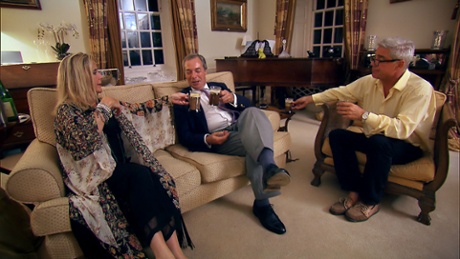
Utterly unphenomenal was Steph and Dom Meet Nigel Farage. The first-named two are apparently the “posh couple” off Gogglebox, but that’s to make the mistake of confusing “posh” with “endowed with a modicum of class”. Steph, looking increasingly (in the words of Wodehouse) like the woman who’s been poured into her dress and forgotten to say “when”, got pissed, but not as pissed as Dom, who was (as he would doubtless have described it) hog-whimperingly drunk by the time he met Nigel at the pub.
Nothing meaningful ensued. Nigel got fairly pissed and told us about his missing ball; but he’s a clever man, couldn’t have done all that otherwise, and fairly oozed charm, sobriety, brains and, yes, class… but, like someone once said, it’s all relative. According to the Radio Times, the Guardian’s Polly Toynbee wanted this programme, somewhat illiberally, pulled. Up to me, I’d show it to awful men stuck within Brooker’s 1,000-year time machine, set on constant repeat, as happened to poor Rafe Spall with Wizzard’s Christmas thing.
The Fall was always going to end with Stella and Paul, yet it was still a murky business watching how closely cop and killer mirrored each other in the concluding episode of this extraordinarily tense series. But suggestions that she, the sublimely understated Gillian Anderson, had somehow crossed lines, growing too close to Paul’s sub-Nietzschean psyche, are invalid, as she had earlier quietly explained to her colleague Tom. In, of course, bed: “A woman once asked a male friend why men felt threatened by women. He said they were afraid that women would laugh at them. When she asked a group of women why women felt threatened by men, they said, ‘We’re afraid they might kill us.’ So he might fascinate you… but I despise him with every fibre of my being.” Terrific, taut, nasty, grown-up viewing, and the stirring news is that there are loud whispers of new series of both this and The Missing next year.