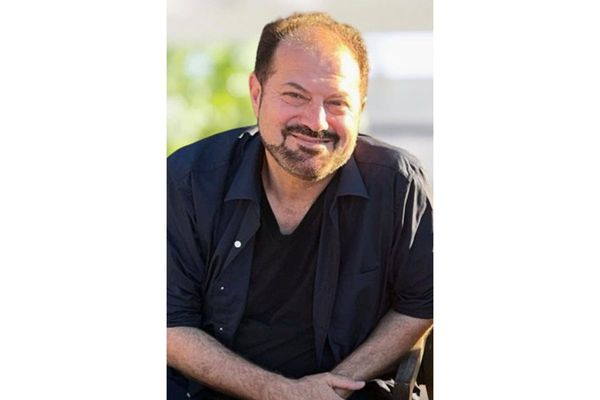
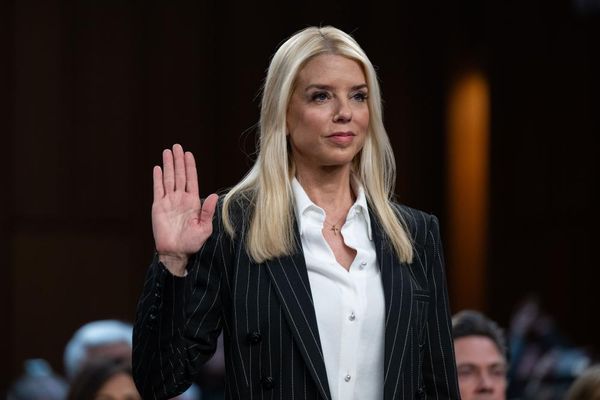
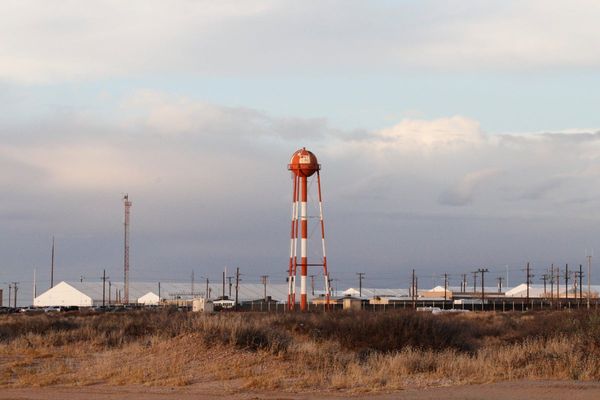
Anita Lasker-Wallfisch, Frank Bright and Susan Pollack
in The Last Survivors. Composite: BBC/Minnow Films Ltd
The Last Survivors (BBC Two) | iPlayer
Inside Europe: Ten Years of Turmoil (BBC Two) | iPlayer
Pure (Channel 4) | All 4
Steph & Dom: Can Cannabis Save Our Son? (Channel 4) | All 4
Ride Upon the Storm (Channel 4) | All 4
Landing the same night as our paper had carried the news that one in 20 British adults do not believe the Holocaust even happened, The Last Survivors, Arthur Cary’s spellbinding, intensely caring documentary on the few remaining Britons to have walked alive as children out of Auschwitz or Treblinka, was urgent viewing. And yet, for something so urgent, it was also remarkably peaceful, gentle and reflective.
It told, at a beautifully steadied pace, the tales of these people, now mostly in their 80s or beyond, featuring a surprising percentage of sculptors, artists and musicians, and a predictable percentage of those who didn’t, really, want to talk about it. Chief among these was the magnificent Anita Lasker-Wallfisch. “People always want to see emotions,” she barked, instead giving the camera an intense waft of ciggie smoke. “We’re talking about facts here; I’m not giving people the pleasure of seeing my emotions.”
As all best programmes do, this managed to raise quietly unanswered questions, which (if we’re any good at all) we have to reach deep into ourselves to answer. What equates to trauma? Can we ever today be said to suffer or have suffered “trauma” – absenting direct abuse or harm or squalid negligence – compared with those camps? On the other hand, what kindly harms might these survivors themselves have bequeathed by their stoicism, their very refusal to allow their families “in” until so very late in the day?
One in 20. I was frankly a little surprised the figure was so low, given that similar numbers subscribe to angels, colonic irrigation and further esoteries. Among millennials the figures were, unsurprisingly, worse. (In Austria 12% had never heard of the Holocaust.) Next day the papers were full of the suggestion that school pupils get a daily hour of “mindfulness”. How about – baby steps, mind – starting with a weekly half-hour of “history”?

Talking of denial, I can only assume that neither MPs, intent on Tuesday night’s intense reverse-ferreting, nor newspaper editors, intent on their subsequent week’s campaigns to cast the EU with tiresome predictability as Voldemort, had even a second to cast their eyes upon Inside Europe: Ten Years of Turmoil. It might have spared them all much pain, many lies, much bloviating nonsense.
The company Brook Lapping and their wonderful series producer Norma Percy had gained the usual sublime access to talking heads. Thus we had horse’s mouth testimony, from the very biggest in the bestiary, of how since 2010 Britain (by which I mean mostly but not exclusively “England” and “Tories”) has been single-handedly responsible for its myth-making about British exceptionalism – a celebratory, slow, repetitive, yet oddly incurious act of self-fellation.
We had Nicolas Sarkozy, neither looks nor charm yet fled, despairing angrily at David Cameron’s first act in Europe having been to remove himself from the cross-nation centre-right grouping because his own party’s Euro-weirdos wouldn’t approve: an early hint. The Pole Donald Tusk, to whom I’ve quite taken a shine, chided Cameron gently at his “stupid” referendum; Tusk now says Cameron admitted that the only reason for it was “his own party”. Also, the once-friendly Herman Van Rompuy – “I didn’t come all the way to London to take orders.” And insights into Angela Merkel’s psyche – the East Berlin yearning for freedom, for wider family – and, crucially, her early warnings as to the limitations of a simple in-out vote, shorn bald on the ballot of nuance or ramification. A quite wonderful and illuminating watch, and two still to come, if you can somehow bear to watch what actually went on while daily reeling with the angry consequences.

Pure, Channel 4’s latest thing to set cats among pigeons, can lay claim to being rather taboo-busting, and is bound to win plaudits. Rightly so, in many ways: it’s the interpretation of a book about mental illness – specifically, a form of OCD designated “pure”, as the symptoms occur not physically but as mental obsessions, often savagely debilitating. Poor 24-year-old Marnie just happens to see tonguing, furry, sweaty, awful porn-sex between whichever people she’s looking at whenever it kicks in. She hates it – knowing something’s slightly off with her brain – and she loves it – being 24 in London, and ditto.
It addresses serious, really serious, issues; I just don’t know whether they quite mesh yet with the other stated intent: comedy. Newcomer Charly Clive as Marnie is wonderful – surely an instant hit – with her perfect(ly fake) Scots accent and dry jibes, but so far this straddles an uneasy chasm between wryness and horror, and threatens to unseat both pegs.
Among the many issues left so carelessly unaddressed in the past two years of shambolic pocket-stuffing mendacity otherwise known as Brexit, one at least was highlighted in Steph & Dom: Can Cannabis Save Our Son?. The dreadful Gogglebox couple came across, in real life, as just dreadfully humane, savagely loving parents, to both their 18-year-old son Max, who was diagnosed at the age of four with severe refractory epilepsy (up to 120 seizures a day), and to 15-year-old Honor, a smarter, more caring daughter than anyone quite has the right to.
Max, the parents knew, was more likely to die with every month he aged. They were not looking for a cure. They hoped that cannabidiol might keep him at least alive and, while pinning no hopes on miracles, had heard remarkable recent tales from here and the United States of restoration, of quite unprecedented drops in seizures, with Max officially sanctioned for rare treatment on compassionate grounds.

This had all the feel of a good-news-finally tale until the kicker, at Max’s 18th (balloons, marquees, Steph with, naturally, a drink). Suddenly, it just… stopped. As, it turns out, has the concomitant legislation. Red tape, heel-dragging, parliamentary distaste for difficult questions about drugs, or hypocrisy about drugs, or obsession with party politics – this could have been nodded through instantly, without even a whinny from the vainglorious Bercow, but it hasn’t. Meanwhile, Max, who seized twice in the course of filming, and they were both very difficult watches, continues to seize.
Ride Upon the Storm is yet another Channel 4 belter to which you’d do well to become addicted. Written by Borgen’s Adam Price, it turns away from politics to priesthood, and is utterly clever-clever, and utterly soap opera. Join, and be enthralled: Johannes, whisky priest! Son August, golden-boy Iraq war chaplain! Son Christian, black sheep, good looks! Slaughter, jealousy, lies and hygge.