The Game (BBC2) | iPlayer
Nick and Margaret: The Trouble With Our Trains (BBC2) | iPlayer
Dispatches: The Secrets of Sports Direct (C4) | 4oD
Inside Harley Street (BBC2) | iPlayer
Peter Kay’s Car Share | iPlayer
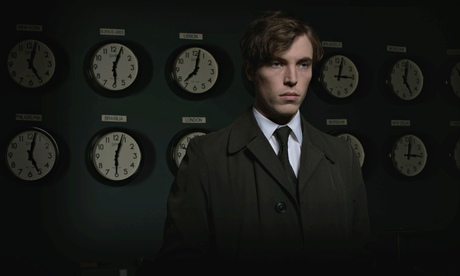
“The objectives, even our own, are unclear.” Election week could hardly have kicked off with a more apt clarion call, albeit one played by dissonant tubas with gummy valves – but the quote came courtesy of another very British muddle, the cold war, via last week’s splendid opener to new BBC drama The Game.
London, 1972, with all that entails, including smoking, rain, grand three-piece suits in Donegal tweed and tawdry dead-letter drops in the men’s toilets at Boston Manor park. And Tom Hughes as Joe Lambe, which might gladden the hearts of all those who took to Twitter to complain about withdrawal symptoms after the end of Poldark, although it might gladden their hearts equally were they to get a morsel of a life.
Hughes looks, almost, like a prettier Endeavour Morse, but possesses few of the redeeming morals. And no one, I’ll venture, has dared to call Brian Cox “pretty” since he was a gurgling wean in a pram, back in the pre-Enlightenment days when the only geological fault in Dundee was that it wasn’t below sea level: but he fills the screen as ever with, somehow, an indomitable vulnerability. Add to these two Paul Ritter as Bobby, the most persuasively oleaginous Whitehall creation since Mark Gatiss inhabited Peter Mandelson a few weeks ago in Coalition (and Judy Parfitt, as Bobby’s mother, managed in her 60 seconds to be perhaps the scariest mother since Norma Louise Bates). Toby Whithouse’s plot is grown-up. Which is to say it’s filthily complicated, but still credible, and you really don’t want to be wandering off to slow-roast a shin or give a helpful recap to the girlfriend who’s just emerged from her “quick” shower. It, and this, rewards much attention, and there will soon be triple, if not quadruple agents, and it’s hard to recall now just how fraught was every piece of trembling international diplomacy, with US nukes on our soil and Russian dittos in the sea, but we were shockingly close to endgame. To the fat lady having sung. To blazing nukes, and to that’s all she wrote.
But we won. Ish. Exactly what kind of country we have since become emerged in a couple of highly decent documentaries, first via the faintly absurd duo off The Apprentice, and the second via one Harry Wallop, who would surely be a character from Viz magazine’s Cockney Wanker were he not, shame on him, a fine Dispatches reporter.
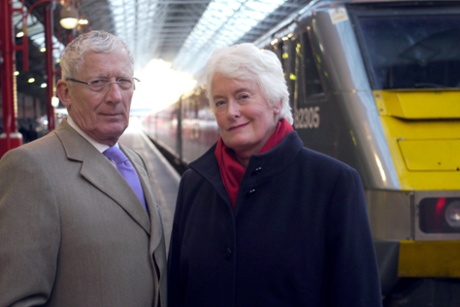
The Trouble With Our Trains saw “Sir” Alan Sugar’s erstwhile deputies, Nick and Margaret, take to the tracks to muse on why Britain’s trains are 40% less efficient (and thus more expensive) than those in France, Sweden, the Netherlands, Switzerland.
They found, to mostly only their surprise, that rail privatisation has been a disaster. Even Margaret Thatcher balked at it , while overseeing in the 80s other sell-offs that roughly “served” the country in the same rough way a stallion serves a mare. Privatisation “all seemed such a good idea at the time”, quoth Nick, always the more human of the pair, which is to say he can smile as if it doesn’t hurt (But did it, Nick? Really, did it? To whom?) Yet even slab-faced Margaret, back in her home town of Holywood in Northern Ireland, where the still-nationalised system, basically and shockingly, works terrifically, found herself in catastrophic peril by having to entertain doubts over the unalloyed glories of capitalism.
Still, they managed to highlight, if not all that forensically, a couple of the more lunatic failings. First, the “Delay Attribution Guide”, a mammoth guidebook to our age’s twin sins of needing simultaneously to a) cast, and b) avoid, at all costs, blame. That’ll be the direct and entirely predictable result of splitting responsibilities between Network Rail and the shiny operating companies, all mouth and trousers, such as Virgin, with its huge if sub-literate slogans (“Create amazing”; “Arrive awesome”), and can lead to a 10-month wrangle over the definition of a peacock or, worse, red tape being permitted to hogtie a packet-fresh stretch of urgent bypass track for a whole year, just for want of a Thomas to run on it. Second shocker was the reminder that Network Rail is subsidised, by us, to the tune of Huge, and getting Huger. Even by the nefarious standards of market forces, this must be deemed “epic fail”. Graham Black, once this newspaper’s head of design and a highly articulate man, spoke of the 07.29 Brighton-London service, late every single day for a year. Incredibly, he still appears sane, pausing but rarely to snatch flies from the air.

The Secrets of Sports Direct told, via Harry Wallop, a dirty little tale of a dirty big business. This was analytic, forensic, secretly filmed and savagely depressing. The endless fake closing-down sales in already god-forgotten town centres; the fake discounting; the fake posters; the very real zero-hours contracts and bullying of staff; the very real Mike Ashley, 22nd richest person in the UK. I could have cared more, however. Anyone who goes into these stores, no matter how desperate for a bargain (and the goods are cheap. In every sense) – comes out strobed in advertising, for Sports Direct and then, when they wheeze and puff their way into the Lycra, for the brand name. I’ll be the first to say it: I am such a snob.
I was slightly snitty recently about Vanessa Engle’s Inside Harley Street, but I belatedly acknowledge it has been utterly intriguing, and her tinder-dry monotone questions an art form in themselves in the way they fall between politely naive and… well, rude.
This final week she tackled various forms of alternative practitioners, from the deranged to the just about useful. There were leeches. There were foul-smelling Chinese infusions for pregnancy. There was, overall, a more benign feel to this programme – if they’ve got the money to afford to go there, who’s to stop them being stupid; and, in truth, as one interviewee said, sometimes it’s just someone taking the time, and listening. I reserved the right, however, to shout at the charlatan “kinesiologist”, scamming nice ageing female twins by pretending their limbs actually grew longer or shorter according to the pricey pills he brought near their legs. Their legs could tell electromagnetically whether those pills would be the ones. Even through the wraparound packaging, bless! And of course the true snake-oil salesmen, the homeopathists. I do like to keep an open mind, but not so open that my brains fall out.
Peter Kay’s Car Share is a delight, with some bite, and Kay’s perennial attention to northern detail. It’s a shame not to be able to say more, and I will, later. But all six episodes were launched on iPlayer at once, for folk to binge watch, yet all deleted from that catch-up service on Tuesday night in an inexplicable move worthy of W1A. They’re now limited to real-time Wednesday and Thursday nights, and are being trickled out on catch-up, but still, if you can get your head around all that – my own brain is starting to itch – worth it.