The Frankenstein Chronicles (ITV Encore)
London Spy (BBC 2) | iPlayer
Peep Show (C4) | ITV Player
Unforgotten (ITV) | ITV Player
Not quite sure what we’d do if we were suddenly deprived, historically, of the fact of early 19th-century London. If sex was invented in 1963, murder was apparently invented in about 1826, seemingly amid the smoggy reaches of the Isle of Dogs and the treacherous pilings of Borough and Tobacco Dock: all sucking silt, yellow lights lazily swung, tolls of heavy bells seasoned with fog and heartache. Today there are surely something like 84 boatmen, complete with requisite humps, joke Rada speech impediments and foul clay pipes, employed exclusively by ITV drama location scouts to poke about the nether reaches of the Great Wen in the hope of finding smelly mud and a long shot that won’t suddenly include a FlyBe plane docking at City airport.
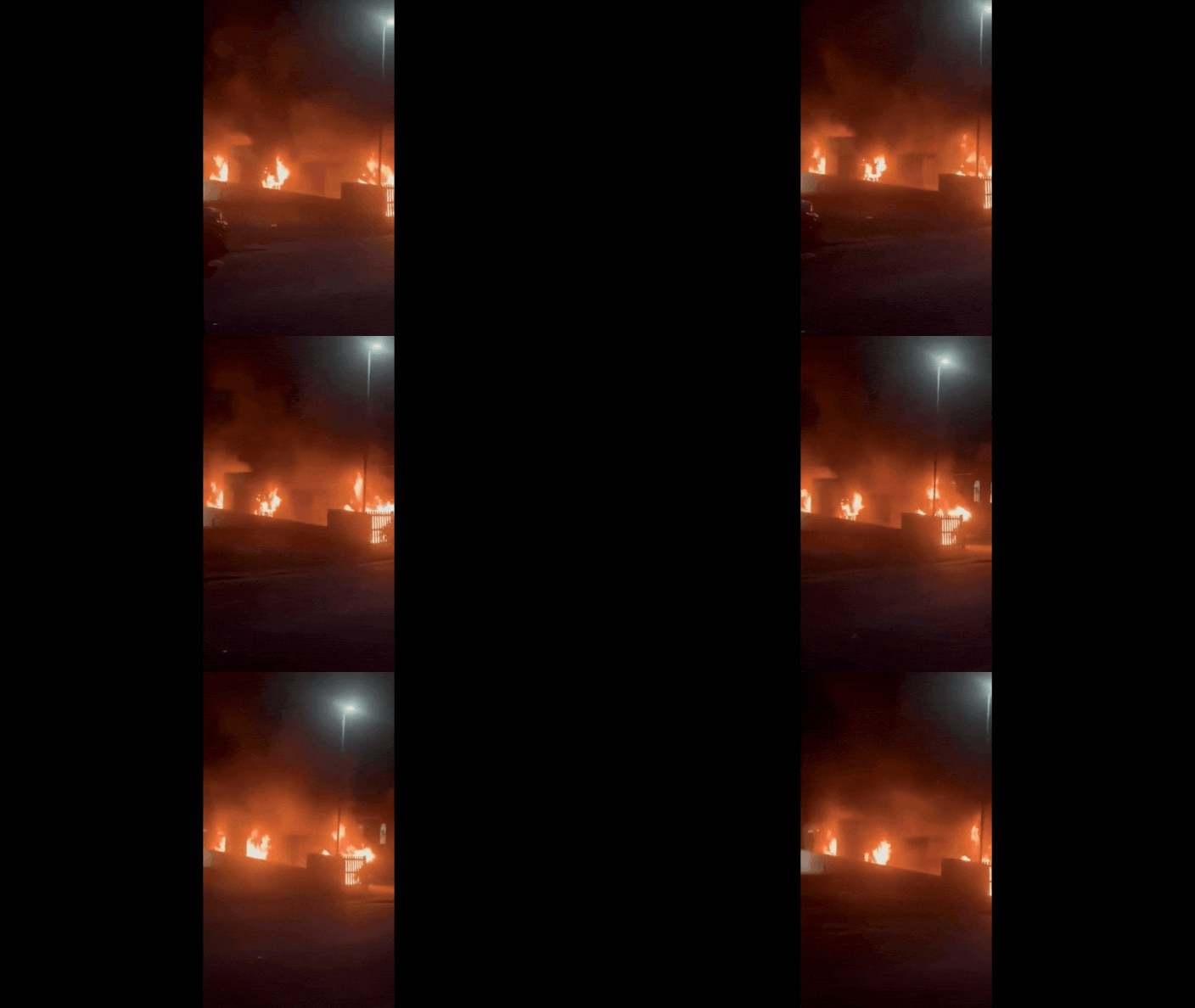
So The Frankenstein Chronicles arrived, even as Jekyll and Hyde is treading the same sulphurous cobbles, a potentially disastrous timeslip clash cunningly avoided by much of Frankie having been filmed, indeed, in Northern Ireland. The six-part Frankenstein Chronicles takes as much poetic licence as Jekyll, in that it plays fast and loose with literary truths: Blake pops up, as does Mary Shelley, and a grizzled Sean Bean, now quite shorn of his Sharpe good looks and allowed to just get on with being a good actor. He gnaws the furniture rather decently as the one uncorrupt member of the river police, though gnaws it with that certain Beany melancholy – “I knurr what it is to grieve”; “My days are consumed by smuurk” – which suggests his days are in no danger of being consumed by a sell-out run of Laugh? I Nearly Dropped My Knobkerrie! at the Gaiety theatre.
It’s genuinely rather good, and a beast of wholly different hide to Jekyll: that one, despite the pre-watershed “outrage” at its gothic horrors, remains a thoroughgoing, good-natured mash-up, whereas this offers real rare shivers, missing children and children returned polluted – parts sewn together, abominated – and I’m quite itching to see where it goes next, and whether it can come any closer to explaining William Blake (as close to a bona fide mystic as anyone else these lands have produced). Also, and unusually for this kind of programme, the makers have finally listened to the only 99.99% of the population who can’t abide watching drama so verite that it looks like it’s been filmed from behind a heavy Victorian Welsh dresser through a clump of Swarfega wrapped in staunch blackout curtains tucked inside the Earl of Hell’s waistcoat: a lighting technician has finally done his, rather than an auteur’s, job.

Absolutely oddly enough, there was something of the London gothic too about London Spy. Shouldn’t have been, at all: it’s so totes modern, with the MI6 building and smartphones and selfies and the like, but that city and its secrets and, specifically, its rain-wrecked river, can’t help but pull us back to ancient darknesses.
It started as a kind – and yes, courteous – affair between a complete gay puppy of a boy, Ben Whishaw, and a taciturnity of coiled need in Ed Holcroft, the ice-cool maths genius who gives two (or is it seven?) different names and two (or is it five?) different jobs, and about whom the only thing we can be certain is that he possesses trays of identical ironed white shirts, which led me to much jealousy, never mind the fact that he could easily audition as a successor to Daniel Craig’s Bond. But Ed – Alex? Alistair? Joe? – carked it even before the end of episode one (of five) and highly nastily, in an obvious reference to Gareth Williams, the MI6 operative found in a padlocked bag in Pimlico in 2010.
Sense of place is never far away. It’s an odd morsel of London, that slice of river. Vauxhall, with its interesting (pointlessly ugly, even for the Arup partnership) bus station, and junkies, and gay clubs; Millbank, with its power, a heartbeat from Whitehall; Pimlico, with its thwarted Fulham aspirations and inordinate number of spies; MI6, with its screw-you frontage and quieter offshoot (government spoiler alert, oops) near the Pimlico tube station. Perhaps I’m too close – I lived there for a couple of years, until a girl disaster – but all resonated in this splendid refraction of writer Tom Rob Smith’s dark mind.
Whishaw, shaping up to be an actor of serious stature, has never nailed it better. Basically an hour with the camera on him and not one facial muscle pulled wrong: he managed endearing, broken, weak and angry within, to my watch, 15 seconds. This opener was all set-up: a rare love finally found and then demolished. Danny (Whishaw) will soon step up, from puppy to hound: and there will be blood.

“The problem for you is… I’m your friend.”
Never was a truer phrase spoken. In a glorious opening to the very last series of Peep Show, the fabulously distrustable Jez, within whom somehow reside the soul and bones of Caligula, is living in a loo. Darling Mark is, six months on, still seething with anger about his ex, Dobby, and Jez’s having tried to stick tongues down throats, yet needs Jez, if only to obviate his boredom with new real life and a new real flatmate. An apology is called for, by Mark, clearly with a certain pomp. Jez’s witchy obfuscation and attempt at male bonding – “Obviously, I think we’re both very sorry about what happened” – was a masterclass. Asked to apologise again, he resorted to crazed and thickened accents. Always a winner I find, when saying sorry. Just lovely and surely gong-heavy soon.
Unforgotten ended more happily than it began. It began dark and mournfully, with 70s race killings (gay killings, turned out to be) and cold-case inertia and I was less than hooked.

But the sheer class drew me in, weekly. Tom Courtenay, the lovely Nicola Walker, Trevor Eve, Cherie Lunghi, Bernard Hill, Gemma Jones, Frances Tomelty, far from least Ruth Sheen – and I felt quietly bereft at the end. Lessons: unacknowledged crime hurts. Unacknowledged hurt hurts more.