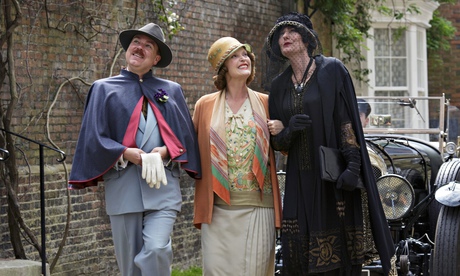
Mapp and Lucia (BBC1) | iPlayer
Snow Wolf Family and Me (BBC2) | iPlayer
Roald Dahl’s Esio Trot (BBC1) | iPlayer
Charlie Brooker’s Screen Wipe (BBC2) | iPlayer
Miranda (BBC1) | iPlayer
I do apologise for the preponderance of the letters B and B and C in the above list but I thought I would accord it a last-ever chance to redeem itself for its Christmas night’s “prime-time” viewing, which comprised some of the – no, actually, the – most depressingly arse-paralysing gloop to have been spoonfed the prole masses this century. Seriously: 9pm, the corporation’s main channels on a not-small family occasion, and the choice was EastEnders followed by Mrs Brown’s Boys or a Tim Rice special entitled A Life in Song. More glee has been had choking on vomit in an abattoir, and I mean on someone else’s.
So I’m not sure whether to revel in a grand comeback or gnaw the walls in frustration at the gulf between commissioning people (clever) and scheduling people (not clever), but Mapp and Lucia was phenomenal, successive nights of the most deliciously moreish television made last year. The adaptation by Steve Pemberton of EF Benson’s exquisitely flensed comedy of manners, set in Rye in the 1920s/30s (and it really is still that lovely), when a certain rarefied form of life actually depended on a bustling church noticeboard for its every social, spiritual, ethical, sartorial and sexual sustenance, could have been carried by the eponymous leads alone for the whole three nights.
Miranda Richardson, with the help only of a subtle set of comedy dentures, was Elizabeth Mapp, and Anna Chancellor sublimely haughty as Emmeline “Lucia” Lucas: two women – ladies, actually, in a day when distinctions mattered as mattered life or death – caught in endless twitching frenzies of one-upmanship, all whispered eyebrows and quietly toxic putdowns. Richardson in particular was again phenomenal; her silent lipsticked mouth spoke volumes. It was rainbowed and beaming when happily and hissily besmirching her “friend” with the sarcastic term “precious one”, or even when genuinely happy, high on unkindness, after a rare coup: but its cochineal would plummet, in repose, to a clownish moue, a faded curtain of dried lip-lines rusted with frustration. But Chancellor was no slouch; even though she won 90% of the battles, when scorned her wrath was ungovernable, and would have had 90% of ovaries (and every testicle around) fleeing for the Downs.
As I said, they could have carried it themselves, but there was glorious support. Pemberton himself as proto-gay Georgie; Poppy Miller and Mark Gatiss and Nicholas Woodeson, and Rye itself. The plots, such as they were – a dodgy Indian guru, an art competition, a something involving the Prince of Wales – were negligibly delightful. But the subplots – the mutating fashions for friendships, brief fads, the power of money, benign unacknowledged homosexuality, misappreciated appreciation for what passes for intellect (or class), the joy of witchy bitchiness – never more relevant. EF Benson left a little more of a canon than this: please, bring it on, and leave Downton looking like the Titanic after the feet got damp.
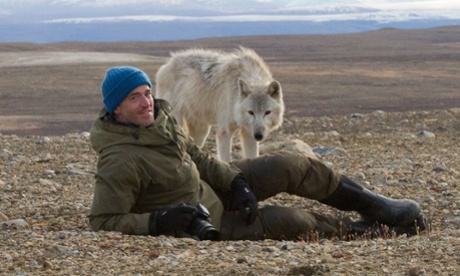
There was a moment in Snow Wolf Family and Me, such a long time in the making, when I grew a smidgen bored. About two seconds, in two hours. Accomplished wildlife cameraman Gordon Buchanan had been making rather heavy weather in the early padded minutes of iterating, seemingly constantly, how close he was to wild wolves, who hadn’t ever encountered humans, and how Ellesmere Island in the Canadian Arctic was the last Wild Place on Earth, and I was slightly… yadda yadda, Gordy, you’ve an electric fence outside your tent, and a couple of producer chums freezing half a mile away but possibly possessed of high-octane Bovril and high-powered rifles.
Had I but known. Had he but known.
Within 20 minutes he was chatting to the wolves. Within 40 – admittedly this was Day Three – walking, unprotected, through vast tundra with a nine-strong pack. Within 55 minutes, actually sauntering: they’d peed on his binoculars and accepted him, perhaps, as a friend. They might still eat him, because they were all starving, but there was much less doubt than in the Mapp/Lucia friendships.
By Day 18 Buchanan had his camera two feet away from the pups in the den – and that footage will turn every child on every planet in the known universe into a sobbing Beseecher – while having his boot licked by a full-grown hunger-machine. Then he made the mistake of naming the pups. Banjo, Lola and Meg, and as soon as he named the last my eyes watered. Meg was my last dog, gutsy and so kind but relatively frail, even as a pup, and as soon as he named her I wondered whether she would die.
This was indeed what the BBC was made for, and it made for mesmerising viewing. But I dislike the implied anthropomorphism. Next episode, Mr B obviously disliked the “other” or “foreign” wolf pack. Coming over ’ere, taking all our musk ox carcasses, killin’ our Meg, innit. He’s a wise man, and, if he can rein in some of that, a potential successor to Attenborough. But re-watch this lovely greatness. It’s better than any thriller.
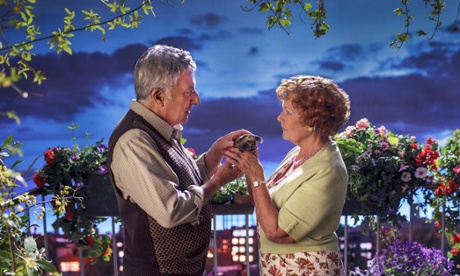
Dustin Hoffman and Judi Dench acted together, and wonderfully, in Esio Trot, an essentially children’s book brought to the screen. Roald Dahl’s tale of late-blooming love, revolving around a tortoise (spell it backwards), with its incremental-growth trick giving me goosepimples for the sublime The Twits, was undermined by the inclusion of actor James Corden and writer Richard Curtis, but not much: Dahl’s intention survived, just. He was a wonderfully dark man. As is Mr Charlie Brooker, whose glorious 2014 Wipe included a great take on the N-word (every time it’s euphemised on the news, you think of the word) and the uncanny link between Dawn of the Dead (1978) and Black Friday shopping (2014).
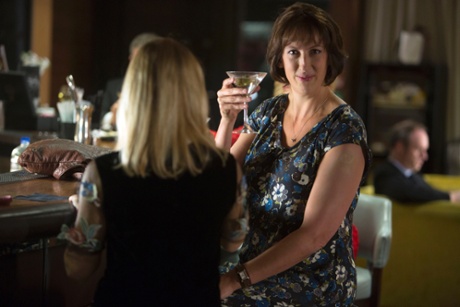
So, Miranda’s over, and leaves us in a fine tradition – Fawlty Towers, The Office – of going on just long enough and no longer, and creating a newly Hollywood-bound personality. Some fusspot critics adopted airs of frenetic postmodern sophistication towards what was, after all, a comedy show. I loved it, every bit, not least for allowing me to finally “get” – albeit only a bit – slapstick. I especially loved it for every reason the detractors resented: its retro nature, its channelling of Eric Morecambe (she even managed, along with his trademark deadpans to camera, to slap Stevie’s cheeks) and its big, warm, sexy lunk of a star.
It ended rightly on a high (she married Gary, needless to say) and included bits of girly fun (meh), sharp observation (yay!) and, actually, a twitch more seriousness than has been usual. “That is not being a child,” she says at one stage, grown strangely grave. “Sometime the world just needs to be… jollied.” Indeed it does, and I raise my glass to Miranda Hart, producer Sarah Fraser, director Mandie Fletcher and all the other splendid women involved: 2015 deserves to be their brilliant year.